

 EN
EN  NL
NL
 DE
DE
 FR
FR

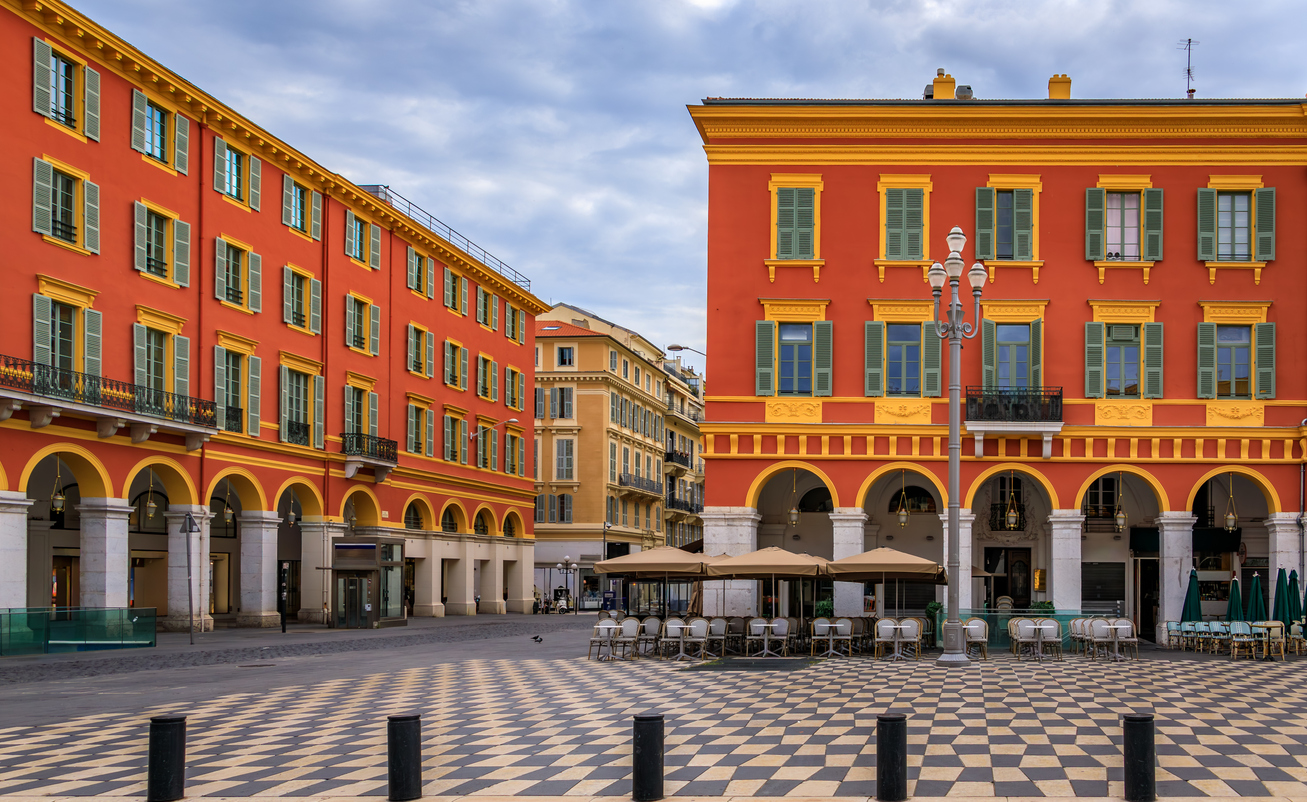
Art Galleries in Nice: Creativity on the French Riviera
Nice does not just sit on the Mediterranean; it absorbs the sea’s changing light and refracts it through a century of artistic experiment. From the Old Town’s ochre lanes and vaulting baroque facades to the open squares of Masséna and Garibaldi, the city wears its cultural life in the open—galleries at street level, studios above courtyards, and museums perched on hills thick with olive trees. You can begin at a museum that holds a painter’s inner world, cross a tram line, and find yourself at a project space where artists test their latest ideas an hour before the opening. The trick is to take the city in slow, neighborhood-sized pieces: a morning in Vieux Nice, an afternoon by the port, a golden-hour ascent to Castle Hill, and an evening vernissage when doors are wide and conversation spills onto the pavement.
For a broader introduction to the city’s culture, history and atmosphere, explore our guide to Nice.
Why Nice’s art scene feels different
Nice’s art identity was never a single school or style, though the words “École de Nice” still ring loudly. It is a meeting point of very particular forces: the sea’s strong light, the proximity to Italy, and a modern history that runs from Belle Époque classicism to Nouveau Réalisme, experimental performance, and the video-led present. A walk through the city reveals signatures: Ben’s black cursive slogans, Sacha Sosno’s monumental “Tête Carrée,” and the glowing figures by Jaume Plensa that keep watch over Place Masséna. Side streets hide workshops where frames are cut, canvases stretched, and editions prepared; municipal galleries open onto the Promenade des Anglais; and at the eastern edge, a complex of former abattoirs called “Le 109” thrums with artist-run energy. The ecosystem is compact yet layered, ideal for a weekend or a week of incremental discovery.
Mapping the neighborhoods: from Old Town to the port
Before diving into specific spaces, a mental map helps. Nice invites you to move on foot and by tram, tracing short, distinct loops that each hold a piece of the city’s creative life.
Vieux Nice and the seaside galleries
The Old Town is a maze of vaulted lanes and sunlit squares, but two axes keep you oriented: Cours Saleya and the Quai des États-Unis. In the morning, the flower and food market on Cours Saleya energizes the neighborhood, and neighbors stroll in for pissaladière or fruit. Between the arcades you will find small galleries and the photography museum near Place Pierre-Gautier. A few steps away, the municipal spaces facing the sea—most notably the Galerie des Ponchettes—anchor rotating contemporary exhibitions in a setting few cities can rival. The sound of waves filters into exhibition rooms, and just outside, steps lead to the Promenade. This is where Nice’s image of itself—as a Mediterranean city comfortable with both tradition and experiment—feels most distilled.
Place Masséna, Carré d’Or, and Jean-Médecin
Move north toward Place Masséna and into the Carré d’Or, and you enter a grid of 19th-century streets where galleries coexist with design shops, patisseries, and bookstores. The tram glides soundlessly past storefronts whose windows change monthly. Here, private galleries often focus on the School of Nice, Nouveau Réalisme, and contemporary painting or photography, catering to both local collectors and curious visitors. You can thread a route from the square’s red façades (and the tall, illuminated “conversation” figures by Jaume Plensa) eastward toward Place Garibaldi, pausing for art books on Avenue Jean-Médecin or pastries on Rue de la Liberté.
Garibaldi and the port: between classic and contemporary
Place Garibaldi, with its trompe-l’œil facades and porticos, forms a hinge between the center and the old harbor at Port Lympia. The square is a reliable compass point for gallery explorers: to the north stands MAMAC, Nice’s primary museum of modern and contemporary art; to the east, the port’s quays step down to yachts and fishing boats. Around here, you’ll find municipal contemporary spaces such as the Galerie de la Marine and, down by the water, the refined Galerie Lympia in the restored 18th-century prison buildings. Between the two, streets like Rue Cassini and Rue Bonaparte host a dense mix of creative businesses—studios, cafés, wine bars, and compact galleries with high turnover shows. It’s a neighborhood where it pays to step inside, look up the staircases, and ask what’s on this week; open studios and pop-up presentations are common, especially in spring and early summer.
Cimiez and the hillside museums
Climb (or bus) to Cimiez for a very different tempo. The hill is airy, residential, and stately, with churches, a monastery garden, olive groves, and two museums tuned to the lives of artists who chose Nice for contemplation: Henri Matisse and Marc Chagall. The gardens themselves feel like sketches in green: elders play pétanque between the trees, and the breeze carries over Roman ruins. Plan to slow down here—this is art viewed with the shoulders relaxed and the horizon in sight.
East side, Le 109, and artist-run spaces
Continue east and a formerly industrial quarter reveals itself as one of the city’s most productive cultural engines. The 109, commonly referred to simply as “Le 109,” is a cluster of cavernous halls and studios where artist-run spaces like La Station produce exhibitions, residencies, and performances. The sightlines are long, the floors concrete, and the atmosphere experimental in the best sense: you come here to see things being tried. Weekends often bring openings and tours; weekdays reward the unhurried wanderer who drops into a project space and ends up in a half-hour conversation about the city’s art history.
Institutions that define the conversation
Nice’s museums and municipal galleries are interlinked and unusually well-integrated into the city’s fabric. You can plot a satisfying day by pairing an institution with nearby independent spaces.
MAMAC: Musée d’Art Moderne et d’Art Contemporain
Sitting just above Place Garibaldi with a sweeping public plaza framed by the “Tête Carrée” of Sacha Sosno and the city library, MAMAC is the living room of Nice’s modern scene. The museum holds robust collections around Nouveau Réalisme (Klein, Arman, César), Fluxus, and American Pop and Minimalism, alongside a program of temporary exhibitions that link those histories to current practice. Architecturally, the building’s pale cylinders and rooftop terraces nod to the sky; a visit on a clear day gives you artworks and cityscapes in the same breath. It’s a place to understand why “Nice” is not just a location stamped beneath an artist’s name but a set of ideas about perception, material, and the everyday.
Musée Marc Chagall
At once intimate and luminous, the Chagall museum on the Cimiez hillside dedicates itself to the artist’s biblical cycle and spiritual paintings. The museum’s white walls and delicate natural light give each canvas space to resonate; in the auditorium, stained glass windows immerse you in the artist’s palette. The surrounding gardens continue the experience outdoors, where shade and bird song create the quiet Chagall preferred for reflection. Even those who think they know his work tend to leave with a calmer, more precise sense of his vision after seeing it in this environment.
Musée Matisse
Across the olive groves, the Matisse museum occupies a 17th-century villa whose red ochre exterior peeks through cypress and pine. Inside, works trace the painter’s long dialogue with color, pattern, and line, from early drawings to later cut-outs and studio objects. The museum also affords a view of Matisse’s Nice in miniature: textiles, ceramics, and motifs that found their way from the city’s apartments and markets into his compositions. Step back out into the garden and you see why he chose Cimiez—the light is generous yet soft, ideal for the clarity he pursued.
Musée des Beaux-Arts Jules Chéret
Descending to the west, the Beaux-Arts museum sits in a Belle Époque villa with a serene garden. Its permanent collection spans from the 16th to the 20th century, with regional painters and sculptors represented alongside the great poster artist Jules Chéret. It’s a museum to see in the afternoon when the pace of the city has slowed; the rooms breathe, and you can spend time with a single painting without rush.
Musée de la Photographie Charles Nègre
Tucked at the edge of Vieux Nice near the Cours Saleya, the photography museum brings a focused, regularly changing program of exhibitions. Its scale makes it an ideal counterpoint to the larger institutions: you see a sharp thematic show or a single photographer in depth, then step back into the scent of basil and citrus drifting from the market. Photography lovers should also watch for outdoor displays mounted on the surrounding streets, which transform alleys into temporary galleries.
Musée International d’Art Naïf Anatole Jakovsky
In Fabron, set within the palm-shaded grounds of a former villa, this museum explores the sincerity and inventiveness of naïve art across countries and decades. The collection’s handmade, imaginative spirit resonates with Nice’s own affection for the direct and the joyful; it’s the kind of visit that changes your mood for the rest of the day.
Contemporary gallery circuit: independent voices and municipal spaces
Alongside the museums, Nice’s private and municipal galleries present a steady rhythm of exhibitions, often syncing openings for lively evening circuits. While lists change as spaces open and move, several anchors and patterns help you navigate.
Galerie des Ponchettes and Galerie de la Marine
These two municipal venues thread contemporary art into daily city life. The Ponchettes space opens almost directly onto the sea, and exhibitions there gain a dialogue with the horizon line outside. The Marine gallery, closer to Garibaldi and the port, brings a crisp, urban counterpoint—white walls, high ceilings, and curatorial through-lines that often speak to MAMAC’s program. Stop by their front desks for printed schedules; you’ll often discover cross-references among municipal sites that make building a day’s route simple.
Galerie Lympia at the port
Down at Port Lympia, a pair of restored 18th-century buildings house Galerie Lympia, a refined space run by the département that hosts high-quality temporary exhibitions. The setting—stone, arched windows, and the play of waterlight—adds a quiet gravity to photography and sculpture shows in particular. You can fold a visit here into a leisurely port walk, pausing for a coffee on Rue Bonaparte before or after.
Le 109 and La Station
For the pulse of the present, Le 109 and its resident spaces (with La Station the best known) combine production and presentation. Expect group shows with emerging artists from the region, thematic exhibitions sparking dialogue across mediums, sound performances, and the occasional large-scale installation that uses the industrial architecture as a collaborator. Keep an eye on weekend schedules; “vernissages” typically begin early evening, and conversations tend to roll on well past the official end time on the terrace outside.
Private galleries: from École de Nice to new painting
In and around the Carré d’Or, longtime galleries trace Nice’s art lineage from Nouveau Réalisme to present-day experiment. Some specialize in the School of Nice, displaying works by figures such as Arman, César, and Ben alongside contemporary voices who reinterpret that legacy. Others lean toward photography, abstraction, or editioned works on paper friendly to first-time collectors. Window browsing works well here: a quick scan of the posters taped to doorways tells you what’s open; a second look reveals a schedule of artist talks or Saturday afternoon readings.
Photography and project spaces near Vieux Nice
South of Garibaldi and around the Opéra, compact white cubes and project rooms often host month-long shows with a local thread—young photographers mapping the city’s edges, painters engaging with the market on Cours Saleya, or sculptors testing material ideas. These are intimate rooms where you can speak directly to the gallerist or artist; they also tend to carry small editions and books that travel well in a suitcase.
Public art in the streets: the open-air museum
Nice rewards the habit of looking up. Even on the most gallery-focused itinerary, you’ll cross works that have become part of everyday life. Place Masséna’s tall illuminated figures by Jaume Plensa change color at dusk, a playful set of silhouettes presiding over the square like thoughts caught in mid-conversation. North of Garibaldi, Sacha Sosno’s “Tête Carrée”—the iconic square-headed sculpture building of the Louis Nucéra library—seems to speak to the city’s appetite for surreal impact. Between the port and the Old Town, murals and artist interventions anchor corners and underpasses, and along the tram lines you’ll find pieces that act as subtle wayfinders. Take the long way between stops and you’ll compile your own list of favorite details: a mosaic in a doorway, a poetic stencil tucked into the base of a lamppost, a courtyard sculpture glimpsed through a gate.
A day designed around galleries: two simple itineraries
Nice is walkable, and the tram makes longer hops easy. Below are two sample routes that prioritize a mix of institutions, independent spaces, and pauses—the blanks are where your personal discoveries fit.
Itinerary 1: Old Town to Garibaldi to the port
Start early in Vieux Nice, when Cours Saleya is crisp and not yet crowded. Grab a slice of warm socca from a counter near the market and a coffee. If photography is on, visit the Musée de la Photographie Charles Nègre; otherwise, step along the Quai des États-Unis and check the exhibition at the Galerie des Ponchettes. Cut north through the alleys to Place Garibaldi, keeping an eye out for small project rooms and posters for evening openings. Cross the plaza and spend late morning at MAMAC. For lunch, meander to a simple spot near the square or toward the port, where traditional addresses serve Niçoise staples—socca, pan bagnat, or petits farcis—without fuss. In the afternoon, continue to Galerie de la Marine and then down to Galerie Lympia by the water. As light softens, walk the quays of Port Lympia; the red ochre buildings glow, and the city’s color story clicks into place.
Itinerary 2: Cimiez calm and contemporary experiment
Begin in Cimiez among the olive trees. Visit the Musée Matisse, then take in the gardens and cross to the Chagall museum. Break for a slow lunch in the shade—this is a part of Nice where time lengthens—and then come down into town. Mid-afternoon, head east to Le 109 and La Station for what’s on; weekday visits here are good for quiet looking, while weekends deliver openings and energy. If you have a spare hour, ride the tram to the port and climb to Castle Hill for a final look at the bay, the mountains, and the rooftops. You’ll see the city as artists have always painted it: not as a postcard, but as a set of relationships between light and surface.
Opening hours, rhythms, and how to move
Galleries in Nice keep European rhythms. Many close on Sunday and Monday, and some take a midday break between roughly 12:30 and 14:00, especially in quieter months. Museums typically close one day a week and shift to extended evening hours for special events, so it’s wise to check each institution’s schedule before you set out. Summer brings later sunsets and occasional “nocturnes,” while shoulder seasons offer clear light and fewer crowds. Weather-wise, the city is kind to walkers; a hat and a water bottle make all the difference on bright days.
Public transport keeps planning simple. Tram Line 2 links the airport to the center and to Port Lympia; Line 1 connects the main shopping artery of Jean-Médecin to Masséna, Opéra Vieille Ville, Garibaldi, and the university district. Between those spines, the pleasure is in walking. Distances compress in the historic center, and small side streets hide serendipitous finds: a tiny gallery with a one-week show, a studio with the day’s work drying by an open window.
Collecting in Nice: editions, authenticity, and shipping
Collectors—serious or curious—will find Nice easy to navigate. Private galleries handle everything from first acquisitions to significant works, and the city’s mix of price points means you can start small with a signed photograph or editioned print. It helps to keep a simple checklist in mind:
- Ask for a certificate of authenticity (certificat d’authenticité) for unique works and signed editions.
- For works on paper, discuss archival framing and materials with the gallerist; local framers are used to museum standards.
- If you live outside the EU, inquire about duty-free procedures (détaxe) and how they apply to art purchases; galleries can explain straightforwardly.
- For shipping, established local shippers handle packing and international logistics; discuss lead time and insurance.
- If you’re browsing antiques or posters at the Monday market on Cours Saleya or in the Ségurane quarter near the port, examine condition carefully and don’t hesitate to request a simple condition note.
For framing, Nice retains a culture of craft. Reputable ateliers near the center and the port can match the sensibility of the work—minimalist float frames for contemporary painting, or classic profiles when a piece calls for it. Turnaround time varies by season; during summer, book early if a deadline looms.
Cafés, bakeries, bookshops, and art supplies: the small things that make days work
Art days improve dramatically with good coffee, something to nibble, and a bookshop in the mix. Around Garibaldi and the port, cafés on Rue Bonaparte and Place du Pin handle both breakfast and mid-afternoon pick-me-ups; a cortado in the shade can carry you to the next show. In Vieux Nice, Maison Auer near the Opéra is a classic stop for candied fruits and chocolates, while Pâtisserie LAC’s multiple addresses reliably deliver precise, seasonal pastry. For something purely local, taste a slice of pissaladière still warm from a bakery tray or sit down to a steaming plate of socca—chickpea batter baked crisp—at a no-frills address near the port.
Booklovers can build a private reference shelf with local finds. Art book specialists and independent bookstores near Masséna and Garibaldi stock catalogues on the School of Nice, monographs on Matisse and Chagall, and small-press titles from contemporary artists. If you are sketching or working on the road, a central art supply shop near Hôtel des Postes equips you with reliable papers, inks, and pigments. Nice has always been a working city for artists, and those who need to replenish materials will find the basics within a short walk.
Seasonal highlights and recurring events
The city’s calendar arcs from winter spectacle to summer gentleness. Carnival in February is a burst of ephemeral public art—floats, costumes, and giant figures traversing the Promenade des Anglais—whose creative process often spills into workshops and side exhibits. Spring and early summer bring clustered opening nights, when a handful of galleries coordinate vernissages so you can follow a route of six or seven shows, glasses clinking at each stop. In November, video and installation take a turn in the spotlight as citywide projects activate museums, municipal spaces, and independent venues, inviting you inside for immersive screenings during the year’s first cool evenings.
On a Europe-wide scale, “Nuit des Musées” in May extends museum hours after dark, and Nice joins eagerly—a chance to see MAMAC or a municipal gallery in a different light. Autumn’s “Journées du Patrimoine” (Heritage Days) open doors to spaces usually closed, including artists’ studios, historical rooms, and backstage corners of museums; it’s an excellent moment to understand the infrastructure behind exhibitions you enjoy the rest of the year.
The School of Nice, in situ
For visitors keen to connect punctually to the city’s place in art history, Nice offers both objects and atmospheres. Beyond MAMAC’s holdings, look for traces of the School of Nice—Yves Klein’s void-blue experiments, Arman’s accumulations, Ben’s manifestos—in gallery shows and in the urban texture. Discussions of “le quotidien,” the elevated everyday, echo in glass cases of collected tools and in street-side installations that treat traffic cones, rebar, or found furniture with as much seriousness as marble. It’s not a closed chapter; contemporary artists continue that conversation with materials and gestures pulled from today’s Nice—construction sites near tram expansions, fragments of promotional banners, or patterns glimpsed in the shade structures over outdoor markets.
Street-level etiquette and getting the most from small galleries
Independent galleries rely on mutual respect. A few simple habits make visits richer for everyone. Greet the person at the desk with a friendly “bonjour” when you enter, even if you plan a swift loop and exit; it’s courteous and opens the door to questions later. Ask before taking photos—many spaces allow it if you avoid flash. If the artist is present, try a gentle prompt (“what’s the starting point for this series?”) and listen; in Nice, you’ll often be answered with lived detail rather than art-speak. For openings, arrive near the start if you want to talk, later if you prefer a crowd’s hum. And if a print, book, or small edition speaks to you, buying it is more than a souvenir; it’s support for the architecture of exhibitions you’re enjoying.
Food and pauses that fold naturally into an art day
A well-paced gallery route includes deliberate pauses. Near Place Garibaldi, seafood lovers gravitate to long-established address books stacked with oysters and shellfish platters; around the port, socca specialists tend ovens that crackle all afternoon. In Vieux Nice, emblematic tiny dining rooms hide behind thick curtains—quiet at lunch, purely local by early evening. Gelato on Place Rossetti restores body and spirit if an extra block in the sun suddenly feels like a mile. And if you need a slice of calm, the shady square by the Palais de Justice or the benches atop Castle Hill will do more for your eyes than another espresso.
Sourcing frames and caring for what you collect
One of Nice’s unadvertised strengths is its network of expert framers and conservators. If you buy a work on paper, consider local framing before you travel; the conversation you can have in person—choosing an acid-free mat tone with the artwork in hand—is difficult to replicate at home from memory. For canvases, ask about simple wooden crates if you plan to ship, and about edge protection if you carry the piece. Mediterranean sun is beautiful but strong; at home, think about placing works away from direct light and consider UV-protective glazing for sensitive media. Galleries are used to these questions and answer them daily; don’t hesitate to lean on their experience.
Little details that deepen a visit
Nice rewards repeat attention and a willingness to wander the second-row streets. Peek into courtyards; municipal buildings sometimes display student or community art in public corridors. Read posters; a reading, screening, or talk may be announced with small type. Bring a notebook; even if you never draw, listing a few titles and artists as you go means you can retrace your steps the next day and revisit a work that wouldn’t let you go. And consider retracing your route at a different hour: a show seen at noon and again at 18:00 can look like two different exhibitions under changing light.
Practical notes: tickets, language, and timing
Ticketing is straightforward. Museums and municipal galleries offer clear pricing, concessions, and occasional combined options; schedules shift by season and for special events, so a quick check of the day’s hours before you leave your apartment saves a closed-door disappointment. In independent galleries, entry is free; exhibitions change monthly or bimonthly, with breaks in August when the city’s pace resets. French remains the working language, but Nice’s art world is used to international visitors; you’ll hear English (and Italian) often. A few art terms are useful—vernissage (opening), exposition (exhibition), commissariat (curation)—but curiosity carries farther than vocabulary lists.
Old stones, new ideas: how architecture shapes looking
Architecture is not a backdrop in Nice; it shapes how you see art. In the Old Town, vaulted rooms and thick walls concentrate attention—the soft, indirect light expects you to come close. Along the sea, tall windows pull in the horizon so you read sculpture against water’s movement. At the port, modern galleries sit behind shutters and pilasters that nod to shipwrights and merchants, lending shows a sense of continuity with the city’s trading past. Up at Le 109, raw industrial skins, girders, and tall doors prompt artists to think at scale, and viewers to accept both polish and process. You move from one to another physically, but also in a continuous mental recalibration; the city teaches you to read art in multiple keys over the course of a single day.
For families and first-time visitors
Traveling with children changes the rhythm but not the possibilities. Pick one museum per half-day; MAMAC works well thanks to varied media and vivid colors. Pair each museum with an outdoor pause—Cimiez’s gardens after Chagall or Matisse, the Promenade after the Ponchettes, the fountain and checkerboard of Place Masséna after a gallery on Rue Longchamp. Keep snacks at hand (bakeries are abundant), and make room for drawing: a small sketchbook can turn a café stop into an activity. Staff in municipal museums are used to curious kids; a simple “is photography allowed?” opens conversation and often elicits a smile and a few extra tips.
If you only have one afternoon in Nice
Many art travelers fold Nice into larger Riviera trips and ask what’s possible in a single afternoon. Begin at Place Garibaldi and cross to MAMAC for an hour with the permanent collection. From there, walk ten minutes south to the Old Town’s photography museum, then drift to the sea and check if the Galerie des Ponchettes is showing. Turn east and trace the waterfront to the port, stepping through Rue Bonaparte to glance at gallery windows and project spaces. If Galerie Lympia is open, step inside; if not, sit by the water for ten minutes and simply watch the light change. You will have seen enough to know that Nice is more than one visit—and you’ll have sketched your route for next time.
Closing thoughts: learning to see like a Niçois
The best way to grasp Nice’s creative soul is to accept small scales and short distances as virtues. The city’s art life is distributed, present in dozens of places at street level rather than hidden in a distant complex. This means you build your own exhibition day, piece by piece, the way a local collector might: a museum for perspective, a municipal space for a specific curatorial angle, an independent gallery for discovery, and a final quiet hour in a garden or on a quay to let the images settle. Over time, you begin to see the city itself as a mobile exhibition—its facades, markets, and tramlines providing the lines and planes that artists have been parsing here for generations. That, more than any list of highlights, is Nice’s lasting gift to visitors who come for galleries and leave seeing differently.
Looking for the perfect base to explore the museums, galleries and cultural highlights of Nice and the French Riviera? Discover our holiday villas and holiday homes on the Côte d’Azur.

