

 EN
EN  NL
NL
 DE
DE
 FR
FR

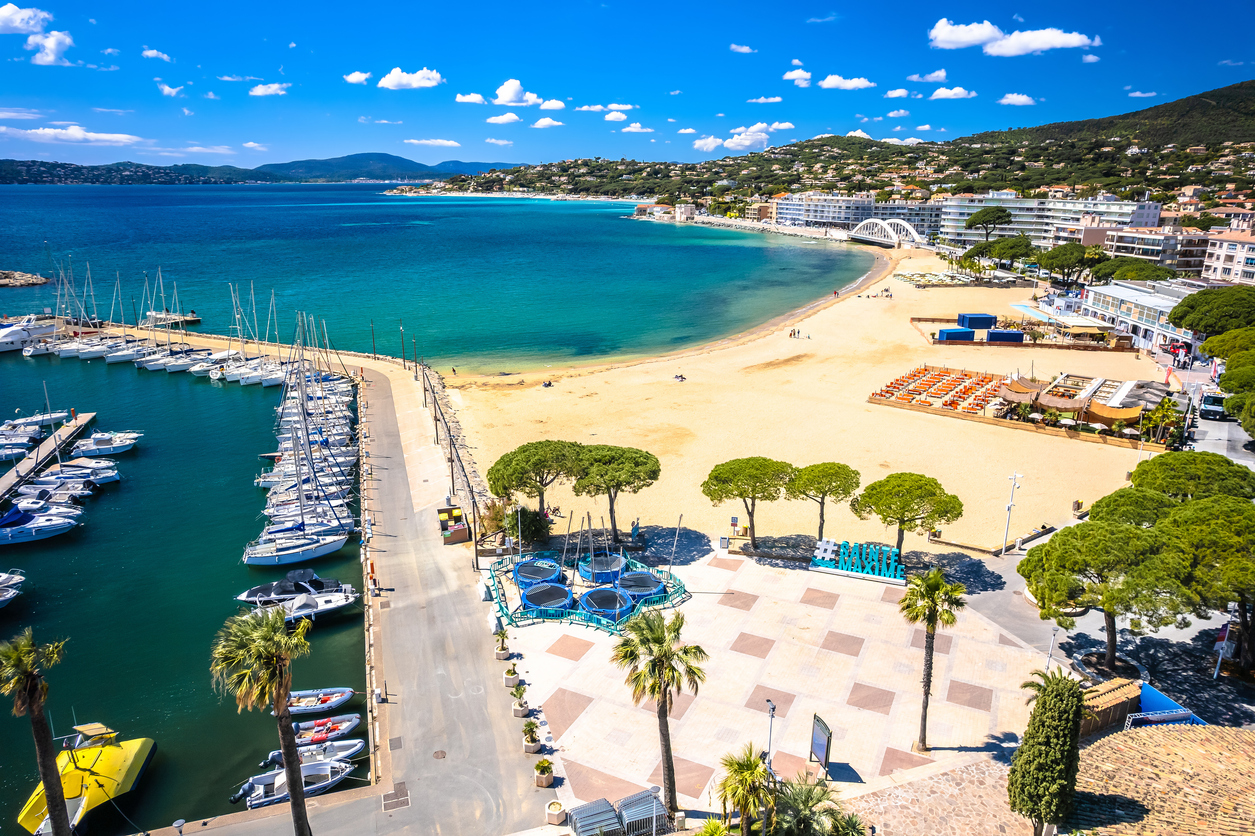
Best Beaches in the Gulf of Saint-Tropez: From Pampelonne to Hidden Coves
The Gulf of Saint-Tropez on the French Riviera is a natural amphitheatre of beaches: a wide arc running from the pine-framed coves of Sainte-Maxime and Les Issambres to the mythic, five-kilometre sweep of Pampelonne in Ramatuelle, and the wilder capes that shelter crystalline creeks where the sea glows turquoise. This guide moves beach by beach, cove by cove, offering locally grounded advice on where to swim, when to go, and how to enjoy each shoreline at its best.
For a broader overview of the Gulf’s landscapes, villages, and coastal rhythm, you can explore our complete Gulf of Saint-Tropez travel guide.
The Gulf at a Glance: How Wind, Light, and Landscape Shape Each Shore
Understanding the Gulf of Saint-Tropez helps you choose the right beach for the day. The north shore (Sainte-Maxime through Beauvallon and Port Grimaud) faces south, catching lots of sun and, on mistral days, generally calmer water than the open coast. Inside the deep bay of Saint-Tropez itself—around Canebiers and the town’s municipal beaches—the sea can be glassy until late morning. By contrast, the long ribbon of Pampelonne faces southeast into open water, which is why it feels airy, luminous, and sometimes lively with waves when winds turn. Beyond the headlands, the capes of Taillat and Lardier are rugged, protected, and fringed with Posidonia seagrass meadows that keep the water startlingly clear.
If you see banks of dried Posidonia on the sand, that’s a sign of a healthy sea. These natural “banquettes” protect beaches from erosion and are deliberately left in place outside the peak season. It’s all part of a coastline where nature and beach culture have learned to share space—something you feel keenly when you step from a shaded coastal path into a sunlit cove and the sea turns that improbable shade of blue you’ve come for.
Pampelonne, Ramatuelle: Five Kilometres of Myth with Real Nuance
Ask ten locals to define Pampelonne and you’ll get ten different beaches. It’s one long strand, yes—but each sector has its own rhythm, from the dunal quiet near Bonne Terrasse to the famous beach clubs in the centre. The sand is fine and pale nearly everywhere; the entry is generally gentle, which makes it superb for long, lazy swims.
North Pampelonne: Tahiti to Chemin des Moulins
The northern end feels closest to mid-century Saint-Tropez, back when a straw mat and a wicker basket were the height of beach style. The approach roads—Chemin des Moulins and nearby lanes—thread through low, sandy pines. Expect signed municipal parking set back behind the dunes and short footpaths over the sand to the water. On early summer mornings, this is a favourite for locals who swim before breakfast. The light is soft, the breeze is usually tame, and you can often trace the line of the Esterel hills across the gulf.
Central Pampelonne: Beach Clubs and Long Swims
The central stretch, roughly between the Tropézina area and the midpoint near the Club 55 sector, is where “Pampelonne the icon” lives—elegant beach restaurants, shaded sunbeds, a hum of lunch that lasts past four in the afternoon. Yet the public shore still dominates: even in high summer, you can walk five minutes and find plenty of free sand to lay a towel. The shallow shelf remains forgiving for non-swimmers, and on calmer days it’s superb for paddleboards. Mooring zones for boats are pushed well offshore; swimmers get a generous buffer marked by yellow buoys. For lunch, you can picnic in the dunal shade north or south of the busier sections, or wander into one of the beach restaurants for a simple grilled fish and a carafe of rosé—this is still Ramatuelle, where unfussy can be the most luxurious option.
South Pampelonne: Bonne Terrasse to Cap Camarat
Head toward Bonne Terrasse and the scene softens again. The sand may feel a touch coarser in places; the backdrop is more scrub and low dunes, and the soundtrack is waves and wind rather than music. Access roads here—Route de Bonne Terrasse and nearby spurs—end at marked lots tucked behind vegetation. From midsummer onwards, sunset colours are quietly spectacular in this sector, especially when the sea is calm enough to mirror the sky. You’re within walking reach of Cap Camarat’s lighthouse by coastal path, but it’s a longer, hot hike—carry water and a hat. In this sector, you’ll sometimes see signage for designated naturist stretches; respect the posted limits and keep cameras away.
Pampelonne Practicalities: Access, Parking, and Etiquette
Municipal parking areas run along the back of Pampelonne, signposted from the D93. In high season, arrive early—by 9:30 if you can—to avoid long walks from the overflow. Payment machines typically accept coins and often cards; a few lots still prefer coins, so keep some change handy. Behind the beach, wooden walkways protect dunes: please use them. Lifeguard posts operate daily in peak season, and flagged zones indicate supervised swimming. Anchoring is restricted to protect seagrass; if you’re arriving by boat, use designated mooring fields or keep off Posidonia beds. Dogs are seasonal: off-season is more permissive; summer rules vary by sector—check local signage from the mairie. And wherever you settle, pack out every scrap, even fruit peels; foxes and gulls quickly learn bad habits.
L’Escalet to Cap Taillat: The Turquoise Trail
South of Pampelonne, the landscape turns wild. L’Escalet is the classic stepping-off point: a small, pebbly-sand mix beach wedged between rocky fingers with water so clear you can count sea urchin spines from the shore. From here, the sentier du littoral (coastal path) runs south across coves and low headlands to the isthmus of Cap Taillat—a narrow neck of dunes strung between twin seas. When the Levant wind stirs, one side is ruffled while the other stays calm; on still mornings, both are glass.
Snorkelling and Paddleboard Notes
Bring a mask: near-shore rocks host sea bream, wrasse, and big, docile salema swarms. You’ll often find damselfish hovering over Posidonia meadows just beyond chest depth. Footwear helps on rocky entries, and a simple shirt or rash guard saves your back during long swims. Paddleboards are superb here when the sea is flat; launch at first light before boat traffic builds and hug the coast. Keep clear of fishermen casting off the rocks at dawn—locals are friendly if you give them space.
Hiking Timing and Heat Strategy
The walk from L’Escalet to Cap Taillat is 25–40 minutes depending on heat and photo stops; continue another 35–45 to Briande Beach and, beyond, toward Cap Lardier if you’re feeling adventurous. There’s little shade: start early, pack at least one litre of water per person, and in midsummer bring a light scarf or hat. After winter or spring storms, access points shift as dunes naturally move; respect temporary diversions. Do not shortcut across the grassed dunes—those are living, fragile systems that hold the coastline together.
Saint-Tropez Village Beaches: Swim Within History
In-town beaches in Saint-Tropez are about atmosphere as much as sand. Mornings carry the hush of fishermen’s footsteps around the Vieux Port; by late afternoon, everything glows with a painter’s light. The scale is small: coves tucked between ochre walls, backed by umbrella pines and gentler paths.
Plage des Graniers: A Citadel Swim
Just around the headland from the harbour and beneath the hilltop citadel, Graniers is an intimate cove with soft sand underfoot and a cobbled lane approach. Park up by the cemetery or in town and walk—spaces are limited. Go at breakfast time: locals do a quick dip, then a coffee on the way back. By midday, the sun sits almost overhead and the sea turns luminous. The coastal path hooks onward toward Les Salins; sturdy sandals help.
Baie des Canebiers: The Locals’ Playground
If Tropezians have a family beach, this is it. The Baie des Canebiers is a wide, shallow arc where kids paddle safely and paddleboards dot the horizon. Pine shade is generous, and there’s usually room to spread out even in August if you don’t mind walking a little. Kayaks launch easily; windsurfers sometimes enjoy the afternoon breeze in the outer bay. It feels residential and relaxed, with a strong “Sunday with the cousins” vibe.
Les Salins: Long Sand and a Quiet Edge
At the eastern lip of the gulf, Les Salins stretches out beneath low dunes and scrub. The sand is pale and fine, the water entry gradual. Parking is limited and the approach lanes narrow; patience helps on August weekends. If you’re seeking a long, contemplative walk at the waterline, begin here late afternoon and amble back as the colours shift. Midweek in June or September, you may feel you have the place almost to yourself.
The North Shore: Sainte-Maxime and Les Issambres
Across the bay from Saint-Tropez, the north shore holds a necklace of sandy beaches and rocky points with easy access and family-friendly waters. The light is generous all day; at night, you see the town lights glitter across the bay like a stage set.
Sainte-Maxime: La Nartelle, La Croisette, and La Madrague
Plage de la Nartelle in Sainte-Maxime is the town’s star for waves: on certain mistral days, you’ll get playful rollers perfect for body-surfing and teens with foam boards. The sand is broad, and the gradient allows long wades. Several public stretches lie between beach restaurants—just keep walking to find your spot. Closer to town, La Croisette is handy for a quick swim and a promenade stroll, while La Madrague, a touch east, offers a slightly quieter rhythm with easy parking pockets set back from the RN98. For sunrise swims, any of these feel private until the boulangeries open.
Les Issambres: Small Calanques and a Natural Point
Les Issambres rewards curiosity. The Calanques de Tardieu thread tiny shingle coves between low rocks; water clarity is excellent and fish dart just offshore. The standout, though, is the Pointe des Sardinaux—sometimes nicknamed the “little Camargue” for its shallow pools and grasses sidling up to the sea. It’s a low, protected promontory with superb snorkelling along the rock fringe and gentle entries for children. Bring a mask, water, and reef-safe sunscreen; mornings are quiet, and by 10:30 you’ll have a soft onshore breeze. San Peïre, the main centre, has an easygoing promenade for ice cream and evening strolls after the beach.
Family Logistics on the North Shore
Parking lies in small clusters along the RN98; keep an eye for shaded lay-bys that lead down short paths. In peak season, an early start pays off; by late morning, consider beaches slightly farther from the main centres to avoid the densest crowds. Many stretches are supervised in July and August; look for lifeguard posts and flag colours. If you want to skip traffic altogether for a day, passenger boats shuttle between Sainte-Maxime and Saint-Tropez regularly in summer—a scenic way to combine a morning swim with lunch in town.
Middle-Gulf Strands: Grimaud and Cogolin by the Water
Between Sainte-Maxime and Saint-Tropez, the shoreline eases into long sandy shelves with views across the water to the peninsula. These beaches favour unhurried swims, family paddles, and days when you just want the sea within arm’s reach of the car.
Beauvallon and Guerrevieille: Calm Water, Big Views
Facing south-southeast, the Beauvallon and Guerrevieille beaches are sunrise gems. Mornings bring some of the calmest water in the gulf; by 9:00 you can glide a paddleboard over water so still you’ll watch your shadow skim the Posidonia below. Access is straightforward, with stretches of public sand alternating with private concessions. The view across to Saint-Tropez and the citadel—especially after a mistral has cleared the air—is the stuff of postcards.
The Long Strands near the Canals
On the flat lands nearer the mouth of the Giscle, long municipal beaches front the canal-threaded district. The sand is forgiving underfoot and child-friendly with a gently shelving entry. Afternoons bring a little more breeze here than in the inner bay; mornings are serene. It’s a convenient option when you want an uncomplicated beach day with a bakery stop nearby.
Marines de Cogolin and the surrounding shoreline
Further east along the inner curve of the gulf, the beaches around the Marines de Cogolin are all about ease: flat paths, parking close by, and shallow shoals for young swimmers. On certain mistral days, experienced kitesurfers may set up in the outer, boat-free zones where space allows, but swimmers should keep to flagged areas and always check local rules. Come in the golden hour, when the sea cools, to stroll the shoreline and watch the peninsula take on evening light.
Beyond the Big Names: Hidden Coves and Lesser-Known Corners
It’s surprising how quickly you can step off the map here. Even in August, the right ten-minute path will land you in a cove with room to exhale. The trick is to think like a local: start early, keep your bag light, and choose a short section of the coastal path to explore.
Briande Beach: A Reward for the Walk
South of Cap Taillat, Briande is a long, lovely strand tucked between rocky points. Reaching it takes a 30–45 minute coastal walk from L’Escalet or about the same from the Gigaro side. Sand alternates with small, smooth pebbles; the water clarity is top-tier, and you’ll often share the place with hikers and swimmers rather than day-trippers. There are no facilities—pack what you need and carry every bit of it back out.
Between Rocks and Pines: Pocket Beaches You’ll Remember
Thread the path between L’Escalet and Cap Taillat and small, unnamed coves open like invitations: a two-towel shelf of sand on one side; a tiny, sheltered pool perfect for little snorkellers on the other. On the opposite shore, the Pointe des Sardinaux and the rocky nibs around the Calanques de Tardieu give similar pleasures in miniature. A simple guideline: if you glimpse three beach umbrellas from the path, walk five more minutes—you’ll usually find a quieter pocket just ahead.
Where to Eat by the Water: A Few Well-Loved Tables
Beach days in the gulf pair naturally with long lunches and simple, sea-breezy dinners. A few places have that “we’ll remember this in February” quality without fuss. Along Pampelonne, institutions like Club 55 continue to serve straightforward grilled fish and summer vegetables with a light hand; Cabane Bambou keeps an easygoing rhythm at the sand’s edge; and Les Palmiers blends shade, sea views, and a relaxed soundtrack that doesn’t overpower conversation. On the Saint-Tropez side, the restaurant at Les Salins is a favourite for late lunches after a long swim—unpretentious, generous, and candlelit by evening. In Sainte-Maxime, Barco Beach and Le Prao Plage are reliable for toes-in-sand simplicity and a chilled glass while the kids build sandcastles within view. These are editorial picks; book directly with the venues in high season if you’re set on a particular lunch hour.
Markets, Picnics, and the Joy of Keeping It Simple
The gulf is built for picnics. On Tuesdays and Saturdays, the Place des Lices market in Saint-Tropez overflows with tomatoes that smell like sun, rustic fougasse, olives marinated with local thyme, and goat cheeses wrapped in chestnut leaves. Ramatuelle’s village market brings similar bounty on summer mornings, and Sainte-Maxime’s daily market along the promenade offers fruit at its peak. Pack it into a soft cooler, add a chilled bottle from a local vineyard, and find your shade on the dunes above Pampelonne or under the pines at Canebiers. Leave nothing behind but footprints—and remember that gulls are ingenious: keep food covered and never feed wildlife.
Choosing Your Beach by Wind, Tide, and Time of Day
A gulf day can be tuned like a sail. If the mistral (northwest) is blowing, favour the inner gulf—Canebiers, the town coves, or the north shore from Sainte-Maxime to Grimaud—where the land mass breaks the fetch and the sea stays calmer. On a light easterly (levant), Pampelonne often lies smooth as silk early, with the first ripples brushing the sand by midday; the capes can be sublime on the leeward side. Without wind, sunrise is universally magic: glass water at Beauvallon, silent paddles from L’Escalet, and empty sand even at Pampelonne. For long, warm swims, aim late morning into early afternoon when the sea settles into its daily rhythm. If you love photography, the hour before sunset around Bonne Terrasse or Canebiers paints the gulf in rose and gold.
Safety, Sea Life, and Local Etiquette
The gulf is friendly water, but common-sense rules apply. Swim within flagged zones when they’re present and heed lifeguards. On rocky entries (L’Escalet, the calanques), wear lightweight water shoes. Sea urchins live on the rocks—take your time stepping in, and you’ll avoid them easily. Jellyfish are occasional summer visitors: if you see locals wading in slowly and scanning, do the same; ask at lifeguard posts if a bloom has been reported. Boats keep to marked channels; swimmers should never venture into those corridors. Drones are widely restricted; if you’re unsure, leave it in your bag.
Protecting the coast is part of the bargain here. The ridges behind many beaches are living dunes—keep to boardwalks, never trample vegetation, and don’t pluck sea lavender or other coastal plants. Posidonia leaves on the shore are not “seaweed to clear” but part of a vital habitat. Smokers: carry a pocket ashtray; even one cigarette butt leaves plastic fibres. And if you picnic, leave your spot cleaner than you found it; a spare bag tucked into your tote makes that effortless.
Getting Around the Gulf Without a Car
In high season, the water is often the best road. Passenger boats run frequent routes between Sainte-Maxime and Saint-Tropez; in peak months they’re quicker than driving, and the view coming into the Vieux Port is a lifetime memory. From popular beaches, coastal paths stitch together long sections of walkable shore—especially from Saint-Tropez via Graniers to Les Salins, and around L’Escalet to Cap Taillat. Short taxi hops link trailheads; some communes also run seasonal shuttles to key beaches. Pack a light day bag and good sandals, and you can string together a day of swims without ever buckling a seatbelt.
Season by Season: When the Gulf Feels Most Itself
May and June are luminous: wildflowers still cling to the coastal tracks, the sea rises quickly through the teens into low-20s Celsius, and long stretches of sand are quiet midweek. July and August are celebratory—busy, yes, but with the upside of fully serviced beaches, lifeguards on duty, and the social hum of summer. Aim early mornings and late afternoons for space and softened light. September is arguably perfect: warm sea, eased crowds, and a softer sun. October keeps delivering stolen swims, especially on still days after the first autumn blow has cleaned the air.
Mini-Itineraries: Tailoring a Perfect Beach Day
For Families with Small Children
Morning paddle at Baie des Canebiers (easy, shallow, shady), picnic under the pines, then a nap drive to Beauvallon or Guerrevieille for an afternoon float. If there’s a light mistral, swap in Sainte-Maxime’s La Nartelle for playful ankle-high waves and a sandy castle-building backdrop.
For Snorkellers and Sea-Gazers
Start at L’Escalet with a mask and light shoes; follow the rocks south for fish life in the first few metres. Lunch on the sand at Cap Taillat, then nap on the leeward side. If you have energy for a second swim, the outer rocks at Pointe des Sardinaux in Les Issambres give late-afternoon clarity and orange glow on the sea.
For Walkers Who Want a Swim at Every Turn
Park near the Saint-Tropez cemetery, stroll to Plage des Graniers for a first dip, then walk the littoral path toward Les Salins. The coast unfolds in pocket coves and slips of sand; swim when the mood strikes, and reward yourself with a simple seaside lunch before looping back by the quiet lanes above the shore.
How This Guide Was Compiled
We’ve blended field notes from multiple seasons with conversations with lifeguards, local sailors, and long-time residents, plus on-the-ground checks by the AzurSelect team to confirm access, seasonal rhythms, and those little details—where the morning shade lingers, which paths erode after a storm—that make a difference on the day.
Beach Club Culture, Lightly
Part of Pampelonne’s allure is the lunch ritual. A few addresses—Club 55, Les Palmiers, Cabane Bambou, Indie Beach, Jardin Tropézina—keep the spirit of the strand alive: sand underfoot, honest grills, and service that understands people come here to relax, not perform. If you want that “table in the sand” experience, call ahead in July and August, or plan a late lunch after 3 pm when the first wave eases. Elsewhere around the gulf, beachfront restaurants typically take walk-ins off-peak, especially in shoulder season. Dress codes are casual but considerate; sandy feet are fine, full swimsuits at the table less so.
Photography and Quiet Corners for the Golden Hour
For soft dawn light, Beauvallon’s curve facing the peninsula is reliable, with still water and the citadel catching first sun. Pampelonne’s northern third is lovely at sunrise too, with the low dune grasses lit like wheat. At sunset, Canebiers and the Bonne Terrasse sector give warm hues across unbroken horizons; from the rocks near L’Escalet, you’ll catch the last glow along the capes. Keep tripods low on the path or rock shelves—never in the dunes—and be discreet around bathers.
What to Pack for an Effortless Beach Day
- Lightweight shade: a compact umbrella or beach tent, especially for the capes
- Reef-safe sunscreen and a long-sleeve top for long swims
- Water shoes for rocky entries at L’Escalet and the calanques
- Two trash bags: one for recycling, one for everything else
- Small change for parking meters in older lots
- A soft cooler with plenty of water; add a frozen bottle to double as an ice pack
- A scarf or hat: the mistral can feel cool even under strong sun
- Mask and snorkel: fish life is close to shore almost everywhere
Final Thoughts: Finding Your Own Rhythm on the Gulf
The Gulf of Saint-Tropez is a coastline of choices. Some days call for the broad canvas of Pampelonne, where the horizon invites long swims and long lunches. Others belong to the small discoveries: the tide pool on the Sardinaux that delights a child, the pine shadow at Canebiers that lengthens just when you need it, the cove off the path to Cap Taillat where you slip into water so clear it seems to erase the distance to the seabed. Pick your direction by wind and mood, start early, walk a little farther than the crowd, and the gulf will repay you in quiet moments you’ll carry home.
Exploring the French Riviera? View all our holiday villas on the Côte d’Azur.

