

 EN
 NL
 DE
 FR

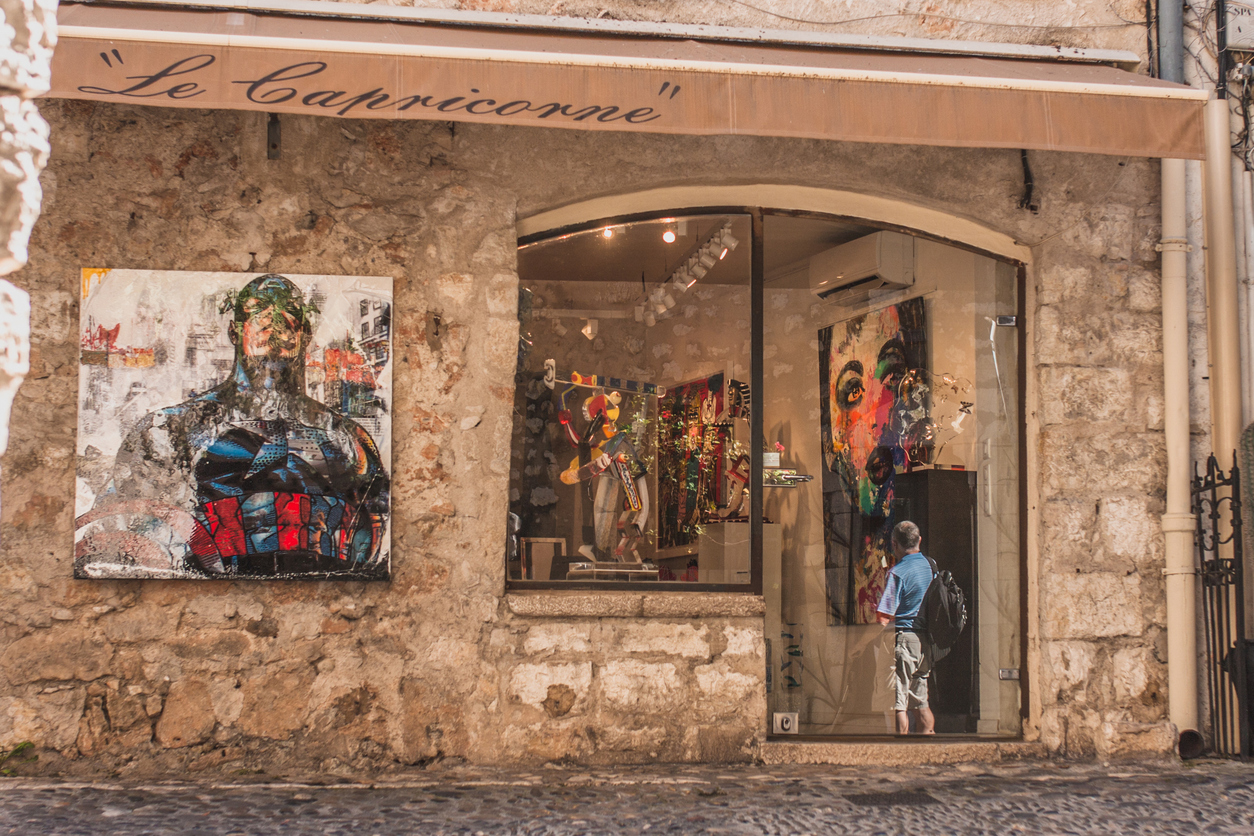
Art Galleries in Saint-Paul-de-Vence: Creativity on the French Riviera
It only takes a few steps along the cobbles of Rue Grande to understand why Saint‑Paul‑de‑Vence has long been a magnet for artists and collectors. Sunlight pours through stone archways, splashing across canvases in gallery windows; a bronze catches the breeze in a shaded courtyard; beyond the ramparts, the Baou de Saint‑Jeannet rises like a stage backdrop. Inside the walls, the village is compact yet dense with creative energy—home to a remarkable concentration of galleries, ateliers, and cultural spaces that reward slow, attentive wandering. Whether you collect, browse with curiosity, or simply love to see how art and place speak to one another, Saint‑Paul‑de‑Vence offers an unusually intimate way to experience creativity on the French Riviera.
To discover more cultural highlights, villages and destinations across the region, explore our Côte d’Azur travel guide.
Why This Hilltop Village Became an Art Haven
Saint‑Paul‑de‑Vence’s art story is as much about geography and light as it is about patronage. The ramparts, completed in the 16th century under François I, cradle a village of narrow lanes whose warm stone reflects a golden hue in late afternoon—a quality painters have pursued since the 1920s. In the 20th century, the area’s gentle climate, affordable ateliers (then), and proximity to Nice and Antibes coaxed artists to linger. Here, bohemian conviviality met serious artistic ambition: conversations stretched from ateliers to café terraces, and friendships formed between painters, sculptors, poets, and gallery owners. The result is a village that wears its creative legacy without pretense; step out of a gallery and you are never more than a few meters from a view that explains why the work was made here in the first place.
The 1960s saw a decisive shift with the opening of a major foundation just outside the walls, which established Saint‑Paul‑de‑Vence as a destination for world‑class exhibitions. At the same time, gallerists with a keen eye for contemporary movements staked their claim along Rue Grande and on the slopes below the village. Decades later, that blend of internationally known institutions and small, owner‑run galleries remains the village’s quiet superpower.
Orientation: How to Read the Village for Art
The heart of Saint‑Paul‑de‑Vence is essentially a long stone spindle. Enter through the northern gate beside the pétanque square and you are funneled onto Rue Grande, the main artery, which runs south toward the cemetery. Galleries cluster along this spine and spill into side lanes—look for discreet signs leading to vaulted rooms, mezzanines, and tiny courtyards where sculptures bask in pale light. On busy days, it pays to dip off the main thoroughfare: some of the most rewarding finds hide down quiet passages or behind unassuming wooden doors.
If you have limited time, make two passes. The first is a relaxed drift along Rue Grande to note spaces you want to revisit. The second is targeted: loop back to the ones that drew you in, and then wander the ramparts walkway for an airy counterpoint of views. Comfortable shoes matter; the village cobbles are set on edge in pleasing patterns and can be polished smooth by centuries of footsteps. Most galleries open late morning, close for lunch, and reopen in mid‑afternoon, with extended summer hours. If you can, aim for the first hour after opening or late afternoon when the light softens and conversations with gallerists can stretch without hurry.
The Village’s Signature Cultural Institution: Fondation Maeght
Follow the road that rises through the pines northwest of the ramparts and you reach the Fondation Maeght, a modern art foundation whose low‑slung architecture seems to perch on air. It is not a gallery per se but an essential axis for understanding the creative gravity of Saint‑Paul‑de‑Vence. Designed by Josep Lluís Sert and inaugurated in 1964, the foundation’s spaces were tailored to the art they hold—courtyards bleed into galleries, and a sun‑brushed terrace yields to the famed Miró Labyrinth, a playful constellation of sculptures and ceramics that feels both whimsical and monumental.
Time moves differently here. Plan for at least two hours to take in the permanent collection and any temporary exhibitions, and to pause in the sculpture garden where pines release their resin scent in warm weather. Because the foundation sits just outside the village, many visitors weave it into a longer art day: a morning at Maeght, lunch back within the walls, and an unhurried afternoon of gallery‑hopping. If you’re traveling with children or art‑curious newcomers, the labyrinth is a particularly good bridge—its tactile, outdoor energy lowers the threshold for engagement and primes the eye for the subtler work you’ll see later on Rue Grande.
Chapelle des Pénitents Blancs (Folon Chapel): Color, Light, and Quiet
Tucked within the village fabric is a small sanctuary that rewards attention: the Chapelle des Pénitents Blancs, sometimes called the Folon Chapel after Belgian artist Jean‑Michel Folon, who reimagined its interior. Mosaics, stained glass, and soft murals create a contemplative glow that feels in dialogue with the village’s blue skies and pale stones. It’s a rare chance to see how contemporary vision can inhabit sacred space without brashness. Slip in between gallery visits; the hush recalibrates the senses and makes the next painting or sculpture feel more vivid.
Galleries You Should Know Along Rue Grande and Beyond
Saint‑Paul‑de‑Vence’s gallery mix is eclectic: established names with international programs live shoulder‑to‑shoulder with tight‑curated spaces championing a single medium or a handful of artists. Expect contemporary painting and sculpture, of course, but also photography, ceramics, and work that crosses categories. The joy lies in the elasticity of the scene—one doorway brings you face‑to‑face with a monumental bronze, the next with a single graphite drawing hung with quiet conviction.
Guy Pieters Gallery: Dialogues with Big Ideas
Among the best‑known names in the village, Guy Pieters Gallery tends to present artists whose work courts the public square as confidently as the white cube. Think large‑scale sculpture, conceptual statements, and a curatorial program that reads like a conversation with art history. Step in even if you imagine the work may be beyond your budget; the staff is adept at placing bold works in a local context and introducing smaller, editioned pieces that hold their own.
Galerie Catherine Issert: A Pure Contemporary Thread
This gallery has a refined sensibility that rewards repeat visits. Exhibitions often tilt toward rigorous, idea‑driven contemporary practices—works that interrogate process, repetition, and material. Expect the unexpected: a wall where rhythm does the speaking, or a room arranged to slow your steps. If you are building a collection with an eye for conceptual clarity, it is worth making time for a full conversation here; gallerists are generous with context and catalogs, and they remember returning visitors.
Bogena Galerie: European Voices, Attuned to Place
Bogena balances European and international artists with a sensitivity to scale and light that makes the gallery’s rooms feel especially at home in Saint‑Paul‑de‑Vence. Sculpture and painting share the stage; a bronze might hold the far corner while color fields invite a closer read. If you are pairing a piece with an airy Riviera interior, the staff’s instinct for proportion is particularly helpful.
Photography and Works on Paper: Small Rooms, Big Focus
Several intimate spaces specialize in photography or drawings—quiet rooms where the hum of the street drops away and you are left with silver‑gelatin tones or the grain of a pencil line. These galleries can be ideal for first acquisitions: prices are often more approachable, and framing advice is part of the conversation. Ask how the print process was handled and what editions exist; a single smart question unlocks a trove of insight.
Atelier Culture: Meeting the Maker
Beyond polished galleries, Saint‑Paul‑de‑Vence has ateliers where you can meet artists at work. Look for signs that simply say “Atelier” with an arrow pointing into a vaulted cellar or a sunlit back room. Here, ceramics dry on a shelf beside brushes; a painter wipes color from a palette before greeting you. These visits can demystify the making process and are a good space to commission a small work or enquire about studies that led to a larger piece you admired elsewhere. The etiquette is simple: step in, say bonjour, and let the artist set the pace. If they are in the flow, a nod and a slow browse may be your best move; if they look up with a smile, you have an opening to ask about technique or materials.
How to Structure a Gallery Day
While the village is compact, pacing makes all the difference. A satisfying day balances focused looking with time to let impressions settle.
A Morning of Fresh Eyes
Begin at the northern gate and drift down Rue Grande while the streets are still quiet. Note the exhibitions you want to return to, then pivot toward one or two anchor galleries for longer conversations. If the day is clear, step out onto the ramparts for a visual reset; the view toward the Mediterranean and the Esterel hills weaves itself into what you’ve seen inside.
Lunch and a Reset
Choose a spot on a shaded terrace within the walls or near the pétanque square and let the midday hours play out. It’s common for galleries to close around lunch and reopen later, so use the break to jot notes about artists, titles, and prices. If you like pairing art with wine, a local cave can suggest a bottle made on neighboring slopes—the kind of detail that makes a memory tactile when you’re back home.
Late‑Afternoon Depth
Return to your top three spaces with specific questions. Ask about back‑room works, artist catalogues, or viewing a piece in different light. Late afternoon is also a gentle time to visit the chapel; its cool interior recharges the eye. If it’s summer, check whether any vernissages (opening nights) are planned; Friday evenings often hum with soft clinking glasses and relaxed conversation.
Buying Art in Saint‑Paul‑de‑Vence: Practical Notes
If you fall in love with a work, the practicalities are straightforward with a few French particulars worth knowing.
- Provenance and documentation: Ask for a certificate of authenticity, details on editions (if relevant), and exhibition history. Good galleries volunteer this, but a clear request ensures your records are complete.
- Pricing and deposits: Prices are typically displayed or provided on request. If you need time to decide, a short reservation with a deposit is sometimes possible; agree the terms in writing.
- Payment: Credit card and bank transfer are standard. For higher amounts, galleries often prefer wire transfers; ask about any bank fees.
- VAT and export: France applies a reduced VAT rate to original artworks in many cases; specifics vary by seller status and margin regime. If you’re exporting outside the EU, galleries can advise on paperwork and, in some cases, VAT recovery or zero‑rating for export.
- Shipping: Most galleries work regularly with fine‑art shippers who can pack, insure, and deliver worldwide. Clarify lead time, crating standards, and insurance coverage. Air‑freight can be surprisingly swift off‑season, while summer schedules may extend timelines.
- Framing and conservation: Sunlit rooms are part of Riviera life. If your piece is light‑sensitive, ask about UV‑filter glazing and safe hanging distances from windows. For sculpture, request installation tips and hardware guidance.
- Customs and permits: Contemporary pieces usually travel without special permits. For older works or those above certain value thresholds, an export license may be required. Reputable galleries will flag this in advance.
Above all, be open about your space, lifestyle, and why a work speaks to you. The right gallerist responds not only with inventory but with context—introducing studies, related works, or even artist visits during future trips that can deepen the relationship between you and the piece you choose.
Seasonal Rhythms: When the Village Breathes Differently
Each season tunes the village’s art experience in a distinct key. Spring unfurls with new shows and bright mornings where pines smell alive after rain. Summer brings late openings, street musicians, and a social buzz that flows around gallery doorways in the cool of evening. Autumn is a collector’s season—quieter lanes, longer conversations, and a golden light that flatters stone and canvas alike. Winter? It’s for those who love intimacy: a few galleries might rotate hours, but the ones that are open feel almost private, and the surrounding hills can look crisp and blue against clear skies.
Keep an eye on exhibition calendars posted on gallery doors. Many spaces align show openings, creating informal mini‑festivals of art that ripple along Rue Grande—uncrowded chances to meet artists and hear the stories behind the work.
For Families and First‑Time Gallery‑Goers
Saint‑Paul‑de‑Vence is surprisingly welcoming to families. Consider giving children a simple “treasure map” of shapes and colors to spot: a red circle, a bronze animal, a painting with more than five shades of blue. Short, focused visits with fresh air breaks on the ramparts help everyone keep their energy. If you carry a small sketchbook, invite quick, two‑minute drawings of a favorite detail in each gallery. At the foundation, the outdoor labyrinth is an easy on‑ramp; inside the village, sculpture‑friendly courtyards also ease the shift from street to art.
Polite, Confident Gallery Etiquette
The village’s galleries are personal spaces—often owner‑run, with the gallerist close enough to hear your shoes on the stone. A few small courtesies make the experience smoother for everyone:
- Greet first. A simple bonjour opens doors—literally and conversationally.
- Ask before photographing. Policy varies, and a quick request reads as respect.
- Mind bags and sunglasses. Keep them close and resist leaning toward canvases.
- Go slow. A room that feels sparse often carries the heaviest curatorial intention; give it time.
- Invite conversation. “What drew you to this artist?” is a generous opener that suits any space.
Most gallerists here love what they do and enjoy guiding curious visitors. If a piece calls to you, say so; if you’re just browsing, say that too—clarity helps everyone relax into the visit.
Where to Pause Between Galleries
Art days benefit from well‑chosen breaks. Within the walls, the terrace at Le Tilleul, shaded by the namesake linden tree, is a long‑time stop for a late‑morning coffee or an early evening glass of rosé. By the northern gate, the café beside the pétanque square offers ringside seats to the village’s favorite pastime—watching a match with a cool drink after a circuit of galleries is a nearly perfect Saint‑Paul moment. If you enjoy wine, a tucked‑away cave in the village core stocks regional bottles and happily recommends small‑production cuvées you’re unlikely to spot elsewhere. For a sensory detour, the boutique of a historic perfumery in the village translates Riviera botanicals into fragrance—another way to carry the place home without adding weight to your suitcase.
A Pair of Itineraries: Half‑Day and Full‑Day
Half‑Day: The Concentrated Stroll
Start at the northern gate just after galleries open. Make a brisk initial pass along Rue Grande, noting three spaces that pull you in. Loop back to those, giving 20–30 minutes each for conversation and close looking. Detour to the Folon Chapel for a reset. Finish with a quiet walk along the western ramparts toward the cemetery; the view gathers the day into a single, abiding image.
Full‑Day: The Layered Immersion
Morning: Head first to the Fondation Maeght for the exhibitions and the Miró Labyrinth while the air is cool and the pine shade is fragrant. Return to the village for a leisurely lunch, then begin a slow promenade down Rue Grande with a shortlist of galleries to revisit.
Afternoon: Spend substantive time in one anchor gallery known for contemporary programming, then seek an atelier visit—ask for recommendations if you don’t see “Atelier” signs. Build in a mid‑afternoon café pause by the pétanque square. As the light warms, target sculpture‑forward spaces and rooms with photography to let your eyes shift scale and medium.
Evening (summer): If openings are on, float between them, choosing conversation over coverage. Saint‑Paul‑de‑Vence is small enough that serendipity does half the curation for you—show up, stay curious, and let the evening find its rhythm.
Quiet Corners and Viewpoints Artists Love
The village is stitched with small vantage points that can change how you see the work you’ve just encountered. Two minutes off Rue Grande, many lanes end in stone parapets with long views toward the Mediterranean or back to the wooded hills. The southern tip near the cemetery is a contemplative spot—sunlit yet somehow hushed—where you can sit and let color from a recent canvas stir against the natural palette of olive leaves and limestone. Early evening on the north ramparts can be luminous; the last light slants along the village wall, gilding even the most pared‑back works with a residual glow in memory.
When Weather or Crowds Nudge You Indoors
Summer afternoons can be bright and lively; winter sometimes brings bracing winds over the hilltops. On such days, lean into the cosiness of Saint‑Paul‑de‑Vence’s vaulted interiors. Choose a cluster of galleries within a few doors of each other and make a mini‑circuit. Ask for catalogues and sit a moment to leaf through them; it’s not unusual for a gallerist here to bring out a back‑room piece or a portfolio once they sense your genuine interest. If rain dots the cobbles, the village becomes especially photogenic between doorways—glossy stones, deeper shadows, and a quiet that pairs well with concentrated looking.
Photography Tips Without Being “That” Visitor
It’s tempting to photograph everything, but the best images here tend to be the ones that understand the village as a collaborator, not a backdrop. A few suggestions:
- Step back from facades. Frame gallery windows with a slice of archway or cobblestone to signal place, not just object.
- Wait for the pause. Early morning and late afternoon gift you with soft light; the lull just after lunch can be lovely in winter.
- Ask before shooting inside. Policy varies; a quick, polite request often opens the door to a better angle and maybe even a story.
- Don’t forget details. Door latches, worn thresholds, and hand‑painted gallery placards say “Saint‑Paul‑de‑Vence” without a single wide shot.
Materials and Making: What Feels Native Here
Artists in and around the village often work with materials that echo the landscape: limestone‑toned clays, patinated bronzes that pick up the green of olive leaves, pigments that sit between sea and sky. If you’re drawn to pieces that feel “of the place,” ask about the material’s origin and finishing. A small ceramic fired to a soft, chalky white or a bronze whose patina carries a trace of olive or pine can translate the village’s light into an object you can live with. The conversation about material is also a good way to find emerging makers who prize craft as much as concept.
Insider Habits That Make the Most of the Scene
Locals and long‑time visitors share a handful of quiet habits that keep the experience rich:
- Arrive with one curiosity. Not “What’s good?” but “Who here is thinking about light as material?” or “Show me work on paper that lives large.”
- Revisit the same gallery over years. Relationships yield early notice of shows and a deeper understanding of the artists they champion.
- Carry a slim notebook. Titles, years, and a quick sketch help memory beat the camera roll every time.
- When in doubt, step outside. Two minutes on the ramparts before returning to a room can shift a work from “nice” to “necessary.”
A Note on Time: Let the Village Set the Pace
Part of Saint‑Paul‑de‑Vence’s charm is its refusal to rush. Galleries here favor the steady hum of discovery over spectacle. You’ll find that a day drifts, and the best conversations often arrive on the second pass. That’s the moment to ask to see the back room, to handle a small sculpture, to look at a piece in a different light near the doorway. You are never far from a café or a low stone wall for a pause, and the next door is always close enough to make curiosity easy.
Leaving With More Than a Purchase
Whether you buy or not, you leave Saint‑Paul‑de‑Vence with a recalibrated eye. The village makes a gentle case for living with art—a pitch delivered by late light on carved stone, by a bronze that holds a courtyard quietly, by the way a line of blue on paper suddenly rhymes with the sky over the Baou. If your suitcase carries nothing more than a few postcards, a folded catalogue, and a memory of a conversation in a small room on Rue Grande, you will still have taken something essential with you.
Looking for the perfect base to explore Saint-Paul-de-Vence, its galleries and the cultural treasures of the French Riviera? Discover our holiday villas and holiday homes on the Côte d’Azur.

