

 EN
EN  NL
NL
 DE
DE
 FR
FR

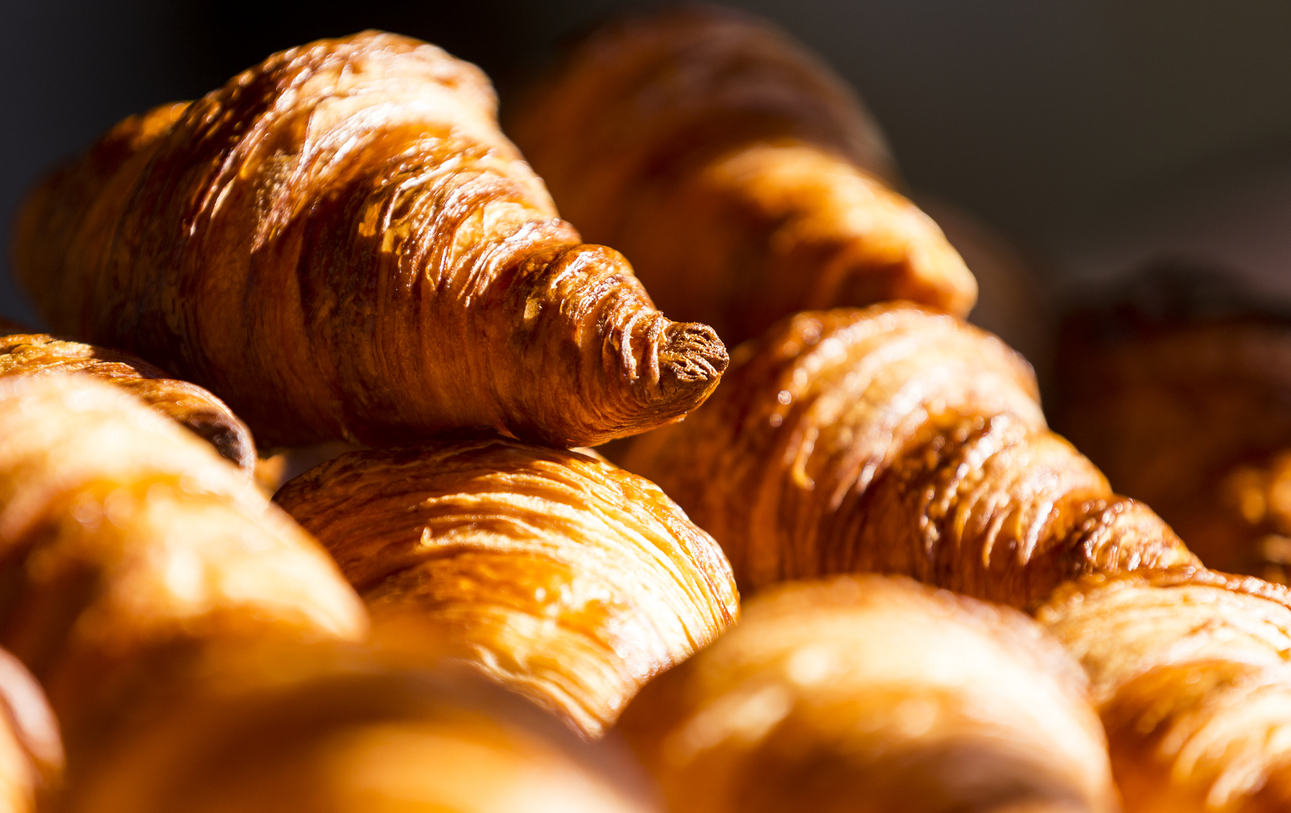
The Art of the Croissant: Craft, Culture and the French Morning Ritual
There is a particular hush to a French morning that lifts the moment a warm paper bag of croissants trades hands across a counter. The perfume of cultured butter, the whisper of shattering layers, the first sip of a short, properly pulled espresso—together they form a ritual that is at once practical and poetic. It is easy to think of the croissant as a simple breakfast, but in France, and especially along the Côte d’Azur where mornings often begin outdoors, it is a conversation between craftsmanship and culture, between technique and terroir. From the lamination bench at 3 a.m. to a café saucer at 8:30, the journey of a great croissant illuminates the whole ecosystem of French gastronomy: mills, dairies, markets, bakeries, and the people who wake early to keep the ritual alive.
For a wider view of the markets, cafés, villages and local traditions that shape daily life on the Riviera, explore our complete Côte d’Azur guide.
A Crescent of History: From Kipferl to Café Counter
The croissant’s roots are often traced to the Austrian kipferl—denser, crescent-shaped pastries that predate France’s layered marvel. The French interpretation took shape in the 19th century as bakers began enriching yeasted dough with butter and, eventually, laminating it to create the delicate honeycomb crumb (alveoli) and gossamer-thin sheets that define today’s croissant. By the early 20th century, with advances in milling and the rise of Parisian café culture, the croissant had become the morning emblem of modern France.
Yet the “French croissant” is not monolithic. In the north, bakers often privilege deeper caramelization and a slightly bolder bake that stands up to cooler weather and heartier breakfasts. Along the Riviera, where sun and sea shape appetites and temperatures, you may encounter a lighter lamination and a more tender, gently bronzed exterior—still buttery, but calibrated to the warmth of southern mornings and a preference for elegance over heft.
Butter, Flour, Time: The Ingredients Behind a Great Croissant
Three pillars support the croissant: exceptional butter, finely tuned flour, and time managed with almost musical sensitivity. A fine croissant is never over-sweet; it draws flavor from cultured dairy, fermentation, and the Maillard magic of a careful bake. Every choice matters, from the butter’s plasticity at 16–18°C to the flour’s protein profile and ash content. And then there is time: bulk fermentation, resting, and proofing form the pulse of the pastry, guiding texture and taste.
The case for cultured, AOP butter
Ask an experienced baker what makes their croissant sing and you will hear one word first: butter. Cultured butter, ideally bearing a PDO/AOP designation, is prized for both flavor and function. Producers such as Isigny Sainte-Mère (Normandy), Échiré (Deux-Sèvres), and Beillevaire (Pays de la Loire) offer butters whose tang and aroma are built on slow maturation and careful churning. For lamination, plasticity—how the butter bends without breaking—is crucial. A butter that splinters when rolled will create uneven layering; one that smears will seal layers together and stifle lift. On the Riviera, many artisans choose cultured butter with 82% fat, balancing flavor, pliability, and a clean melt that leaves no greasy palate feel.
Choosing the right flour and its impact
French flours are classified by “type” based on mineral content (ash). For croissants, a T45 or T55 with moderate protein helps build structure without veering into chewy bread territory. Mills matter. Artisan bakeries frequently name-check their milling partners because flour is an agricultural product with personality; vintage, grain blend, and milling method affect hydration, elasticity, and aroma. You’ll find respected names like Moulins Viron (Ile-de-France) on many baker benches, while Provence has its own craftspeople—Moulin Pichard in the Alpes-de-Haute-Provence, for example, is known among pâtissiers for thoughtfully milled flours suited to viennoiserie. The right flour allows extensibility in the dough so layers roll out thin, while retaining enough resilience to rise with definition in the oven.
The Lamination Ballet: Technique, Temperature, and Touch
Lamination is a choreography of cold butter and cool dough, folded and rolled into hundreds of micro-layers. The goal is precise: layers thin enough to flake and crackle, yet sturdy enough to rise and hold a crescent shape without collapsing. Temperature is the unsung hero. Work too warm, and butter leaks into the dough, robbing lift; too cold, and butter fractures, causing patchy layers. The sweet spot for both dough and butter is generally in the mid-teens Celsius during the lock-in and the first turns.
Professional bakers on the Riviera are acutely aware of ambient temperature. Summer’s early dawns often feel like late mornings elsewhere, and that affects proofing speed. Many boulangeries roll and shape in the cool dead of night, then proof in controlled cabinets to avoid over-fermentation. That is how a croissant can taste clean and buttery rather than yeasty or heavy by the time you pick it up with your morning paper.
A practical timeline for home bakers
While this is not a recipe, understanding the typical rhythm of croissant-making adds appreciation to your morning bite. A streamlined schedule often looks like this:
- Evening: Mix the détrempe (base dough) with a small amount of yeast; ferment briefly, then chill overnight to relax gluten and develop flavor.
- Early morning: Prepare a butter block. Lock it into the dough and perform two to three “turns” (folds), chilling between turns to maintain definition.
- Late morning: Roll out, cut triangles, and shape crescents with gentle tension.
- Proofing: Allow to rise until jiggly and visibly layered, ideally in a controlled, moderately humid environment.
- Bake: High initial heat for oven spring, then slightly lower to finish the color evenly without leaking butter.
Each pause—resting after mixing, chilling between turns, proofing before the bake—is a flavor and texture investment. Rushing risks gummy crumb; over-proofing leads to butter loss and a greasy feel.
Common mistakes and baker solutions in the Riviera heat
Warm climates conspire against lamination. Typical pitfalls include butter seepage, uneven crumb, and collapsed structure. Solutions used by experienced boulangeries include working in smaller batches, using slightly cooler butter than dough to prevent smearing, and leaning on fermentation control (cooler proofing, careful yeast dosing). Some adopt an inverted lamination method (feuilletage inversé) borrowed from puff pastry for heightened flakiness, though it is more fragile and finicky in summer. The best solution remains timing: start before dawn, finish before the heat arrives, and get those croissants onto counters just as cafés begin to hum.
Morning Rituals on the Côte d’Azur
Along the Riviera, breakfast has a relaxed tempo. Commuters might nab a croissant “à emporter” and eat it en route, but many prefer to sit, read, and watch the light move across a terrace. The sea air sharpens aromas; butter seems sweeter, coffee more fragrant. In this setting, a well-made croissant is not a rushed commodity—it is a first, delicate course of the day.
Ordering like a local: comptoir vs terrasse
Two norms shape your order: where you sit and how you drink. Standing at the counter (au comptoir) is quick and often costs a touch less; terrace seating (en terrasse) invites time and conversation, and prices may reflect that. Ask for “un croissant au beurre,” and you signal preference for the butter-rich version as opposed to the plainer “ordinaire,” though most quality bakeries now specialize in the butter standard. If you want to soak up the view, order a “café” (espresso) or “noisette” (espresso with a spot of milk), and savor the contrast of strong, tight coffee against sweet dairy notes. A local nuance on the Riviera: you will sometimes see orange juice and a croissant served together as a light “petit déjeuner” when the heat makes heavier fare feel out of place.
Coffee and preserves: pairings that respect the pastry
The best pairings spotlight rather than overshadow. Espresso, ristretto, or a clean-filtered brew complements a croissant’s butter complexity. Cafés in Nice often serve Malongo roasts—a hometown coffee icon with bars where baristas pull short, sweet shots designed to meet viennoiserie halfway. Jams and honeys are common at home rather than at cafés; on market days, you might pick up citrus marmalade in Menton style or lavender honey from Provence and enjoy them with plain croissants later. Avoid very dark, bitter spreads that can bulldoze the pastry’s subtle sweetness.
Where to Taste Exemplary Croissants on the Riviera
No two bakeries express the croissant in quite the same way. Here are a few addressable names—each with its own style—that locals often cite when discussing viennoiserie quality along the Côte d’Azur. Note that the focus is on consistent craft rather than theatrics; come early for peak freshness.
In Nice, Maître Pierre on Rue de France has long balanced tradition with Riviera practicality. Its croissants lean toward a tender lamination that flakes cleanly without showering the table, and the bake tends toward golden rather than mahogany—a nod to morning temperatures and open-air breakfasts. Pâtisserie Lac, known for its chocolate work and refined pâtisserie, also turns out croissants with notably delicate layers; their approach tends to feel pastry-chef precise, with crisp exterior and a honeycombed interior that begs for a quick dip in espresso. For coffee pairings, Malongo’s Atelier Barista locations in Nice frame the pastry with well-calibrated extractions and an educational bent toward French coffee heritage.
In Antibes, Boulangerie Veziano near the old town is beloved for its breads and Niçois specialties, but the viennoiserie counter shows equal care. Expect croissants with a defined, lacy crumb and a flavor that speaks clearly of good butter rather than sugar. The old-town setting makes it easy to carry a bag across to the Marché Provençal and snack under the shade of the arcades, a very local pleasure.
Cannes offers pâtissier-driven interpretations. At Jean-Luc Pelé, the pastry team is better known for elegant cakes and chocolates, yet their croissants show a finesse consistent with the brand: controlled lamination, symmetrical crescents, and a polished bake. If you wander up from Marché Forville with a basket of fruit, a still-warm croissant and a coffee nearby make a quietly perfect breakfast before the Croisette wakes fully.
In Saint-Tropez and neighboring Sainte-Maxime, La Tarte Tropézienne is a natural stop. While famous for the cream-filled brioche that bears the town’s name, the bakery’s croissants reflect the same care in proofing and baking, with a supple crumb that pairs well with a strong café. For a harbor-view breakfast, Sénéquier’s terrace in Saint-Tropez is an enduring stage for the morning ritual; their service is brisk early and the pastry basket, croissants included, matches the rhythm of sea-bound life as boats tug at their lines.
These names are not the only ones, of course. Riviera towns are dotted with small, quietly excellent boulangeries where the baker opens at 4 a.m. and sells out by mid-morning. The rule of thumb is simple: if the air smells of cultured butter, if the croissants are not over-glossed or suspiciously uniform, and if locals queue before work, you are close to what you came for.
Markets and Morning Bread Baskets
Markets set the cadence of food culture in southern France, and they inevitably shape your croissant moment. Many of the region’s most enjoyable food experiences can be found in destinations such as Sainte-Maxime, Les Issambres and Grimaud, where markets and cafés remain an important part of daily life. In Nice, the Cours Saleya’s morning bustle makes a fine pre- or post-market stop for a croissant and coffee. In Cannes, Marché Forville gathers growers, fishmongers, and cheesemakers beneath one roof, and it is common to see shoppers pair a still-warm croissant with ripe apricots as an impromptu breakfast. Antibes’ Marché Provençal offers a daily education in seasonality; a paper bag of croissants in one hand and a jar of local flower honey in the other turns a simple morning into a ritual. In Saint-Tropez, the Place des Lices market reinforces the town’s dual identity: glamorous yet grounded in regional produce. Bring a croissant to the square, sit under the plane trees, and the morning unfolds the way it should—unhurried, delicious, and distinctly local.
Regional Nuance: Riviera Lightness vs Northern Richness
France’s culinary geography is always at play. In Paris or Normandy, you might meet a croissant with a darker, crisper shell and a slightly deeper dairy tang—ideal alongside a café crème in chilly weather. On the Côte d’Azur, the best croissants tend to present a gentler bake and a fragrant, almost floral butter note that plays well with sea air and summer mornings. Hydration levels may be nudged to favor tenderness; proofing may be dialed for a suave, feathery crumb rather than a robust crackle. Neither is right or wrong; they reflect regional appetites and climate wisdom. Understanding these differences enhances appreciation, the way a wine lover reads a glass of rosé differently in Ramatuelle than in Reims.
The Almond Afterlife and Other Variations
Not all croissants are destined to be plain. The almond croissant (aux amandes) is often a second-day specialty: yesterday’s plain croissant gets split, filled with almond cream (frangipane), brushed with syrup, topped with almonds, and rebaked. When done with restraint, it is a wonder—caramelized, aromatic, slightly custardy. When over-sweetened, it can bury texture; the best bakeries keep the filling light and perfumed. Pain au chocolat remains a morning staple across the Riviera—here you will rarely hear the southwestern “chocolatine” appellation—while aux raisins (pain suisse) and seasonal viennoiseries appear as the year turns. In late winter, citrus zest may sneak into a special-edition pastry in Menton’s orbit; around Epiphany, galette des rois shares the stage with the croissant for a short, glorious window.
Sourcing Matters: Mills, Dairies and Small Producers
The croissant sits at the intersection of multiple crafts. Flour from independent mills—the likes of Moulins Viron or Provence’s Moulin Pichard—translates grain into workable dough with predictable behavior. Butter from Isigny Sainte-Mère, Échiré, or Beillevaire contributes lactic complexity and silkier lamination. Eggs, when used for enrichment or glazing, benefit from short, transparent supply chains. Even the salt—often fine sea salt from the Atlantic coast—has a gentle role to play. On the Côte d’Azur, some bakers collaborate with regional dairies or select seasonal butters to keep flavor consistent as temperatures swing. The most telling sign is transparency: when a boulangerie proudly names its miller or dairy on the counter card, it signals respect for ingredients and the people behind them.
Sustainability in the Boulangerie
Modern boulangeries face a delicate calculus: rising energy costs for night baking, climate considerations, and the obligation to reduce waste without compromising quality. Many have become savvy about production planning—limiting batches by late morning to avoid leftovers, or transforming unsold croissants into almond versions or bread puddings. Some invest in energy-efficient deck ovens and timing protocols that let residual heat finish batches. Sourcing local or regional flours reduces transport footprints, and composting or food donation programs close loops. For guests, the most sustainable act is also the most delicious one: arrive early, buy fresh, and let the baker’s nightly labor become your morning meal.
Croissant Etiquette and Storage
If you sit down at a café with a bag from a neighboring bakery, order a coffee before you unpack your prize; some cafés welcome outside pastry with a drink order, others prefer you to purchase in-house. If in doubt, ask politely. Eat a croissant warm or at room temperature—never refrigerated, which dulls aromas and toughens texture. If you must reheat, a few minutes in a medium oven revives crispness; microwaves collapse the crumb. Day-two croissants shine with quick oven time and a thin swipe of jam. And if you bring a box to a friend, pick up a few savory items—olive-studded fougasse, a slice of pissaladière—so the table tells a fuller story of the region’s baking culture.
Craft, Yes—But Also Culture
It is tempting to treat croissant appreciation as a checklist—layers, crumb, aroma, color—but doing so misses the point. What the Côte d’Azur reminds you, morning after morning, is that context matters as much as craft. A very good croissant, eaten on a terrace in Antibes with sea breeze and a small coffee, can be great. A great croissant, snatched and hurried down, can feel only good. In between stands the market, the café, and the pace at which the Riviera likes to wake. The ritual is generous; it asks only that you show up early enough, pay attention, and let butter and laminated dough do what they were designed to do: turn the ordinary into something gently extraordinary.
How to Read a Croissant Like a Pro
When you step into a bakery or sit at a bistro table, a quick sensory scan tells you much about what will land on your plate. Consider these cues:
- Aroma: A clean, cultured butter scent without heavy yeastiness or artificial vanilla. If it smells like sugar or margarine, move on.
- Color: Evenly golden to deep blonde with subtle chestnut edges; a tarry dark shell can mask bitterness, while pale suggests under-baking.
- Structure: Visible, fine layers on the exterior; when torn, an open, lacy interior with translucent walls and no gummy streaks.
- Sound: A whispering crackle as you break it; damp silence suggests butter leakage or under-proofing.
- Mouthfeel: A crisp shell that gives way to a tender, slightly elastic crumb; the finish should feel clean, not greasy.
On the Riviera, the best expressions skew to balance: enough shatter to satisfy, enough tenderness to encourage another bite, and a finish that invites coffee rather than demands it.
A Ritual Worth Rising Early For
The croissant, in the end, is a social object disguised as pastry. It organizes the early hours for bakers and eaters alike; it connects the craft of milling, churning, fermenting, and baking to the habit of conversation. Along the Côte d’Azur, where mornings stretch into blue afternoons, this simple crescent becomes an anchor. Whether you favor the tender style of Nice’s pâtissiers, the precision of Cannes’ pastry houses, the village charm of Antibes’ boulangeries, or the harbor-poised trays in Saint-Tropez, you are participating in a ritual that is both distinctly French and warmly universal. Tomorrow morning, set your alarm a shade earlier. Stand at the counter or find a terrace. Order a coffee short and a croissant plain. Let the craft speak, and let the day begin as the French always intended—quietly, beautifully, and with butter.
Dreaming of slow mornings, local markets and life on the Riviera? Discover our holiday villas and holiday homes on the Côte d’Azur.

