

 EN
EN  NL
NL
 DE
DE
 FR
FR

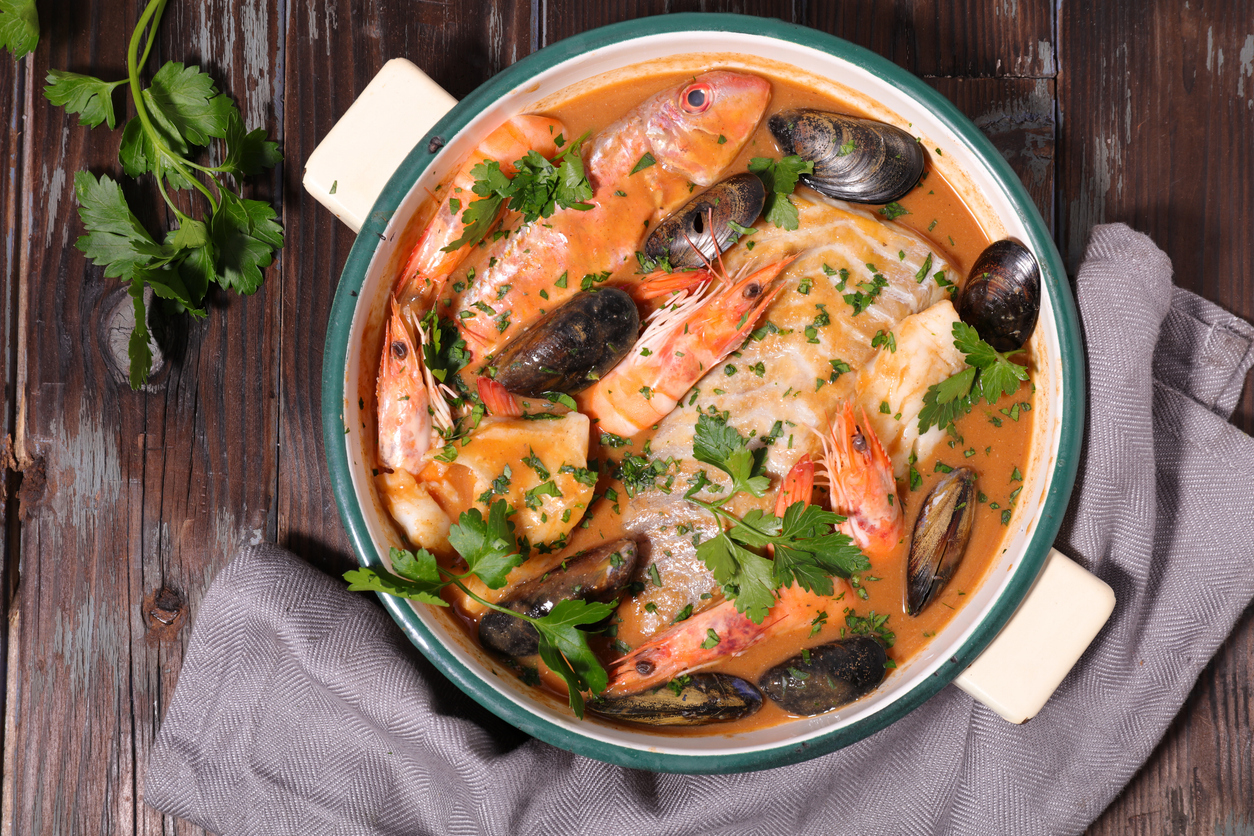
The Art of Bouillabaisse: Tradition and Taste on the Côte d’Azur
Bouillabaisse is more than a recipe; it is a ritual that binds the Mediterranean to the table, a dish whose aroma tells you where you are before the first spoonful. While its roots reach back to Provençal fishing boats, today the Côte d’Azur shapes bouillabaisse in its own image: sunlit, market-driven, and attentive to the natural rhythm of the sea. Along the curve from Menton to Saint-Tropez, you’ll find chefs, fishmongers, and winemakers who see bouillabaisse as a conversation between the morning’s catch and time-tested technique. The pleasure lies not only in the broth’s saffron glow or the silk of rouille spread on crisp croutons, but in the Riviera’s coastal cadence: early markets, unhurried lunches, and the quiet pride of producers whose names rarely reach the menu yet define its flavor.
For a broader feel of how the Riviera’s food culture sits within its architecture and coastal lifestyle, this editorial page on luxury villas in the South of France offers helpful regional context.
From Fishermen’s Stew to Riviera Ritual — A Short History
Historically, bouillabaisse began as a practical way to honor the sea’s less marketable bounty. Rockfish too bony for grilling, conger eel, and gurnard simmered slowly with fennel, orange zest, and tomato. Fishermen ate it on the quay, and over time, bistros on the Mediterranean coast brought the dish indoors, polishing its service without erasing its soul. Marseille codified a “charter” of sorts that emphasized Mediterranean species and a traditional, two-part service. East of Marseille—on the Côte d’Azur proper—the tradition took root in ports where fishermen still unload crates as cafés set their tables: Nice, Villefranche-sur-Mer, Antibes, Cannes, and the Gulf of Saint-Tropez.
As the Riviera developed its own culinary dialect, bouillabaisse stayed true to essentials while leaning into local details. Bellet olive oil from the hills above Nice might perfume the rouille; saffron could be from small Var producers; citrus peel might be added with a lighter hand. The defining thread remains the bond between the dish and the day’s catch. Ask chefs from Nice to Saint-Tropez when their best bouillabaisse appears and you’ll hear the same reply: when the sea says so.
What Makes Bouillabaisse Bouillabaisse?
At its heart, bouillabaisse is an expression of place and process. The broth draws depth from an aromatic base—onion, fennel, garlic, tomato—plus orange zest and Provençal herbs. Fish trimmings and smaller whole rockfish are simmered gently, then sieved to yield a concentrated, saffron-tinged liquid that’s neither murky nor thin. Before service, larger cuts of fish—rascasse (scorpionfish), grondin (gurnard), congre (conger eel), vive (weever), and sometimes saint-pierre (John Dory) or lotte (monkfish) when available—are poached in that broth.
Bouillabaisse’s spirit also lies in its ceremony. The broth arrives first, steaming and vivid, with croutons, rouille, and grated cheese (often Gruyère or Comté, depending on the house). Once you’ve tasted the broth on its own—and with a smear of rouille—the platter of fish follows, expertly deboned and dressed with ladles of the broth. The dish resists shortcuts: a good bouillabaisse balances characterful fish, a lucid broth, and impeccably timed service.
The Fish Counter: Rockfish and Seasonality
The Côte d’Azur’s rocky inlets nurture the very fish that give bouillabaisse its backbone. Look for scorpionfish’s firm, gelatin-rich flesh; gurnard’s sweetness; conger eel’s silk; and weever’s delicate flakes. Monkfish and John Dory appear depending on the day, adding heft and refinement. Fish availability fluctuates with weather, migration, and the prud’homies (ancient local fishing guilds) that help shape sustainable practices along the Riviera.
Because authenticity depends on what the boats bring in, many restaurants prepare bouillabaisse only for two or more guests and ask for advance notice. When a menu reads “selon la pêche” (according to the catch), it’s an invitation to trust the sea’s logic. On calm spring mornings and in early autumn, you’ll often find the widest spectrum of rockfish on Côte d’Azur markets; midsummer brings volume and warmth, but sometimes fewer of the smaller species that define a deeper broth.
Broth, Rouille, and the Ceremony
Beyond fish, three details separate the memorable from the merely good:
- The broth’s clarity and depth: A proper bouillabaisse is neither muddy nor thin, showing a bright, saffron-gold hue with a clean finish.
- Rouille that lifts, not smothers: Traditionally bound with olive oil and bread or potato, rouille should be vibrant with garlic and a flicker of heat.
- A two-service ritual: Broth first, then the fish—deboned at table—returned to the broth so flavors dovetail rather than compete.
Croutons are more than garnish. Toasted slices of local pain de campagne or baguette rubbed with garlic provide texture and a way to savor the broth’s nuances. Many Riviera kitchens prepare their croutons with peppery olive oil from nearby mills, echoing the dish’s ethos: simple ingredients elevated by care.
Markets That Feed the Pot
Every convincing bouillabaisse starts at a stall long before noon. On the Côte d’Azur, market mornings shape menus as much as any recipe card. Walk Cours Saleya in Nice at first light to see fishermen and fishmongers lay out rockfish, gurnard, and eel alongside crates of fennel and tomatoes. The market is most energetic in the mornings from Tuesday to Sunday, with Monday typically devoted to antiques—useful to know if you plan a market-led lunch.
In Antibes, the Marché Provençal near the old town hall bursts into life most mornings, with fish counters flanked by herbs, citrus, and saffron vendors. Talk to fishmongers about what poaches best for broth and what they’d pan-sear instead. Cannes’ Marché Forville is similarly indispensable: you’ll find an array of small rockfish early, especially outside peak heat, and plenty of guidance on how to handle them. Forville’s food stalls are busiest in the mornings, and the rhythm shifts toward flowers and antiques on certain days—another reminder to go early and ask questions.
Menton’s covered market (Les Halles) rewards those who arrive before breakfast with a Mediterranean mosaic: basil, garlic, fennel bulbs, and bright tomatoes next to silvered fish still smelling of salt. Further west in the gulf, Place des Lices in Saint-Tropez hosts a storied market several days a week; while the vibe is glamorous, locals still come for seasonal produce that ends up in bouillabaisse pots from Ramatuelle to Sainte-Maxime. In Sainte-Maxime itself, morning markets in the old town provide all the fundamentals for broth and rouille; in summer, evening markets surface along the seafront, better for browsing than fish buying but excellent for snagging a loaf for your croutons.
Fréjus and Saint-Raphaël bridge the fisherman’s world and the bistro’s: stroll the quays at dawn to meet vendors with day boats, then follow the scent of garlic and saffron into town. Wherever you go, observe this local habit: shop early, ask the fishmonger to reserve specific species, and never hesitate to request advice on bones for broth versus fillets for the platter.
Where to Taste It: Tables Along the Riviera
Restaurants along the Côte d’Azur respect that bouillabaisse is anchored in the catch. Many ask for advance notice (commonly 24 hours) and a minimum of two guests; several offer “royale” versions with lobster or langoustines. What matters most is the chef’s sourcing and the integrity of the two-service ritual. Here are addresses where the dish’s spirit is taken seriously, each with its own accent.
Nice and Villefranche-sur-Mer
On Nice’s port, L’Ane Rouge has long championed seafood with a straightforward, season-driven hand. When the boats cooperate, the kitchen proposes bouillabaisse that leans into rockfish and a lucid broth; on other days, you might find a simplified “poisson en soupe” that nods to the tradition without overreaching. Down the coast in Villefranche-sur-Mer, La Mère Germaine—a historic address overlooking the rade—steps gracefully between classics and refined plates. Ask about a bouillabaisse or bouillabaisse-style service on days when the catch allows; expect clean deboning and an emphasis on the broth’s clarity.
La Réserve de Nice, perched above the seawall, occasionally offers a bouillabaisse-inspired presentation that foregrounds the broth’s finesse and the day’s best fish; call ahead to understand how the kitchen is interpreting it in the current season. For a more casual, convivial atmosphere on Cours Saleya, Chez Freddy typically lists bouillabaisse alongside platters of grilled fish. It’s lively rather than hushed, good for those who like the theater of a bustling dining room with their saffron steam.
Antibes and Cap d’Antibes
Le Bacon in Cap d’Antibes occupies a special place in Riviera seafood lore, known for taking the bouillabaisse canon seriously. Its broth is characterful but not heavy, and the fish service—as precise as it is generous—shows why regulars return. In the old town, bistros flanking the Marché Provençal often prepare robust fish soups and, on request, simpler bouillabaisse-style meals. The key in Antibes is proximity: menus genuinely shift with the stalls, and the best experiences start with a morning browse under the market’s stone arches.
Cannes and the Golfe de la Napoule
Cannes loves seafood in all its guises, and classic brasseries downtown can surprise with sincere, well-executed bowls. At Astoux et Brun, the focus is shellfish and platters, yet fish soups and occasionally bouillabaisse-style preparations emerge when markets favor rockfish. Nearby, Le Caveau 30 on Rue Félix Faure leans brasserie rather than strictly Provençal, but it’s one of the spots where staff will talk you through what’s best that day—sometimes a brothy, saffroned fish course with clear bouillabaisse DNA.
Saint-Tropez and the Gulf
On the Vieux Port in Saint-Tropez, Le Girelier brings a classic, harbor-front setting to the bouillabaisse experience. Expect a traditional sequence, generous platters, and staff who know the difference between a theatrical sauce and a disciplined broth. A short hop from town, La Bouillabaisse Saint-Tropez sits on the beach that shares its name. Here, the atmosphere is breezy, and the kitchen tends to offer both a traditional take and a more festive “royale” when the season and catch align. In the broader gulf—from Sainte-Maxime to Port Grimaud—smaller tables often prepare bouillabaisse on order: a reminder that in this corner of the Riviera, the line between fisherman and cook can be happily short.
Chef Perspectives: Fidelity and Interpretations
Ask three Riviera chefs about bouillabaisse and you’ll hear three complementary priorities. One insists on species: without true rockfish, it’s a fine fish stew but not the thing itself. Another safeguards technique: never boil the broth hard; keep the saffron in balance; skim gently and often. A third talks about the guest’s journey: offer the broth first—unsullied—so the diner meets the sea directly, then present the fish and complete the picture. All three are right, and the Côte d’Azur’s tables thrive on the tension between fidelity and expression.
Some kitchens take a minimal path—lean aromatics, zero cream, restrained rouille—to foreground the fish. Others add a subtle whisper of orange zest and a warmer garlic note in the rouille, drawing from family recipes. Cutting-edge chefs sometimes serve a “deconstructed” bouillabaisse: a distilled broth in a small carafe, fish poached à la minute, rouille nested on a cracker. The question is not modern versus classic; it’s whether the dish still feels like an honest conversation with the sea outside the window. On the Côte d’Azur, that conversation remains lively—and delicious.
Wines for Bouillabaisse: From Bellet Whites to Provençal Rosés
Bouillabaisse’s broth is rich yet lucid; its fish are delicate but flavorful. Wines must lift rather than weigh down, and the Côte d’Azur offers a striking range of pairings. Bellet—Nice’s urban appellation—makes poised whites from Rolle (Vermentino) that glide alongside saffron and garlic without elbowing fish aside. Château de Bellet and Clos Saint-Vincent are among the estates whose whites often show saline freshness with enough texture to handle rouille.
Rosé can be more than a reflex here. The best Côtes de Provence rosés—think of structured bottlings from Château Minuty in Gassin—bring red-fruited lift and herbal snap that meets bouillabaisse halfway, especially when the fish selection leans toward monkfish or John Dory. If you prefer even firmer bones in the glass, fresh, lightly chilled Provence reds from Tibouren or Mourvèdre can play a supporting role with “royale” versions that include lobster.
- Bellet white (Rolle): for classic, saffron-led broths with strong garlic rouille.
- Côtes de Provence rosé: for balanced, bright pairings that refresh between spoonfuls.
- Structured Provence white (e.g., Rolle/Sémillon blends): for bouillabaisse with richer fish like conger.
Beyond the Riviera proper, Cassis whites are famously sympathetic—textural, herbal, maritime—if you encounter them on local lists. The principle remains consistent: seek wines with salinity, citrus, and moderate body. High oak and heavy alcohol darken the broth’s brightness; finesse wins the day.
Crafting the Experience at Home: Fishmongers, Bakeries, and Olive Oil Mills
Recreating bouillabaisse at home starts with relationships. Speak with port-side fishmongers early; explain that you’re building broth and a platter and ask for a mix of small rockfish for simmering plus a few larger cuts for poaching. Many vendors will gladly save heads and bones that contribute gelatin and depth. In Nice and Antibes, stalls adjacent to the main markets (Cours Saleya and Marché Provençal) are ideal for that kind of conversation; in Fréjus or Saint-Raphaël, look to the quays at dawn for boats unloading their overnight catch.
For croutons, a firm, country-style loaf slices and toasts best. In Nice, Multari bakeries are known for reliable, crusty bread that holds up to broth without collapsing. Olive oil matters more than you might think: a peppery, green oil can make rouille feel pointed; a gentler, buttery style yields a silkier spread. Maison Alziari in Nice bottles oils with very different profiles—consider tasting a few to decide how you want your rouille to behave in the bowl. If you’re curious about traditional mills, the Moulin d’Opio, up in the hills near Grasse, reminds you how varied local oils can be even within short distances.
Spices and aromatics, finally, should be treated respectfully. Saffron doesn’t need heaviness to express itself; it needs time and a clean stage. Steep it in warm broth rather than boiling, and add it closer to the end so it sings without shouting. Garlic in the rouille should be vivid but not acrid—mortar and pestle give a softer, more unctuous emulsion than a hurried blitz in a processor. The reward for this patient approach is a bowl whose perfume tells you, unmistakably, that you are tasting the Côte d’Azur.
Ordering Like a Local: Etiquette and Small Rituals
Bouillabaisse rewards those who follow its tempos. Reserve the dish if the restaurant requests it, and ask whether it’s served in two parts; this sets the tone for a focused experience rather than a generic “fish soup.” When the broth arrives, try it naked first—no crouton, no rouille—so your palate calibrates to its seasoning. Then add a thin smear of rouille on a crouton and revisit the broth; you’ll taste how garlic and olive oil amplify the saffron and fish. When the fish platter appears, note the careful deboning and the order of poaching: firmer fish like monkfish hold longer; delicate fillets benefit from less time and more attentiveness.
Aperitifs on the Riviera are simple and sociable. Aniseed spirits, a glass of Bellet white, or a well-chilled, pale rosé from the Côtes de Provence are common preludes, taken lightly to keep the palate sharp. Lunch is still the heartland for bouillabaisse in many towns—the light shifts more beautifully across the broth at midday than it does at night, and markets favor a lunch service. A small practical note: if you ask for extra rouille or croutons, do it before the fish arrives to keep the rhythm intact.
Seasonality, Sustainability, and the Sea
True bouillabaisse is seasonal not because a chef decrees it so, but because the Mediterranean does. Wind patterns, temperatures, and sustainable quotas all shape what lands in a pot. Along the Côte d’Azur, prud’homies—local fishing guilds with centuries of continuity—still help set the norms of responsible practice. Respect for those norms is not a culinary affectation; it is the reason you can still find the rockfish that make bouillabaisse distinctive. When in doubt, ask your server which species are on the platter that day and where they were caught; you’ll often hear names of nearby reefs or coves, not abstractions.
Beyond the Bowl: Bistros, Wine Bars, and Local Habits
Not every day calls for the full bouillabaisse ritual, and part of the Côte d’Azur’s pleasure is the web of places that orbit its spirit. In Nice, La Part des Anges functions as a wine bar and cave where you can taste Bellet whites alongside thoughtful tapas—perfect research for future pairings. In Antibes, post-market mornings often flow into a glass at a neighborhood bar, a habit that softens the transition from stall to table and encourages impromptu plans. Cannes, with its dense cluster of brasseries, is a reminder that fish soups—served with aioli or rouille—can deliver bouillabaisse’s perfume in a simpler key.
In the Gulf of Saint-Tropez, harborside cafés remain the Riviera’s unofficial briefing rooms: staff exchange news of the boats; chefs tweak menus in real time. Bakeries, olive oil shops, and market spice vendors sustain the infrastructure of flavor that makes a great bouillabaisse possible, even on days you choose a plate of grilled fish or a salad niçoise. If there is a single thread connecting all of these places, it is the conviction that good taste is a daily practice, not a luxury reserved for special occasions.
Conclusion: A Living Tradition in Saffron and Sea
Bouillabaisse on the Côte d’Azur is a living tradition—one whose essence is clarity rather than complication. Markets open the conversation; chefs, fishmongers, bakers, millers, and winemakers keep it honest. Whether you experience it at a refined table in Cap d’Antibes, a storied dining room in Villefranche, or a breezy beachfront near Saint-Tropez, the ritual remains the same: taste the broth, break bread, welcome the fish. It’s an act of attention—to the sea, to season, to patience—and the Riviera rewards that attention with bowls that are both deeply rooted and luminously fresh. In the end, bouillabaisse is not only something you eat; it’s how, for an hour or two, you belong fully to this coast.
Planning a gastronomic escape on the French Riviera? Discover our holiday villas and holiday homes on the Côte d’Azur.

