

 EN
EN  NL
NL
 DE
DE
 FR
FR

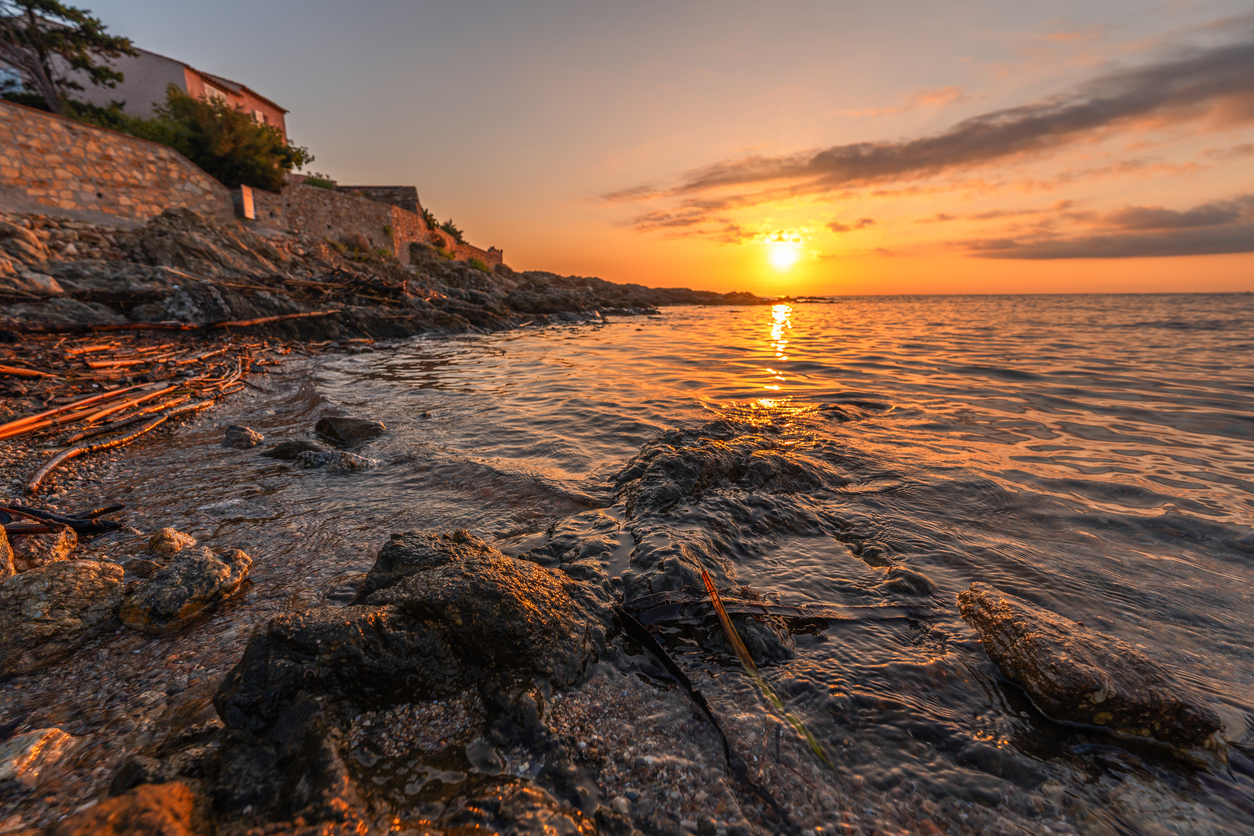
Coastal and Hillside Walks from Les Issambres
If you love the feeling of salt on your skin and pine-scented breezes in your lungs, Les Issambres is a place that rewards curious feet. Tucked between Sainte-Maxime and Fréjus on the Var coast, this shoreline hamlet blends the easy rhythms of a Mediterranean seaside with quick access to gentle ridgelines and red-rock massifs. From wave-splashed footpaths and quiet coves to cork-oak hills laced with tracks, you can put together a week of walks here that never feels repetitive. Think tide pools and Roman ruins in the morning, a ridge walk above parasol pines after lunch, and sunset back by the water. This guide brings together the most rewarding coastal and hillside walks starting from, or within a short reach of, Les Issambres, with down-to-earth tips so you can pace your days and find a few of those lesser-known corners locals keep for themselves.
Getting Oriented: The Landscape Around Les Issambres
Les Issambres is the seaside quarter of Roquebrune-sur-Argens, spread along a scalloped coastline of sandstone coves and small sandy bays. To the east and inland rise the first shoulders of the Maures, one of Provence’s classic low mountain ranges, where cork oak, heather, and strawberry tree thrive in the iron-rich soils. Slightly farther to the east, the Estérel’s volcanic pinnacles add drama with their intense rust-red cliffs.
Most visitors quickly discover two kinds of walks here. The first follows the Sentier du Littoral, the coast path that threads between the sea and the gardens, hopping from cove to cove. The second moves uphill, following ancient tracks over rounded ridges such as the Col du Bougnon or exploring the famous Rocher de Roquebrune with its Three Crosses. You can easily mix the two in a day: a morning coastal amble with a swim and a hillside loop in the cooler early evening. Distances can be as gentle or as ambitious as you like, but what they all share is the inescapable presence of the sea—either lapping at your boots or glittering a couple of valleys away.
The Sentier du Littoral: Your Coastal Walking Thread
The Sentier du Littoral runs like a soft seam along this stretch of the Côte d’Azur, and in Les Issambres it’s among the most inviting sections. The path is a patchwork: sometimes a natural rocky terrace right above the waves, sometimes stepped boardwalk, sometimes sandy track with fragrant low scrub on the sides. It links beach to beach, passing headlands with benches set perfectly for a thermos coffee, and revealing micro-places you’ll miss from the road—little calanques barely big enough for two towels, slabs of rose rock warmed by the sun, and glimpses of old military structures that tell stories of a complicated past.
Waymarking is straightforward. Wooden signposts indicate directions to nearby beaches or points like La Gaillarde or the Pointe des Sardinaux. Sturdy shoes are best: while nothing is technically demanding, the rocks can be polished smooth by waves, and salt spray can make things slick. Most stretches are family-friendly; you can always retreat to the pavement and pick up the path again if a section looks exposed or wet. And it’s easy to craft your walk as a series of stages with swim breaks built in—arguably the most civilized form of “interval training” on the Riviera.
Coastal Walk 1: San Peire to the Pointe des Sardinaux
San Peire is the heartbeat of Les Issambres, with its small square, bakery, and a curve of beach where fishing boats once anchored. From the little marina, set out west on the waterfront promenade and in minutes you’ll be on the coastal path. Your goal is the Pointe des Sardinaux, a low headland that juts silently into the sea like a flat ship’s bow. The walk is short, easy, and as photogenic as they come—perfect for the afternoon before dinner or a leg-stretcher after a daytrip.
Along the way, keep your eyes open at low tide for the outline of a Roman fishpond, a square of low stone walls just offshore that once held live fish ready for a villa’s table. The “vivier gallo-romain des Issambres,” as locals call it, is a tangible reminder that this coast has been carefully used for millennia. The engineering—letting seawater in and out through sluices—feels simple and clever, and it’s one of those details most visitors walk by without realizing what they’re seeing.
At the Pointe des Sardinaux itself, the path widens into a rough heath sprinkled with wild thyme, immortelle, and low pines bent by the wind. There are picnic tables set discreetly among the trees, and in calm weather the rock shelves make easy platforms for a quiet swim. The cap wraps around a set of tide pools that are fun to explore with kids—look for little blennies and crabs scuttling under stones, and tiny anemones that slip into themselves when touched. On the headland you’ll also notice wartime remains—concrete structures from a coastal battery—muted memorials to the layers of history that sit atop all this beauty.
Highlights at the Pointe des Sardinaux
- Early mornings, the light over the Golfe de Saint-Tropez is soft and clear; you’ll often have the tip to yourself.
- At low tide, the geometry of the Roman fishpond stands out crisply; bring a small field guide if you enjoy identifying archaeological features.
- Benches and picnic tables are placed with intention. If you’re planning a simple picnic, this is one of the best headlands to linger.
Coastal Walk 2: Les Issambres to La Gaillarde and Bonne Eau
Heading east from San Peire, the path becomes a little more dramatic as it approaches La Gaillarde, where low sandstone cliffs dip gently into green water. You’ll thread past quiet coves with polished rock slabs—some with ladders or carved steps—and stretches of beach that feel worlds away from a car park even when one is only ten minutes up a lane. This is the part of the coast where the pinkish tones of the rock shine in late afternoon, and where the wind patterns create pools of calm water even when the open sea chops up a bit.
La Gaillarde itself is known for wide sands, but don’t be seduced into stopping too soon. Continue a bit further to discover the rocky inlets near Bonne Eau. The name hints at what locals know: in settled weather, the water here is exceptionally clear and inviting for a snorkel. Peer down and you’ll see the gentle sway of posidonia meadows—seagrass that forms the lungs of the Mediterranean. These meadows are protected; you’ll often see buoys marking “no anchoring” zones to keep boat anchors from ripping them up. You can do your part by entering and exiting the water from the rocks rather than trampling the grass, and by observing calmly rather than chasing fish.
A detail to look for along this stretch: the discreet remnants of military observation posts tucked into the headlands. Some are no more than circular foundations, but once you notice them you begin to piece together how vigilantly this shoreline was watched in the mid-20th century. Nearby, a modest seasonal exhibit occasionally opens in summer to explain the local role in the 1944 Allied landings along the Provençal coast. Even if it’s closed, interpretive panels often provide context, and it’s easy to imagine the tension of that era while listening to the soft percussion of waves on the rocks.
Coastal Walk 3: Les Issambres to Saint-Aygulf and the Étangs de Villepey
For a satisfying half-day that feels different from a classic beach walk, strike out east beyond Bonne Eau towards Saint-Aygulf. The path undulates along a wilder stretch of coast, where the urban edge pulls back and the vegetation grows thicker. Your destination is the Étangs de Villepey, a mosaic of lagoons and reeds where freshwater meets the sea. This protected area is a magnet for birds and a peaceful change of mood—one moment you’re salt-sprayed, the next you’re watching a heron stalk along a reedbed.
Approach from the coast and you’ll find footbridges and small observation platforms that let you scan the wetlands without disturbing them. The soundscape shifts: instead of surf and cicadas, you’ll hear the thin whistles of waders and the harsh calls of terns. If you bring binoculars, linger and let the scene assemble itself; patient eyes are often rewarded. This whole walk works especially well in shoulder seasons—spring and autumn—when birdlife is at its richest and the light is gentle.
Birdwatching at the Étangs de Villepey: What to Look For
- Black-winged stilts with impossibly long pink legs stalking in shallow water.
- Little egrets, a delicate cousin to the heron, flashing bright yellow feet as they hunt.
- Flamingos in small groups, especially in colder months; their soft pink hues deepen with diet.
- Avocets, shelducks, and the quick dashes of sandpipers along the edges of mudflats.
Bring patience and a windproof layer; breezes can be cooler around the wetlands than on the beach, and the best sightings come when you’re still and quiet.
An Easy Promenade: Garonnette to Sainte-Maxime Seafront
Not every walk has to be wild. Sometimes you just want an easy stretch that keeps your shoes clean but still fills your eyes. Start at La Garonnette, on the western edge of Les Issambres, and follow the coastal path and promenades towards Sainte-Maxime. You’ll pass long arcs of sand and tidy gardened seafronts, with frequent benches and plenty of opportunities for a coffee or an ice cream. It’s flatter than the headlands to the east and perfect if you’re pushing a buggy or walking with someone who prefers an even surface without steps.
Look across the bay for classic Riviera vignettes: sleek sailing yachts tracing slow arcs and, on very clear days, the outline of the Maures behind the village of Saint-Tropez. If you reach Sainte-Maxime, the seafront gardens and public art displays provide a pleasant turnaround point. In summer, small ferries run between nearby piers, which can be handy for returning to your starting point without retracing every step. Check schedules locally; services vary by season and weather.
Hillside Walk: Col du Bougnon Ridge Loop
When you’re ready to swap salt for pine resin, head inland from Les Issambres to the Col du Bougnon. This low pass marks the beginning of a scenic ridge that lifts you above the coastline just enough to unfold a sequence of views. The ascent is gradual—more a steady meander than a climb—and the tracks are a mix of fire roads and narrower paths marked by yellow paint flashes, common on local “PR” (Promenade et Randonnée) routes.
From the col, a classic loop swings onto a ridge where parasol pines lean into the sky and cork oaks reveal their russet bark where it’s been harvested. In spring, pink cistus flowers pattern the understory, and if you brush the genus Helichrysum between your fingers you’ll carry a faint curry aroma for the next hour. A few spurs offer balcony views: west across Fréjus and Saint-Raphaël towards the Estérel and east over the Golfe de Saint-Tropez. It’s common to have long sections to yourself here even on busy beach days, which is part of the appeal—sea in your field of view, birdsong in your ears, and the quiet crunch of sandy soil underfoot.
If you’re up for a slightly longer outing, add a detour to a small belvedere locals favor as a picnic spot. These are often unmarked on maps, but you’ll recognize them by the worn stones forming ad hoc seats and the lake-like calm that sometimes settles over the sea on windless days. Take water; shade is friendly but not total, and in summer the heat radiates from the ground.
Hillside Adventure: Rocher de Roquebrune and the Three Crosses
For a walk that feels like a step into another geological world, make time for the Rocher de Roquebrune, the orange massif visible from the coast just inland of Les Issambres. It’s a world apart from the rounded Maures. Here the rocks are craggy and textured, and the famous Three Crosses on the summit ridge form a simple landmark to aim for. Several circuits exist, ranging from two hours to most of a day, and most are well marked with painted blazes and signposts at junctions.
The classic route spirals up through maquis dotted with rosemary, myrtle, and the evergreen strawberry tree. As you gain height, viewpoints open towards the Argens plain, the Estérel, and the sea. The final stretches to the crosses require a bit more attention—nothing technical, but hands might be useful for balance on some rocky steps. On top, take a moment to explore the ridge; in one direction you’ll see the coastline around Les Issambres like a blue ribbon, and in the other a landscape of vineyards and scattered farmhouses that feels pure Provence.
Local tip: start early on warm days. The rock absorbs heat, and breezes are often gentler in the morning. In winter, the light is crisp and the orange tones of the rock absolutely sing in photographs.
A Red-Rock Detour: Estérel Summits from Agay
From Les Issambres, the Estérel is close enough for a half-day excursion, and if you’re drawn to dramatic geology it’s worth it. Trailheads near Agay lead to Cap Roux and the Pic de l’Ours, two aesthetic summits where red rhyolite cliffs plunge towards the sea. Paths are clear but steeper than the Maures, and you’ll want solid footwear and a moderate level of fitness. On the Cap Roux circuit, lookout points reveal a patchwork of headlands, and on clear days you can sometimes trace the coast all the way to the Alps on the horizon.
This is a contrasting flavor of “hillside” to pair with your Les Issambres base: wilder, slightly more rugged, but still civilized by good waymarking and accessible trailheads. If you enjoy variety, do a gentle coastal stroll one day, the Col du Bougnon the next, and a Cap Roux loop after that—you’ll feel as if you’ve seen three different regions without moving far.
Family Discovery Loops: Romans, Resilience, and Rockpools
Walking is often best when it’s an adventure, especially with kids. From Les Issambres you can stitch together mini “quests” where each stage reveals something new. Start with a short walk to the Roman fishpond near San Peire—plan for low tide so the outline is visible—and tell the story of how the Romans farmed fish in the sea itself. Continue to a sheltered cove where everyone can cool off and scan for fish over the posidonia meadow. Then circle back by a headland where wartime remains sit quietly in the scrub, and use the interpretive signs to anchor a conversation about the 1944 landings along the Provençal coast.
Another idea: a morning tide-pool safari at the Pointe des Sardinaux. Bring a small magnifying glass and let kids lead. You’ll be surprised how fascinating a tiny anemone can be when seen up close. Finish with a picnic under a bent pine and a family commitment to leave the place exactly as you found it. Small rituals like “carry out three bits of litter” turn walk time into stewardship without feeling preachy.
Seasonal Strategies: When to Walk and Why
Every season around Les Issambres offers something particular. In spring, the maquis blooms with color—pink cistus, yellow broom, the white flames of rockroses—and walking temperatures are perfect. Birds arrive in numbers at the Étangs de Villepey, and early mornings by the coast feel freshly scrubbed. Summer brings an easy rhythm of early starts, a long swim break, and a shady nap before an evening stroll; plan hillside loops for the coolest hours and bring more water than you think you need. Autumn is a sleeper hit, with warm seas and uncrowded paths; rainfall greens up the hills and the light has a golden slant ideal for photography. Winter is crisp and quiet, and on those days after a mistral wind has swept the sky clean, the clarity is remarkable—you’ll see further, and the coast feels like it belongs to you.
One practical note: on days when the mistral is up, choose your direction to keep the wind at your back on exposed headlands, or switch to a more sheltered inland path. Conversely, on still, hot days, the coast often feels cooler than the hills thanks to sea breezes, so plan your walk accordingly.
Safety, Waymarking, and Local Rules
Marked routes in the Var typically use yellow blazes for local “PR” paths and red-and-white blazes for longer “GR” trails. On the coast, the Sentier du Littoral is obvious, but always be attentive to conditions. Large swell can send waves onto otherwise safe rocks; if stones are wet or dark with spray, give them a generous buffer. Wear shoes with grip—sports sandals or light hiking shoes—and carry a small first-aid kit.
In the Maures and Estérel, summer fire risk is serious. Access to some forest areas may be restricted during high-risk days, and you’ll see color-coded maps posted at major trailheads indicating the day’s status. Respect any closures; they exist to protect both the environment and you. Never light fires, and avoid smoking on trails—the maquis is beautiful and fragile.
Sun protection is a year-round habit here. Even in winter, the combination of reflective sea and pale rock can surprise you. Water sources on hillside routes are scarce; assume you will not find potable water en route. On coastal paths, shade is intermittent; a light, long-sleeved layer and a hat make hours of difference.
Three Sample Itineraries for Different Days
1) A Breezy Introduction: Sardinaux and San Peire
Morning coffee at San Peire, then the easy walk to the Pointe des Sardinaux. Explore tide pools, find the Roman fishpond at low tide, and picnic under the pines. Optional: swim on the way back and finish with a gelato in the square. Distance: 4–6 km depending on detours; mostly flat; allow 2–3 hours with stops.
2) Coast-to-Wetland: Bonne Eau to the Étangs de Villepey
Start near La Gaillarde, thread the rocky inlets to Bonne Eau for a mid-morning snorkel, then continue along the coast to the Saint-Aygulf wetlands. Linger at an observation platform to spot stilts or egrets. Return the way you came, or use local buses to shorten the return. Distance: 10–12 km out-and-back; gentle undulations; plan 4–5 hours with wildlife watching.
3) Double Feature: Col du Bougnon Loop and Sunset Swim
Beat the heat with a morning loop over the Col du Bougnon ridge, pausing at a viewpoint for a simple picnic. Siesta after lunch, then a late-afternoon amble along the Sentier du Littoral east of San Peire with a swim and a quiet headland sunset. Distance: 8–10 km on the ridge plus 3–5 km on the coast; moderate effort; make a day of it.
Nature Notes: Plants, Rocks, and Sea
Part of the pleasure of walking around Les Issambres is how the landscape encourages you to notice details. Under your feet in the hills are soils that range from sandy to iron-tinged, a clue to why the vegetation changes quickly from place to place. Cork oak is emblematic—look for trunks with a warm, cinnamon hue where bark was recently harvested, a sustainable practice done in cycles. Parasol pines arc elegantly over ridgelines and frame sea views like natural pergolas. In spring, three common rockroses—white, pink, and yellow—dot the paths, and in autumn, savory scents lift after rain.
Along the coast, rocky shelves of sandstone create perfect habitat for intertidal life. The posidonia meadows just offshore are one of the most important underwater ecosystems in the Mediterranean; they oxygenate the sea, stabilize the seabed, and provide refuge for juvenile fish. When storms throw long, fibrous “eggs” of posidonia onto the beach, resist the temptation to clear them—they help prevent erosion and are a sign of a healthy underwater meadow nearby.
If you’re lucky and quiet in the Maures, you might catch sight of a Hermann’s tortoise crossing a path in spring or early summer. Give it distance and let it choose its pace. In the air, look for short-toed eagles hovering over hillsides in search of snakes, and in winter, tiny firecrests flitting through pines. Near villas and gardens, the hoopoe’s striped wings and soft “oo-poo-poo” call are often heard on warm mornings.
Food, Markets, and Picnic Spots
A good walk deserves a good picnic, and Les Issambres makes it easy. In San Peire, the morning smells of fresh bread lead you to local bakeries where you can pick up fougasse, olive breads, or a simple baguette. A small greengrocer will often have tomatoes that taste of sunshine, and you’ll find goat cheeses from nearby farms that hold their shape in a warm backpack. The Monday market in San Peire is a friendly place to gather picnic ingredients—ripe fruit, tapenade, and perhaps a slice of pissaladière if you’re early.
As for where to spread your feast, the Pointe des Sardinaux is a classic, with pines and well-spaced tables. Along the ridge above the Col du Bougnon, small clearings open with views that deserve a slow lunch. If you like a bench with a view and a bit of people-watching, the promenade towards Sainte-Maxime provides plenty of choice followed by an easy stroll back.
If you want a post-walk taste of the region in a glass, the cooperative cellar in the village of Roquebrune-sur-Argens is a good place to learn about local rosés, reds, and the honeyed whites that pair nicely with goat cheese. Keep tastings for after your walk, and if you’re planning a long day out, pack more water than wine—it’s the Cote d’Azur, but the sun is still the sun.
Photography and Quiet Corners
The best light on both coasts and hills arrives early and late. On the coast, aim for sunrise over the Golfe de Saint-Tropez from the Pointe des Sardinaux, where low, side-lit waves pattern the water. In the hills, the late afternoon gives texture to cork oak bark and makes the ridges glow. After a mistral has cleaned the air, visibility stretches astonishingly far; those are the days to put a telephoto lens in your bag if you have one.
For quieter corners even in midsummer, time your walk to start while most people are still at breakfast. East of La Gaillarde, small, nameless rocky inlets rarely fill up before late morning, and short detours off the main ridge near the Col du Bougnon quickly leave the crowd behind. On the Rocher de Roquebrune, choose a circuit that approaches the Three Crosses from a less popular trailhead and you’ll enjoy long, companionable silences punctuated only by birdsong and the crunch of your steps.
Getting There and Getting Around
Les Issambres unrolls along the coast road, and most trailheads are accessible on foot from the hamlet’s main clusters or by short transfers. Parking areas are signed near beaches like La Gaillarde and the Pointe des Sardinaux, but they fill quickly in summer; early starts are the easiest solution. Regional buses run along the coast, connecting Les Issambres with Sainte-Maxime and Fréjus/Saint-Raphaël, which helps with one-way coastal walks. In season, boat shuttles operated by local companies connect nearby piers with Saint-Tropez and Sainte-Maxime; these are pleasant ways to balance a day of walking with a change of perspective from the water.
For hillside walks, the Col du Bougnon is the nearest easy access point from Les Issambres, reachable by a short drive or, for keen walkers, as an extension from the coast. The Rocher de Roquebrune has several marked starting points around the base; pick one with a route length that matches your energy, and remember that the summit area can be more exposed to wind than the lower slopes.
Respecting the Coast and Hills: A Few Simple Habits
Walking here feels like a privilege, and a few simple habits keep it that way. Stay on marked paths; short “shortcuts” quickly erode fragile soils. In the sea, avoid standing on rock ledges carpeted with life or pressing into posidonia beds, and leave shells and stones where you find them—small as they seem, they’re part of the place you came to enjoy. Pack out everything you bring in, and consider picking up any stray bits of litter you encounter; headlands act like combs for windswept wrappers. On hillsides, close any gates you pass through and give farm animals—or working dogs—wide, calm space. If you hear the clatter of cicadas rising in chorus as you walk, take it as a sign you’re blending in well with the rhythm of the place.
Conclusion: Let the Landscape Set Your Pace
What makes walks from Les Issambres special isn’t just the postcard beauty—though you’ll certainly get your fill of turquoise water and olive-green hills. It’s the variety in a compact area and the way you can shift moods with a few minutes’ walking. One day feels like a natural history field trip between a Roman fishpond and a bird-filled lagoon. Another takes you above the coast for a balcony view and a quiet rest under cork oaks. The next is simply about the rhythm of steps along the Sentier du Littoral and the gratifying cool of a swim before a snack on a warm rock.
If you let the landscape set your pace, you’ll find yourself remembering these walks not as a checklist but as a string of moments: the fruity scent of crushed strawberry tree leaves, the surprise of a hoopoe flying low across a path, the soft violet glow on the Estérel at dusk, the way the tide pools at Sardinaux reveal their quiet cities when you look just a little longer. That’s the charm of walking here—you don’t need to race to the next viewpoint. Everything you came for is already around you, waiting for you to notice.
For those who want to combine coastal paths with quiet hillside walks at their own pace, staying locally makes all the difference, and our villas in Les Issambres offer a perfectly placed base by the sea.

