

 EN
EN  NL
NL
 DE
DE
 FR
FR

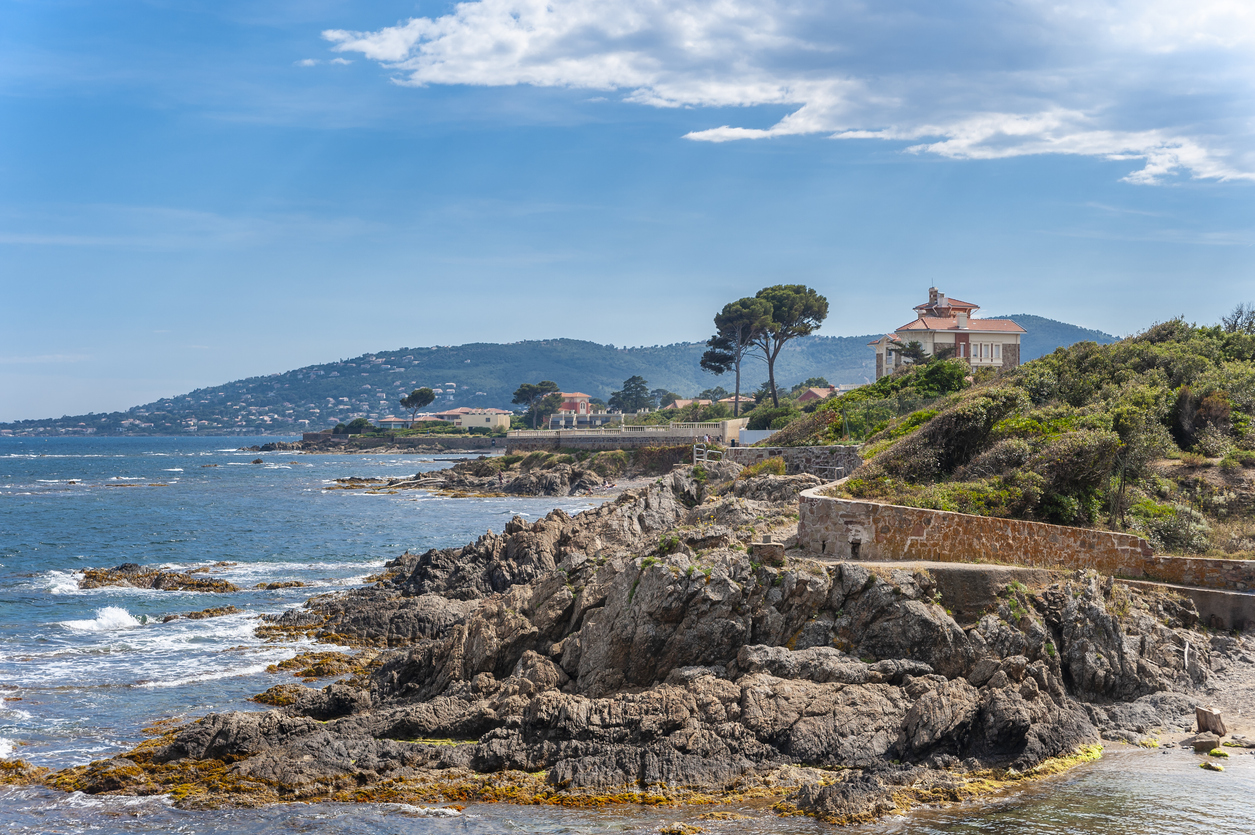
Coastal, Nature and Historic Walks from Saint-Aygulf and Fréjus
If you enjoy discovering a place on foot, Saint-Aygulf and Fréjus are a generous starting point. The scenery here changes in the space of a few kilometers: wild, red-rock headlands, pale sandy bays, quiet lagoons busy with birdlife, Roman ruins tucked into pine-scented parks, and the first foothills of the Estérel rising in sculpted folds above the sea. This guide gathers a collection of tried-and-true walks that locals recommend to friends, from breezy coastal strolls to deeper nature loops and historically rich ambles. You’ll find ideas for half-day escapes and day hikes, small details to look for along the way, and tips to enjoy it all in a relaxed, respectful way.
Getting Oriented: Sea, Lagoons, and Ancient Stones
Saint-Aygulf sits on the eastern side of the Argens estuary, where the river meets the Mediterranean beside a necklace of beaches and coves. Just inland are the Étangs de Villepey, a lagoon complex that gathers migrating birds each season. A little to the east, the coastline roughens into rocky shelves and “calanques,” then curves toward the Fréjus and Saint-Raphaël harbors. Fréjus itself splits into two obvious faces for walkers: a compact, layered old town with Roman and medieval monuments, and generous green spaces like the Base Nature and Parc Aurélien. When the urge for bigger views hits, the Estérel Massif begins just beyond—red volcanic rock, fragrant maquis, and sea-to-summit panoramas.
Distances in this region are short, and you can combine sections for longer days. With a base in either Saint-Aygulf or Fréjus, you can move from coastal path to cathedral cloister to forest trail without ever feeling rushed.
Sentier du Littoral: Saint-Aygulf’s Coves and Headlands
On the edge of Saint-Aygulf, the Sentier du Littoral (Coastal Path) is the most natural way to get acquainted with the shoreline. It’s the old customs officers’ path, zigzagging along low cliffs, dipping into calanques, and surfacing at pocket beaches. You can walk short out-and-backs for an hour of sea air or stitch together 10–12 kilometers for a rewarding half-day that reaches toward Les Issambres.
Route suggestion
Start near Plage des Esclamandes and follow the signed coastal path southeast. The track passes flat sandstone shelves popular with shore anglers, then cradles around the Grand and Petit Boucharel calanques. The sea here is often clear enough to peer into shallow pools where small fish and crabs hang in the surge. Continue to Pointe de la Gaillarde, where a low headland provides wide views across the Gulf of Fréjus. If you have energy, keep going toward Les Issambres and seek out the discreet remains of a Roman marine fish pond near the waterline—a reminder that people have been harvesting from this coast for a very long time.
What to look for
Besides the obvious sea views, look closer at the rock. On sunny days you’ll see seams and pockets in the stone, and in spring the cracks carry wildflowers—sea lavender, rock samphire, and thrift. After storms, driftwood and sea-worn pebbles gather in the calanques. On low-wind days in winter and early spring, you may spot cormorants drying their wings on isolated rocks.
Note: After winter storms, sections of the coastal path can be uneven or temporarily diverted. Pay attention to local signage and stay clear of unstable edges.
Étangs de Villepey Nature Reserve: Lagoon Loop for Birdwatchers
Just behind Saint-Aygulf, the Étangs de Villepey form one of the local area’s most rewarding short walks. This is a mosaic of shallow pools, reedbeds, and saltmarsh connected by sandy tracks and wooden footbridges. It’s peaceful even on busy beach days and has a different energy with each season.
Route suggestion
Pick up the path from the edges of Saint-Aygulf and loop clockwise along the northern pools. The surfaces are mostly flat, with sections of boardwalk, and there are a few simple hides where you can pause. Keep an ear out for the rolling calls of coots and the piping of avocets. In spring and autumn, migrating waders pick their way along the mud margins. On bright winter days, you might be lucky and see pink flashes of flamingo passing between larger lagoons along the coast.
Insider notes
Early mornings are the most active for birdlife. Bring a lightweight pair of binoculars if you have them and keep dogs close to avoid disturbing nesting areas. There’s little shade in midsummer; a hat and water make a big difference. If you want to extend your walk, finish with a gentle back-and-forth along the neighboring seafront to watch kite surfers carving lines at the river mouth when the wind is right.
Parc Aréca: Botanical Pause and Seafront Promenade
Parc Aréca in Saint-Aygulf is a tidy, green surprise: a small botanical garden that’s ideal for a leg-stretch and a breather. Paths wind through palm species, giant bamboos, and Mediterranean shrubs, and benches sit beneath umbrella pines—a classic Côte d’Azur scene. It’s a helpful stop at the beginning or end of the coastal path if you want a quieter frame for your walk.
From the park, follow the promenade toward Plage des Esclamandes. Depending on the season, you’ll pass dune plants in flower and bright beach grasses bending in the breeze. If you’re with children, the combination of Parc Aréca and a short shoreline stroll is a gentle outing with variety: shade, sea, and open space for a picnic blanket.
Lesser-Known Coves: The Rugged Pockets between Saint-Aygulf and Les Issambres
Between Saint-Aygulf and Les Issambres is a chain of small coves that many visitors only glimpse from the road. If you enjoy poking into corners, plan a slow half-day with pauses at the Calanque du Petit Boucharel and its larger neighbor, and at discreet rocky pockets closer to La Gaillarde. The trick is to walk the coastal path and be willing to take tiny side trails down to the rock shelves, always respecting private property boundaries and cliffs.
Geologically, you’ll notice the transition from softer sandstones nearer Saint-Aygulf to denser rock with iron-rich hues as you approach the first outliers of the Estérel. After rains, the difference in color pops, and shallow pools on the shelves act like little mirrors. On calm days, snorkelers may wade in at sheltered corners; the water clarity is often best in early morning before sea breezes ruffle the surface.
Fréjus Old Town Heritage Walk: Roman to Medieval in a Compact Loop
Fréjus’s old center is tailor-made for a layered, slow walk. It’s compact, the streets are narrow enough to keep cars at bay, and at every corner a new texture appears—Roman brickwork in one alley, a medieval doorway in the next. Start near the Cathédrale Saint-Léonce and step into the cloister if it’s open; the galleries carry a simple, repeating rhythm that encourages unhurried looking. The early Christian baptistery is one of those small, dense gems where the centuries pile up in a few meters of stone.
From the cathedral, stroll toward the ruins of the Roman amphitheatre, then angle to the Roman theatre on the opposite side of town. Both sites give a sense of Fréjus as Forum Julii, a Roman hub built to watch and guard this corner of the sea. Along the way, keep an eye out for sections of the ancient city walls and the fragment known as the Porte des Gaules. They’re the kind of landmarks that hide in plain sight and reward slow walkers who let curiosity lead them left and right rather than rushing in straight lines.
If you enjoy small, surprising places, set aside time for the Hông Hiên Tu pagoda a short walk beyond the center. It’s not what many expect to find in a Provençal town and provides a quiet cultural counterpoint to the Roman stones.
Parc Aurélien: Pinewoods, Vistas, and Traces of the Past
Parc Aurélien is an expansive, gently rolling green space on the edges of Fréjus, dotted with mature pines and rough meadows. Local families come here to wander and breathe, and walkers use it as a link between town and countryside. Paths branch in loose webs rather than strict loops, which is part of the appeal: you can drift without worrying too much about “the route.”
Look for scattered remains tied to the town’s Roman past and for subtle viewpoints across the rooftops of Fréjus toward the sea. In spring, wildflowers thread the grass. On summer evenings, the light under the pines softens and the air carries a warm resin scent that feels unmistakably Mediterranean.
Base Nature François Léotard and the River Mouth Walk
Once a seaplane base, the Base Nature is now a broad public park with a long shoreline and views across to Saint-Aygulf. The scale gives your legs room: run, cycle, or simply settle into a steady seaside walk. If you trace the path toward the Argens mouth, you reach one of the area’s most open horizons, with sandbars, river birds, and the gentle back-and-forth of small boats in the channel.
In the late afternoon the colors are generous—the sea goes pale blue, the sand warms in tone, and the Estérel peaks to the east take on a low, rosy light. Windier days bring a livelier mood: kite surfers carve arcs off the beach, and terns dive after sprats in the river plume. Because the surfaces here are mostly flat and broad, it’s a comfortable walk for mixed groups and families.
A Walk with a Story: The Malpasset Dam Ruins and the Reyran Valley
For a different atmosphere entirely, head north of Fréjus into the Reyran valley to visit the ruins of the Malpasset Dam. The dam failed in 1959 after exceptional rains, and the scar remains a sobering sight. Today, a straightforward path leads up the stony valley floor to where blocks of concrete lie scattered like oversized toys, and the torn abutments frame the sky.
It’s not a long walk—plan an hour or two round trip, more if you like to explore—but it leaves a lasting impression. Along the way, the Reyran’s dry bed braids with pockets of Mediterranean scrub. Lizards dart across warm stones, and in spring butterflies lift from the thyme. Take your time at the site; the scale sinks in slowly. Panels along the route help orient you to what happened and what you’re seeing.
Practical note: The valley can be hot and exposed from late spring to early autumn; go early or later in the day and carry water. After heavy rains, the ground can be soft or the stream awakened—check conditions locally before you set out.
Fragments of the Roman Aqueduct: Quiet Steps through a Long History
Fréjus’s Roman aqueduct once carried water from the inland hills to the city. Today, you can find scattered, well-preserved remnants threaded through neighborhoods and countryside. One of the easiest ways to see them is to follow local signs around the La Tour de Mare area, where sections of arches and channels stand among modern streets and small green spaces. It’s a curious blend of old and new, emphasizing how lightly the centuries can overlap here.
Another set of remains lies in the low hills north of town. If you have a car-free morning, weave a route that links two or three segments; the act of moving between them teaches you more than staring at a single site. You begin to imagine the flow, the gradient, and the patient, practical engineering that fed Roman Fréjus.
Cap Dramont: Granite-Like Reds, Blue Sea, and a Story of 1944
A short hop east of Fréjus brings you to Cap Dramont, a favorite coastal walk for locals and an easy win for visitors. The loop follows a well-maintained path around the headland, plying between pine forest, sea cliffs, and terraces of that signature red rock. Out offshore sits the Île d’Or, a small island topped by a stone tower that looks like a film set and has indeed inspired a few stories.
The walk takes a couple of hours at relaxed pace, with opportunities to linger at viewpoints and on little pebble beaches. On the southern side of the headland, near the long sweep of sand known as the Plage du Débarquement, you’ll find memorials and quiet references to the Allied landings in August 1944. It’s a poignant footnote to a day of sea views and open sky—history tucked into the landscape rather than set apart from it.
Balcony of Cap Roux: A Top Estérel Panorama
When you’re ready for a longer day and a bigger climb, the “Balcon du Cap Roux” loop in the heart of the Estérel is a rewarding choice. The classic start is from a small forest house car park nestled in the massif. From there, well-marked paths lift you gradually through strawberry trees, cork oaks, and fragrant shrubs to an airy traverse beneath the cliffs of Cap Roux.
The colors here do much of the work. The rock shifts from salmon to deep rust as the light moves; the scrub greens and greys play against the sky; and then you get the shock of the sea through a gap, a saturated blue you can’t quite match with a paintbox. Plan three to four hours for the loop, and leave time for a picnic on one of the outlooks where the entire arc of the coast runs from Saint-Raphaël to the headlands beyond Cannes.
Practical note: In summer, the massif may be closed on high fire-risk days. Check the day’s access status before you go, and carry plenty of water—shade is intermittent once you’re on the balcony.
Gorges du Blavet: A Shadowed Alternative for Hot Days
North of Fréjus and slightly inland near Bagnols-en-Forêt, the Gorges du Blavet offer a cooler, more enclosed walking experience. The gorge walls rise in red pillars and buttresses, with short trails that snake beneath overhangs and through sculpted boulders. Rock climbers love this area for its shaded sectors; walkers appreciate the change of scale and the way the air stays cooler near the water.
Most routes here are short—plan an hour or two—and you can pick a direction based on the season and time of day. In spring, songbirds echo in the narrow sections. In autumn, after the first rains, the aromas from wet rock and scrub intensify. Wear shoes with decent grip; the rock can be dusty and slippery in places, and you may need your hands on the occasional step.
Slow Walks with Children: Short, Simple, and Full of Discovery
If you’re walking with kids, several routes near Saint-Aygulf and Fréjus pack interest into short distances. Parc Aréca plus the Esclamandes promenade is a straightforward choice with shade, plants, and sand. At the Étangs de Villepey, turn the loop into a treasure hunt: how many different birds can you spot? What colors can you find along the water’s edge? The small boardwalks and hides feel like an adventure without very much effort.
In Fréjus, the Base Nature is a natural for scooters or balance bikes along the seafront, with plenty of room to stop and watch kite surfers or to build loose stone stacks on the beach. In the old town, challenge older children to count the number of fish carved in the cathedral cloister beams, or to find the fragment of the Roman gate. These are little anchors that make the walk less about “going somewhere” and more about noticing what’s around you.
Sunrise and Sunset: When Light Makes the Walk
On the coast, early morning is often the most generous time to walk. At Plage des Esclamandes, sunrise can lay a pale gold band on the sea and light the dunes from the side, revealing delicate lines and textures. The calanques nearer La Gaillarde glow in the first light too, the sea staying unusually still before the daily breeze builds.
Sunset has its own logic. On clear evenings, the view from Cap Dramont is a classic, with the Île d’Or silhouetted against a long gradient of color. Closer to Saint-Aygulf, a short stroll to the mouth of the Argens lets you watch the tide-like play of sea and river as the day cools, with terns still working the current and beach walkers beginning to thin out.
Markets, Picnics, and Places to Pause
On walk days, a simple picnic can keep you flexible. The centers of Saint-Aygulf and Fréjus both host regular open-air markets where you can pick up seasonal fruit, olives, and local cheeses. Bakeries in town can provision you with fougasse or a classic baguette. A few good picnic spots to aim for:
- A bench under the pines in Parc Aréca before or after a coastal loop.
- A flat rock shelf near the Petit Boucharel calanque on a calm day.
- A shaded table at the edge of Parc Aurélien, with views through the trees to the town below.
- A sheltered cove on the Cap Dramont loop, timing your stop between passing walkers.
As always, pack your litter out. Wind can lift lightweight packaging; a simple tote bag or zip pouch keeps everything tidy between bites.
Seasonal Nature Notes: What Changes and When
Spring is the most fragrant walking season here. Cistus blooms splash the scrub in white and pink, asphodel spikes rise from rough grass, and wild thyme sends up scent when your boots brush it. Birds increase at the Étangs de Villepey and along the coast, and you’ll feel the days lengthen week by week.
Summer brings stable weather and reliably dry paths, but also heat. Early starts make all the difference—be walking by eight or nine, and aim for shaded routes like the Gorges du Blavet if you’re out longer. The sea breeze on the coastal path can be a relief; inland, carry more water than you think you need.
Autumn is kind and overlooked. The sea stays warm for a while, the light tilts lower, and the Estérel carries a mellow tone that invites lingering on viewpoints. Winter can be superb on clear days, with low-angled sun, crisp views, and the coastal path largely to yourself. After storms, check for diversions or closures, especially on cliff sections and in the massif, which may restrict access on high fire-risk or post-storm days.
Respecting the Coast and the Reserves
The landscapes that make these walks special are also sensitive. A few reminders help keep them that way:
- Stay on marked paths, especially in dune areas and around the Étangs de Villepey, where birds nest near ground level.
- Keep dogs under close control or on a lead where required; several nature zones request it for wildlife protection.
- Fire risk is real in the Estérel; pack out all waste, and never light a fire. Observe seasonal access restrictions.
- Take only pictures—shells, flowers, and rocks are part of living systems here.
Many of these reminders are posted at trailheads and along paths. A quick glance keeps everyone on the same page and helps you enjoy the walk without worry.
Getting Around Without a Car: Handy Pointers
If you like to string walks together using public transport, you’re in luck. Trains serve Fréjus and Saint-Raphaël, giving you a quick hop from one section of coast to another, and local bus networks connect Saint-Aygulf, Fréjus, and neighboring towns like Les Issambres. Regional services branded ZOU! can help for longer hops along the coast, and the local agglomeration’s buses cover the short links. It’s generally easy to step off at a town center or beach stop and begin a coastal section right away.
In season, some coastal shuttles may run between beaches and town centers. Cycling is also a practical way to join up trailheads—many seafront sections have shared-use paths that keep you off main roads. If you’re planning a day in the Estérel, check timetables in advance; trailheads in the massif are more easily reached by car or an early bus.
Three Well-Balanced Days on Foot
If you have a long weekend, this simple plan gives you a good cross-section without packing it too tight.
Day 1: Sea-level introduction
Start at Parc Aréca in Saint-Aygulf and ease into the day with a slow loop through the palms and bamboo. Continue along the promenade to Plage des Esclamandes, then pick up the Sentier du Littoral toward the Boucharel calanques. Settle in for a few hours of coastal path, with a picnic on a sheltered shelf between La Gaillarde and Les Issambres. Return by the same route or take a bus back from Les Issambres in the late afternoon.
Day 2: Stones and stories
Spend your morning in Fréjus old town. Visit the cloister and baptistery if they’re open, trace the line between amphitheatre and theatre, and give yourself time to just wander. After lunch, walk through Parc Aurélien for pine-scented shade, or head to the Base Nature for an open-to-the-sea stroll along the river mouth. If the light is good, stay out until it warms over the sand and the Estérel purpled ridges begin to glow.
Day 3: Red rock and blue horizons
Get an early start for Cap Dramont. Walk the loop, pause at viewpoints, and take in the Île d’Or. If you still have legs and the massif is open, continue inland later in the day toward the balcony route under Cap Roux for a deeper Estérel experience. If you prefer to keep it lighter, finish with a gentle sunset stroll back at the Argens river mouth.
A Few Walks in Detail: Time, Terrain, and Tips
Saint-Aygulf to Les Issambres coastal section
Time: 3–4 hours out-and-back if you explore coves. Terrain: rocky coastal path with occasional steps and short climbs. Highlights: calanques, chance to see the Roman marine fish pond near Les Issambres, open sea views. Tip: If there’s been a recent storm, check local notices for path closures; some sections may be rerouted briefly.
Étangs de Villepey loop
Time: 1–2 hours at an easy pace. Terrain: flat paths and short boardwalks. Highlights: bird hides, reedbeds, quiet atmosphere even on busy beach days. Tip: Pack binoculars and walk early for more birdlife.
Fréjus old town heritage loop
Time: 2–3 hours with visits. Terrain: cobbled streets, gentle gradients. Highlights: cathedral cloister and baptistery, amphitheatre, ancient gate remnants. Tip: If you plan to enter monuments, check opening hours before you go, as they can vary by season and day.
Cap Dramont coastal loop
Time: 2–3 hours including photo and beach stops. Terrain: rocky paths, steps, occasional exposed sections with railings. Highlights: Île d’Or, WWII landing beach, red cliffs and sea contrasts. Tip: Go anti-clockwise for gentler climbs and to hit shaded sections earlier on a sunny day.
Malpasset Dam and Reyran valley
Time: 1.5–2 hours round trip. Terrain: stony valley floor, uneven in places. Highlights: powerful site of the dam ruins, Mediterranean scrubland. Tip: Avoid midday heat; bring water and closed shoes with decent soles.
Local Details Most People Miss
These small touches often fly under the radar and make a walk richer:
- At Pointe de la Gaillarde, step back from the obvious view to notice small square-cut blocks aligned near the water. They’re subtle traces that whisper of older uses of the shore, from fish holding ponds to basic moorings carved in rock.
- On the coastal path near Saint-Aygulf, look for natural “potholes” in the stone where waves and pebbles have ground perfect circles over time. These are easiest to see at very low sea states.
- In the cathedral cloister at Fréjus, lift your eyes to the wooden beams. Carved decorations here and there—fish, leaves, and geometric patterns—reward unhurried looking.
- At the Base Nature, the broad concrete remnants remind you that this generous park was once a place of aircraft and military function. The sense of scale makes the openness feel deliberate rather than empty.
- Walking the aqueduct fragments around La Tour de Mare, notice how modern homes respect certain lines in the landscape. The old watercourse still quietly dictates patterns on the ground.
What to Pack for Comfortable Walks
You don’t need specialized gear for most routes here, but a few basics make every outing easier:
- Lightweight walking shoes with grip for rocky paths.
- Water (more in summer), sun hat, and sunscreen; coastal breezes can deceive you about the sun’s strength.
- A light wind layer; even warm days can cool quickly by the sea.
- Compact first-aid items and blister care if you’re stringing together longer coastal sections.
- Binoculars for the Étangs de Villepey and sea birdwatching from headlands.
- Simple picnic kit: reusable bottle, cloth napkin, a small trash bag, and a pocketknife if you’re buying cheese and fruit at a market.
Accessibility and Easier Options
Not every walk has to be rugged. The Base Nature’s seafront and wide park paths make a comfortable roll or stroll. Parc Aréca’s flat loops and benches invite lingering, and the Étangs de Villepey have multiple access points with short, level stretches. In Fréjus’s old town, stick to the main squares and adjacent streets to enjoy the atmosphere without committing to long slopes or tight cobbles.
For coastal views without much climbing, start at the Plage du Débarquement near Cap Dramont and wander the promenade before sampling small sections of the headland path in and out as energy allows.
A Few Etiquette and Safety Reminders
Local walking culture is friendly and relaxed. A few norms help everyone enjoy the paths:
- Greet other walkers with a simple bonjour. It’s small, and it changes the mood of a shared space.
- Yield space on narrow paths, especially near cliffside sections where passing room is tight.
- On mixed-use paths, keep to the right and listen for cyclists or runners, who will often call out as they approach.
- After wet weather, be alert for slick rock on the coastal path and for small washouts on hillside trails.
Weather, Wind, and When to Go
Mornings are usually calmer on the coast. As the day warms, a sea breeze often develops, which can be pleasant for the coastal path but tiring on exposed headlands. Inland in the Estérel, early starts lessen heat and help you avoid any temporary access restrictions that creep in during peak fire season. Winter cold snaps are short, and clear days can be outstanding, with long views and quiet paths. After major storms, check for notices at trailheads; the coastline is dynamic, and stewardship teams do a good job of signing short-term diversions.
Putting It All Together: A Walking-Friendly Base
What makes Saint-Aygulf and Fréjus satisfying for walkers is the tight weave of experiences. In a single day you can pad along a dune-edge path, step into the concentrated calm of a medieval cloister, stand beneath a Roman arch, and then watch the sky open at the river mouth as the evening wind lifts. The next day, trade it for the blunt, red drama of Cap Dramont or the balcony beneath Cap Roux, and you have a different world with hardly any travel.
Pick two or three routes that fit your mood and the season, and leave room to improvise. The best walks here rarely rush; they bend to a side path because a patch of wildflowers looks lively, or they pause ten minutes because the light improved and the tide drew a new line on the sand. The details are the point. If you walk with that in mind, Saint-Aygulf and Fréjus will keep offering you something you hadn’t yet noticed.
Conclusion: A Walkable Tapestry of Coast, Nature, and Time
From the shore-hugging curves of the Sentier du Littoral to the reflective calm of the Étangs de Villepey, from Fréjus’s Roman stones to the high red balconies of the Estérel, this corner of the Côte d’Azur rewards people who move at walking speed. You don’t need to chase every highlight; you only need to give yourself enough time to let the place work on you. A morning with seabirds and light surf. An hour in a cloister where wood, stone, and shadow make their own language. A ridge path where the sea opens all at once and you understand why people built lookouts here. String a few of those moments together and you’ll carry the area with you long after your boots are off.
Exploring the coast and nature around Saint-Aygulf and Fréjus? Discover our carefully selected holiday villas and find the perfect base to enjoy this diverse part of the Côte d’Azur.

