

 EN
EN  NL
NL
 DE
DE
 FR
FR

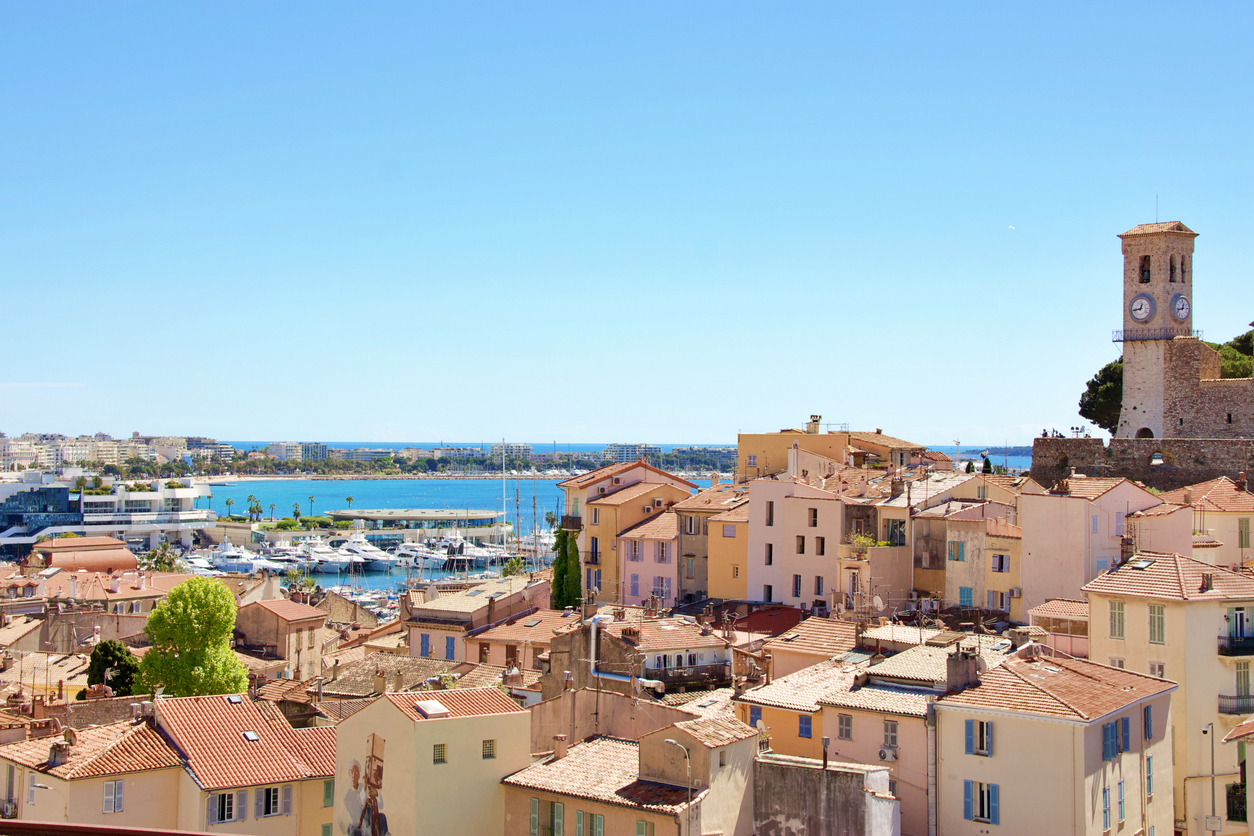
Most Beautiful Photography Spots in Cannes
Cannes is famous for red carpets and Riviera glamour, but what keeps photographers returning is the clarity of its Mediterranean light and the density of views packed into a surprisingly walkable city. From fishing boats and pastel facades to panoramic hilltop lookouts, rocky headlands, and quiet island cloisters, Cannes offers a full spectrum of subjects within minutes of one another. Whether you shoot with a phone or a heavy kit, dawn on the Croisette, sunset along the Midi beaches, and blue hour in the Vieux Port will reward you with scenes that feel both cinematic and intimate. This guide distills the spots locals rely on, the times that flatter each scene, and the small, concrete details that add authenticity to your images.
To discover more destinations, beaches and highlights across the region, explore our complete Côte d’Azur guide.
Understanding Cannes Light and Seasons
Photographers talk about Cannes light because it changes character across seasons as clearly as it does across the day. In winter, cool, ultra-clear air after a northerly blow sharpens horizons and brings the Estérel mountains into razor focus. Early spring is softer and often still, with sea-glass blues and delicate haze that can be flattering for portraits and street scenes. High summer blooms with heat shimmer and high-contrast midday sun—hard to manage unless you embrace silhouettes, tight details, or beach textures. Autumn tends to be the most balanced season: warm water, calmer winds, a lower sun arc, and fewer crowds.
As for daily rhythms, sunrise from the eastern end of the Croisette unleashes long, honeyed side light on the bay and the Old Port, sometimes layered with low cloud streaks over the Lérins Islands. Golden hour before sunset can flare dramatically over the Estérel chain to the west, sending a copper sheen across Plage du Midi and setting rigging lines aglow in the Vieux Port. Blue hour lingers in Cannes—especially in shoulder seasons—giving you enough time for both a harbor reflection set and a quick move up to Le Suquet for skyline silhouettes.
La Croisette: Palms, Curves, and Cinema
La Croisette is Cannes’ emblem, a seawall-promenade curving for nearly 3 kilometers from the Palais des Festivals to Port Canto and the Pointe Croisette. It’s an unfolding sequence of compositions: regular palms against pastel skies, airy pavilions, gleaming vintage convertibles on weekend mornings, and yachts anchored off the beach. The promenade tiles and balustrades provide strong leading lines, while the beach cabins and occasional art installations add graphic punctuation. Photograph it at dawn if you want swathes of the promenade to yourself; by mid-morning the atmosphere is about people and pace—wheels of rollerblades, dogs on leashes, kids with gelato—which makes for lively street frames.
Best angles along La Croisette
At the eastern end near Port Canto and the Pointe Croisette, you can shoot west along the curve, capturing the entire arc of bay with the Old Town (Le Suquet) perched above the Vieux Port. Stand slightly elevated on the low stairs by the gardens to compress the curve and emphasize its rhythm. For minimalist shots, step onto the sand and use a long focal length to isolate palm tops and sky gradients. In the middle sections, watch for moments when light breaks between palms and strikes benches, creating latticed shadows. Near the Palais des Festivals, shoot up from the low seawall to catch gulls at head height against the masts beyond, then turn inland for geometric frames of the esplanade and the steady pulse of foot traffic.
Le Suquet and the Old Town Skyline
Le Suquet, the original hillside village, is Cannes at its most textured: cobbles, shuttered facades, quiet passageways, and a crown of landmarks—the Église Notre-Dame d’Espérance and the museum in the old castle complex. From the terraces around the church you command the city: the Vieux Port below, the Croisette curve, the Lérins Islands, and the inland hills. Arrive 30–40 minutes before sunset to set up a wide frame as boats drift into moorings and street lamps flicker on. Sunrises after a windy night can be exquisite too, with the islands and Antibes headland appearing etched and sculptural.
Streets and stairways of Le Suquet
Start at the base on Rue Saint-Antoine for tight, vertical compositions of signs, lantern arms, and geraniums spilling from balconies. Work up the Montée Saint-Claude or the stone steps past the small fountains and time-worn doorways; pause to shoot down each side alley, where the sea often glints at the end like a beckoning panel of light. In late afternoon, the alleys on the western slope catch slices of warm sun that graze stucco and throw long shadows from wrought-iron handrails. If you like environmental portraits, the area fills with artists and buskers in summer; ask first and be generous with time, then step back to layer your subject with tilted rooftops and a wedge of sky.
Vieux Port and Quai Saint-Pierre
The Old Port is a boat lover’s grid of lines and reflections. Classic fishing craft, varnished wood, and rows of white hulls line up against restaurant terraces and the soft elevation of Le Suquet. Work the north side of the basin first thing in the morning to catch low sun rippling off hulls and mast reflections broken by the wake of tiny harbor shuttles. If you prefer order, shoot when the light is soft and windless to create near-perfect mirror images. Look for ropes draped over bollards, chipped paint on nameplates, and nets drying on the quay—intimate details that balance your wider cityscapes.
Blue hour brings a slow crescendo: mooring lights blink on, terrace bulbs glow, and the harbor becomes a bowl of color. Set a small tripod low to the ground and build layers—foreground cleat, mast forest mid-ground, and the church tower as anchor. Long exposures smooth the water and turn passing scooters on the Quai Saint-Pierre into gentle light strokes skirting the basin.
Marché Forville and Rue Meynadier
Forville Market is Cannes’ morning heartbeat at the foot of Le Suquet. From Tuesday to Sunday, produce stalls unfold like palettes: artichokes, violet garlic, mountains of peaches and apricots when in season, and glistening piles of anchovies and red mullet at the fish counters. Monday transforms the hall into a brocante and antiques market, equally photogenic in a different way—vinyl sleeves, vintage posters, brass instruments, and cameras that may well have captured the city decades ago. Arrive early for stall setup shots, misted vegetables under the misters, and the proprietors sharing a quick espresso between customers. Ask before photographing people close-up; a smile and a few friendly words go far.
Exit onto Rue Meynadier, a pedestrian artery with traditional food shops and old signage. The narrowness of the street compresses your background nicely. Follow light pools around corners and wait for decisive moments: a baguette tucked under an arm, a scooter nose edging toward the lane, a delivery hand-truck rattling over old pavers. Side-streets back toward Forville, including the little square behind, give you micro-views—laundry lines, cats on windowsills—that ground your Cannes story in small, human details.
Pointe Croisette: Port Canto to Palm Beach
The eastern headland of Cannes is one of the most rewarding zones for seascapes and skyline views. From Port Canto, a marina with an open feel, you can look back along the Croisette to the Old Town. In the early morning the dock water often lies glassy, producing elongated mast reflections with only the occasional passing dinghy to add a soft ripple. Continue to the Pointe itself—rocky, low, and close to the sea—where foreground textures of limestone and tufts of sea plants frame the Lérins Islands beyond. Use a moderate wide-angle and place the island horizon one-third up to balance rock and sky; in winter storms, waves can leap dramatically over the rocks, so keep your gear and footing secure.
On the sheltered north side lies Plage Gazagnaire and Moure Rouge, more low-key than central Croisette beaches, with photogenic fishing sheds and jetties. Sunset light often lingers here, the sky streaking pink over Saint-Honorat while the Palm Beach point catches the last gold. If you enjoy minimalist compositions, use the concrete slipways and ladder rails descending into the water as graphic elements against a silky long-exposure sea.
Plage du Midi and the Westward Look
Running west from the Vieux Port, Plage du Midi offers mile after mile of open beach with the Estérel’s rust-red profile drawing the eye to the horizon. It’s a natural sunset stage. Late afternoon is the time to work textures: footprints shelved into sand, wavelets leaving gleaming scallops, and the slim sparkle of wet tidelines. You’ll find occasional stone jetties that launch straight into the sea—leading lines that culminate in distant cliffs. Wait for the moment the sun drops behind a shoulder of the Estérel; silhouettes of walkers and paddle boarders pop crisply against the color wash.
From along the Boulevard du Midi, point your lens back toward Cannes for an unassuming but rewarding reverse skyline: church, cranes, masts, and the Croisette curve all compress into a gentle cascade. Blue hour from here grants you a glowing ribbon on the shore with ferry wakes smearing into soft brushstrokes across the bay.
Parc de la Croix des Gardes: Above the City
When you want height and green space, head to the forested Parc de la Croix des Gardes. Trails wind under umbrella pines and stone pines to viewpoints where the city lies arranged like a map, the Croisette curving left and the islands punctuating the sea. The giant cross at the summit is a landmark, but the best frames often come from small clearings along the peripheral paths where trees naturally vignette the view. Bring a longer lens to compress the harbor layers or pick out ferry tracks, and a wider lens to include canopy silhouettes as a natural frame.
In late winter, mimosas bloom bright gold across the park—Cannes celebrates the season in yellows and fresh greens that glow even on overcast days. After rain, the scent is resinous and the paths darker, which can be visually rich: slick bark, luminous needles, and a pearly sea beneath a cloud blanket. Arrive an hour before sunset to scout; the sun drops toward the Estérel, so you can position for side-lit trunks and a sparkling coast beyond.
The Lérins Islands: Sainte-Marguerite and Saint-Honorat
No Cannes portfolio feels complete without a day (or even a spare morning) on the Lérins Islands. Ferries leave from the old harbor to both Île Sainte-Marguerite and Île Saint-Honorat; the crossing is brief, but the photographic mood shifts completely—quiet paths, Aleppo pines whispering, turquoise coves, and centuries-old stonework.
On Sainte-Marguerite, follow the coastal path clockwise from the ferry landing. You’ll meet low, rust-streaked cliffs folded with small inlets, clear water banded from green to blue, and pines leaning from the rock like bonsai grown large. The Étang du Batéguier, a brackish lagoon on the island’s western side, attracts birds; a long lens rewards patience here, while a wide lens captures mirror-flat reeds and sky reflections in calm weather. The Fort Royal, with its imposing walls and walkways, yields panoramic views back to Cannes and across to Cap d’Antibes. Late afternoon light grazes these stones beautifully, and interior courtyards provide sheltered, contrasty spaces for detail work—weathered doors, ring bolts, and the rhythm of windows.
Forts, coves, and monastery cloisters
Saint-Honorat feels more intimate. Much of the island is shaped by the Cistercian community, and that restraint shows in the vineyards, the aligned cypress, and the quiet chapels spaced around the shoreline path. The medieval fortified monastery on the south-eastern shore rises like a mini-castle directly from the water; at low swell you can frame it with patterned rock pools in the foreground. The island’s stone jetties, aligned to simple lines-of-sight, are excellent for long exposures; aim for clouds sweeping off the sea or a ferry trail softening into the horizon. Please be respectful near the monastery and chapels; avoid loud shutters in interior spaces, and ask permission before photographing people.
Cinematic Murals and Festival Landmarks
Cannes celebrates its cinema heritage not only during the May festival but year-round in a set of large-format murals dotted around town. Several sit within easy walking range of the station, Rue d’Antibes, and the old quarter, depicting iconic film scenes and stars. They make playful backdrops for portraits and dynamic street frames—wait for a cyclist to pass to anchor the scale, or shoot a reflection in a nearby window to layer mural and city life. The Allée des Étoiles de Cinéma, with handprints of actors and directors set into plaques, offers texture-rich close-ups and context shots near the Palais.
The Palais des Festivals itself can be tricky. The famous steps are at their best very early when the esplanade is empty. On event days, use longer focal lengths from the edges of the square to compress crowds, banners, and flags into a lively tapestry—letting color do the work rather than chasing faces. Blue hour here often gives you a clean gradient behind the illuminated facade, while the harbor to your right adds a nautical counterpoint in the same frame.
Gardens, Squares, and Quiet Greens
Cannes’ formal gardens don’t shout, but they reward curiosity. The Jardin de la Roseraie near Port Canto is a small, manicured space where you can borrow symmetrical lines and floral textures to soften your urban set. Across the center, the squares around the Croisette—especially near the kiosks facing the sea—harbor plane trees that cast crisp lattice shadows by mid-morning. On weekends, the Allées de la Liberté play host to an antiques market under those same trees; angle along the rows for diminishing perspective, and look for the moment wind snatches at the corner of a vintage map or flips an old postcard.
Back toward the Old Town, the Jardin du Suquet Forville hides behind the market. It’s a pocket garden with benches, a few steps, and slivers of harbor view between foliage. Late afternoon light drops diagonally across the plantings, and the surrounding walls cut glare—handy if you’re balancing intense sky with shaded mid-ground.
Lesser-Known Corners Locals Love
Part of Cannes’ charm lies in ordinary corners. The Moure Rouge sheds with their battered doors and coils of rope feel a world away from the Croisette sheen, especially on gray days when color pops from peeling paint. Around Rue Hoche, the cluster of café terraces is a canvas for human-scale moments—baristas knocking grounds from the portafilter, the reflection of a waiter in a café window overlaying pedestrians on the sidewalk. On the periphery of the center, the light industrial edges of the La Bocca district can yield stark geometry at late afternoon: corrugated metal facades flashing gold and deep blue shadows stacking along loading bays.
Cannes also hosts pop-up art and seasonal installations on the promenade. Keep an eye out in spring and autumn for sculptural pieces set against the sea; these fleeting works are perfect for layering passerby silhouettes with strong forms and the horizontal band of horizon as a stabilizer.
Night Photography: Harbor Glow, Trails, and Fireworks
By night, Cannes takes on a calm shine. The Vieux Port provides the most reliable reflections; avoid windy evenings or set your shutter long enough to average ripples into a glaze. Stand close to a mooring ring or coil of rope, light it gently with a low-power warm torch if needed (mind other people), and let the harbor lines recede into a pool of mast lights. Along the Croisette, try light trails from scooters and cars—anchor your frame with a static palm, set your focus manually, and let sequences of 2–4 seconds wash red and white arcs through the scene.
In summer, the Festival d’Art Pyrotechnique de Cannes turns the bay into a stage. Fireworks are launched from pontoons aligned across the water, and the best wide views come from three places: the slopes around Le Suquet, stretches of Plage du Midi where you can incorporate reflections on wet sand, and the Pointe Croisette where you can balance fireworks with the dark mass of the islands. Use a remote release or interval timer, keep ISO low, and experiment with bulb exposures of 3–8 seconds as bursts bloom. If you prefer tighter work, frame a section of the sky with a building profile or mast cluster to give scale.
Practical Tips: Etiquette, Logistics, and Safety
Markets and residential lanes reward a polite, patient approach. Ask before photographing vendors up close, and be mindful near children and private homes. In churches and monastery spaces, silence and discretion are appreciated; some areas may restrict tripods or interior photography—observe signage and follow on-site guidance. On the promenade and harbor, tripods are generally tolerated if you keep clear of foot traffic; set up late, shoot quickly, and leave the walkway unblocked.
Sea spray and sand are your main gear enemies. Bring a microfiber cloth, a rocket blower, and a simple rain cover or zip bag for quick showers. A circular polarizer cuts glare on water and boosts sky contrast, but be gentle at wide angles to avoid uneven polarization. If you like long exposures, a 6-stop ND filter is usually enough in blue hour; at full sun you’ll appreciate a 10-stop filter to smooth waves around the rocks at the Pointe Croisette. Comfortable shoes matter more than you think on the cobbles of Le Suquet and rocky coastal sections near Palm Beach. Hydration, sunscreen, and a light layer for sea breezes will keep you happy through a full day out.
Regarding drones, urban and harbor environments commonly impose restrictions or require permits, and island spaces include sensitive natural and monastic zones. Always verify local regulations before flying and respect no-fly signage; when in doubt, keep to ground-based photography and enjoy the play of light most visitors miss when they look up instead of around.
Suggested Photo Walks: Three Itineraries
Use these half-day circuits to cover varied ground without backtracking. Each loop is designed for a specific light window, with concrete moments to watch for.
Sunrise Curve and Harbor Loop (2–3 hours): Start at Port Canto 20–30 minutes before sunrise. Shoot the Croisette curve with pastel skies. Walk west along the promenade, stopping for palm silhouettes crossing the path. Reach the Vieux Port as the sun kisses masts—work cleats and reflections, then pivot across to the Palais square for clean architectural lines before crowds arrive. Finish with a coffee near the harbor and a quick climb to a low terrace of Le Suquet for a final citywide frame in fresh morning light.
Old Town and Market Texture Walk (3 hours, morning): Begin on Rue Meynadier, following light patches into Forville Market by 8:30 a.m. Focus on details—chalkboard prices, fish scales shimmering, bread loaves stacked like architecture. Exit behind the market into the Jardin du Suquet Forville for a breather, then climb to the church terrace. Build one or two hero frames of the bay, then descend via side alleys, chasing the golden side light on stucco. Cap the circuit with a harbor-side reflection set if the wind stays calm.
Island Quiet and Golden Finish (half to full day): Take an early ferry to Sainte-Marguerite. Circle clockwise to the lagoon and southern coves; keep a light kit for mobility. After lunch near the landing, cross to Saint-Honorat. Walk the perimeter to the fortified monastery, lingering for textures: stacked stones, arrow slits, herb patches. Catch a mid-to-late afternoon return to Cannes and head straight to Plage du Midi for sunset—wet sand reflections and silhouettes against the Estérel skyline make a satisfying end.
Editing the Colors and Textures of Cannes
Post-processing choices can either honor or obscure Cannes’ natural palette. The city lives in warm creams, pale terracotta, cool sea-blues, and the deep greens of pines and palms. Pushing saturation too far quickly erases these subtleties. Instead, try modest vibrance with selective HSL adjustments for aquas and blues to avoid cartoon seas. Warm highlights for late-day shots keep stucco tones honest; a slight cool lift in shadows preserves sea and sky depth without turning alleyways muddy.
On harbor scenes, clarity or texture applied selectively to rigging, ropes, and wood grain gives bite while leaving the water buttery smooth. A polarizer’s effect is hard to mimic in post—if you used one, keep an eye on sky banding and ease back global contrast. For the Croisette’s long lines and minimalist beach frames, lean into simplicity: dodge gently across sand ridges to add structure, burn sky corners to hold the viewer’s eye inside the frame, and refine white balance to keep the Riviera’s particular daylight: more honey than lemon.
Coffee, Bites, and Breathable Pauses
Working a long day benefits from well-placed breaks. Around Rue Hoche, morning terraces fill steadily but retain a local tempo; you can sip a café crème while reviewing dawn shots and still catch candid frames without moving from your chair. Near Marché Forville, daytime snack options orbit the hall—perfect for street frames that combine food, faces, and hand gestures over counters piled high. Along the Croisette, kiosk stands near the beach steps provide graphic backdrops for minimal portraits: a single figure at a counter, horizon line stacked above, palm fronds just brushing the edge of the frame.
If you want a seaside pause away from bustle, the small lawns and benches at the Jardin de la Roseraie are soothing. Photograph the low afternoon light sliding through rose canes and across pathways; use a long lens to compress floral foregrounds against passing sail silhouettes as they stitch across the bay.
Weather Scenarios and How to Use Them
Clear sunrise with high cloud streaks: Head to Port Canto or the Pointe Croisette. Use the seawall and ladders as anchors against a gradient sky and let early joggers provide motion contrasts.
Hazy midday: Embrace textures—alleys in Le Suquet, market interiors, and boat details. Soft haze flattens distant views but gentles skin tones, ideal for environmental portraits with shopkeepers or craftspeople (always ask).
Windy afternoon after rain: Vieux Port for choppy but lively water, or Croisette for flying palm fronds against clean blue. A short climb to Croix des Gardes can reveal sculpted cumulus building over the inland hills, tiering your frames with depth.
Overcast: Islands. Colors hold well on gently lit rock and pine; reflections in the Étang du Batéguier glow under a cloud blanket. In town, it’s also a perfect time for murals and graphic subjects without shadow clutter.
From Fréjus, Sainte-Maxime, Les Issambres, Grimaud, or Saint-Aygulf: Folding Cannes Into Your Photo Day
If you’re based along the northern Gulf of Saint-Tropez or around Fréjus, Cannes makes an easy photography day, especially outside peak traffic hours. Set out before dawn for a sunrise start on the Croisette, park near Port Canto or the Pantiero by the harbor, and you can be on the promenade with time to spare. After a harbor and Old Town circuit, the midday lull is ideal for the islands: even a few hours on Sainte-Marguerite gives you green shade and coastal textures before you return for sunset at Plage du Midi.
For contrasting geology on the way back toward Fréjus and Saint-Aygulf, consider pausing at the red-rock coastline around Théoule-sur-Mer, a realistic stop when you’re routing home along the coast. The shift from Cannes’ pale stones to the Estérel’s iron-rich cliffs changes your color story within half an hour—rust, pine green, and slate-blue seas—an excellent counterpoint when you edit the day as a whole. If you’re returning toward Les Issambres or Sainte-Maxime, the late golden hour along the northern gulf often rewardingly lights low piers and calm bays—making for a serene closing set after Cannes’ urban energy.
Composing Stories, Not Just Scenes
Great travel photography strings moments into a narrative: arrival calm, daily bustle, high vistas, quiet refuge. Cannes lends itself naturally to this cadence. Open with a clean, wide sunrise curve from the Pointe Croisette. Move into mid-morning market details and alley light in Le Suquet. Take your viewer to sea level among ropes and reflections in the Vieux Port; let them breathe in the hush of island pines and stone; return to the city’s westward beaches as sun falls behind a jagged skyline. Layer in a candid laugh at a café, a mural backdrop, a spray of mimosa or a palm shadow. The result feels personal—not just a checklist of “spots,” but a lived day in a place where light and life stay in dialogue.
Final Checklist: What to Pack for Cannes
Because Cannes compresses such variety into short distances, you can travel light. Consider:
- A wide-to-normal zoom (24–70mm equivalent) for promenades, markets, and islands
- A small telephoto (70–200mm or 135mm prime) for harbor compression, island details, and hillside views
- Compact tripod for blue hour and fireworks (short center column helps on crowded quays)
- Circular polarizer for water and skies; 6–10 stop ND for long-exposure seascapes
- Microfiber cloths, blower, and simple rain cover for sea spray
- Comfortable shoes and a light layer for evening sea breezes
- Spare batteries and cards—blue hour has a way of stretching into night
Conclusion: Cannes, Seen Patiently
Cannes is at once showy and subtle. The famous images—palms, red carpets, yachts—are there for the taking, but the city rewards patience with textures that don’t advertise themselves: the sly geometry of its promenades, the resilience of its fishing corners, the monastic hush across the water, and the way mimosa and pine frame a bay as if the coastline had been composed for a lens. Walk it instead of rushing it. Let markets and alleys set your tempo. Then finish at the water’s edge, where the day writes its last lines onto wet sand or into a harbor bowl of reflected light. Your memory card will feel like a story rather than a stack of postcards.
Looking for the perfect base for your photography trip on the Riviera? Discover our holiday villas and holiday homes on the Côte d’Azur.

