

 EN
EN  NL
NL
 DE
DE
 FR
FR

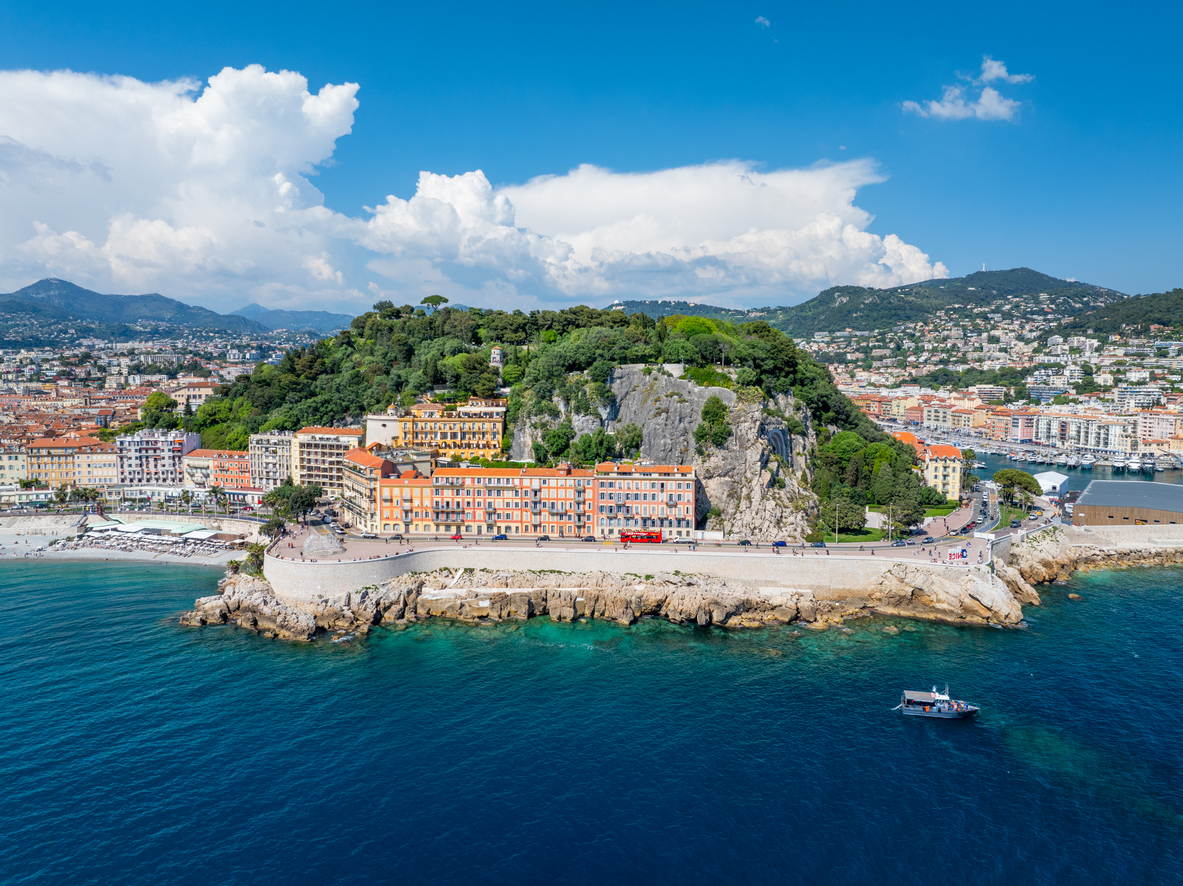
Most Beautiful Photography Spots in Nice
Nice is a city that rewards anyone who looks closely. Its colours are not just postcard blues and peaches; they are subtle chalky pastels, mirror-sheen reflections, and the deep greens of stone pines framing the Baie des Anges. If you’re planning a photography-focused day here—whether you’re based on the western Riviera around Fréjus, Saint-Aygulf, Les Issambres, Sainte-Maxime, or further east—you’ll find that Nice invites you to slow down, learn the light, and build a visual story street by street. The following guide is a locally informed walk-through of the city’s most photogenic places, with practical timing, composition ideas, and small details that typical lists miss.
Before exploring the city through your lens, discover the highlights, neighbourhoods and attractions in our complete guide to Nice.
Understanding the Light: Why Nice Photographs So Well
If you’ve ever wondered why Nice photographs with such clarity, start with the light. The curve of the Baie des Anges faces south-southwest, which means that morning light skims in from the left (from the direction of Mont Boron and the hills above Villefranche, though you’ll keep your frame within Nice), and evening light often burns out over the airport end, bathing the Promenade des Anglais in low, honeyed tones. The maritime air scatters the spectrum in a way that can turn whites creamy and blues dense—lovely, but it demands careful white balance and exposure discipline.
Seasonally, winter and early spring give you the crispest horizons; after a Mistral day, the clarity can be startling, with the Mercantour peaks sometimes snow-capped in the far distance. Summer offers softer haze but longer blue hours, ideal for shooting trams, sculptures, and reflections once the city lights switch on. In autumn, the ochres of Vieux Nice seem to deepen, and the sea keeps a gentle warmth that’s ideal for long exposures at dusk along the quay.
Two quick habits pay off in Nice: first, scout your shadow lines because the narrow streets in Vieux Nice open and close to light all day. Second, think in layers—foreground texture (pebbles, blue chairs, shutter details), middle ground (facades, palms, people), and background (sea or hills). The city was built to be seen in strata.
Promenade des Anglais and Quai des États-Unis: Iconic Shoreline
Start where the city exhales: the waterfront. From the pebbled slope of the beach to the string of palms and the soft curve of the bay, this is Nice’s signature line. Many photographers arrive at Place Masséna and walk south until the checkerboard paving gives way to the pale sweep of the Promenade. You can keep moving for kilometres, but there are a few anchor points worth lingering over.
Rauba-Capeu and the Sea Wall
Just east of the Opera district, the walkway wraps around to Quai Rauba-Capeu. The open horizon here is clean, with steps down to the water and a low wall ideal for blue-hour tripods. The popular hashtag sculpture nearby offers a bright focal object—but step back a little to avoid crowding and to make the curve of the bay read. At sunrise in winter, a magenta band sometimes pools low over the sea; at that time, aim a long lens back toward the Promenade to compress the sweep of the shore.
The Blue Chairs and the Pebbled Foreground
Nice’s classic blue chairs line the Promenade; they make simple, graphic anchors for both close-ups and long-lens cityscapes. Try shooting along the chairs at a shallow angle, opening at f/2.8 or f/4 to blur the background while keeping a single armrest razor-sharp. Alternatively, kneel at the waterline, let the polished grey pebbles fill the bottom third of the frame, and use a graduated ND filter to hold the sky. On calm days you can catch a subtle mirror glow off wet stones just after a wave retreats.
Long Exposures and the Westward Glow
As the sun slides behind the airport side, the light can flatten. That’s your cue for long exposures: neutral density (ND 6–10 stops) to smooth the sea, a small aperture to hold detail in the palm fronds, and a two-second timer to avoid vibration. If clouds are moving, angle the camera such that their motion radiates over the bay curve, giving a painterly streak from frame corner to horizon.
Colline du Château: The City From Above
Castle Hill—Colline du Château—is the grandstand for Nice. Multiple belvédères (viewing terraces) offer subtly different angles, and it’s worth scouting each to see how the pier, the Promenade, and the port align.
Belvédère de la Tour Bellanda
From this terrace, the bay arcs elegantly. A mid-telephoto (70–100 mm) compresses the Promenade’s palms and arc of the coast, while a wider lens (24–35 mm) allows you to include a stone parapet or pine branches as a frame. Morning light rakes across the facades, picking out Arcade shadows and balcony cast-iron. If you arrive at first light, look for a thin ground fog over the sea—occasionally the air layers create a pearly gradient that digital sensors love.
La Cascade and Soft Mist
The man-made waterfall near the summit offers an unexpected study in motion. Shoot from the side rather than head-on; that way, the water’s veils overlap limestone edges for more depth. A tripod is useful but not essential—brace against the stone rail, drop to 1/5 s with image stabilization, and you’ll often get that silky texture. The moss here glows intensely green in April and May; a circular polarizer will pull glare off the wet rock and saturate colour without looking artificial.
The Port Overlook
Walk east across the top of the hill until the city falls away to the harbour. From here, you’re looking onto Port Lympia’s two-tone facades and the basin of working craft and sleek dayboats. Wait for a ferry or a pilot boat to cut a wake across the frame; in blue hour, the geometry of quay lights and masts makes for a quietly elegant grid.
Vieux Nice: Colour, Shadow, and Texture
Old Nice is a study in verticals and recesses—streets so narrow the light becomes a ribbon. To work here, watch the angles as the sun tracks across the lanes. Mid-morning is your best friend: laundry lines glow, shutters throw striped shadows, and vendors set out crates that build natural still lifes.
Place Rossetti and the Cathedral Facade
Place Rossetti is lively but photographically forgiving. The square is just large enough to stand back and compose the baroque facade of Cathédrale Sainte-Réparate without keystoning too hard. A tilt-shift lens is perfect, but a careful vertical alignment and stepping back toward the gelateria corner will do. Speaking of gelato, the famous Fenocchio stall is a bright, human-scale prop—capture the moment someone receives a towering cone, hands outstretched, with the dome blurred softly behind.
Rue Pairolière and the Delis
Move north toward Rue Pairolière where spice shops and small delis spill scent and colour into the air. Here, shoot details: scoops of olives, pyramids of candied fruit, a coil of sausage hung against an ochre wall. Remember etiquette: vendors generally welcome respectful photography if you ask; a simple “Ça va si je fais une photo?” accompanied by a smile opens doors.
Hidden Corners and Trompe-l’œil
Keep an eye out for painted window frames and faux stonework—trompe-l’œil is a local art. Some corners around Rue Droite and Rue de la Préfecture show entire pilasters and window frames painted with surprising finesse. Isolate a single painted shutter against real stucco, and let the ambiguity do the work.
Cours Saleya: Markets in Motion
Cours Saleya is Vieux Nice’s open-air stage. Mornings bloom in floral colour—literally, as the flower market unfolds under striped awnings. This is where you want to work fast, with a prime (35 mm or 50 mm) on a light body and a readiness to kneel for a different angle.
Morning Rhythm
Arrive early. When the sun hits the tops of the awnings, you can meter for highlights and let the shadows fall deep, sculpting petals and stems. Pair flowers with background architecture: changing your position by a meter can align a bucket of ranunculus with a distant dome, adding a contextual note. If backlight is harsh, embrace silhouettes—petal shapes read beautifully even as blacks go inky.
Monday Antiques
On Mondays, the market shifts to brocante and antiques. Golden hour can glint off brass and glass; ask permission before moving items, and consider bringing a microfiber cloth to remove a smudge on a mirror you plan to shoot. Reflective surfaces are fun but treacherous—watch for self-portraits and adjust your angle by a few degrees to stay unseen.
Snacks as Storytelling
There’s a narrative mercy in pausing for local food. A warm slice of socca—a chickpea pancake beloved by locals—photographs beautifully when torn open, steam lifting in backlight. Nearby, Maison Auer, a historic confectioner on Rue Saint-François de Paule, displays candied fruits in jewel tones behind vintage glass—perfect for a short depth-of-field study that feels timeless.
Place Masséna and the Promenade du Paillon: Geometry and Reflection
Place Masséna is Nice’s optical theatre: black-and-white checks underfoot, terracotta facades with pale archways, and the tall, softly glowing seated figures by Jaume Plensa perched above eye level. In the hour before and after sunset, this area comes alive for photographers.
Checkerboard Precision
Compose low and straight: a central vanishing point across the square, with the Arcades and statue lines drawing your eye. Light trails from the tram can be layered at blue hour—meter for the buildings, keep ISO modest (100–200) and drag the shutter (1–2 seconds) as the tram glides through. If the square is crowded, shift to the northwest corner near the arcades and capture passing silhouettes crossing the checks; they look like chess pieces mid-move.
Miroir d’Eau: The Water Mirror
Across the street, the Promenade du Paillon’s water mirror offers cloud and skyline reflections. On still days you’ll get literal mirrors; in a breeze, a painterly ripple. Place a child’s splash or a dog’s stride in the foreground at 1/500 s to freeze droplets against reflections. On warm evenings, low fountains mist; backlighting them at 85 mm gives feathery halos that feel cinematic.
From Day to Night
This is a rare place where you can stand in one spot for an hour and collect four different moods: harsh noon patterns, golden light along the facades, blue-hour neon, and night reflections. Bring a microfiber cloth to wipe off spray from lenses if you work near the jets, and mind the edges where tiles meet the shallow pool—tripods can wobble.
Port Lympia: Colour Blocks and Working Water
Nice’s port is an antidote to over-glossed Riviera imagery. It’s very much alive: forklifts buzz, fishermen mend nets, and delivery vans reverse with a beep. The surrounding buildings wear deep saffron and tomato-red paint, with pale trim that pops even on overcast days.
Pointus and Paintwork
The small wooden fishing boats, called pointus, are irresistible. Many are painted in candy colours with names on the bow. Get low on the quay so the hull fills half the frame and the townhouses stack behind. A polarizer will deepen the paint tones and cut surface glare on the water.
Quai Perspectives
From the eastern quai, a long lens back toward the western side compresses the facades into a tight patchwork, with masts rising like lines on a stave. Late afternoon is best; the sun brings out texture in the paint and rails. If you prefer street energy, walk Rue Bonaparte where cafes hum; light through cup rims, pastries on marble tables, and the occasional bicycle lean together into easy vignettes.
Socca and Stories
For an atmospheric pause, the old socca ovens in the port quarter serve as social hubs. A plate of socca at a simple table, shot overhead with edges of glasses and a hand reaching in, becomes a quiet portrait of the city’s daily life. There’s no need to stage—just observe the rhythm and photograph cleanly.
East of the Port: Coco Beach and Cap de Nice
Past the port, the shoreline turns rocky. Coco Beach is essentially a series of concrete and stone ledges cut into the coast, where locals sunbathe, swim, and watch storms roll by. For photographers, it’s a natural studio: wave energy, stair-rails for leading lines, and broad views back toward the city.
Wave Drama and Safety
On days when swell runs, long exposures turn chaos into silk. Place the camera at ledge height, set your ND filter, and time the shutter as the backwash sucks down. Stay well back; rogue splashes can drench gear. On calm evenings, the steps and rails make clean graphic shapes against a twilight sea—minimalist studies at 35–50 mm work well.
Le Plongeoir’s Silhouette
Near the headland, the old diving platform—today’s Le Plongeoir restaurant—creates a striking silhouette. From the public path, frame it against open water at sunset. Keep the structure as a dark cutout and let sky color do the work; resist overexposing. If the lights are on, wait for a human figure to move across a lit window to add scale.
Mont Boron and Fort du Mont Alban: High Pines and Wide Vistas
For sweeping landscapes, climb Mont Boron. The trails weave through pine and evergreen oak, with occasional windows that burst onto citywide views. Higher still, the Fort du Mont Alban platform (outside the fort) offers one of the finest panoramic points over Nice’s bay and the hills beyond.
Pine Framing
Use the long arms of the pines as a natural vignette. A 24–35 mm focal length lets you include both needle texture and the full curve of sea and city. Early morning, the air is clean, the light side-lit, and paths quiet. If you’re carrying a drone, be mindful of local regulations; the park sits near urban areas where restrictions change. Handheld panoramas are a safer bet: shoot vertical frames, overlap generously, and stitch later.
Sunrise Discipline
Arrive before dawn, choose your foreground pine, and wait. As the first band of light clears the hill shoulders, the bay separates into glitter and shade. A graduated ND filter across the sky keeps the city’s mid-tones intact. If you catch low clouds, let them stretch across the ridge; their softness plays well against the city’s geometry.
Cimiez Heights: Monastery Gardens and Quiet Greens
In a city of seafront drama, Cimiez provides calm. The Monastère de Cimiez has gardens of geometric beds, cypress alleys, and frames onto the city. Nearby, the Matisse Museum sits in a red Genoese-style villa, photogenic from the outside with shutters and symmetrical windows.
Garden Geometry
Look for the overlap of clipped hedges and stone. At golden hour, the garden’s low walls cast edges that help guide the eye. A 50 mm prime here is perfect: enough compression to flatten perspective slightly, but nimble enough to work around small crowds. In spring, roses add dots of colour; consider underexposing by a third of a stop to hold petal tone.
Quiet Views Over the City
From behind the monastery, small belvédères open onto Nice below. Use the balustrade as a baseline and place a tall cypress off-centre to balance the bay curve in the distance. On breezy days, shutters click best at 1/250 s or faster to keep leaves sharp; let the city sit softer, so the feeling remains contemplative rather than clinical.
West Nice: Parc Phoenix, Palms, and Plane-Spotting
Near the western edge of the city, Parc Phoenix is a family-friendly park built around a large lake and a tropical greenhouse. For photographers, it’s a chance to switch scales: macro in the greenhouse, reflections on the lake, and candid life around the lawns.
Greenhouse Macro and Palms
Inside the greenhouse, humidity beads on leaves and glass bridges arc over pools. Bring a small cloth to defog your lens and try a macro lens or extension tubes for leaf textures, spirals of fern fronds, and the architecture of palms seen from underneath. Outside, the lake gives clean mirror shots in early morning when the surface is still.
Evening Approaches
For a very different subject, late-day light at the western beach sectors can line up with airplane landings and departures. If you enjoy dynamic frames, use a long lens to catch an aircraft on short final with palms or parasols as foreground silhouettes. Keep shutter speeds high and frames clean; it’s a quick, graphic contrast to the old-town mood.
Hidden Facades, Arcades, and Belle Époque Details
Nice’s layers of architecture are photogenic far beyond the waterfront. The quarters around Boulevard Victor Hugo, Rue de France, and the Carré d’Or present carved stone, cast-iron balconies, and elaborate doorways that take beautifully to raking light.
Doors, Grilles, and Shadows
Walk mid-morning or late afternoon when light skims surfaces. A short telephoto isolates wrought-iron arabesques against pale stone. Pay attention to intercom panels and modern signage; a slight angle change can remove distractions. If you love patterns, the arcades near Place Masséna provide repeating arch forms—compose a frame that stacks the sequence and wait for a lone passer-by to stride into a pool of light.
Courtyard Peeks
Occasionally, an open door reveals a courtyard with mosaic tile or palm shade. Always ask before entering; a quick, polite request to a concierge or resident keeps you welcome. Some of the best shots are incidental: a stairwell with light falling like a slice, or a mailbox bank in perfect repetition.
Trams, Squares, and Street Rhythm
Nice’s modern tram lines thread through its historic core, an excellent subject for motion studies and urban geometry. Avenue Jean Médecin, Place Garibaldi, and the smaller squares in the port quarter all have workable sightlines.
Avenue Jean Médecin’s Straight Shot
This is your tramline classic. Position low to the ground for a converging-rail illusion, but stay very aware of safety and traffic. As evening comes on, storefronts glow warmly; try panning at 1/15–1/30 s as a tram slides past, keeping its nose sharp and letting the surroundings blur.
Place Garibaldi’s Yellow Facades
The square’s soft yellow buildings and green shutters make a luminous palette at any hour. Trompe-l’œil windows appear here, too; aim for layered frames where real balconies overlap painted ones. Candid photography is welcome if you’re discreet—capture friends talking under arcades, a cyclist crossing from shadow to light, or a waiter’s arm balancing cups.
Marché de la Libération
Up near the old train station halls, the Libération market is more local than Cours Saleya and a joy for early risers. Rustic produce displays, vendor banter, and the sun creeping over rooftops make for authentic scenes. Work small and quick: a 35 mm prime, aperture priority around f/4–f/5.6, ISO 400 to keep shutter speeds safe as people move.
A Golden-Hour Mini Itinerary
If you have one fully photographic day in Nice, this sequence touches many moods without rushing. Pack a light kit, good shoes, water, and a snack.
- Sunrise on Colline du Château: Start at the Bellanda terrace for the bay. Capture the first rakes of light across the Promenade.
- Morning wander in Vieux Nice: Work Rue Pairolière and Place Rossetti for textures, shutters, and quiet moments as the city wakes.
- Cours Saleya market: Focus on flower backlight and vendor portraits; pause for a slice of warm socca.
- Midday geometry at Place Masséna: Shoot high-contrast checks and the Miroir d’Eau reflections, then a tram pan on Avenue Jean Médecin.
- Afternoon at Port Lympia: Frame pointus, facades, and the working port’s movement; a coffee on Rue Bonaparte offers candid street scenes.
- Late day at Coco Beach: Minimalist sea-and-rock studies, or wave tracers if swell runs.
- Blue hour back at Place Masséna and Quai Rauba-Capeu: Light trails, sculpture glow, then the bay as city lights come on.
What to Pack for Nice Photography
Keep your kit focused and mobile. You’ll cover ground, move up and down steps, and duck into markets and gardens—flexibility matters more than sheer lens count.
- Two lenses: a fast 35–50 mm prime for street and low light, and a 24–105 mm zoom for flexibility or a 70–200 mm for compression from overlooks.
- Filters: circular polarizer (for paintwork, sea, foliage), 6–10 stop ND (long exposures), and a soft graduated ND (skies over sea or city).
- Travel tripod: compact, stable enough for long exposures at the Promenade and Coco Beach; consider spiked feet covers for stone.
- Lens cloths and a blower: sea spray and fountain mist are frequent; clean surfaces keep colours crisp.
- Spare batteries and a light rain cover: sudden sea breezes or mists can surprise you.
- Comfort: lightweight shoes with grip for stone steps, a foldable hat for summer glare, and water.
Shooting Ethically: People, Markets, and Privacy
In France, street photography is common, but privacy is valued. As a rule of thumb, wide scenes of public places are fine; tight portraits of identifiable people merit consent. Markets are social spaces—ask politely, and you’ll often be rewarded with smiles and even better angles. With children, avoid close shots unless you have explicit parental permission.
In churches and quiet gardens, silence and discretion count. Switch your shutter to electronic where possible, step lightly, and never use flash during services. In busy squares, be aware of crowd flow so your tripod doesn’t obstruct. If a security staff member requests you shift, do so with a nod; there’s usually a better angle a few steps away anyway.
Working With Colour: Mediterranean Blues and Ochres
The Mediterranean palette can be both saturated and subtle. To keep it honest and avoid overcooking:
- Set white balance thoughtfully: “Daylight” works under stable sun, but “Cloudy” often flatters late afternoon skin tones and stone. For precision, shoot a quick grey card in shifting light.
- Protect your highlights: the sea and white facades clip easily. Expose to hold sky detail and lift shadows later; modern sensors give you room.
- Use the polarizer gently: a quarter turn may be enough. Over-polarising can make skies blotchy at wide angles.
- Find complementaries: blue against orange is the city’s natural scheme—look for a cobalt shutter on an ochre wall, or a turquoise hull against terracotta facades.
Black-and-White Nice: Shapes and Shadows
While the city’s colour sings, black-and-white thrives in Nice’s geometry. The arcades of Place Masséna, the chessboard paving, the ribbed palm trunks, and afternoon shadows in Vieux Nice all read with graphic power. Think in contrast: meter for the highlights at the market awnings and let deep shadow swallow the rest, or wait for a cyclist to cross a bright patch under the arcades. A well-placed human silhouette against the Miroir d’Eau’s steam feels timeless.
Seasonal Notes and Local Rhythms
Every season reshapes your frames:
- Winter: crisp horizons after windy days; long shadows in Vieux Nice from mid-afternoon; fewer crowds at viewpoints.
- Spring: flower market in riot mode; fresh green at Cimiez; occasional morning mists for atmospheric waterfront shots.
- Summer: longer blue hours; vibrant street life late into the evening; midday heat encourages indoor sets (museums’ exteriors, arcades, shaded alleys).
- Autumn: warm sea, quieter quays, deeper facade colours after the sun’s angle lowers.
Museums and Cultural Facades Worth a Pause
Even if you’re not visiting exhibitions, several museum exteriors lend fine frames. The Matisse Museum’s rhythmic shutters in Cimiez, the contemporary angles of the Museum of Modern and Contemporary Art (MAMAC) near Place Garibaldi, and the Opera’s neoclassical frontage in the old town are all practical studies in proportion. Keep in mind that tripods can be restricted inside museum grounds; from public ways, you’re generally fine.
Cafés and Confectioners as Photographic Sets
Nice’s cafés offer more than refreshment—they provide ready-made still lifes and candid backdrops. A narrow espresso cup aligned with a terrazzo tabletop, a slice of socca on brown paper, or candied citrus behind an antique glass counter all embody the city’s esprit without needing people front and centre. If you want a flourish, the old diving platform restaurant near Coco Beach, mentioned earlier, provides a silhouette without stepping onto private property.
If You’re Based West: Making a Day of It
For travellers staying in Sainte-Maxime, Les Issambres, Grimaud, Saint-Aygulf, or Fréjus, a photographic day in Nice is entirely realistic. Start early to arrive before the market swells, and plan your return after blue hour. The essential rhythm—overlook at dawn, old town mid-morning, shore in late afternoon, and reflections at night—compresses cleanly into one long, rewarding loop. Pack light and allow time to simply watch; often the best frames happen in the minutes you’re not hunting.
Building a Personal Series: Beyond the Greatest Hits
To move past postcard repetition, set yourself a small assignment. Perhaps “Doors of Nice” over a morning, focusing on letterboxes and knockers. Or “Blue Chairs,” photographed in different weather and angles. A favourite is “Reflections,” catching city fragments in café windows, puddles at the Miroir d’Eau, and polished boat hulls in the port. The constraint brings coherence, and Nice’s density of visual cues makes the exercise fun rather than limiting.
Editing Workflow for Riviera Light
When you sit down to edit, think of Nice’s light as delicate. Resist over-saturation; the city’s ochres and blues don’t need much help. Lift shadows gently to keep the feel of narrow lanes; add a touch of clarity or texture to stone and shutter detail, but watch skin tones in candid shots. For long exposures, ensure horizons are level—curving the bay is fine compositionally, but a tilted sea is not. If your camera rendered midday scenes a bit harsh, a subtle warm split-tone in highlights can restore the Riviera glow without looking contrived.
Local Insight and Regional Context
Nice doesn’t exist in isolation; its look and mood are part of a broader Riviera fabric that stretches west past Cannes and into the Gulf of Saint-Tropez. For a wider introduction to the coastline, villages and landscapes that define the region, see our complete Côte d’Azur guide.
Safety, Weather, and Practicalities
Nice is generally straightforward to photograph, but a few common-sense notes help. At the water’s edge, spray sneaks up; keep a lens cloth handy and step back if swell rises. In markets and on trams, protect your gear discreetly—nothing alarming, just zip bags and use a wrist strap in crowds. On Castle Hill and Mont Boron, trails can be dusty; closed shoes grip stone better than sandals. In summer, the sun is punishing at midday; prioritize shade and indoor sets then, saving open waterfront shots for the soft light at day’s edges.
Putting It All Together: A City That Teaches You to See
By the end of a day or two in Nice, most photographers notice a curious shift: you stop looking for the grand scene and start seeing the small alignments—slanting light under an arcade, a shutter’s peel, the way a blue chair arcs to meet a wave. That’s the city’s gift. It rewards patience and attention, those old-school virtues that can’t be replaced by gear or presets. If you leave with a card full of images that feel both fresh and unmistakably “Nice,” you’ve tuned to its frequency.
And if, on another trip, you begin your Riviera day farther west around Sainte-Maxime or Fréjus, you’ll recognise the same light’s DNA and how it bends differently over each bay. That awareness—of hue, of breeze, of stone—will travel with you, and the frames you make will carry more than a pretty view. They’ll hold a living place.
Looking for the perfect base to explore the French Riviera? Discover our holiday villas and holiday homes on the Côte d’Azur.

