

 EN
EN  NL
NL
 DE
DE
 FR
FR

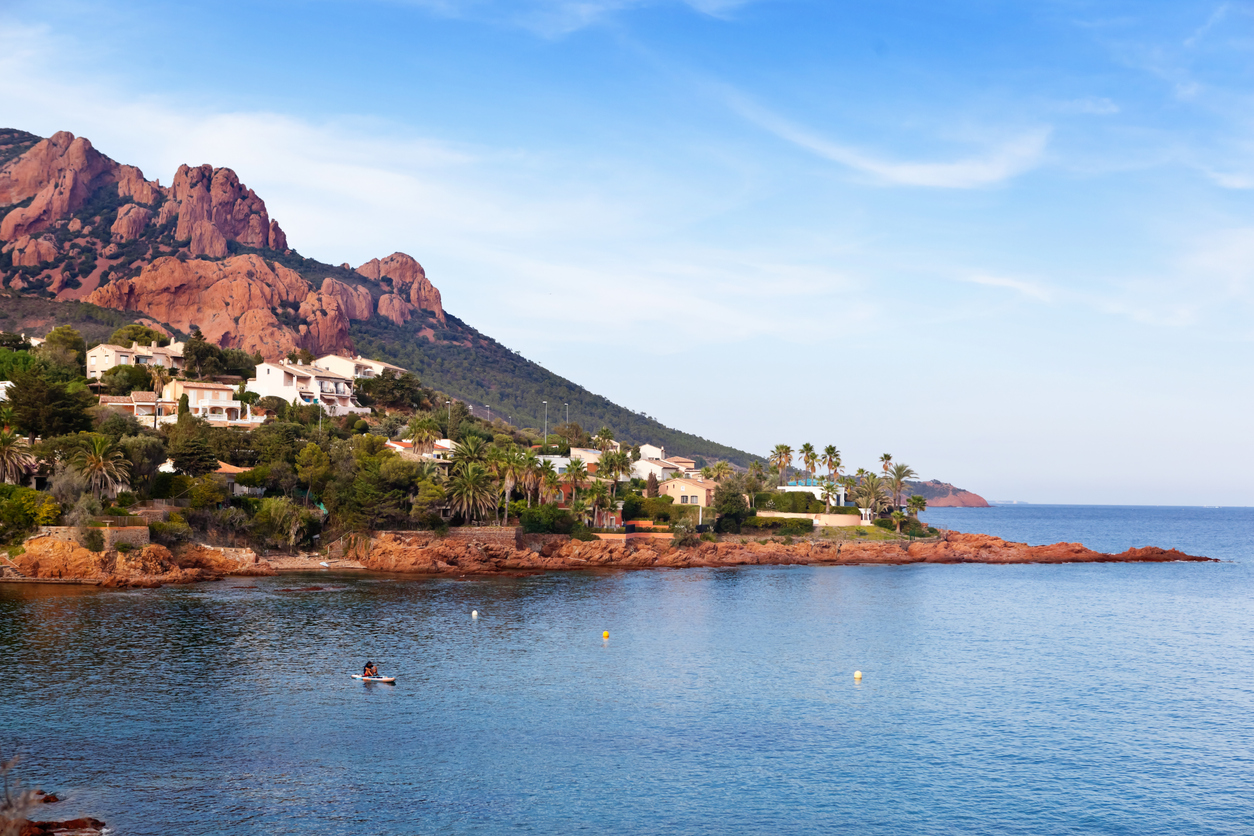
Most Beautiful Photography Spots in Saint-Aygulf and Fréjus
Saint-Aygulf and Fréjus sit on a remarkably photogenic stretch of the Mediterranean, where pale sands, red-tinged rocks, Roman stonework, and weathery pines converge within minutes of one another. If you love to chase changing light and layered textures, this compact corner of the Var will keep your lenses busy from blue hour to moonrise. What follows is a locally tuned guide to the most rewarding vantage points, the times they sing, and the practical touches—wind, tide-like swell, and access—that make the difference between a good frame and a special one.
Before exploring the area through your lens, discover the beaches, nature reserves and historic sites in our complete guide to Fréjus and Saint-Aygulf.
How the light moves between Saint-Aygulf and Fréjus
Both Saint-Aygulf and Fréjus benefit from an east–west shoreline, so the sea often catches first light cleanly and holds color for long evening fades. Morning favors Saint-Aygulf’s broad beaches and wetlands: low sun skims the Étangs de Villepey reeds and pools, while the dunes behind Esclamandes hold delicate shadows. By late afternoon, the façades of Fréjus Old Town glow, the amphitheatre’s arcs throw sharp relief, and Port Fréjus begins to mirror the sky. Sunset can be equally strong at the harbor mouth or at Saint-Aygulf’s littoral coves, where rocky shelves point toward the horizon.
Understanding wind, sea, and clarity
Local wind patterns matter. After a mistral, the air clears to a crystalline blue that flatters distant layers—think the red-ochre folds of the Estérel across the bay and the rugged silhouette of the Rocher de Roquebrune inland. A southerly brings haze and softer contrast, which can be lovely for pastel, high-key seascapes but less ideal for long telephoto work. The Mediterranean has minimal tidal range, yet wind swell shifts the sea line notably; on breezy days, expect dramatic spray on Saint-Aygulf’s rocks and clean ripples along Fréjus’ marina inlets. Pack a microfiber cloth—salt mist can cloud a lens in minutes when the swell wraps into the coves.
For more destinations, viewpoints and travel inspiration across the region, explore our complete Côte d’Azur guide.
Saint-Aygulf: The Étangs de Villepey wetlands
The Étangs de Villepey form a mosaic of brackish pools, reedbeds, and sandbars stretching behind Saint-Aygulf’s dunes. It’s one of the area’s most quietly magical photography spots, especially at dawn when mist sometimes slips across the water and the birds are busiest. Timber footbridges and gravel paths thread the margins, creating natural leading lines as well as discrete vantage points where you won’t disturb wildlife.
Best vantage points and birdlife
Look for the wooden footbridges on the town side of the D559, where narrow channels reflect the sky in long, glassy strips. From these platforms, you can frame egrets and herons fishing along the reed edge or capture black-winged stilts tiptoeing through mirrored shallows. In late afternoon, face west: the light backlights reed plumes, and silhouettes of terns and gulls hover over the Argens outflow. Winter can bring kingfishers to sheltered cuts; summer rewards broader scenes—patchwork water, reed textures, and the shadow play of passing clouds.
Composition ideas and lenses
A 70–200 mm is the most versatile choice here: tight enough for bird behavior without isolating subjects unnaturally, long enough to compress receding pools and reeds into harmonic layers. Try a low vantage—kneel on the boardwalk—to bring reflections up into the frame. Use the boardwalk rails as foreground anchors, or stack verticals: sky, reed fringe, reflective water, and the dark slice of a footbridge. In still air, experiment with slow shutter speeds to gently blur reed tips; when it’s gusty, embrace the movement and let wind rake through the grass as a storytelling element.
Saint-Aygulf: Esclamandes Beach and the Argens mouth
Plage des Esclamandes isn’t a single beach but a sequence of sandy zones stitched by dunes, beach grass, and seasonal wooden walkways. On the lagoon side, the river Argens fans into shallows that change daily: one day a smooth crescent, the next a channeled braid of sand and water. It’s a painterly place to work with lines and negative space.
Dunes, patterns, and kite-surf action
Just behind the shoreline, low dunes collect wind patterns, especially after a breezy night. Arrive early so footprints haven’t spoiled them; work with a 35–50 mm and kneel close so ripples lead toward a distant pine, a lifeguard post, or the thin glint of the sea. On mistral afternoons, the eastern sector often hosts kite-surfers. Track a colorful kite slicing across darkening water while a rider carves a foamy “S”—a fast shutter speed will freeze spray; 1/50–1/80 sec will introduce a graceful smear if you pan smoothly. Keep the horizon tight and level: a squeaky-clean baseline makes the chaos of spray and fabric pop.
Sunrise reflections and silhouettes
At dawn, the Argens mouth is calm enough to become a sheet of mirrored color. Stand upwind so ripples are minimal; find a sliver of open water between reeds and sandbars, then wait for a single bird crossing or a lone walker on the far shore. Silhouettes are strongest when you leave a lot of breathing room above the subject and let the frame carry bands of color—cool violet near shore deepening to warm orange nearer the sun.
Saint-Aygulf: The littoral path and secret coves
The Sentier du Littoral skirts Saint-Aygulf’s rocky sections, dropping to pockets of red-splashed stone where Aleppo pines lean over delicate inlets. These coves are ideal for textured, intimate seascapes: a cracked rock slab in the foreground, a wedge of translucent water, a stair of waves, a slant of pine above. The geometry is there; the job is to simplify.
Rock textures, pines, and blue hour
After sunset, set up on a stable rock ledge and aim for long exposures that turn a restless cove into milky threads. Ten to twenty seconds typically smooths small chop while preserving enough structure to hint at movement. Compose so branches frame the sky rather than bisect it; pine silhouettes read cleanly against cobalt blue. A polarizer at twilight can deepen color but beware of uneven skies—keep it subtle and remove it for long exposures if it complicates vignetting.
Fréjus Old Town: Stones, cloisters, and quiet corners
Fréjus’ medieval core is compact, textured, and best approached on foot in soft light. It is not staged; it’s lived-in. Weathered shutters, terracotta hues, and clipped voices from a bakery queue make a natural backdrop for unobtrusive street scenes or architectural studies without crowds.
Fréjus Cathedral, cloister, and baptistery
The Cathedral of Saint-Léonce anchors a cluster of passages that shift from open sun to deep shade within steps—excellent for learning to manage contrast. The cloister is a gift for low-light detail: look up at the painted wooden beams (muted, worn color; keep your ISO modest and shutter steady), explore the rhythm of columns, and pair the cool shade with the warm square outside. The small garden with its well-like centerpiece offers an axial composition—columns at the sides, the well in the middle, and a patch of sky beyond. If you have a 24 mm prime, test two versions: one leveled for symmetry, another tilted slightly to let the lines converge for a more dynamic, almost cinematic feel.
Roman theatre and the Porte d’Orée — sculpted light
Fragments of Rome are stitched into Fréjus’ daily life. The Roman theatre and the freestanding Porte d’Orée (the “Golden Gate” remnant) make strong studies with raking light. Early or late sun outlines the stones, layering warm edges over cool shadow. Step back to use a lone cypress or a low wall as a foreground shape, then carefully exclude modern clutter. On overcast days, work closer; let the even light show joint lines and surface grain without harsh contrast.
Fréjus Amphitheatre and the Reyran aqueduct
The amphitheatre sits on the northern edge of town and rewards patience. Its curved walls and repeating arches channel the eye; a long lens compresses them into graphic ribbons, while a 35 mm lets you place a single passer-by against the scale to introduce a humane note. The remaining arches of the Roman aqueduct in the Reyran valley are quieter but no less photogenic. Low afternoon sun tracks across the piers and throws shadows that echo the arch curves in negative—perfect for studying rhythm and echo.
Managing contrast and crowds
For both sites, mid-morning can mean busier footfall and harsher light. If midday is all you have, work in black and white; let contrast be your friend. Deepen blacks to isolate silhouettes beneath the arches and burn back bright gravel to keep attention on the stone. When people are numerous, stop chasing empty frames and commit to scale: give space to the architecture and treat passing visitors as punctuation marks—tiny, bright figures in the sweep of a wall.
Port Fréjus and the seafront curve
Port Fréjus is made for evening. The marina’s basins collect double rows of masts and palms that bloom into neon reflections as the sky cools. Follow the arc from the inner quays out toward the harbor mouth; a simple walk gives you a sequence of angles, each more open to the sky than the last. The small beacons at the entrance throw saturated highlights that star beautifully at f/11–f/16.
Harbourside color and long exposures
Set your tripod low on the quay and align a fendered hull in the foreground to ground the frame. As lamps flicker on, dial a 10–20 second exposure to elongate reflections into silky vertical lines. A subtle graduated ND can hold onto the last blush of color above the horizon while preserving the marina’s brightness. On still nights, try close-up abstracts of boat hulls, ropes, and water—just shapes and color, no horizon required.
Base Nature François Léotard: Space, sport, and sea
The Base Nature sprawls between the sea and the river plain, a rare expanse of open sky where joggers, skaters, and families scatter across giant lawns and a beachfront promenade. Photograph it as a study in scale. The absence of clutter is the subject—humans as small, moving accents under a huge coastal dome of light.
Minimalist frames and human scale
Stand back with a 50–85 mm and compress the scene so a ribbon of path runs across a near-empty field with single figures spaced like notes on a staff. On onshore-breeze days, clouds can stream in low from the sea; use a 1/4–1/2 second exposure to pull a thread of motion into the sky while pedestrians remain crisp. If skaters are your thing, isolate one person against the sea with the faint line of the horizon placing them almost in silhouette—timing the kick or a carve at the apex of motion yields a satisfying, clean arc.
Villa Aurélienne and its parkland
Set slightly inland, the Villa Aurélienne sits amid Mediterranean parkland that rewards unhurried wandering. Cypress, umbrella pines, and clipped alleys lead toward the villa’s pale façade. The light here is gentler than on the coast; even in mid-afternoon, trees filter sun into patterned patches that play well with stone steps and shuttered windows.
Seasonal palettes and quiet perspectives
In early spring, fresh greens offset the villa’s cream; in late summer, drier tones and deep shadows lend a moody, cine-like quality. Work the long alleys for vanishing-point compositions, or stand at the edge of the gravel forecourt and place the villa off-center, letting a mass of cypress occupy one side of the frame. A 28–35 mm lens keeps verticals honest while letting you include enough of the trees to suggest refuge.
Markets, cafés, and everyday life: street photography cues
Morning markets in both Saint-Aygulf and Fréjus are ideal for layered street frames—hands weighing fruit, a quick laugh over olives, a shopkeeper chalking prices onto a slate. Step back rather than forward; let scenes play out and be a patient observer instead of a disruptor. Later, seek the café triangle of table, cup, and passer-by: a saucer in crisp light on a zinc top, a figure crossing a sunlit gap in the background. These small, local vignettes are what anchor your set to place.
Working respectfully around people
Keep gear small in markets and cafés. A discreet 35 mm or 50 mm prime encourages proximity without the look of surveillance. If someone becomes your clear subject, a brief nod and a “merci” afterwards diffuses awkwardness. If someone shakes their head or steps away, accept it instantly. You’ll find that moments come faster when you move with courtesy and calm.
Two photo itineraries to structure your days
With so many subjects packed into a short distance, it helps to shape your time into themes. Below are two field-tested loops that balance light, texture, and breathing room.
A dawn-to-dusk loop, day one
Pre-dawn: Begin at the Étangs de Villepey. Give yourself 20 minutes before first light to settle a composition on a footbridge. Start wide to include the reed margin, then switch to a moderate telephoto for first flights. Keep ISO low; the reflected sky will rise in exposure quickly.
Sunrise: Move to the Argens mouth at Esclamandes. Walk to where river and sea blur into a rippled plane. Frame a clean band of color and wait for a passing silhouette—one person, one dog, or a gull low over the water. Blue to gold happens fast here; expose for highlights and lift the shadows later.
Mid-morning: Follow the littoral path toward one of the rocky coves east of the center. Work foreground textures: cracked slabs, pebbled pockets, and the distinct, warm cast of the rock. Watch your feet—surge can be sneaky even on calm days.
Lunch break: Return to Saint-Aygulf’s center for a simple salad or a tartine at a shaded terrace. Keep the camera close; street moments appear and disappear with lunch rush rhythms.
Late afternoon: Drive or cycle to Fréjus Old Town. Start with the cathedral and cloister while the sun is still high enough to alternate shade and lit patch. Use the quieter lanes for portraits of texture—knockers, patinated doors, a lone bicycle against an ochre wall.
Sunset: Finish at Port Fréjus. Scout two quayside spots and pre-visualize a long exposure frame. As color builds, commit to one view and let the sky do the work. If the light lingers, walk to the harbor mouth for a final minimalist silhouette against the open horizon.
A texture-and-history loop, day two
Early morning: Villa Aurélienne. Before visitors arrive, the sound is mostly wind and cicadas. Work the alleys and side façades; keep compositions spare and quiet, maybe with a stray shadow cutting across gravel.
Mid-morning: The amphitheatre. If the light is too stark, go graphic in black and white; push contrast and enjoy how the repetition of arches becomes pure pattern. Wait for one or two figures to establish scale—no more.
Early afternoon: The Reyran aqueduct remains. Clouds or high haze are welcome; they soften top light and keep your dynamic range manageable. Step off to one side to avoid a dead-on, postcard alignment—let the arches lead diagonally.
Late afternoon: Cathedral quarter again, for what you missed. Spend time inside the cloister with a slower, more contemplative approach. A few frames of hands or details—worn stone edges, painted beam motifs—round out the story.
Blue hour: Back to Saint-Aygulf’s littoral shelves. Choose a small cove, compose carefully, and lean into the slow, steady exhale of long exposures. Pine silhouettes above luminous water will close your day with a hush.
Practical notes for photographers
These locations are close together, but the small practicalities help turn a pretty outing into a productive shoot. Below are the little things that locals quietly account for.
Getting around, parking, and access
Saint-Aygulf’s wetlands access points are beside main roads; arrive early for the simplest parking, especially in high season. Stick to marked paths and boardwalks around the Étangs de Villepey; the soft margins and nesting areas are fragile. The Esclamandes dunes are protected—use the wooden walkways to avoid trampling grass and to keep footprints out of your own foregrounds. In Fréjus Old Town, park around the periphery and walk in; lanes are narrow and photography is better unhurried. The amphitheatre and the aqueduct are straightforward to locate; if you’re unsure, ask a shopkeeper or passer-by where “les arches romaines” are—directions will come with a smile and a hand wave.
Safety, etiquette, and environmental care
On the littoral rocks, keep one eye on the sea; sets arrive in twos and threes, and soles slick with spray slip fast. Secure tripods low when the wind is up, and never turn your back on surge at the waterline. In the wetlands, give birds a generous buffer; if a subject changes behavior because of you, you’re too close. In town, avoid blocking doors or steps, and remember that a quiet nod goes a long way when you work close to people.
- Carry a small trash bag. Wind lifts light litter; you’ll find it in your frame anyway, so you might as well remove it and leave the scene better than you found it.
- Neutral colors help you blend—khaki, grey, navy—and reduce glare when you work near reflective water.
- A circular polarizer is helpful for midday water and glare on stone, but use sparingly at the wide end to avoid uneven skies.
Post-processing approaches for this coastline
Files from Saint-Aygulf and Fréjus benefit from restraint. The coast already offers saturated color and stark contrasts; slight nudges keep the look convincing. Think luminous rather than loud.
Keeping blues believable, stones warm
For seascapes, keep white balance on the cooler side at dawn (5,000–5,500 K) and lean warm at sunset (6,000–6,300 K), but let the histogram, not presets, decide. It only takes a few points of vibrance to enliven marina reflections; too much and you’ll lose the silken grace of long exposures. For Roman stone and ochre façades, lift midtones gently to let surface texture show; small curves adjustments are safer than big global sliders. In mixed-light cloisters, brush in local contrast and clarity very lightly on carved details while protecting shadows to preserve a sense of air. Finally, for the dunes and wetlands, avoid heavy clarity or dehaze; these scenes wear a soft edge that whispers rather than shouts.
Night photography: after the crowds
When the day cools and the last dinner rush fades, both Saint-Aygulf and Fréjus take on a measured calm that’s lovely to photograph. Reflections sharpen, footsteps thin, and the geometry of lamps and masts arrives with a crispness the daytime sun rarely allows.
Coastal neon, harbor trails, and quiet cloisters
At Port Fréjus, aim for lamplight stitching a curve across the water. Stack exposures if needed to balance the brightest signs with the sky’s last violet; ten minutes after sunset, highlights compress naturally. On the littoral shelves, try a starburst study: stop to f/14 and let a solitary lamp at the path’s bend throw points of light while the sea reads as a dark slate. In Old Town, keep ISO conservative and let longer shutters whisper detail out of the shade; brick and stucco reward patience. Don’t over-polish noise—grain at night can feel like breath on still stone.
Five unmissable frames to anchor your set
If you like leaving with a coherent series rather than a scatter, aim for these anchors. They give a narrative across sea, stone, and daily life.
- Dawn at the Étangs de Villepey: a reed-edged mirror of sky with a single bird etched against the first pale band of color.
- Esclamandes at sunrise: a sandbar curve with a human silhouette at the seam of water and light.
- Littoral cove at blue hour: pine branches framing a long-exposure sea, rock texture reading in twilight.
- Fréjus Cathedral cloister: a quiet, low-light study of beams and columns, intimate and still.
- Port Fréjus after sunset: mast reflections turned into soft neon threads across calm water.
Gear checklist tuned to these spots
Travel light, but pick tools that match the subjects you’ll actually meet.
- 24–70 mm or a pair of small primes (28/35 and 50): architecture, coves, markets, and general scenes.
- 70–200 mm: wetlands layering, amphitheatre compression, and candid details across a square.
- Compact tripod: for blue hour and marina long exposures; keep it low on breezy quays.
- Polarizer: for glare on water and stone; use with care to avoid odd skies.
- ND filter (3–6 stops): to tame shutter speeds for wave blur and evening reflections.
- Microfiber cloths and a small blower: salt spray and sand drift are givens on windy days.
- Soft footwear with grip: wet rock is treacherous even when it looks dry.
Reading the weather and adjusting plans
When a plan meets the coast, the coast wins, but you can pivot gracefully.
Mistral day: Skip the dunes at midday (sand will scour your gear) and embrace action at Esclamandes in late afternoon—kite-surf arcs against dark blue water. Evening at Port Fréjus will be crystal-clear; reflections may be choppy, so go tighter on hull details.
Hazy southerly: Choose Villa Aurélienne and Fréjus Old Town from late morning through afternoon—soft contrast suits stone and stucco. At sunset, head for a littoral cove; haze glows beautifully when the sun slips below a thin cloud bank, giving you a long, gentle gradient for minimalist frames.
Cloudy, windless: The wetlands become your canvas. Without harsh contrast, you can frame delicate reed textures and subtle water tone shifts all day. The amphitheatre also shines under soft light; you can work inches from the stone without deep shadows killing detail.
Food, pauses, and small local interludes
Photography days are long; small breaks keep your eye fresh. In Saint-Aygulf, duck into a side-street bakery for a quick espresso and a still-warm fougasse before returning to the dunes. Around the market square, you’ll find generous fruit stalls that make fine still-life studies in passing sunlight—just ask before shooting up close. In Fréjus toward late afternoon, claim a tiny table near the cathedral quarter for a citron pressé; the oblique light and murmuring square create an easy backdrop for a restful, observational frame or two between sips.
Lesser-known angles worth hunting
The most rewarding spots often sit ten steps to the side of the obvious viewpoint. Try these if you like to color outside the lines.
- Backside of a littoral cove: Instead of facing seaward, turn your back to the horizon and look inland. The way pine trunks ladder up the ridge can make a moody, vertical composition with a lick of reflected blue at the bottom.
- Shadow stripes in Villa Aurélienne’s alleys: On late afternoons, cypress cast long stripes that fall at gentle angles across gravel; place a single figure crossing these lines for a minimalist, graphic street shot inside a garden.
- Amphitheatre rim perspective: Climb to a safe, permitted vantage and work a shallow angle along the top edge—curves and repeating lines compress into a hypnotic sweep that feels abstract until a human steps into frame.
- Wetlands reed “windows”: Find gaps in the reed fringe that reveal a mirrored channel running perpendicular to your position; place that window off-center and let out-of-focus reeds in the foreground create a soft vignette.
Editing a cohesive set
Once home, think like an editor rather than a collector. Pick a throughline—“stone and water,” “traces of wind,” or “lines into blue.” From Saint-Aygulf’s textures and Fréjus’ stones you can build a series that reads with a steady voice even as subjects shift. Choose a consistent contrast curve and a restrained color approach; stack frames into a loose narrative from dawn to blue hour and end with night reflections. If you’ve worked both people and places, alternate them one by one to keep rhythm: landscape, close texture, small human moment, architecture, and so on.
Final thoughts
Saint-Aygulf and Fréjus reward the photographer who stays put and watches light crawl. You don’t have to chase distant icons; the beauty is close at hand—the hush of first flights over Villepey, the hush of long exposures over red rock, the hush of stone learning night again under a few lamps. Bring curiosity, patience, and a willingness to stand still long enough for the coast to speak in its own voice. By the time you leave, your memory card will hold a conversation between water and walls that feels wholly of this place—modest in scale, rich in detail, and quietly unforgettable.
Looking for the perfect base for your photography trip? Discover our holiday villas and holiday homes on the Côte d’Azur.

