

 EN
EN  NL
NL
 DE
DE
 FR
FR

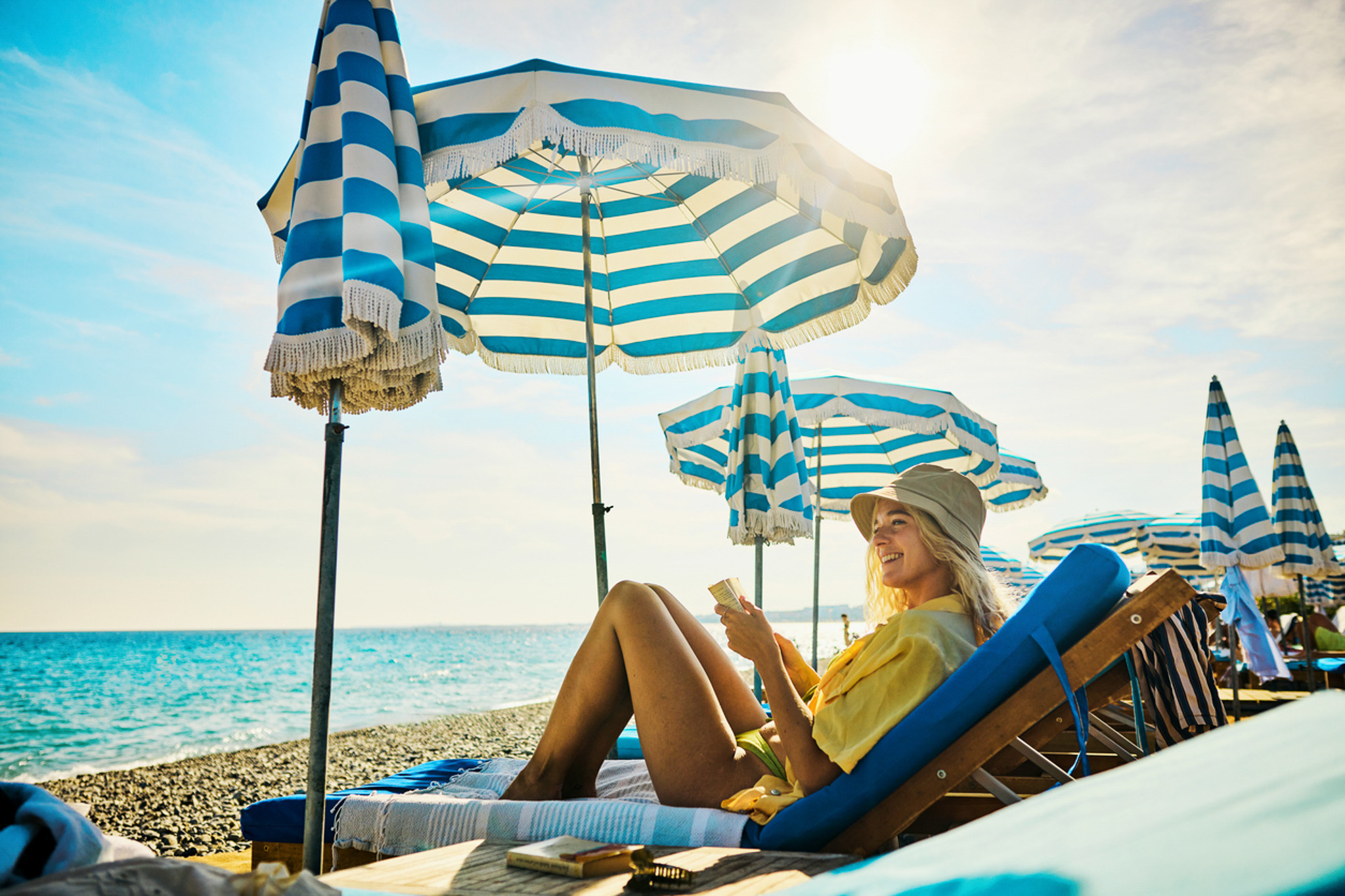
Summer on the Côte d’Azur: Early Mornings, Siestas and Long Mediterranean Evenings
There’s a rhythm to summer on the western and central Côte d’Azur that locals in Sainte-Maxime, Les Issambres, Grimaud, Saint-Aygulf and Fréjus know by heart. Mornings belong to the sea and the market, midday to shutters and shade, and evenings to glowing horizons and unhurried dinners. If you tune your day to that pulse, you’ll find an effortless balance: up with the cicadas, a long lunch and siesta when the heat crests, and then a lingering promenade by the water when the light turns honey-soft. This guide traces that cadence through specific spots and small rituals that feel true to place—details you’ll notice if you wander with intention.
To discover more of the region’s beaches, villages and local traditions, explore our complete Côte d’Azur guide.
Why early mornings make sense here
On the Var coast, mornings come with a gentler temperature, glassier water, and quieter streets. The breeze is often still, so coastal swims at La Nartelle in Sainte-Maxime or along the calanques near Saint-Aygulf feel like slipping into silk. Market traders set out their baskets by 7 or 8 a.m., and the first espresso on a shady terrace genuinely tastes different when the square is just waking. For those who like photography or sketching, dawn light on honey-coloured stone in Grimaud village (especially near the Moulin Saint Roch and the castle ruins) has an old-world softness you’ll never catch at noon.
There’s also a practical note: getting errands done before 10:30 a.m. frees the rest of the day. Bread and fruit in your bag, swimsuits already damp from a first dip, lunch ingredients chosen, you can surrender to the siesta without guilt. Locals plan the day around heat and light, not a to-do list. Adopt that, and you’ll find the Côte d’Azur opens up in friendly, unhurried ways.
Dawn sketches: where to start the day
Sainte-Maxime’s first light and the Pointe des Sardinaux
If you only do one early start, make it Sainte-Maxime. Slip onto the Promenade Aymeric Simon-Lorière just as the sky softens. The fishermen at the marina putter in, gulls orbit, and the gullible hush of morning is unbroken except for oars and bicycle bells. From the promenade, walk or drive to the Pointe des Sardinaux, a small protected headland. It’s rocky rather than sandy, which means fewer people, clear water, and shallow basins that warm quickly—ideal for a sunrise snorkel. Kids love the tiny rock pools; adults love the peace.
By 8 a.m., the boulangeries are in full swing. You don’t need a perfect address to find the right spot: follow the scent of butter and settle at a café terrace just off the harbour for a petit noir and a crescent of still-warm croissant. If you prefer a sweeter regional note, look for a slice of tropézienne cream brioche; yes, it’s famous in Saint-Tropez, but you’ll find excellent versions in Sainte-Maxime too.
Les Issambres: morning swims at La Garonnette and San Peïre
Les Issambres curves around coves that catch the morning sun beautifully. Plage de la Garonnette and the sands near San Peïre are gentle, family-friendly and easy to reach before the day gets busy. On windless mornings you’ll see paddleboarders cut silent tracks offshore. Bring a mask and fins—there’s playful snorkeling around the rocks at the edges of the beaches, and the water clarity can surprise you even in high summer. If you’re up for a short walk, pick up the Sentier du Littoral (the coastal path) and follow it for a few coves; you’ll find small, flat rocks where you can spread a towel far from any soundtrack but the sea.
Saint-Aygulf: calanques and the Etangs de Villepey at sunrise
Saint-Aygulf wakes gently, with a softer profile than its livelier neighbours. The series of small calanques—like those near the Boucharel area—offer clear morning water and early shade. If you prefer a nature walk, the Etangs de Villepey lagoons just behind the dunes have wooden footbridges and bird hides where you might spot egrets or terns gliding low over the water. It’s a cool, meditative way to start the day before stepping onto the sand.
Grimaud village: lanes, viewpoints and the windmill
Early in Grimaud village the stone lanes hold the night’s cool, and you can hear your own footsteps. Begin at Place Neuve by the fountain, then meander up to the Moulin Saint Roch and the castle ruins. The views swing wide over wooded hills and the gulf. There’s a small everyday magic here: potted geraniums spilling red on window sills, cats sunning on steps, rosemary hedges hedging perfumed gates. Stop by a tiny café for a coffee; people watching in Grimaud is done at whisper-volume before mid-morning.
Fréjus: Roman stones in soft light
Fréjus has weight and history that reward an unhurried morning circuit. Trace the lines of the old Roman amphitheatre; walk a stretch near the aqueduct remains that march toward the horizon; and step into the Cathedral of Saint-Léonce with its cool, hush-filled cloister. Stand in the cloister’s dappled light while the town beyond warms up. Later in the day the stones hold heat and the atmosphere shifts; morning lets you commune with these places in calm.
Markets that reward the early riser
By mid-morning, shopping becomes a contact sport. Before 10:30 a.m., it’s a pleasure. In Sainte-Maxime, the weekly market spreads bright stalls with peaches, brandade, lavender, olives, and salted anchovies. Go early for tomatoes that smell like tomato, not a concept. In Les Issambres, the San Peïre market (typically on Monday mornings) is compact but well-curated: a great place for goat’s cheese, cherry tomatoes, and a slice of pissaladière to tide you over. Saint-Aygulf’s market is broader—good for charcuterie and hunks of cantaloupe so ripe you can smell them from three stalls away.
Grimaud village’s weekly market threads through the lanes below the church. Browse linen shirts and woven baskets, then pause over a jar of local honey stamped with the name of a beekeeper you’ll probably meet by chance again at a night market by the sea. In Fréjus, head to the historic centre: olives, garlic braids, and rustic cakes line up against a backdrop of Roman stone. Tip: carry a light basket or cotton tote, and ask before you touch—producers will often choose the best fruit for you if you tell them when you’ll eat it.
Coffee, bread, and terrace etiquette
Coffee culture on this part of the coast lives on patios and in shade. In Sainte-Maxime, the quiet back streets just behind the harbour hold cafés where locals greet each other by name. Order your coffee how you like it (un café is an espresso; un allongé is closer to an Americano), then sit. A croissant on a plate, the newspaper, the sound of someone moving chairs—that’s part of the morning. If you want something specifically local, try a slice of fougasse or a still-warm baguette tradition with salted butter. In Les Issambres and Saint-Aygulf, the simplest pleasure is a take-away espresso sipped on a low seawall while looking at the water’s almost-metallic early shimmer.
Etiquette is simple: greet with a bonjour, return the saucer when you stand, and don’t rush the staff. Summer brings a tide of guests; civility and patience draw smiles. If you linger, order another drink. You’ll be surprised how often a server remembers you the next morning.
Late morning by the water: swim, paddle, or stroll
The curve of La Nartelle, Sainte-Maxime
La Nartelle’s long sandy sweep is best mid-morning before the true heat sets in. Families love it for its easy entry and good spacing; swimmers love the long parallel laps you can do along the buoy line. If you’re looking for a different texture, head back to the Pointe des Sardinaux for rocks and plunge pools, or the smaller beaches tucked between. The sea is often calm enough for paddleboarding, especially on days when the afternoon breeze hasn’t awoken.
Les Issambres’ little secrets
Between the main beaches of Les Issambres are intimate pockets: a flat rock ledge here, a tight crescent of sand there, a shoal that turns aquamarine on a clear day. Walk a minute or two beyond the crowds and you’ll find a landing spot where the only soundtrack is water on stone. Bring reef-friendly sunscreen and a simple mask. It’s not the Red Sea, but if you slow down enough, the Mediterranean is a patient host: sea bream flicker in and out of weed beds; tiny crabs sidle; sunlight becomes a living thing underwater.
Saint-Aygulf’s calanques and dunes
Saint-Aygulf feels made for those who like variety. Start at a calanque for a dip, and then trade sea air for the thyme-scented quiet of the dunes behind the main beach. The Etangs de Villepey pathways connect you to a green-blue world of reeds and salt; bring binoculars if you enjoy birdwatching. Late morning, duck back through the dunes and the sea will feel freshly cool on your skin.
Lunch and the art of the Var siesta
By one o’clock, the sun is a steady hand on your shoulder, asking you to slow down. Answer with lunch and a siesta. In Sainte-Maxime or Les Issambres, assemble a picnic from the morning’s market: tomatoes, a round of goat’s cheese, olives, socca or pissaladière, apricots and nectarines. Add a chilled bottle of sparkling water with a twist of lemon. If you choose a restaurant, lean into simple, regionally rooted plates: salade niçoise done honestly, grilled sardines, aïoli with seasonal vegetables, beignets de fleurs de courgette when you see them on a chalkboard. In Fréjus and Saint-Aygulf, look for places set back a street from the seafront; the shade is cooler and the cooking can be more homely.
Then, shutters. Even if you’re near the sea, a proper siesta transforms the rest of your day. Close the blinds, turn the fan low, and let the world run without you for an hour or two. Read a few pages of something that smells like salt and paper. Children nap and wake sweet-tempered instead of sandy and cross. The cicadas speak for everyone. In the hottest weeks, those who respect the siesta are the ones ready to enjoy the long evening light.
Family-friendly pauses: nature, rock pools, and shade
If sleeping mid-day isn’t your habit, look for cool-air alternatives. In Sainte-Maxime, find a grove of stone pines just inland, and spread a blanket. In Les Issambres, return to a rocky cove and let children hunt for hermit crabs in the half-shaded pools while you doze in a straw hat. In Saint-Aygulf, the bird hides at the Etangs de Villepey are friendly to the heat-shy; you might spot a heron spearing lunch as if to underline the pace of the day.
Another low-heat option is a slow visit to an artisan or small museum. In Roquebrune-sur-Argens, a short inland hop from Les Issambres, the chocolate and cocoa house offers a sweet, air-conditioned hour that delights children and adults alike. In Fréjus, the archaeological museum gives you context for the stones you saw at dawn, and the cathedral cloister is made for quiet contemplation any time of day. All of these complement, rather than compete with, the siesta tradition.
The golden return: late afternoon into evening
By five o’clock, the coast exhales. A light onshore breeze (brise marine) lifts the heat, the sea regains a slow lap against shore, and everyone seems to forgive the sun for being so insistent at noon. This is the hour to walk the Sentier du Littoral between Sainte-Maxime and Les Issambres for half an hour, then turn and watch the light deepen on the way back. It’s the hour for a second swim at La Nartelle, when the water has kept the day’s warmth and the angle of the light makes silhouettes of swimmers.
It’s also when you’ll find locals converging on pétanque courts. In Sainte-Maxime, look for a boulodrome shaded by plane trees near the seafront. In Grimaud, the lanes open into little squares where a friendly game springs up while people drift past with ice creams. Buy a cold lemonade, put it down beside you, and learn how quickly a casual throw turns into affectionate rivalry. No one minds if you cheer; everyone minds if you stand in the circle’s line of sight.
Evenings by the sea: promenades, apéritifs, and unhurried dinners
Sainte-Maxime after sunset
The promenade in Sainte-Maxime comes into its own in the evening. Street musicians tune up under warm lights, families stroll with gelato, and couples drift from the marina to the far end of the bay and back. The apéritif window—roughly 6:30 to 8:00—is spiritual here. Order a verre de rosé from the Côtes de Provence Fréjus sub-appellation if you see it; the best examples are pale, saline, and perfect with a saucer of olives and almonds. Small plates might include tapenade or anchoïade with raw vegetables. Eat little, talk softly, and watch the sky do its slow theatre.
Night markets sometimes line the waterfront in summer with stalls of soap, linen, and local crafts. If you prefer quiet, step a street back from the promenade for dinner. Classic seaside plates—grilled daurade, a bowl of soupe de poisson with rouille and croutons—feel earned after a day in and out of the sea. And if fireworks are scheduled over the gulf, you’ll know: the crowd’s attention gathers as one and a hush falls just before the first bloom of light.
Les Issambres’ terrace glow
In Les Issambres, evenings are intimate and salt-scented. The terraces around San Peïre hold a loyal crowd, families mixing with couples at tables that bleed into the square. Order something local to share—petits farcis or a goat cheese salad with honey—and watch the kids ply the square’s imaginary lines for a last run of the day. If you appreciate a low-key experience, stroll to a small cove just before full dark and listen: boats ticking as their engines cool, a stray conversation drifting from a balcony, cicadas tuning down for the night.
Grimaud village: music and conversation
Grimaud reserves a special charm for long evenings. The village hosts summer performances—keep an ear out for Les Grimaldines, where music winds through lanes and small stages turn squares into twilit theatres. Even on quiet nights, choose a table at Place Neuve, order a glass of wine, and watch: the stone fountain murmurs, old friends lean for cheek kisses, and conversation becomes the evening’s measure. Walk up to the castle ruins just before full dark, and the gulf lights appear like new constellations.
Fréjus: Roman and Riviera
Fréjus wears its night in two textures: historical and seaside. The historic centre favours tavernas and courtyards; stroll after dinner and peer into the cloister if late openings coincide with your visit. Down at Fréjus-Plage, the seafront is more kinetic—rides for children, night markets in high season, and a generous choice of ice cream flavours you’ll swear you don’t want and then order anyway. If your legs still have energy, walk a little way toward the edge of the Esterel’s red rocks; even a short glance at their twilight profile feels like a promise to return the next morning.
What to drink and where it’s made
Rosé is the Côte d’Azur’s calling card, but it isn’t a single taste. Around Fréjus, the Côtes de Provence Fréjus sub-appellation often yields subtly saline, citrus-lifted wines that love grilled fish. Visit a winery in the late afternoon when the light is long and the heat less stern: Clos des Roses just inland from Fréjus pairs vines with sculpture and offers a calm, open tasting experience. Near Les Issambres and Roquebrune-sur-Argens, estates like Domaine des Planes showcase the pine-and-garrigue-punctuated landscape in your glass—herbal notes, pale colour, a whisper of strawberry.
Trade tip: on hot nights, ask for a half-bottle if you’re two and want to keep the pace light. Or let someone else take wine entirely and order a sparkling water with a thin slice of citrus; restaurants here rarely fuss about that choice. If you see a local apéritif like Rinquinquin (peach) or a properly bitter pastis, consider sharing a small glass before dinner; one is perfect, two is too many in the heat.
Small rituals that make the day
- Carry a light cotton fouta (thin beach towel). It serves as shawl on the promenade, shade cloth on hot seats, and a picnic napkin.
- Keep a tiny jar of coarse salt in your market bag. Tomatoes and stone fruit become transcendent with a pinch.
- Leave a few coins by the coffee saucer. It’s not obligatory, but it oils the day.
- Learn a word or two in Provençal you’ll see on menus—fougasse, anchoïade, pan bagnat. They’re friendly words and taste as good as they sound.
- Watch the flag at the beach. Jellyfish sometimes drift in on certain winds; lifeguard stations usually post notices.
- If you drive, aim for shaded parking and leave the windows cracked a finger’s width. The siesta applies to cars too.
Three day-by-day flows to borrow
Sainte-Maxime: sea, market, and music
Begin at the Pointe des Sardinaux for a swim at 7:30 a.m. Pack a mask and a small thermos of coffee. By 9, stroll into the centre and buy fruit, a round of chèvre, and a loaf that crackles when pressed. Late morning swim at La Nartelle; leave when the sand is hot through your towel. Lunch in shade—salad, bread, fruit—then a siesta behind closed shutters. Wake at 4:45 p.m., shower, and put on something light. Walk the promenade with an apéritif—rosé or a citron pressé. Choose a simple dinner; grilled fish and one shared dessert. If there’s live music in a square, let it decide your evening’s length. Walk home late, the sea still audibly turning over itself.
Les Issambres and Saint-Aygulf: calanques and lagoons
Start with a quiet coffee at San Peïre, then set off on the Sentier du Littoral to find “your” rock. Swim, dry in the morning sun, then walk back just as the beach fills. Monday market at San Peïre is perfect for picnic material; add olives and perhaps a small tart that looks too simple to be remarkable (it won’t be). Drive or cycle to Saint-Aygulf; take the boardwalks into the Etangs de Villepey and let the hush lower your body temperature without effort. Lunch in the shade of the dunes, a nap, then a last swim at a calanque as the sun swings down. Return to Les Issambres for dinner on a terrace that looks out to the gulf’s distant lights.
Fréjus and Grimaud: stone and song
Walk Fréjus with the sun at your back: the amphitheatre first, then the aqueduct, then the cloister. A late-morning espresso in the historic centre, perhaps a single cannelé or a slice of cake to keep your energy steady. Lunch at home or under pines; a long siesta. Late afternoon, drive up to Grimaud village as the light lands soft on the walls. An apéritif at Place Neuve, then a slow climb to the ruins at dusk. If Les Grimaldines or a classical concert is on the schedule, let it sweep you along. Otherwise, an unhurried dinner, and a walk back down lanes that still smell like warm stone at 11 p.m.
Local flavours worth seeking
This coast rewards curiosity at the table. Look for:
- Bourride, a cousin of aïoli, when cooler breezes slip in.
- Pan bagnat done right: bread that has carried the dressing all the way through and vegetables that still have voice.
- Petits farcis: stuffed vegetables that taste of gardens, not leftovers.
- Socca: chickpea flatbread blistered and peppered. It’s more a Nice staple, but you’ll sometimes find it here.
- Tarte tropézienne: the best versions are lightly perfumed, not cloying; share one at a café between two spoons.
Seawise and heatwise: practical notes
The Mediterranean isn’t moody, but it does have habits. Afternoons often bring a breeze that roughens the sea a little; mornings are calmest for paddles and long swims. Jellyfish come and go with currents; look for the purple flag at lifeguard posts. If you do meet one, rinse with sea water and don’t rub; a dab of vinegar helps if you have it. Hydrate more than you think you need, and carry a hat you don’t mind crushing into a bag.
On the roads, the D559/N98 coastal route can snarl after 10 a.m. In high season, try to make your morning moves early and your evening returns later. Between Sainte-Maxime and Grimaud, inland lanes offer shade and sanity; set your navigation to avoid primary coastal arteries at peak times. Parking fills by late morning near popular beaches; the early bird truly does get the shady spot.
Reading the sky and listening to the wind
Two winds matter in summer: the mistral and the calmer sea breeze. When the mistral is on—a clear, forceful northwesterly—skies are lapis and heat retreats a degree or two. Swimming stays fresh, and evenings invite an extra layer on the promenade. On still days, the sea can feel like velvet by sunset, and the brise marine will do the work of a fan if you’re seated outside. Learn to glance up and ask quietly, “What day is it?” The coast answers in its own languages: the hiss of pine needles in wind, the slap of halyards on masts, the way umbrellas tilt as if to nod “oui, oui” to shelter.
Shopping and small finds
Beyond markets, a few small pleasures: in Sainte-Maxime, a good olive shop will happily let you taste your way through green, black, and wrinkled. In Les Issambres, a modest fromager can help you assemble a late-evening board with a whisper of lavender honey. In Fréjus, a patisserie that keeps its blinds down until late afternoon often hides the day’s best work in its last tranche of fruit tarts, when the heat has abated and the baker is smiling again. Provençal soaps are more than souvenirs—they scent a drawer all year and return you to summer each time you open it.
Culture and calendar: when evenings turn festive
Summer calendars in these towns are dense. In Grimaud, Les Grimaldines pour music into the lanes; classical concerts warm chapels and courtyards with strings that sound like a comet’s tail. Sainte-Maxime’s waterfront hosts night markets and occasional fireworks that briefly turn the gulf into a mirror of light. Fréjus balances Roman gravitas with Riviera easygoing—temporary exhibitions by night, children’s carousel lights by the sea. Ask at local tourist offices or check municipal posters; schedules can be fluid and often include last-minute delights—a jazz trio in a square, a storyteller for children at dusk, a winegrower pouring tastes on a promenade table.
On planning gently
The urge to do everything is natural, but this coast gives its best to those who choose a few things and do them deeply: one swim at dawn, one market, one dinner that goes long, one walk into the gloaming.
Questions first-timers ask (and locals answer)
Is it really worth waking up early on holiday?
Here, yes. You’ll bank quiet and cool that make the midday pause more satisfying. You’ll also experience a different character of the towns—less performative, more neighbourly, shaped by work rhythms (fishermen, bakers, market traders) rather than leisure ones.
How do locals handle the heat at lunch?
Shade and simplicity. A salad with anchovies, a grilled fish, sliced melon, a carafe of water, unhurried conversation. Then shutters. The trick isn’t to escape heat, but to team up with it—accept the pause, and the day stretches kindly.
What if the wind picks up?
Shift slightly inland for a walk in pines (the air is aromatic and sheltering), visit a museum or chapel, or wander a hill village like Grimaud where the lanes steer breezes into manageable whispers. Windy days sharpen the light; your photographs will thank you.
Are there quiet beaches even in August?
Yes, but they are usually small or a short walk from parking. The rocky edges near the Pointe des Sardinaux or less-known coves between main beaches in Les Issambres might require rock shoes and a sense of adventure. Go early or late and bring only what you can carry in one hand.
Evenings that linger: how to close the day well
What makes a Riviera evening feel right isn’t a checklist but an atmosphere: the sea nearby, the smell of salt and thyme, a candle or two on a terrace table, and conversation that forgets the hour. In Sainte-Maxime, watch boats turn into silhouettes as the last swimmers step out, towels wrapped like capes. In Les Issambres, a second espresso after dinner lengthens the night just enough. In Grimaud, the quiet between songs at an open-air concert can be as moving as the music. In Fréjus, a last walk past Roman stone reminds you you’re part of a much longer story than your holiday week.
Parting thoughts: holding the rhythm
The rhythm of summer on this side of the Côte d’Azur is not a rigid schedule but a conversation with light and heat. Start early with the water and the market, rest when the sun insists, return to the world in the golden hour, and end gently. Whether you’re based in Sainte-Maxime, Les Issambres, Grimaud, Saint-Aygulf or Fréjus, that pattern will sharpen your senses and soften your days. You’ll taste more, see further, and find yourself keeping tiny souvenirs that aren’t objects: the hush of a cloister at 9 a.m., the first bite of a tomato that tastes like August, the long bell of a church calling evening across stone, the moment the sea darkens from indigo to velvet and you realise you’ve been watching without moving for ten minutes.
Ready to enjoy long Mediterranean evenings of your own? Discover our holiday villas and holiday homes on the Côte d’Azur.

