

 EN
EN  NL
NL
 DE
DE
 FR
FR

The Legendary Port of Saint-Tropez: Glamour and Heritage
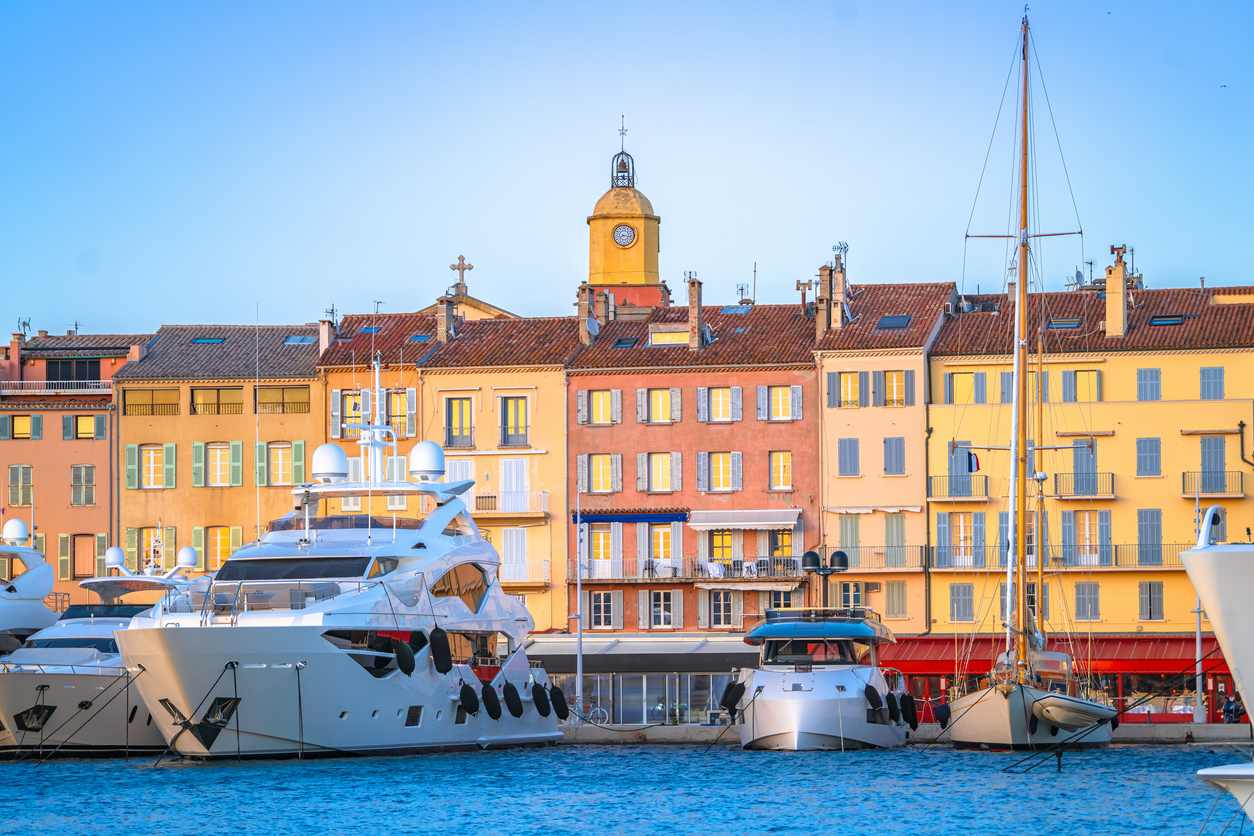
Stand anywhere along the quays of Saint-Tropez and you quickly realize why this small harbor has come to embody the magic of the French Riviera. The water winks a deep blue beneath a forest of masts, the facades glow peach and lemon against the sky, and the bell tower watches over it all with timeless calm. Yes, there’s glamour—evident in sleek superyachts and fashion-house window displays—but beneath the gloss beats a steady heart of maritime tradition, neighborhood rituals, and everyday life. The legendary Port of Saint-Tropez is many things at once: a living museum, a working harbor, a stage for spectacle, and a village square where stories begin. For those who want to explore the wider French Riviera beyond Saint-Tropez, AzurSelect’s overview of the Côte d’Azur offers a clear starting point.
A Harbor with Deep Roots: From Fishing Village to Icon
Long before the paparazzi found the Côte d’Azur, Saint-Tropez was a humble port on a strategic curve of the Mediterranean. Its name nods to Torpes, a Roman officer whose legend became woven into the town’s identity. Through the Middle Ages and into the early modern era, the village fortified itself—a necessity in a world of shifting alliances and coastal raids. By the 17th century, the Citadelle stood sentinel above the sea, and the port served regional trade, salt, wine, and fisheries.
By the 19th century, as long-haul trade shifted and railways rerouted prosperity, the village quieted. Then art changed everything. In 1892, painter Paul Signac sailed into the harbor on his yacht, Olympia, captivated by the light and color. He bought a house, welcomed fellow artists, and produced work that showcased the unique geometry of boats, masts, and reflections on the water. Postcards spread the word; writers, actors, and creators followed. The 20th century layered in cinema, music, and a free-spirited allure that still animates the quays. Importantly, the core remained the same: a port first, a promenade second, and always a place where the sea is the main character.
The Shape of the Port: Quays, Basins, and Landmarks
If you look at a map, Saint-Tropez’s port traces a soft crescent cupped by breakwaters. On the ground, the layout is all intimacy and rhythm. The Vieux Port, the old basin, is the village’s living room. Boats tug at their moorings along Quai Suffren and Quai Jean Jaurès, where cafes line up like old friends; at the head of the arc stand weathered warehouses and fishermen’s houses now reimagined as shops and ateliers. The Môle Jean Réveille forms the outer arm, its lighthouse a gentle exclamation point at sunset. Look for the squat medieval silhouette of the Tour du Portalet protecting the inner waters—part vantage point, part reminder of centuries when the harbor was a gate to the world and a shield against it.
Today the port accommodates a blend of modest craft and impressive yachts, with around seven hundred berths across its various areas. During the day, the shifting choreography of arrivals and departures provides endless fascination. In the evenings, the entire harbor becomes a reflection pool, duplicating the bell tower and pastel facades in the water’s surface, as if the town were quietly admiring itself. The scale remains human, and that is part of the port’s power: you can stroll the entire waterfront in a few unhurried minutes, absorbing dozens of small scenes.
La Ponche: The Soulful Old Quarter
Walk east from the main harbor and you slip into La Ponche, Saint-Tropez’s oldest quarter. Cobbled lanes squeeze between weathered facades, laundry lines stretch across alleyways, and sudden glimpses of the sea brighten the corners. This is where fishermen traditionally lived, where nets were mended and gossip traded on doorsteps. Three tiny beaches—La Glaye, La Ponche, and La Fontanette—pebble the shore like secrets. They’re not grand, but at dawn or in the late afternoon they’re perfect for a quiet moment with the sound of water nudging the stones.
Keep an eye out for the Lavoir Vasserot, a historic washhouse tucked behind a small garden. It’s easy to miss and worth a pause—imagining conversations that once rose with the steam is a way to feel the pulse of the old village. Wander up to Place de l’Ormeau and let your feet choose the next alley; part of La Ponche’s charm is how it refuses to be rushed. Every angle seems to have been composed by an artist, and in a way, it has—time has been editing this neighborhood for centuries.
The Fishermen’s Heritage and the Pointus
Despite the cachet, the Port of Saint-Tropez remains a working harbor, and the most endearing ambassadors of its seafaring heritage are the pointus—traditional wooden fishing boats with a curved prow and a graceful tail. You’ll see them moored side by side, their names painted with pride on varnished wood. These boats aren’t just nostalgic décor; they represent a living tradition. Many are maintained by local associations and families, taken out for festivals, sunset fishing, and everyday outings.
If you’re an early riser, head to the quays at dawn to see fishermen preparing their nets or unloading the morning’s catch. On certain days, small stalls appear with the freshest of fish, often gone before the sun gets high. It’s a simple scene—scale glinting on the deck, gulls hovering like punctuation—and it brings the port back to its essence. Ask politely, and you’ll learn stories of lamparo fishing on summer nights and of long, calm mornings when the Gulf turns into a mirror.
Sail and Spectacle: Les Voiles de Saint-Tropez
Every autumn, the harbor becomes a theater for one of the Mediterranean’s most photogenic regattas: Les Voiles de Saint-Tropez. Classic yachts, all polished wood and billowing canvas, sail out alongside modern carbon thoroughbreds. The juxtaposition is irresistible—a living history of naval architecture racing across the same wind. The regatta’s energy spills through the port: crews in matching polos stride down the quays, and dockside chatter drifts from boat to boat.
Good vantage points include the Môle Jean Réveille for a grand panorama and the Citadelle’s ramparts for broader perspectives on the Gulf. If you’re watching from shore, bring patience and a hat, and resist the temptation to step onto a narrow gangplank unless you’re invited. The atmosphere is festive but disciplined—after all, the sea makes its own rules. Even outside regatta season, the port hosts various nautical gatherings. When the wind picks up and the sails unfurl, Saint-Tropez becomes exactly what it has always been: a place where the horizon matters.
Art at the Water’s Edge: Painters, Galleries, and the Annonciade
The Musée de l’Annonciade sits so close to the waterline that it seems to breathe with the tide. Housed in a former chapel near the harbor, it holds treasures by Signac, Cross, Matisse, and their contemporaries, who taught the world how to see Saint-Tropez’s light. Pointillist dots flicker into boats, sails, and rippling reflections; fauvist strokes turn the port into a symphony of color. You don’t need a degree in art to feel the thrill—stand in front of a canvas and your eyes do the rest.
Beyond the museum, the village hides an ecosystem of small galleries and ateliers, some so discreet you might pass them twice before you realize what they are. Ask a local about the “chemin des peintres,” informal routes that take you to spots beloved by artists—a bench nestled behind the Annonciade, a bend in La Ponche, a perch near the Tour du Portalet. If you keep the sun to your left in the morning and your right in the evening, you’ll meet the same light that drew the painters here more than a century ago.
The Cinema Heritage: From Bardot to the Gendarmerie
Saint-Tropez’s cinematic moment ignited with the 1950s and 60s, a period that left a lasting imprint on the port. Brigitte Bardot’s presence turned the village into a symbol of effortless allure, and the camera loved every angle: the wooden doors opening onto quays, the clatter of heels on cobbles, the bell tower framed against bright sky. Around the corner from the harbor, the Musée de la Gendarmerie et du Cinéma tells the story of how film and village entwined—complete with nods to the beloved comedies that used Saint-Tropez as both setting and character.
Take a stroll to recognize familiar backdrops: a staircase in La Ponche, a low wall along the quays, the orange clock tower peeking over roofs. The pleasure lies in the overlay—you’re walking in your own present while stepping through scenes millions have watched. It’s another layer of the port’s legend, one that shines brightest in the golden hour when the village looks exactly like a film still.
Flavors of the Port: Markets, Cafés, and Sweet Classics
Even if you eat nowhere else in town, make time for Place des Lices on market day. On Tuesdays and Saturdays, the square under the plane trees transforms into a fragrant maze of stands. You’ll find sun-warmed tomatoes and basil, glistening olives, lavender honey, handsome cheeses, and salted anchovies that taste like the sea. The atmosphere blends hustle and easy conversation; a vendor might offer a sliver of saucisson while telling you how the Mistral affected the vines that season.
Back at the port, the café terraces are classic stages for people-watching. Order a café noisette or a citron pressé and let the slow theater of the harbor unfold. For a bit of edible history, try a slice of tarte tropézienne—a cream-filled brioche whose fame blossomed right here. It is both a local delicacy and a symbol of Saint-Tropez’s sweet spot between tradition and indulgence. If you prefer savory, you’ll notice the Provençal staples: anchoïade with crisp vegetables, pissaladière rich with onions and anchovy, and fish soups that trace their lineage to the morning’s catch.
Boutiques and Craftsmanship: Beyond the Window Displays
Saint-Tropez’s waterfront is synonymous with luxury boutiques, but look closer and you’ll spot a quieter heritage: craftsmanship shaped by sea, sun, and salt. The town’s iconic leather sandals—tropéziennes—remain a made-to-measure art in certain longstanding workshops, where artisans cut and stitch leather with the kind of patience that doesn’t rush for summer crowds. Try slipping into a pair that molds to your foot and you’ll feel why locals swear by them.
Beyond fashion, you’ll find ceramics glinting with turquoise glazes; olive-wood boards polished to silky grain; and handwoven baskets that carry beach picnics year after year. Look for small ateliers on side streets off the port, where the bell tower’s chime drifts in like a metronome. Browsing is part of the experience—chatting with a maker about leather patina or clay firing techniques adds a layer of memory you’ll bring home along with your purchase.
Maritime Know-How: Inside the Working Port
Glamour gets the headlines, but the port functions on a backbone of expertise. From chandleries tucked a block back to maintenance crews moving with quiet efficiency, you can sense the professionalism that keeps boats seaworthy. The port office coordinates, docks regulate speed, and fuel docks hum in early mornings when pleasure craft and working boats take turns. There’s a gentle choreography to the way lines are tossed and caught, how fenders are adjusted, how a bow thruster nudges a vessel into place with inches to spare.
Environmental stewardship increasingly defines the harbor’s identity. Local initiatives focus on protecting Posidonia seagrass meadows, crucial nurseries for marine life that also calm waves and stabilize sands. Waste disposal, bilge-water management, and hull-cleaning practices are governed by strict rules designed to keep the water clear. You might notice skimmers collecting surface debris or marked zones discouraging anchoring over sensitive fields. It’s all part of the shift toward a port that honors the sea it depends on.
Small Beaches, Grand Views: Secret Spots within a Stroll
Not every beach day requires a drive. From the port, a short hike brings you to Plage des Graniers, a crescent of sand tucked below the Citadelle. Go early or in the late afternoon, when the water is glassy and the light paints the fortress warm. Another local favorite is Plage des Canebiers along the inner Gulf—calm and family-friendly, with pine trees offering scattered shade. If you’re in the mood to stretch your legs, follow the Sentier du Littoral from the port area toward Les Salins; the coastal path threads through scented scrub and opens to headland views that take you from the bell tower to the far capes.
For non-beach views, climb to the Chapelle Sainte-Anne on a mild afternoon. The walk takes you above the village and rewards you with a sweeping panorama over the Gulf of Saint-Tropez—a perspective that knits together the port, the hills, and the sea into one coherent picture. Bring water and linger; the chapel has hosted generations of villagers giving thanks for safe returns and good harvests.
The Citadelle and the Maritime History Museum
The Citadelle of Saint-Tropez crowns the town like a guardian hand. Its star-shaped bastions and dry moats speak of centuries when coastal defense shaped daily life. Step inside and you’ll find the Maritime History Museum, where exhibits tell stories that make the port’s past tangible. Fishermen’s tools worn by use, charts faded by sunlight, and models of trading ships reveal how the harbor connected Saint-Tropez to distant horizons long before international fame arrived.
One gallery traces the era of coastal trade, another highlights the lives of sailors who rounded dangerous capes. You learn why certain winds carry nicknames, how navigation evolved, and what voyages meant for families left behind. When you exit to the ramparts, the view unspools the very routes those sailors took. On a clear day, you can make out the outlines of capes that shaped local weather and fate: Camarat, Taillat, and Lardier to the southwest, and the soft curve of the Gulf cupping Sainte-Maxime and beyond.
Festivals and Rituals: Living Traditions on the Quays
To understand Saint-Tropez’s character, come for a festival. In May, the Bravade honors the town’s patron saint with an exuberant blend of processions, drums, and ceremonial musket fire. It’s a celebration of identity with roots deep in local memory, and although it spills through the village, the port is never far: the sea, after all, is both backdrop and witness. In early summer, the Fête de la Saint-Pierre, patron saint of fishermen, includes a blessing of the boats. This is when the pointus shine brightest, dressed with flags and flowers, a bright flotilla drifting past the quays.
These rituals aren’t recreated for visitors; they’re practiced for the community, and that’s what makes them so compelling. Stand respectfully, step back when processions approach, and let the sounds and colors work on you. You’ll feel why Saint-Tropez is more than a postcard—it’s a place where tradition is as present as sunlight on the water.
Arriving and Moving Around: Practical Wisdom
Saint-Tropez’s beauty is no secret, and the roads can be lively in summer. If you’re driving, earlier is gentler—arrive before the shops open and you’ll find the port waking up in a quieter key. Parking areas sit just outside the tightest streets; a short walk brings you to the quays. Alternatively, water shuttles across the Gulf are a pleasant way to arrive, especially on market days when the village hums. Once here, your feet are the best guides, with bicycles useful for reaching beaches just beyond strolling distance.
For comfort, dress lightly, bring a hat, and carry water. On windier days—the Mistral has a way of clearing the sky to a jewel-blue—temperatures can drop quickly in the evening. If you plan to watch boats during busy events, give yourself time; half the pleasure is in the waiting. And remember, the waterfront can get bright at midday; early morning and late afternoon give kinder light for photography and gentler heat for exploration.
On (and by) the Water: Yacht-Watching with Respect
Many visitors come to see the boats, and the port doesn’t disappoint. Sleek hulls from European shipyards gleam beside classic wooden beauties; crew members coil lines with ballet-like precision. If you’re fascinated by the dance of docking, choose a spot near the superyacht moorings along Quai Jean Jaurès or the outer breakwater and watch the professionals at work.
Etiquette makes the experience better for everyone. Quays are public, gangways are not; never step aboard without an invitation. Ask before photographing crew up close, and keep strollers and scooters clear of mooring lines. These small courtesies are noticed and appreciated, and they preserve the easy-going atmosphere that makes the port feel like a village, even at its most glamorous.
Nature around the Gulf: Pines, Vines, and Blue Horizons
Though the port is the star, the rest of the Gulf sets the scene. Headlands striped with pines frame the water, and vineyards quilt the low hills behind town. You’ll taste that landscape in a glass of local rosé from nearby estates, where the salty breeze brushes the vines. Aleppo pines scent the air along coastal paths, and on quiet mornings the sea is so clear that you can glimpse fish flashing between seagrass blades close to shore.
On a day with time to roam, aim for the capes to the southwest. Their jagged outlines cradle hidden coves, and the water changes mood from turquoise to deep cobalt in a few strokes. Back in the port by evening, the contrast is delicious: from wild headlands to polished quays, all in the space of an afternoon. It’s this variety that lets Saint-Tropez hold both serenity and spectacle in one embrace.
A Day in the Port: A Sample Itinerary
Start early, before the sun climbs. Take your coffee on the quay while the village stretches awake. Listen for the first church bells, watch a fisherman rinse his deck, and nod to a delivery cyclist weaving between cafe tables. Wander to La Ponche via Rue du Clocher and let the harbor slip in and out of view as you turn corners. Pause at the Lavoir Vasserot, then continue to the small beach at La Glaye; the light here is especially gentle in the morning.
By midmorning, head to the Musée de l’Annonciade for an hour among canvases that make you see the port afresh. After lunch, stroll along the Môle Jean Réveille to the lighthouse and scan the horizon—sails in the distance, gulls overhead, and the promise of the afternoon. If the heat builds, slip to Plage des Graniers for a swim and a nap under the Citadelle’s walls. Later, take the path up to the fortress for a walk through the Maritime History Museum and finish with a slow half-lap of the ramparts. You’ll look down at the masts and realize just how compact and perfectly shaped the harbor is.
As evening softens the day, return to the quays for an aperitif. This is prime people-watching time: families navigating ice creams, friends greeting friends, yacht crews easing into a quieter rhythm. After dinner, a stroll along Quai Suffren is all you need. The lights refract in the water, the air smells of salt and night jasmine, and the bell tower keeps quiet company over the scene. It’s an itinerary without hurry, designed for savoring rather than conquering.
Lesser-Known Corners and Quiet Moments
While the port steals the spotlight, a few subtle detours add depth to your visit. Step into the Chapelle de la Miséricorde—simple, serene, and close to the life of the quays. Drift through narrow lanes behind the market square and you might find a hidden courtyard, a single orange tree heavy with fruit, or an artisan shaping leather in a space barely larger than a boat cabin. On the harborside, watch for the discreet plaques that share bits of history; they reward the curious without announcing themselves loudly.
There’s also a little trick to photo-taking that locals know: the port’s colors are most honest just after sunrise and in the hour before sunset. At midday, the glare can flatten the facades; in the blue hours, they rise from the water like a mirage. If you’re seeking a quiet bench, try the edge of the old churchyard or a corner behind the Annonciade. You’ll hear the harbor’s hum without being swallowed by it.
Stories in Stone and Wood: Architecture You Can Read
One reason the port feels coherent is the way its buildings speak the same language. Look at the facades: muted pinks, sunny ochres, and soft apricots that catch the light without shouting. Shutters come in sea-washed greens and blues, a palette born from practical paint choices that battled salt and sun. Down on the quays, heavy rings set into the stone testify to centuries of mooring, and some of the oldest merchant houses still show arches at street level where goods once moved in and out.
The bell tower of the Église de Notre-Dame-de-l’Assomption anchors the skyline. Its Italianate silhouette, topped by a lantern, acts like a compass point as you weave through the village. That moment when it suddenly appears between two houses is pure Saint-Tropez—an everyday miracle of perspective. Even the port’s paving tells a story: shiny in places where countless steps have burnished it smooth, chalky in others where the sea dries quickly after a splash of waves or a sudden summer shower.
For the Curious Eater: Simple Bites that Tell a Tale
Beneath the gloss of gourmet dining, Saint-Tropez nurtures a simple, flavorful food culture tied closely to the port. Look for pan bagnat, the Niçoise-inflected sandwich that takes on local character here with tomatoes, anchovies, eggs, and olive oil in a crusty roll; eat it on a bench by the water and see if any lunch ever tasted better. In season, courgette flowers stuffed with herbs and fresh cheese taste like sunshine itself. On cooler evenings, a bowl of fish soup with rouille and croutons is comfort straight from the sea.
To drink, the obvious choice is a chilled rosé from a nearby estate—crisp, pale, and aromatic with citrus and wild strawberry. But don’t ignore the area’s whites, which have quietly become excellent companions to seafood, or the structured reds that surprise when paired with grilled fish. In a village where conversations drift lazily from boat speed to basil, it feels right that wine should speak of the surrounding hills and the daily breeze that keeps the sky clear.
Responsible Travel: Keeping Saint-Tropez Special
The port’s legend has been decades in the making—and it requires care to keep it shining for future generations. A few simple habits make a difference. Carry a reusable water bottle and refill rather than buying plastic; toss any waste in the clearly marked bins and recycling points; and if you’re on the beach or a coastal path, leave only footprints. Respect the quiet hours of residential streets near the port and step lightly around boats where lines and electricity cables may be in use. It’s also worth exploring beyond the obvious to support small, local businesses that keep the village’s character alive.
You’ll notice signs encouraging protection of marine meadows and discouraging anchoring in certain spots. They’re not bureaucratic hurdles; they’re practical steps to guard a delicate ecosystem that makes the Gulf so inviting. When in doubt, ask a local. Saint-Tropez has a long tradition of hospitality, and most people are happy to point you in the right direction with a smile and a story.
Why the Legend Endures
The Port of Saint-Tropez is a paradox that works. It’s glamorous and grounded, storied and spontaneous, intimate and world-famous. The ingredients are simple: a beautifully shaped harbor, a village that kept its scale, a coastline that pours light into every corner, and a community that still celebrates its own rituals. Add art that taught the world to see, cinema that taught it to dream, and generations of sailors whose wake lines cross and recross in the waters outside the lighthouse.
Walk the quays and you’ll witness ordinary moments elevated by setting: a deckhand rinsing a bronze cleat until it gleams; a child carefully carrying a paper bag of warm bread past a painter squinting at the reflection of masts; a group of friends on a low wall passing slices of tarte tropézienne like a ceremonial dessert. These scenes—unrehearsed, unremarkable anywhere else—become something more here. That’s the legend: not just fame, but the rare ability of a place to turn simple pleasures into lasting memories.
Exploring the French Riviera? View all our holiday villas on the Côte d’Azur.


