

 EN
EN  NL
NL
 DE
DE
 FR
FR

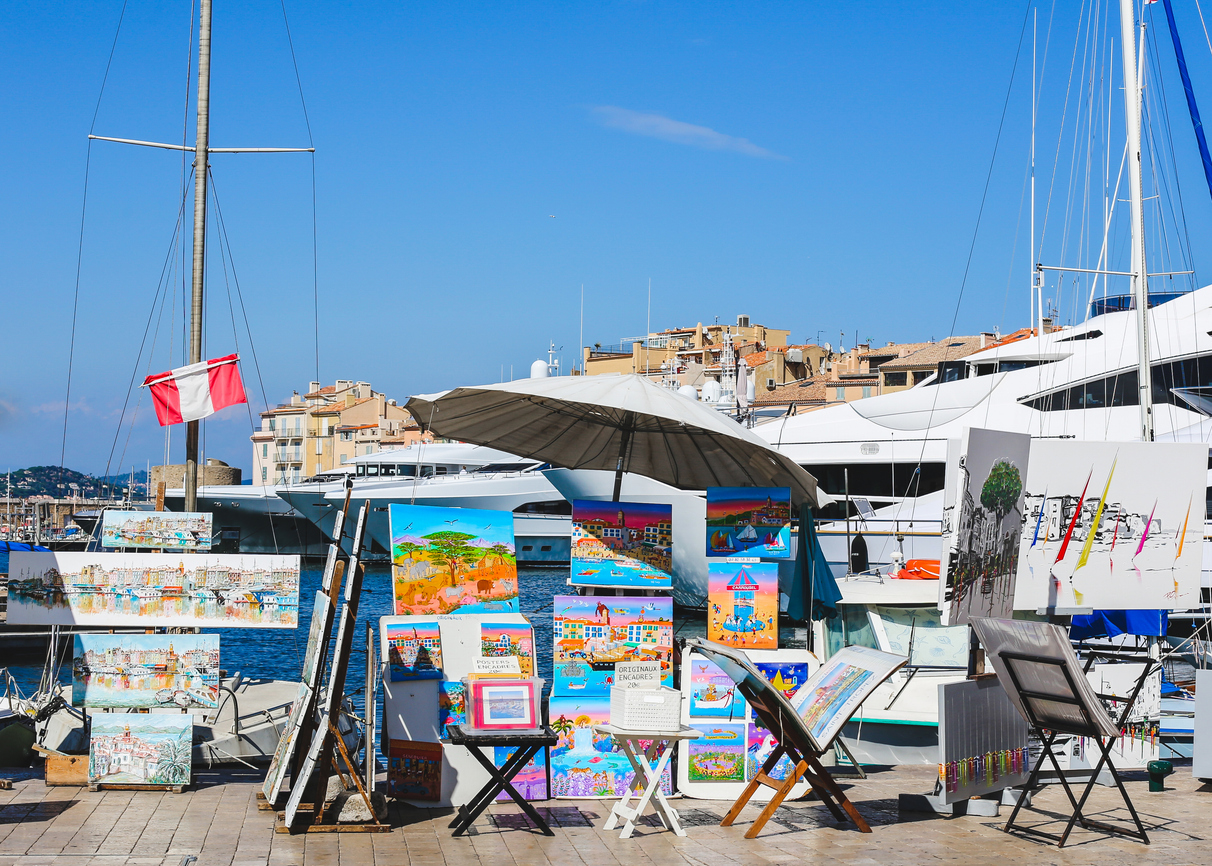
Art Galleries in Saint-Tropez: Creativity on the French Riviera
Saint-Tropez wears its art history as comfortably as a linen shirt in midsummer. The village’s light—prismatic off the sea, chalky on baked stone, and honeyed at dusk—has coaxed artists for more than a century, from the Neo‑Impressionists who set up their easels in La Ponche to the contemporary pop and street artists whose bold canvases now fill white cubes around Place des Lices and the Vieux Port. An afternoon here can glide from museum masterpieces to cutting‑edge sculpture, with pauses for a citron pressé under plane trees and a sunset vernissage by the quays. If you want to understand the visual pulse of the Riviera, Saint‑Tropez offers it compact, walkable, and intensely alive.
For a broader sense of the village’s character beyond the gallery doors, explore our complete guide to Saint-Tropez.
Where the light began: a brief art history of Saint‑Tropez
When Paul Signac arrived by boat in 1892, the harbor village was still a quiet fishing port with narrow lanes and modest ateliers. He bought a house he called La Hune and invited his circle—Henri-Edmond Cross, Matisse, Bonnard, Marquet—to visit. They were hunting not just beauty but a certain quality of light: it fractured into color on the water and simplified forms under the midday sun. Those experiments are the foundation of what you’ll see today in Saint‑Tropez’s galleries: a confidence with color, a fondness for the maritime horizon, and the idea that art belongs in daily life, not in a cloister.
The Musée de l’Annonciade, set just behind the old port in a former chapel, preserves this moment with works by Signac, Cross, Derain, Bonnard, and Vuillard. Spend an hour there and you’ll notice how the village’s geometry—ochre walls, blue shutters, curved prowlines, striped beach tents—repeats as motifs in later art. In the 1960s, the town’s image took on a second layer when cinema and fashion photographers arrived in the wake of Brigitte Bardot, and galleries began to mix avant‑garde painting with photography and graphic work. Today, that blend has widened to include sculpture, kinetic art, urban art, and collectible design objects, all in spaces that feel as casual and sunlit as the town itself.
The gallery map: how Saint‑Tropez’s art scene is laid out
Saint‑Tropez’s center is compact, and most galleries cluster in four areas you can easily cover on foot in an afternoon: the harbor quays, the streets fanning out from Place des Lices, the lanes around Place de la Garonne, and La Ponche’s maze of alleys. Each has a subtly different personality that mirrors the art you’re likely to find.
Beyond the village itself, the wider Gulf of Saint-Tropez offers charming coastal towns, beaches and viewpoints that complement an art-focused day.
The harbor quays: statement pieces with a maritime backdrop
Walk along Quai Suffren and Quai Jean Jaurès and you’ll see the most visible face of Saint‑Tropez’s art commerce: windows filled with large-format canvases, glossy sculptures, and photography with strong graphic lines. This is where monumental works make immediate sense; the reflections off the water act like a second spotlight. It’s not unusual in high season to find temporary outdoor sculptures standing right on the quay, the kind of showpieces that photograph beautifully with sails in the background. If you like bold color, resin finishes, or contemporary figurative pieces with a pop sensibility, start here.
Place des Lices and the surrounding grid: conversation and curation
A few streets back from the port, around Place des Lices, the pace changes. Under the plane trees, locals play pétanque, and market stalls appear on Tuesday and Saturday mornings; between them sit a dense web of galleries on Rue Allard, Rue Gambetta, Rue Georges Clemenceau, and the smaller lanes between. The rooms are often more intimate, with curators who will step out from the desk to talk process, provenance, and framing without hurry. You’ll find mixed shows that pair established international artists with emerging French talent, and the occasional surprise—drawings, ceramics, or editioned prints presented with care rather than spectacle.
Place de la Garonne: design energy and seasonal buzz
On and around Place de la Garonne, steps from designer boutiques, the art offering leans polished and fashion-adjacent. Expect glossy photography, sculptural works in metal or lacquer, and the kind of contemporary editions that sit comfortably alongside collectible furniture. In July and August many spaces here extend evening hours, and it’s common to encounter a vernissage—the opening of a new show—with chilled rosé and the artist greeting visitors on the threshold.
La Ponche: poetry in the stones
Dive into the old fishermen’s quarter and the character changes again. La Ponche’s cobbles turn gallery visits into a meander. Small spaces carry photography, painting, and impeccably chosen works on paper. You may step inside for a single drawing and stay to talk with the owner about how the light on the stones shifts with the seasons. If you’re seeking something quiet but resonant—a lyrical landscape, a line drawing, an intimate coastal study—La Ponche rewards patience.
Landmark institutions: the museum anchors of a gallery town
While galleries are the living room of Saint‑Tropez’s art scene, its museums are the memory. Two small houses of culture enrich any gallery itinerary and provide context for what you’ll see in private spaces.
Musée de l’Annonciade: the color of beginnings
This compact museum captures a pivotal chapter in modern art, where pointillism met the Mediterranean. The works are hung to maximize the encounter with color; nothing feels crowded. If you go in the morning, you can step back out into the harbor with your eyes recalibrated: the blue of the bay becomes a set of pixels, the terracotta roofs reduce to planes of shape. It’s a good reminder that Saint‑Tropez’s galleries don’t exist in isolation; they are in conversation with this legacy.
Musée de la Gendarmerie et du Cinéma: visual storytelling beyond the canvas
Housed in the town’s former gendarmerie, this museum looks at cinema’s relationship with Saint‑Tropez. For gallery-goers, it offers a different lens: poster design, still photography, and the aesthetics of mid-century graphic work. It’s not a gallery, strictly speaking, but it enriches your sense of how images of Saint‑Tropez were created and shared, and why certain visual tropes persist in contemporary work.
La Maison des Papillons – Musée Dany Lartigue: a cabinet of wonder
Tucked in the old town, this intimate museum of butterflies assembled by painter Dany Lartigue is a study in curation. Thousands of specimens arranged with an artist’s eye teach a subtle lesson about color harmonies, pattern, and the way nature’s forms echo in design. Afterward, stepping into a gallery, you may see a painter’s palette differently—nature mirrored in synthetic hues.
What you’ll actually see: the contemporary language of Saint‑Tropez galleries
Even seasoned art lovers are surprised by the variety here. While each gallery follows its own vision, certain currents recur across town in ways that feel rooted to place.
Pop color and joyful figuration
Saint‑Tropez has a reputation for brightness, and the art reflects that: saturated palettes, clean contours, and figurative subjects that nod to Riviera life without cliché. Expect stylized sailors, sunbathers reduced to geometry, or playful riffs on luxury iconography. The best of these works have wit without feeling disposable. They inhabit that thin line between decorative pleasure and serious surface—perfect in a high‑light interior.
Street art and urban aesthetics adapted to the coast
Several spaces showcase artists who began in graffiti or urban installations. On canvas and sculpture, their marks become crisp: stenciled typographies, drips disciplined into motifs, textures trapped under resin. Against Saint‑Tropez’s soft-washed walls and blue shutters, this language feels fresh. It’s also often technically accomplished, with complex layering and archival materials that collectors appreciate.
Photography with narrative depth
From yachting regattas and cinematic portraits to quiet architectural studies, photography has a strong presence. Summer shows often include seascapes with unusual angles—shot from masts or half‑submerged perspectives—as well as black‑and‑white street scenes captured early in the morning when fishermen are washing down the quays. Look for photographers who work in series; in conversation you’ll often hear about long‑term projects rather than one‑off images.
Sculpture, from lacquered animals to bronze abstractions
Sculpture in Saint‑Tropez tends to be tactile and photogenic. You’ll see mirror‑polished surfaces that catch the sea light and matte bronzes that drink it in. Animal figures—lions, panthers, bears—appear often, scaled from bookshelf size to terrace statement pieces. Abstract forms in patinated bronze or corten steel offer quieter options that pair well with Mediterranean gardens. If you have outdoor placement in mind, ask about UV resistance, salt‑air considerations, and maintenance—gallerists here are well versed in coastal living with sculpture.
Editioned prints and design objects
Not every acquisition needs to be a large canvas. Many galleries curate editions: lithographs, screenprints, and numbered photography, often accompanied by COAs (certificates of authenticity). You’ll also find design objects—artist lamps, ceramic series, small bronzes—that allow you to bring Riviera personality into a smaller space or to build a grouping over time.
How the seasons shape gallery life
Saint‑Tropez is a study in rhythm. The art is always here, but how you experience it changes with the calendar.
Spring: fresh shows and relaxed conversations
From late March through May, new exhibitions roll out, and curators have time to talk. If you want to study technique up close, compare works, or commission a piece, spring is ideal. Hours are steady, and you can often schedule a quiet revisit to see a work in different light.
Summer: evening buzz and pop‑up exhibitions
July and August are high‑energy months. Many galleries extend hours well into the evening; you can drift from dinner to an opening without watching the clock. Temporary installations appear near the harbor, and visiting artists sometimes host short residencies or signings. It’s a good time to discover new names and to feel the scene’s social side: the conversation spills onto pavements, and a glass of rosé can spark a meaningful exchange about a series or career.
Autumn: collectors’ season
September and early October bring the golden light of late summer without the crowds. For collectors, this is prime time: gallerists review the season, rotate stock, and are often ready to discuss medium‑term plans for artists you might want to follow. If you’re pairing art with interior projects, it’s also when architects and decorators are in town—useful for onsite discussions about placement and scale.
A curated day: an art‑forward stroll through Saint‑Tropez
If you want to feel the art scene in a single thread, try this slow route designed for conversation, light, and a few essential stops.
Morning: color calibration at the Annonciade and a harbor loop
Begin when the doors open at the Musée de l’Annonciade. An hour there tunes your eyes to color and makes the rest of the day more rewarding. Step out via the harbor and do a gentle loop along Quai Suffren and Quai Jean Jaurès while the light is still slanting and soft. Even if some galleries aren’t open yet, window displays are rich; make a mental note of pieces to revisit. Pause for a coffee at the red‑trimmed terrace on the quay—perfect for people‑watching and flipping through a small catalogue you picked up at the museum shop.
Late morning to lunch: lanes and first conversations
Head up Rue Allard and Rue Gambetta, ducking into two or three galleries whose windows caught your eye. Ask to see works on paper; they’re often kept flat, and leafing through them prompts deeper conversation than pointing at a wall. For lunch, the cafés around Place des Lices have shade and a local hum—simple salads, a daily special, or just a tartine if you want to stay light. Keep your pace unhurried; the best encounters aren’t scheduled.
Afternoon: La Ponche’s intimacy and a quiet hour
After lunch, slip down to La Ponche. The narrow lanes cool the air, and the galleries here encourage a different kind of looking. If you see a single drawing you love, ask the owner what work it sits beside in their mind; you may discover a pairing or a small series that strengthens the piece’s presence at home.
Early evening: Place de la Garonne and a vernissage
As the light shifts to amber, aim for Place de la Garonne. Many spaces will be open late. If there’s an opening, you’ll sense it before you see it: the slight swell of voices, the tray of glasses, a cluster of people at the threshold. Step in, take one lap, then a second more slowly. Summer or not, this is where Saint‑Tropez feels most like itself—art and social life hand in glove.
Inside the white cube: etiquette and how to get the most from a visit
Galleries here are informal and welcoming, but a little forethought elevates the experience. A few practical habits will also help you build trust if you’re considering a purchase.
- Ask permission before photographing works. Most galleries are comfortable with it, especially for memory and private study, but some artists have restrictions on reproductions.
- Handle with care. If you’re invited to browse unframed works, ask for cotton gloves; staff appreciate it, and you see the work without fingerprints.
- Talk materials. Resin, pigments, varnish, paper—coastal light is kind but strong. Ask about UV stability, framing with museum glass, and recommended maintenance for outdoor pieces.
- Be candid about budget and timeline. Gallerists can suggest editions, smaller works, or payment scheduling if you’re clear about parameters.
- Leave contact details for follow‑ups. New works arrive frequently in season; a quick message with a snapshot of what caught your eye helps curators alert you when something similar lands.
Buying art in Saint‑Tropez: practical considerations
Acquiring a work on holiday should be a pleasure, not a logistical puzzle. The town’s galleries handle collectors daily and are used to addressing the practical side. Still, it helps to know what to ask so that the afterglow matches the artwork’s quality.
Provenance, certificates, and editions
For original works, request a certificate of authenticity and, if relevant, a provenance statement indicating previous owners or exhibitions. For editioned prints or sculptures, check the edition size, your number within it, and whether there are artist’s proofs (A.P.) or hors commerce (H.C.) beyond the numbered run. A clear invoice including the artist’s name, title, medium, dimensions, and year will serve you well for insurance and future valuation.
Framing and conservation
Ask about framing options suitable for maritime light: UV‑filtering glazing for works on paper, sealed backs, and spacers to prevent contact with the glass. For canvases and sculptures, establish whether the piece ships framed or unframed, and whether removing a frame for shipment reduces risk. If you plan to place sculpture outdoors, discuss patina care and realistic maintenance schedules in a coastal environment.
Shipping, insurance, and timing
Most galleries coordinate shipping worldwide and can advise on crating, couriers, and insurance. Clarify who bears risk at each stage—gallery to shipper, shipper to your door—and what the estimated transit time is, especially in high summer when logistics are busy. If you’re moving on quickly, consider leaving the work on consignment with the gallery until shipping is confirmed; it can be simpler than storing it in a car during a hot week.
Taxes and paperwork
Discuss taxes upfront and ask for a line‑item breakdown on invoices. Depending on your residency and the nature of the sale, there may be specific formalities for export. Reputable galleries in Saint‑Tropez are used to these questions; a five‑minute conversation at purchase saves an afternoon of emails later.
For serious collectors: building relationships and seeing beyond the window
Collectors who return to Saint‑Tropez year after year tend to develop relationships with two or three galleries whose eye they trust. The advantage isn’t just first look at new work; it’s a dialogue about your collection’s arc—what complements it, what stretches it, when to pause and when to commit. If a piece intrigues you but you’re undecided, say so. Ask whether there are reserve options for 24‑48 hours, and whether you can see installation views of the work placed in comparable interiors. In shoulder seasons, some gallerists may arrange studio visits or private viewings of works not on the floor—always at their discretion and within artists’ preferences.
Family‑friendly ways to engage with art
Saint‑Tropez can surprise families with how naturally children respond to art here. Start with the museum: the scale of the Musée de l’Annonciade is unintimidating, and you can set a simple “color hunt” (count the blues) or “shape hunt” (find circles in sails and buoys). In galleries, ask staff which works are safe to view up close and whether they have a small stool for a child to sit and look; you may be offered a quiet corner and a postcard of a favorite work to take home. If your children like to draw, bring a slim sketch pad: a bench near the lighthouse end of the harbor is a superb spot to sketch masts and hulls for twenty unrushed minutes.
Where art meets daily life: cafés, markets, and craft
Part of Saint‑Tropez’s charm is that its art scene spills into everyday stops. Vintage photographs and Riviera posters line the walls of long‑standing harbor cafés, and shop windows near Place de la Garonne often double as curated displays mixing design objects with limited‑edition prints. On market mornings at Place des Lices, you’ll sometimes find a bookseller with art monographs and local photo zines. For a sweet pause, the original cream‑filled brioche created in the 1950s lends a small slice of local history to an art day; inside, take a moment to notice the archival portraits on the wall and the script typography that has become a kind of local design language over decades.
Beyond galleries, Saint‑Tropez still has working ateliers. A sandal‑maker’s workshop’s wall of lasts looks like sculpture; a frame‑maker’s corner stacked with gilt profiles becomes a study in shadow. These encounters—unscripted, tactile—round out the day. They remind you that art isn’t only what hangs under spotlights; it’s also the meticulous handwork that defines Mediterranean style.
Timing and logistics: making the town work for your art day
Even when spontaneous, a small plan makes the difference between a pleasant wander and a fully satisfying circuit. A few local pointers help you use the day’s light and the town’s rhythm.
Hours and pacing
Galleries typically open mid‑morning, close for lunch, and reopen through the afternoon; in July and August, many stay open into the evening. Museums open earlier and reward an early start. The hottest hours—roughly 13:00 to 16:00 in high summer—are a good time for lunch or for the shaded galleries around Place des Lices. If you want the harbor quays without crowds, go before 10:00 or after 19:00; even in season, the air softens and conversations stretch.
Getting around and where to pause
The old town is best on foot. Wear rubber‑soled shoes for cobbles in La Ponche and a hat for mid‑day loops along the quays. If you’re driving in, plan for central car parks a short walk from the harbor; on market mornings, arrive early or park slightly farther out and stroll in. Hydrate, not as a platitude but because the light encourages long looks; galleries appreciate visitors who aren’t flagging. For a mid‑route reset, the cafés edging Place des Lices are shaded and slow, while the harbor terraces offer breezes and spectacle.
How to choose a piece that feels like Saint‑Tropez without cliché
The most satisfying acquisitions are those that evoke the place for you personally rather than ticking off a postcard trope. A few approaches help you find that sweet spot.
Follow a motif that surprised you
Maybe it’s not the sails or the beaches. Perhaps it’s the geometry of window shutters, the shadow line where a lane turns, or the pale pink of early morning on a wall. If a work captures a small, private Saint‑Tropez that you noticed, it’s likely to stay fresh on your wall long after you leave.
Think in pairs or sequences
Instead of a single large canvas, consider a diptych or a short series of prints. Many galleries can propose groupings that feel like a narrative of your day: harbor at dawn, lanes at noon, sea at dusk. Sequences read as journeys rather than statements, and they sit lightly in a room.
Scale to your light
Saint‑Tropez seduces with brightness, but your home may not have the same light. Ask to see high‑res installation photos of works in dimmer or cooler interiors. A work that glows in afternoon sun can also hum beautifully under winter light if the palette and surface are right.
Conversations that matter: questions to ask a gallerist
Good gallerists relish sharp questions. They also respect those who ask about context beyond the price tag. Consider this small repertoire:
- What conversation is this work having with the artist’s previous series?
- How did the artist approach materials with coastal light in mind?
- What exhibitions has the artist had recently, and where is the work headed next season?
- Are there drawings or studies related to this piece that I can see?
- If I’m responding to this one, which other work in the room do you think I should compare it with, and why?
The answers help you hear an artist’s trajectory and a curator’s thinking—useful whether you’re buying or simply learning.
The evening scene: vernissages and the art of the stroll
In summer, Saint‑Tropez finds its second wind in the evening. A vernissage can be as simple as a tray of glasses and a stack of press releases, or as elaborate as a DJ and an artist walkthrough. Both are worth your time. Arrive early if you want to talk to the artist; arrive later if you prefer to watch the room respond. Step outside for air between laps; the threshold between gallery and street is where half the interesting conversations take place. And don’t feel obliged to stay long—fifteen minutes of focused looking can be richer than an hour of mingling.
Photography spots for art lovers
Even if you’re not buying, you can bring home visual memories that feel like a personal portfolio. Three subjects make good studies: reflections in gallery windows (art superimposed with sails and sky), the geometry of frames stacked in a framer’s shop, and the rhythm of posters on temporary exhibition boards near the port. Shoot early or late for soft shadows; look for diagonals to give depth, and don’t be afraid of a little glare—it’s part of the story here.
Beyond summer: the off‑season perspective
Winter narrows hours but deepens focus. A rainy weekday visit in November or February lets you stand in front of a single work without a sound. Gallerists have time; museums feel like a private viewing. If you live within reach, a winter day trip can be more nourishing than a packed summer crawl, and you’ll see artists’ winter series—often more reflective, sometimes more experimental—before they hit high season walls.
Bringing Saint‑Tropez home, thoughtfully
If you’re not ready to commit to a major piece, consider artist books, small editions, or postcards chosen with the same care you’d give to a painting. Building a shelf of Riviera monographs, exhibition catalogues, and local photo books creates a library that acts like a portable gallery wall. A slender bronze or a ceramic cup from a design‑forward gallery might sit by your window and catch the same morning light you loved on the port. The key is to choose objects that keep you looking rather than simply reminding you where you were.
Final notes on respect and rhythm
Saint‑Tropez’s art scene is open‑armed, but it rests on relationships—between artists and curators, works and spaces, locals and visitors. Step lightly, ask good questions, notice when someone has time to talk and when they’re in the middle of an installation. If a gallery helped you see something more clearly, say thank you, even if you’re not buying. If you do acquire a piece, send a quick photo once it’s installed at home; it closes the loop and makes your next visit even warmer.
Looking for the perfect base to explore Saint-Tropez and the surrounding Riviera? Discover our holiday villas and holiday homes on the Côte d’Azur.

