

 EN
EN  NL
NL
 DE
DE
 FR
FR

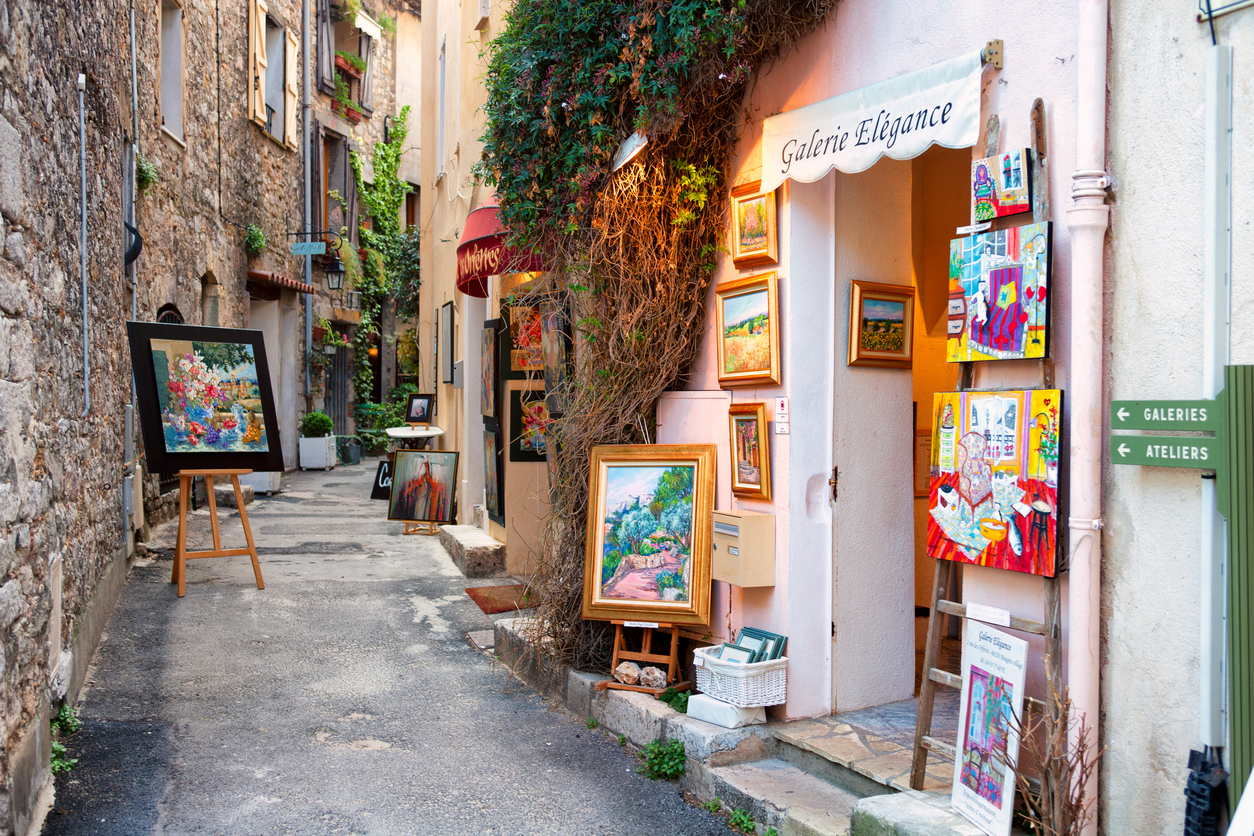
Art Galleries in Sainte-Maxime and Les Issambres: Creativity on the French Riviera
If you spend a few mornings wandering the quays and backstreets of Sainte-Maxime, then drift east along the corniche to Les Issambres, you’ll quickly notice how art seems to surface everywhere: in whitewashed studios tucked behind bougainvillea, in municipal exhibition halls with seaside views, and in pop-up shows that take over promenades on warm evenings. The creative rhythm here is intimate rather than glitzy—anchored in light, sea, and the daily pace of life—making these two towns a rewarding place to browse, discover, and collect.
For broader context on the town’s character and cultural rhythm, you may appreciate this local guide to Sainte-Maxime before you set out.
The coastal palette: why the Riviera light matters to galleries
Long before art openings and seasonal shows became a regular fixture, painters came to this shoreline for the same reason today’s artists still do: the light. On the north side of the Gulf of Saint-Tropez, Sainte-Maxime and Les Issambres benefit from a clarity that arrives with the mistral and a gentle gold that settles in late afternoon, bouncing between sea and pale façades. In practical terms, that conditions what hangs on local walls. You’ll find work that tests how far a horizon can be reduced to a band of ultramarine, or paintings that luxuriate in the shadows thrown by plane trees and balustrades. Sculptors borrow from the shoreline—rivulets in stone echoing sand patterns, or ceramics glazed in salt-washed blues. This isn’t a coincidence; the coastal palette is a shared language, and you see it in windows as you move from quay to old town, from San Peïre’s square to the coves near La Gaillarde.
Sainte-Maxime’s gallery landscape at a glance
Sainte-Maxime’s center is compact enough to explore on foot, and that scale favors galleries that feel personal. Rather than a single “gallery row,” you’ll find a network: municipal spaces that rotate curated exhibitions; small, independent rooms where the artist often greets you; and seasonal pop-ups that appear as soon as the evenings stretch long. The concentration is thickest between the old port and the lanes just behind the seafront—an area where a morning of gallery-hopping can be broken up naturally with coffee stops and short detours to the water.
Municipal exhibition spaces that frame the sea
One of Sainte-Maxime’s strengths is its public cultural programming, which regularly activates centrally located halls. These civic spaces tend to favor thoughtful group shows that bring together regional painters, photographers, and artisans, with a rhythm that moves from spring salons to more ambitious summer exhibitions and quieter winter retrospectives. You’ll often encounter shows that work best with the sea as a backdrop: black-and-white maritime photography hung in bright rooms, abstract canvases curated to echo the changing sky, or thematic exhibitions that explore the coastline’s botanical life and its effect on contemporary craft. Timelines are posted widely around town, so it’s easy to fold an exhibition into a day of errands or a beach walk. The atmosphere is open, never stiff; attendants encourage lingering and conversation, and it’s not unusual to catch an artist talk on a Saturday morning, unadvertised beyond a handwritten notice at the entrance.
Independent studios in the old town
Behind the waterfront, a few streets in from the harbor, the old town’s grid hides intimate studios with modest signage: a surname on a tile, a painted arrow at ankle-height, a splash of color on an open door. This is where you can stand close to the work—and to the person who made it. Expect small-batch oils and acrylics, hand-pulled prints, and ceramics that make obvious sense in a Mediterranean kitchen. Because rents and floor plans are modest here, curation tends toward the distilled: a single series on the walls, a small table of sketches that feel like weather notes, a few sculptural pieces whose patina comes from sunlit windows rather than floodlights. These old-town rooms have a habit of pulling you in while you’re on your way somewhere else; plan for pauses, and don’t hesitate to ask questions—most artists are happy to talk technique, sources of clay, or the spot on the promenade where a particular line of hills finally made sense on paper.
Pop-ups and art under the plane trees
From late spring into early autumn, Sainte-Maxime’s public spaces open up to small art fairs and open-air exhibitions. The promenade and squares host night markets where, for a few hours, you can walk among stalls hung with oils of capes and coves, finely inked maps, and jewel-bright watercolors of cafés at the blue hour. These events invite serendipity: a photographer who only works at dawn might show you proof prints still curling at the edges; a ceramicist could demonstrate how a carved pattern catches shadow as dusk falls. If you’re used to white-cube galleries, the informality is refreshing—people rest on the quay wall with gelato while they debate a frame color, and a gentle sea breeze becomes part of the exhibition’s texture.
Les Issambres: an intimate art scene by the sea
Les Issambres, a seaside community strung along coves and small beaches, takes a quieter approach that rewards attention. The heart of daily life is San Peïre, a small square near the port where market days draw residents and where cultural programming often sets up shop. Here, exhibitions are less frequent than in larger towns, but they often feel more neighborly: a painter whose studio faces the pines one street back, a sculptor who brings two new pieces “just to see how they look in evening light.” Because scale matters, you tend to converse rather than browse; what begins as five minutes becomes a generous exchange about tints, sand, and the stubbornness of marine wind.
Beyond Sainte-Maxime and Les Issambres, the wider Gulf of Saint-Tropez is home to several charming villages, art galleries and cultural attractions waiting to be explored.
San Peïre’s cultural rhythm
Keep an eye on San Peïre’s notice boards and the esplanade by the port: they are your best guide to what’s on in Les Issambres. Summer brings rotating exhibitions in municipal rooms and occasional outdoor shows that briefly transform the square. The proximity to the sea sets a tone—framed canvases hung above stone paving still cool from the day, light bouncing off hulls across the road. Drop by in late afternoon if you can; by then, the glare has softened, and the works’ colors breathe. On market mornings, you’ll sometimes find artists lingering after stalls pack up, laying out sketchbooks next to baskets of figs and jars of local honey. It’s not a schedule in the conventional sense; it’s a habit of gathering that belongs to the place.
Marine textures and tactile work
Artists in Les Issambres tend to work with materials and motifs that make sense in salt air. You’ll see hand-built ceramics with glazes that shift from white foam to deep harbor blue, reliefs in driftwood that preserve knots like cartography, and small bronzes whose surfaces recall sand-scoured rock. Painters too work texturally—sand mixed into gesso to catch light, boards primed to resist humidity, a horizon line that refuses to sit flat because the sea rarely does. If you enjoy work that feels good in the hand as much as it does from a few paces back, this is where to look. Many artists are open about process and practicalities (sealants, framing for coastal homes, maintenance), and it’s worth asking; the answers are as much a part of the work as the brushstrokes.
Art along the littoral
The coastal path that threads through Les Issambres makes a natural backdrop for small, informal displays and the simple act of watching artists at work. On quiet mornings, it’s not uncommon to see a watercolorist posted above a cove, a small fold-out stool in the shade, a line chasing an errant wave. The path’s rhythm—pines, sea, low stone walls, sudden views—invites looking differently at what’s on a gallery wall later. If you want to sketch yourself, bring light materials and choose a spot with space to step back; the path can be narrow in places, and you’ll want to avoid blocking walkers who are simply out for air.
A morning-to-evening gallery day in Sainte-Maxime
Start early, when the town is rinsed with pale light and streets are still waking up. The harbor is a good first stop; you can read the day’s colors in the water and watch local life unfold as fishermen prep lines and shopkeepers sweep thresholds. Slip one street back from the seafront for coffee. A zinc-topped counter and a croissant you won’t rush set a good tone; take ten minutes to look at how shade falls across façades—this matters when you’re later deciding whether a photograph belongs in your dining room or a hallway without natural light.
Old-town streets and compact studios
From the harbor, wander into the old town’s narrow grid. Aimless is best; look for the small signs, the slightly ajar doors, the paintings that seem to glow even on a cloudy day. In these rooms, be unhurried. Ask about the work on the flat file, the sketch pinned at knee-height that hasn’t made it onto a wall. If a piece catches you, return after lunch to see how it reads under different light. Many artists here work in series; if a painting appeals but isn’t quite your size, it’s worth asking if the series continues in larger or smaller formats. This isn’t a hard sell territory; it’s a conversation.
Municipal exhibitions after midday
Make a point of visiting a municipal or cultural center exhibition after lunch. The curation tends to be generous—enough space for work to breathe, notes that respect both artist and viewer. Photography shows are a particular strength in these rooms; you’ll stand close to prints that love the Riviera’s whites and deep shadows. If you’re thinking of adding photography to a home collection, this is a good place to get comfortable with editions, paper types, and framing that won’t fight with your interior light. Don’t be surprised if you’re drawn to a theme—sail, stair, window—that suddenly seems to belong to this town as much as to you.
Late-afternoon sketching and the blue hour
If you’re the sort who likes to put hand to paper, late afternoon belongs to a short walk to a headland or a quiet quay. The light softens, color separation increases, and your pencil decisions become easier. Keep materials simple—two or three pencils, a sharpener, a small pad. Focus on rhythm: the curve of a balustrade, the slope of tiled roofs, the scalloped line of pines. Afterwards, return to the center as evening comes on. When there’s a vernissage (opening), it will be here that the day’s impressions sharpen into a conversation among strangers who, for an hour, feel like neighbors.
A slow, sea-breezed art day in Les Issambres
Les Issambres asks for a different pace. Begin with a stroll along the seafront in San Peïre, where the village wakes gradually to the day’s weather. If an exhibition is advertised in the square or by the port, go early; you’ll have time to step close to works and talk without crowd noise. If not, your morning can be spent walking the littoral path, letting your eye adjust to the area’s forms and colors: rounded rock, pale water over sand, the short, sturdy pines that lean a little toward the east. Let this rhythm inform your later browsing; a sculpture will make more sense when you’ve watched wind draw lines on the surface of a cove.
From square to cove: connecting spaces
After coffee in San Peïre, follow the coast in either direction. To the west, small beaches appear in rhythm with rocky outcrops; to the east, the shoreline opens and tightens, a lesson in negative space that painters love. When galleries or civic rooms are hosting shows, they’re never far from the daily flow of life here: close enough to the sea that salt seems part of the air inside. Expect a mix of professionals and talented amateurs; in small towns, it’s often the honesty of attention that matters, and you’ll find it in pieces that don’t need a press release to make their case.
Evening returns and neighborly openings
On summer evenings, San Peïre often turns sociable. If there’s an opening, it will feel more like a get-together than a formal event—plastic cups of chilled rosé, children weaving between adults, the artist taking time for every question. Bring patience and openness; the work reads differently in this setting, and conversations have a way of traveling from technique to stories from the sea to recipes for grilled sardines. Leave room for surprise; it’s the small places that often hand you something you didn’t know you were looking for.
Buying art here: practical advice for collectors
Shopping for art near the sea is both romance and logistics. Start with authenticity: if you’re buying a painting or print, ask about a certificate of authenticity and, for editions, make sure the edition size and number are clear. For photographs, inquire about paper and inks—archival quality matters in coastal environments. With sculptures and ceramics, talk openly about care in humid, salty air and whether the piece is intended for indoors or can live happily in a sheltered outdoor space.
Framing, shipping, and taxes
Framing in France is excellent, and many artists can recommend a framer who understands how to make a piece breathe without overwhelming it. If you plan to travel with a work, consider buying unframed or, in the case of canvases, rolled and tubed; this is common practice and can be faster and more cost-effective for shipping. Keep receipts and provenance documents in a safe place, and declare purchases as required when you return home. Galleries here are used to international buyers and can usually provide clear documentation in French and English. If you’re unsure about value-added tax or export steps, ask calmly and early; you’re not the first to navigate this.
Meeting the makers: studios, workshops, and short classes
The most rewarding conversations in Sainte-Maxime and Les Issambres often begin in working studios. If a door is open and a sign invites you in, take it literally. You’ll learn more in five minutes of asking about a glaze’s recipe or a painter’s brush choice than in an hour of silent browsing. In high season, look out for short workshops—two-hour watercolor mornings in a shaded square, or beginner-friendly clay sessions where you’ll make a small bowl and understand why your fingertips matter as much as the kiln. These aren’t tourist traps; they’re often led by the same artists who hang on local walls, and they teach with generosity rooted in place.
How to book and what to bring
Workshops and studio visits in these towns are often arranged the old-fashioned way: a phone number on a sign, a time written in chalk, an invitation to “pass by at five.” Bring cash for small fees; bring curiosity for everything else. For outdoor classes, pack light—water, hat, pencils, and a willingness to erase. If you’re traveling with children, ask whether a session can be adapted; many artists are happy to tailor a short activity that introduces kids to color mixing or to the texture of clay, and you’ll go home with something that won’t break in the suitcases: a memory with its own grain.
Seasonal highlights and annual rhythms
Art here doesn’t live on a rigid calendar, but there is a seasonal logic. Spring often brings juried group shows in municipal halls, where you’ll see a cross-section of local and regional talent. Summer expands outward: evening pop-ups on promenades, open-studio days when doors marked “Atelier” stand wide from morning until dusk, and temporary sculpture displays that take advantage of gardens and courtyards. Autumn slows kindly, making room for photography and for exhibitions that require you to stand closer. Winter is reflective; small retrospectives, a focus on craft, and holiday markets where well-made objects—vases, small prints, handmade notebooks—make thoughtful gifts that don’t feel like airport souvenirs.
What to expect on market days
Market days in Sainte-Maxime and Les Issambres bring the towns’ textures to the surface: the smell of citrus and olives, the feel of linens, the rhythm of bargaining that is more conversation than transaction. Art and craft mingle here—enamel jewelry set next to bunches of herbs, hand-printed kitchen towels across from a stall of early pears. If a painter or printmaker sets up a modest stand, don’t walk past for lack of spotlights; small works on paper often hold the most portable truth of a place. Prices here can be accessible, and a small print or a drawing can be the piece that reminds you, years later, of the color of the afternoon the day you bought it.
Looking closely: how to read coastal work
Standing in front of an abstract sea or a ceramic bowl glazed in blue is easy; looking is harder. In these towns, art is often an exercise in paying attention to what’s already present—the angle of light on stone, the color shift from shallow to deep water, the flatness of noon. To read a painting here, start by naming what keeps your eye moving: a line that refuses to stay straight, a patch of underpainting that makes a final color ring, a point where brushstrokes diverge like ripples from a stone. With ceramics, turn the piece (gently) and watch for the artisan’s decisions: the thickness at the lip, the foot’s balance, the way glaze pools in a carved groove. You’re not just shopping; you’re learning the language of a place.
Choosing for your own spaces
Homes on the coast often have bouncing light and, in summer, a brightness that can be unforgiving. Choose works that hold their own in daylight but don’t get lost when lamps come on at night. If your walls are white, pay attention to works with a distinct tonal range; subtle grays and warm off-whites can keep a room from feeling flat. If your home is further inland or in a city, a piece full of Riviera sun can still work—consider framing choices that ground the light: natural wood, float mounts that give breathing room, non-reflective glass so you see the paint, not your windows.
Food, coffee, and places to talk art
Art days flow better with good pauses. In Sainte-Maxime, the lanes behind the harbor offer plenty of café tables where you can spread a brochure and compare impressions over an espresso or a citron pressé. A stop at a pâtisserie on the seafront for a slice of the region’s famous cream-filled pastry has become almost ritual for some gallery-goers; it’s a small sweetness that seems to sharpen the eye. In Les Issambres, San Peïre’s cafés are where you overhear artists arranging to meet later, or a visitor describing a blue they can’t find a name for. If you prefer something quieter, take a short walk and find shade near a low wall above the sea; review your photos there, and decide what to revisit.
Pairing a gallery afternoon with an early dinner
When the sun eases and galleries close, both towns reward simple meals that keep conversation going. In Sainte-Maxime, brasseries just off the main streets offer reliable fare and, often, a view of people heading home with rolled canvases underarm. In Les Issambres, terraces near the water catch the last light and make natural space for paging through a catalog. Ask for a local rosé without ceremony; the point is not a performance of taste but the continuation of a day spent looking.
For families: making creativity part of a beach holiday
Traveling with children doesn’t preclude gallery time; it reshapes it. Both Sainte-Maxime and Les Issambres are easy to navigate with strollers, and many small galleries welcome families if hands are watched and enthusiasm is kept at a respectful volume. Frame a visit with a purpose—“let’s find a painting with three boats” or “count the colors you see in the sea”—and you’ll discover patience where you expected fidgets. Follow a short gallery visit with a stint on the beach, but bring a sketchpad; a child’s drawing of a bay, made while sitting at its edge, can be the best souvenir you carry home.
Short, tactile stops
Kids understand making faster than looking. Seek out ceramic studios where they can touch clay scraps or watch a potter pull a handle; many will offer a minute or two of demonstration if the space is calm. Choose photography exhibitions with strong contrasts and clear subjects; black-and-white maritime scenes read well to young eyes. Keep visits short, and end with gelato or a swim; the association of art with pleasure is a gift that lasts longer than a week at the sea.
Practicalities: hours, language, and getting around
Galleries and exhibition spaces in these towns often close for lunch and reopen later in the afternoon, especially in the shoulder seasons. Summer extends hours into evening, and openings can run late enough to catch the last color in the sky. French is the language on the walls, but many artists and gallerists switch comfortably into English; a few words of French help, and you will be rewarded for trying. Wear shoes that handle cobbles and a little sand; bring water, and be ready to step out of sun into cool white rooms and back again.
Parking and pacing
In Sainte-Maxime, parking near the harbor is convenient but can fill quickly in high season; if you arrive late morning, consider lots a few streets back and enjoy the walk in. Les Issambres’ parking near San Peïre is functional but limited; patience helps. Wherever you begin, give yourself more time than you think you need. The pleasure here isn’t just in seeing a piece you might buy; it’s in the idle minutes between spaces, when the town shows you why so many people have tried to paint it.
Respecting place and people
Art scenes in small towns are held together by relationships. Ask before taking photos, especially of work up close. Keep conversations with artists human; they’re fielding practical questions as well as personal ones. Handle with care if invited to hold a piece. If a door is closed, assume it’s a studio at work and return later. Buy thoughtfully; a small work purchased with intention does more for an artist and your memory of a trip than a big piece bought in a hurry. And remember that the towns feeding these galleries are not museums; they are homes full of routines that quietly support what you see on the walls.
Why these two towns reward attention
It’s tempting, on the Côte d’Azur, to chase big names and blue-chip rooms. Sainte-Maxime and Les Issambres invite another way: a local patience that lets you move at the speed of a pedestrian boulevard, a market morning, a sea turned to silk by the evening. The galleries and studios here draw nourishment from this rhythm. They are not trying to be somewhere else; they are trying to be exactly where they are, which is what makes them valuable. The art feels lived-with rather than spectated-at, precise in its looking yet generous enough to leave space for you inside it.
A closing loop between sea and wall
On your last day, revisit one piece you keep thinking about. Stand close, then step back, then walk outside for a minute to catch the air and return. Ask yourself if the color you loved in the morning still holds at four o’clock; ask if the balance that felt perfect under electric light still sings in daylight. If the answer is yes, trust it. The decision you’re making is not just about an object; it’s a commitment to keep a certain light alive when you’re far from this shoreline. That is, in the end, what the best of these towns’ galleries offer: a way of taking home the discipline of looking that their artists practice every day.
Looking for the perfect base to explore the art galleries of Sainte-Maxime and Les Issambres? Browse our holiday villas and holiday homes in Sainte-Maxime and Les Issambres.

