

 EN
EN  NL
NL
 DE
DE
 FR
FR

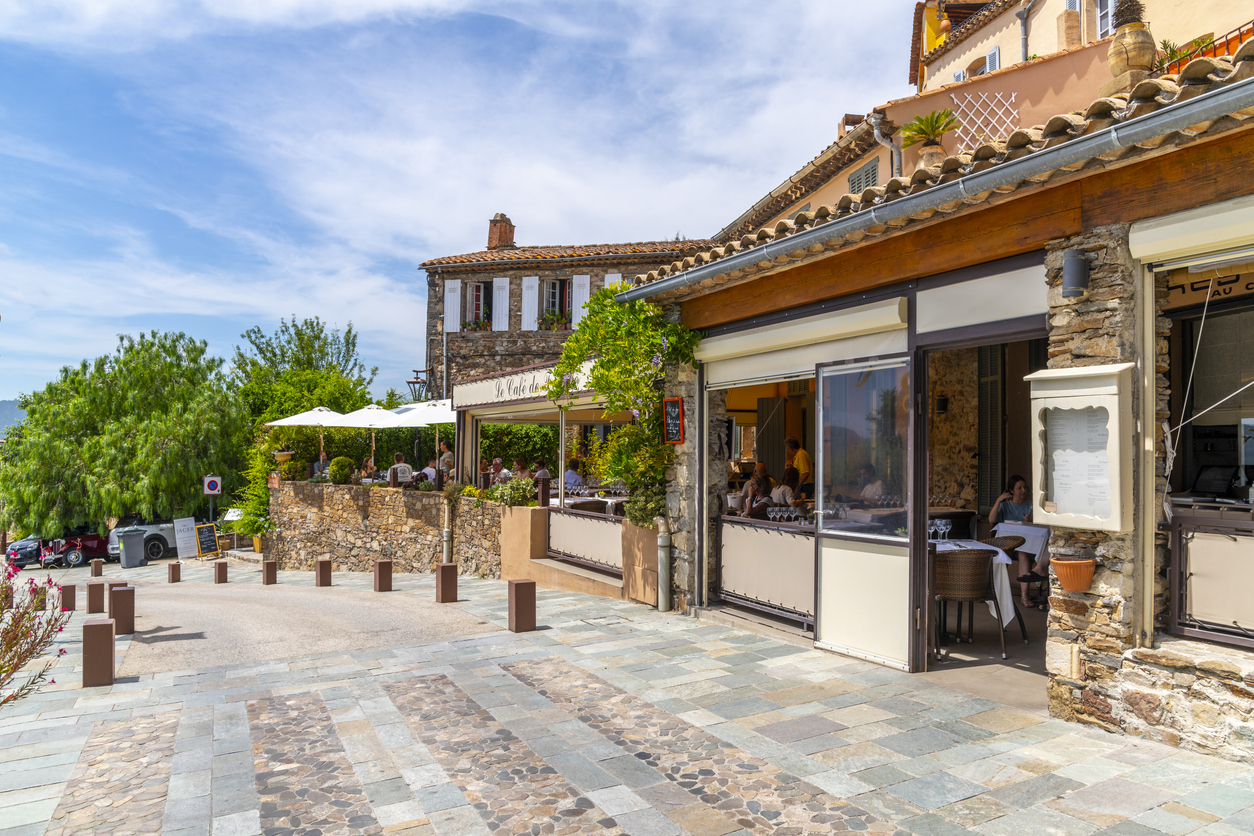
From Boulangerie to Bistro in Grimaud: A Day of Eating Like a Local
Grimaud invites you to eat the day in chapters: a sunrise crumb from a village bakery, a mid-morning stroll through market stalls perfumed with bay and basil, a slow lunch under plane trees, and a golden-hour apéritif before a seafood dinner on the quays of Port Grimaud. The village’s medieval lanes look inland across the Maures hills, while its waterside “Venice Provençale” faces the Gulf of Saint-Tropez—two faces of the same appetite, and the perfect canvas for tasting Provence on its own unhurried terms.
For broader context as you plan your food-focused wander, our Gulf of Saint-Tropez travel guide and other local guides to the Côte d’Azur offer helpful background on seasonal rhythms and neighborhood flavors.
Dawn rituals: pastry, crust, and a quick bonjour
Start where every Provençal morning should: at the counter of a boulangerie. The order is simple. If you’re hungry, a still-warm baguette tradition—its crust blistered, its crumb creamy and irregular—is a proper baseline. For something local and celebratory, a slice of the iconic Tarte Tropézienne, a brioche layered with a light, citrus-scented cream, has as much claim to the Côte d’Azur as rosemary to a lamb shoulder. In Port Grimaud, the La Tarte Tropézienne boutique turns out individual portions and family-size beauties that locals carry to boats and picnics alike.
Take coffee the way most here do on a weekday: short and direct. Order a café or a noisette (a small espresso “stained” with milk). Save the leisurely grand crème for later in the morning when you settle in to watch market life unfold. If you’ve grabbed a baguette, a quick stop at a fromager’s stand later will complete the picture with a goat cheese from the nearby Maures hills or a tome from Haute-Provence.
Market mornings: Grimaud’s weekly gatherings and what to buy
Markets are the heartbeat of eating like a local. In the old village of Grimaud, featured in our Grimaud travel guide, the weekly market animates Place Neuve on Thursday mornings, typically from early morning until around midday. Down by the water, Port Grimaud hosts its own market on Thursdays and Sundays, drawing fishmongers, growers, and olive specialists to the quays. On Sundays (in season), the Marché des Jas des Roberts—set amid the pines on the Grimaud road—mixes farmers’ produce with brocante finds for a textured slice of local life. Go early; by 11:30, the good tomatoes have all but chosen their owners.
Seasonality will guide you more than any shopping list, but it helps to know what the region thrives on. In spring, look for artichokes, pea shoots, and bundles of feathery fennel tops that bakers tuck into fougasse. High summer sings of sun-sweetened vegetables—peppers, zucchini, eggplant—destined for ratatouille, and of figs (Solliès AOP if you’re lucky). Autumn brings wild mushrooms and chestnut honey from the Maures; winter brightens with citrus and sturdy greens. Year-round, olives, anchoïade, tapenade, and pissaladière (caramelized onions on a thin, bready base) are market staples that fit any picnic.
- Produce to try now: bunches of basil for a pistou; courgette flowers to fry at home if you’re cooking; violet artichokes to braise.
- Cheeses: soft goat rounds wrapped in chestnut leaves; Tomme de Provence; fresh brousse when available.
- Charcuterie: Provençal saucisson spiked with fennel; thin slices of jambon cru for sandwiches.
- Seafood: from the quayside vendors in Port Grimaud, think dorade (sea bream) and loup de mer (sea bass), plus oysters when waters are cool.
Remember the unspoken etiquette: a friendly bonjour to the stallholder opens every exchange. Ask if you can taste—cheesemongers will often shave a thin sliver of something seasonal—and accept the vendor’s advice on ripeness. Tomatoes may be “for today” or “in two days,” wrapped in a careful brown-paper promise.
Late morning pause: a café table and a view
Once your basket is full, give in to the village rhythm. Claim a table on a shaded terrace, order something simple, and watch. The coffee choice for lingering is an allongé (a longer pour, somewhere between espresso and an Americano) or a grand crème. Locals often ask for a carafe d’eau alongside; it is always included. Mind that many kitchens don’t open before midday, and even then lunch is a commitment rather than a quick bite. Aperitif snacks—olives, almonds, thin crostini of tapenade—might appear if you stay long enough, but this hour was made for caffeine, gossip, and the comforting clatter of cutlery being set inside for lunch.
Lunch in the hills: L’Ecurie de la Marquise and old-stone Provençal
Grimaud’s old village holds a cluster of restaurants that treat Provençal classics with affection and restraint. L’Ecurie de la Marquise, set within the cool vaults of an old stable, is one of those rooms that magnifies the season rather than dressing it up. Expect the kind of cooking that rewards a morning at the market: grilled meat or fish with wild thyme, a bowl of soupe au pistou when basil is abundant, aioli garni on certain days (cod, carrots, potatoes, and beans ringed by the punchy garlic emulsion), and a ratatouille that’s more confit than quick sauté.
Portions are sensibly sized, and the pace nudges you to order a pichet of local rosé to share. This is where the region’s pale, saline wines make sense: Cinsault and Grenache for lift; Rolle (Vermentino) for a faint herbal line. If there’s lamb on the menu, it may carry the scrubby perfume of the nearby hills; if it’s fish, it will be kept simple—pan-fried dorade with fennel, say—but rely on quality and timing rather than contrivance.
Ordering like a neighbor
Locals often structure lunch as a main plus shared sides, saving dessert for a mid-afternoon stop at a pâtisserie. If you do indulge, consider a fresh goat cheese with honey or a simple apricot tart rather than heavy sweets. Coffee closes the meal; cappuccinos are rare here after noon, but an espresso is always welcome. Tipping happens quietly—service is included, and rounding up is common.
Sea breeze lunch alternative: La Table du Mareyeur in Port Grimaud
If the day is bright and you crave the iodine lift of the sea, descend to Port Grimaud for lunch at La Table du Mareyeur. The name reveals the house specialty: fish and shellfish, handled with a fishmonger’s calm. Platters of oysters, clams, and prawns tower when the waters are cool; in summer, a fillet of sea bass with lemon and olive oil or a whole grilled dorade needs little more than a squeeze of citrus and a scattered handful of herbs. Provençal vegetables—zucchini, peppers, aubergines—often appear alongside in their best roles: softened, sweetened, and laced with good oil.
With seafood, the local rosé still reigns, though many diners begin with a glass of white Rolle. Either way, keep things cold and bright. Bookings are sensible in July and August, but in shoulder seasons you can often secure a table with a timely arrival just at twelve-thirty.
An afternoon among vines: cooperative pride and Cru Classé neighbors
Few places make rosé with the grace you find in the Gulf of Saint-Tropez, and the terroir around Grimaud—schist, sandstone, and maritime breezes—helps explain why. Start at Les Vignerons de Grimaud, the local cooperative and a source of daily-drinking bottles that anchor wine racks all over the commune. The caveau welcomes walk-ins for tastings; ask to compare a stainless-steel-raised rosé with one that saw a whisper of oak, or try a peppery Syrah-led red to understand how the region handles darker fruit. The team often has seasonal olive oils and local delicacies at the counter, a reminder that wine belongs to a table, not a pedestal.
To trace the higher echelons of the appellation, look to nearby estates. Château Saint-Maur, a Cru Classé property on the road toward Cogolin, channels the area’s schist into crystalline, sapid rosés and nuanced whites. Appointments are wise for a tour, but the tasting room commonly accommodates casual visits in season. Domaine de la Giscle, set among the pines closer to Cogolin, is another instructive stop: family-run, expressive, and open about varietal blends that mark Côtes de Provence (Grenache, Cinsault, Syrah, Mourvèdre, Tibouren). Between them, you’ll meet the dialect of the region’s wines in a single afternoon: pale fruit, fennel pollen, salt air, and the faintest echo of garrigue.
Pairing notes for the table you’ll meet later
- With grilled fish: Rolle or a taut, mineral rosé; avoid oaky whites that dwarf delicate textures.
- With aioli or brandade: rosé with a savory core, or a lean Vermentino with citrus lift.
- With lamb and thyme: a Grenache-Syrah blend with more red fruit than tannin; serve a touch cooler than room temperature.
- With market vegetables and ratatouille: a lively, young rosé that mirrors the dish’s sunlit sweetness.
A sweet pause: tartes and gelato by the water
Afternoons tilt toward sugar and shade. Back in Port Grimaud, the La Tarte Tropézienne boutique draws families and salty-haired sailors for brioche slices dusted with pearl sugar. If fruit rules your cravings, a tarte aux figues or tarte abricot reflects exactly what the market piled high that morning. When the heat spikes, a scoop from Barbarac—whose gelato has become a summer habit across the gulf—delivers flavors that suit the coast: pistachio lifted with orange blossom, lemon for the clean break, or a ripe strawberry that remembers the field. Take it to a bench along the quay and join the gentle parade of strollers and cyclists.
Apéritif hour, properly observed
By six-thirty, conversations in both the hilltop village and the marina turn toward apéro. The tradition is simple: a drink that opens appetite and a few savory bites. A glass of local rosé remains the default, but many order a pastis, louched to a milky cloud with cool water, sometimes threaded with a leaf of mint. Nibbles stay modest—green olives from Nyons, a ramekin of tapenade, almond-thin toasts with anchoïade—enough to be sociable, never enough to spoil dinner.
If you’re on the quays, look for bars that set out briny plates (tiny anchovies, baby squid when in season). Up in the village, terraces reward patience with views that soften in the low light. Keep it light and remember that apéro is a prelude, not the meal; the table you commit to later will be happier for it.
Bistro dinner in the village: fire, stone, and restraint
Dinner in Grimaud is not about invention for its own sake; it’s about getting Provençal basics exactly right. Returning to the village, you’ll find that L’Ecurie de la Marquise after dark leans into dishes cooked close to the flame—magret de canard with a lacquer of honey and lavender, or a rib of beef kissed by vine shoots. Fish remains pure and elemental: whole, split, grilled, and served with lemon and a timbale of ratatouille that’s been cooked long enough to merge but not to collapse. Salads step forward again at night, often with warm goat cheese over toasts and a slick of thyme honey. Portions invite conversation; with luck, you’ll hear a table of locals debate the proper anchovy-to-garlic ratio for anchoïade.
If you want a waterside counterpart to the village’s stone-and-fire aesthetic, steer back down to La Table du Mareyeur in Port Grimaud for a seafood-focused dinner that respects the fish first. It’s here, particularly on shoulder-season evenings, that you’ll see locals split a bouillabaisse-style platter without pretense—first the broth, then the fish, always the rouille and croutons nearby, and no one counting courses.
Casual alternative: a pizza and a glass by the quay
Plenty of residents embrace a simpler ritual on a warm night: a thin-crusted pizza near the water and a glass of rosé cold enough to bead. Le Rialto in Port Grimaud has long been one of those straightforward, get-what-you-crave places—wood-fired pies, a touch of chèvre here and courgette ribbons there—that ask for nothing more than a view and company. There is a reason this mode endures: it respects the hour, the weather, and your appetite all at once.
Producers and provisions: bottles and bites to take home
Whatever you eat on the day itself, a part of living like a local is knowing what to carry into the week. Les Vignerons de Grimaud makes it easy to stock a few reliable bottles without fuss. For something more structured, swing by Château Saint-Maur for a Cru Classé rosé that can handle spice and richer sauces back at your table. Domaine de la Giscle’s reds, too, repay a slight chill and a grilled sausage late into summer.
Beyond wine, look for jars of anchoïade and tapenade sold at market by the small producers who make them; ask for the olive variety used (you’ll hear “Bouteillan,” “Cailletier,” and “Picholine” often) and how they’d serve it. A pot of chestnut honey from the Maures will make a picnic cheese feel finished. If you encounter a baker turning out olive and anchovy fougasse in the late afternoon, take one—focaccia’s Provençal cousin is the edible definition of “a thing you didn’t know you needed” when the apéro comes around.
Habits, hours, and small courtesies that locals observe
The food itself will get you far; knowing the rhythm gets you further. Lunch service tends to run 12:00–14:00, with last orders often around 13:45. Dinner starts around 19:30; earlier tables fill in high season, while shoulder seasons creep later. Reserve for weekends in July and August, and count on a more spontaneous approach in spring and fall. If a terrace is filling, relax: the kitchen won’t rush. Meals are meant to stretch and breathe.
- Water and bread appear without discussion. Ask for a carafe d’eau if it’s not offered; bottled water is rarely necessary.
- Tipping: service compris is included; locals round up or leave a few coins for kind service.
- Coffee comes after dessert; milky coffees are brunch territory, not post-dinner custom.
- Menus shift with markets; accept substitutions as a sign of freshness, not a failing.
Behind many of the concise notes you’ll hear repeated—about what’s in season, when to go, why an anchovy is better in May than November—are passionate locals who make it their business to map the region’s tastes. If you’re curious about a publisher that documents Côte d’Azur food culture and itineraries, the editors at AzurSelect outline their approach on their about page.
Wines in the glass: how Grimaud drinks its rosé
It’s easy to treat rosé here as a watercolor wash—a pale, cold backdrop to summer scenes—but locals take it seriously. Pale salmon may dominate, but it’s the balance that counts: ripe but restrained fruit; citrus peel; and that whisper of saline that suggests sea air, not sweetness. Glassware matters: small, tulip-shaped glasses keep it cool and direct. Good restaurants will resist overchilling—even in heat, they avoid masking a wine’s edges with ice. Expect to see Rolle in whites and often as a minority partner in blends, giving a faint almond or fennel seed echo that suits grilled fish and fennel salad.
If red finds its way to the table in summer, it’s cooler than you expect—15–16°C—and chosen for fruit, not oak. In cooler months, those same reds rise in temperature and richness to meet stews and braises. More than anything, the wine service you’ll see is humble and precise: this dish, that grape, done.
A final lap through Port Grimaud: nightcaps and sea air
After dinner, Port Grimaud’s canals glow in a softer register, with voices low and footsteps measured over the bridges. A last glass—maybe a marc from Provence or just a peaceful herbal tisane—fits the hour. Gelato shops linger open on warm nights and will sell you a scoop you thought you couldn’t possibly fit. Back up in the village, the hush comes earlier, and the arches of the old streets keep cool pockets of air long after dusk. It’s a good time to make a few notes from your day: which stall had the courgette flowers; which rosé handled the aioli; which terrace felt like it had been set for you alone.
Putting it all together: plan a day that tastes like Grimaud
If you want to thread these stops into a single, delicious day, keep the pace measured and the appetite curious. Here’s a sample flow that locals would recognize, with room for the unexpected:
- Early morning: pastry run at the La Tarte Tropézienne boutique in Port Grimaud; coffee standing at the counter.
- Market hour: Thursday in the village at Place Neuve, or Thursday/Sunday on the quays in Port Grimaud; buy olives, tomatoes, a soft goat cheese, and a small jar of anchoïade.
- Late morning: terrace coffee; plan the rest of the day around what you found.
- Lunch: L’Ecurie de la Marquise for a village Provençal meal under stone arches, or La Table du Mareyeur for a seafood plate by the water.
- Afternoon: tastings at Les Vignerons de Grimaud; if time allows, continue to Château Saint-Maur or Domaine de la Giscle to understand styles across the appellation.
- Sweet stop: a slice of Tropézienne or fig tart; gelato from Barbarac as you circle the quays.
- Apéro: a glass of rosé and a bowl of olives; keep it modest and salt-forward.
- Dinner: back to the village for fire and thyme, or remain on the water for a last round of fish; pizza at Le Rialto if you’re in a casual mood.
- Nightcap: a quiet stroll and something small to close—a tisane or a tiny digestif—to fold the day neatly.
Why “like a local” matters here
The pleasure of eating in Grimaud lies in a set of small, sturdy choices made by cooks, growers, and diners every day: a tomato chosen for its scent rather than its gloss; a fish cooked whole because it tells you when it’s done; a wine poured a degree or two warmer than you expect because it tastes better that way. When you mirror those choices—by leaning into markets, respecting service hours, ordering what the day is telling you is good—you end up at tables where the food isn’t merely “from here,” it answers to here.
There are splashier meals to be had up and down the coast, but the memory most people carry away from Grimaud is tactile and intimate: dry bread crumbs under your fingertips after you tear a piece of baguette; the way sunlight turns a glass of rosé ambre just at seven-thirty; the quiet understanding from a server that you are not in a hurry, and neither are they. Eat the day this way and you’ll find yourself, without trying, becoming part of the meal the village serves itself.
Planning a stay in the Gulf of Saint-Tropez? Browse our villas in Grimaud.

