

 EN
EN  NL
NL
 DE
DE
 FR
FR

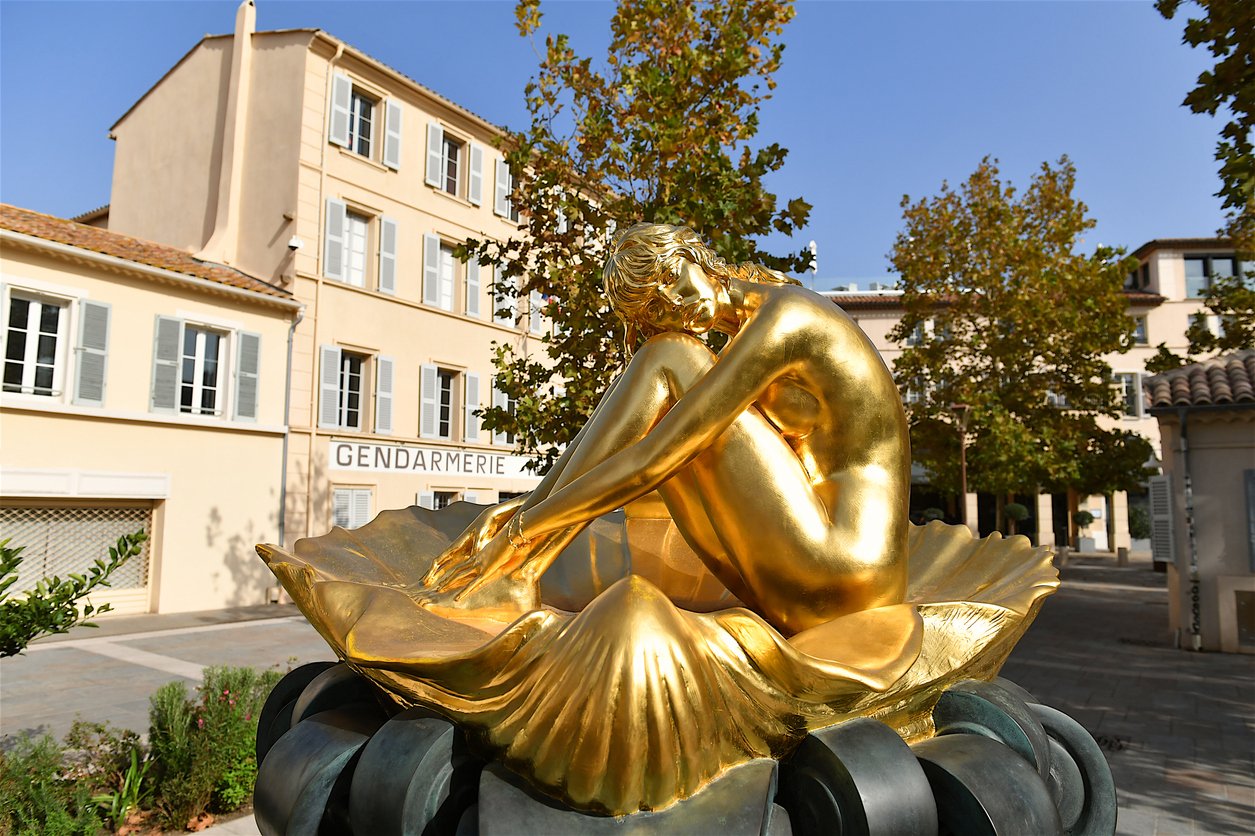
Brigitte Bardot and Saint-Tropez: How One Woman Changed the Riviera Forever
The French Riviera has always had sun, sea, and a painter’s light, but it took one woman to turn a quiet fishing village into a modern myth. Brigitte Bardot—barefoot, sun-browned, and mischievously free—did not just star in a film shot in Saint-Tropez; she triggered a cultural shift. In her wake came beach clubs carved into dunes, red café chairs lined up like cinema seats for the harbor, and a new way of life that prized simplicity, flirtation, and the beauty of being outdoors. This is the story of how a village found its rhythm—and its fame—through a woman who made it look effortless.
For a broader introduction to the region, its villages, beaches and local culture, see our complete Gulf of Saint-Tropez guide.
Before the Blonde Bombshell: A Sleepy Port with a Painter’s Light
Before flashbulbs and paparazzi, Saint-Tropez was a compact, salt-soaked village hugging a perfect curve of water. Fishermen mended their nets along the Vieux Port, and the quarter of La Ponche—today a romantic warren—felt like a hidden annex to the sea. In the late 19th century, the pointillist painter Paul Signac arrived by boat and fell in love with the way the sun skimmed the pastel facades and bounced from the masts. He brought friends—Matisse, Bonnard—and the idea of Saint-Tropez as a sanctuary for artists took hold. The Musée de l’Annonciade, tucked by the harbor, still houses that early modernist gaze: serene canvases that show the town before celebrity made it shimmer.
By the 1950s, Saint-Tropez had a modest summer crowd and a circle of writers and painters who were faithful to the bay. The Place des Lices hosted petanque under plane trees, grocers shouted in Provençal cadence, and the daily business of life proceeded without thinking about magazine covers. It was small enough that people recognized each other by gait and silhouette. That intimacy would become the anchor for what came next—because the village’s charm, in the end, is not just what outsiders saw in it, but what it was already offering to those who knew where to look. To discover more of the town’s history, beaches and hidden corners, see our complete guide to Saint-Tropez.
The Summer That Changed Everything: And God Created Woman
In 1956, director Roger Vadim brought a young Brigitte Bardot to Saint-Tropez to film And God Created Woman. It wasn’t a blockbuster in the way we think of modern hits, but it was a cultural earthquake. On screen, Bardot embodied a new kind of Riviera woman: sensual without apology, intimately at home in the landscape, as natural as the sea breeze. She moved through Saint-Tropez’s alleys and beaches like they were an extension of herself. Audiences noticed—and the village’s days of anonymity were over.
Much of the film’s power comes from its integration of place. Look closely and you see the sun-bleached stones of La Ponche, the cobbled curves that slope towards tiny coves, and the untamed sweep of Pampelonne, at the time a wild ribbon of sand and scrub. Bardot’s character danced, argued, and loved with the sea as witness. The town’s geography turned into a set, and the set into a world people wanted to step into. After the film’s release, a trickle of visitors became a tide: artists and models first, then writers, musicians, and the curious—everyone chasing the rush of a summer lived outdoors with salt in their hair.
La Madrague: The House That Became a Myth
The myth needed a home, and Bardot chose La Madrague, a low-slung house on the shore of Canoubiers Bay, in 1958. She didn’t build a palace; she made a nest, a place where doors were left open to the scent of pine and the hush of the water. La Madrague is a byword now, a place people whisper about in the present tense as if the 1960s might be reclining on a deck chair just beyond the pines. The singer Serge Gainsbourg famously wrote “La Madrague,” an ode to the air and light of the bay—and to Bardot, of course—turning a private refuge into a melody anyone could hum.
From La Madrague, Bardot would arrive in town by simple boats, hair still damp from a swim. She blurred the line between star and villager. Locals remember her buying bread in espadrilles and gingham, kissing cheeks on the Place des Lices, and driving along Route de la Moutte in a car dusted with sand. It was the ordinariness—elevated by extraordinary beauty—that people fell in love with. And so, a curious thing happened: Saint-Tropez’s soul grew louder as its profile grew larger, because its most famous resident reflected the place rather than eclipsed it.
Pampelonne: From Windswept Dunes to the World’s Living Room
Pampelonne Beach, technically in the commune of Ramatuelle just south of Saint-Tropez, was once a lonelier stretch of dunes and sea grapes. After Bardot put the area on the map, simple cabins became beach bars, then beach bars became institutions. Club 55, with its famously breezy motto—roughly, “we’re not here to give ourselves a headache”—embodied the ethos of barefoot luxury before the term existed. It started modestly in 1955 as a canteen of sorts for film crews and fishermen, and grew into a kind of open-air salon, where guests ate grilled fish under canopies of reed and tamarisk with their feet in the sand.
Tahiti Beach followed a similar arc, becoming a symbol of the strip: early-morning swimmers, late-lunch sun-dwellers, and a light that seems to glue time to the afternoon. Even as Pampelonne expanded, the best places held onto a kind of honest simplicity: tables that wobble slightly on the sand, sauces redolent of garlic and lemon, the cheerful rudeness of sun-warmed napkins, and the constant give-and-take with the mistral wind. If you go, look for the older, weather-touched timber and the huts that seem to lean into the dunes—their DNA is closer to the original Pampelonne, when it was more fishermen’s lair than fashion page.
In recent years, the beach has undergone careful restructuring to protect the fragile dune system: lighter, removable constructions; stricter alignment; renewed emphasis on native plants. It’s a reminder that even a myth can learn to tread lightly. Arrive early for the gentlest light and the quieter vibe when the Gulf of Saint-Tropez still looks like frosted glass.
Style, Sun, and a New Freedom
Brigitte Bardot changed not only where people went, but how they looked when they got there. Bikini skeptics had existed since the late 1940s. Bardot made the bikini look inevitable—playful rather than provocative. A headscarf knotted at the neck, a stripe or a spot of gingham, barefoot or in simple sandals: her style said, “Look how easy it is to be beautiful if you’re not trying too hard.” The furniture of Saint-Tropez followed suit: director’s chairs, canvas sling lounges, awnings in candy red or clean white, and tables that welcome plates piled with aïoli, tomatoes, and bread.
There were specifics, of course, that still matter when you want to dress the part locally. The Tropezian sandal workshop K.Jacques has been crafting leather sandals in town since 1933, and Bardot helped make their strappy, pared-down designs iconic. A pink gingham dress by Jacques Esterel, worn by Bardot at her 1959 wedding, set off a national gingham craze. And that other classic, La Tarte Tropézienne—a dreamy brioche cake filled with vanilla and orange blossom creams—owes its name to Bardot, who christened the pastry during the filming days after sampling it in the village. You can still sit at a café table and taste that flavor of 1956 in a neat, sugar-dusted slice.
Sénéquier, Place des Lices, and the Everyday Saint-Tropez
On the Vieux Port, Sénéquier is where the village performs itself. Those red canvas chairs line up toward the quay like cinema seating for the eternal film of arrivals and departures. Order a coffee or a pastis, and you get a front-row view of boats sliding in against the clink of rigging, skippers in deck shoes, and the occasional fisherman who looks like he grew out of the deck planks. In the early morning, the light comes flat and silvery; by late afternoon it turns honeyed and flattering, perfect for long-lens daydreaming.
The Place des Lices is the village’s heart: plane trees making green shadow, petanque balls cracking with the measured violence of a sport performed slowly. On market mornings (typically Tuesdays and Saturdays), you’ll find Provençal linens, those famous woven baskets that somehow carry a whole day, mountain cheeses, tapenades, and wild strawberries if the season is right. Chat with the vendors; they’ll tell you who picks what, and which olive oil goes with which fish. A little patience and a few words of French go a long way here. If you linger, you’ll see how the market folds into daily life: friends splitting a bag of peaches, a chef choosing tiny courgettes with their blossoms still attached, a child wrestling with a baguette half his height.
Cinema Lives On: Where to Feel the Legacy Today
Saint-Tropez is not a film set—it’s a living place—but it acknowledges the screen that helped set it alight. The Musée de la Gendarmerie et du Cinéma, housed in the former gendarmerie building famous from the Le Gendarme de Saint-Tropez comedy films, curates Bardot’s era with affectionate clarity. You’ll find stills, posters, and a sense of how cinema braided itself into the town’s DNA. The Musée de l’Annonciade, mentioned earlier, gives you another dimension: the pre-cinema Saint-Tropez that painters loved for its geometry and light. Place both museums in your day and you’ll feel how Bardot’s arrival was both rupture and continuation—new attention for an old magnetism.
If you’re more kinetic, climb up to the Citadelle of Saint-Tropez via the narrow street called monté des Capucins or from the quieter Plage des Graniers side. The maritime museum housed within is a reminder that even the most glamorous harbor was once a working one. From the ramparts, scan the bay: the mirror of water, the trim terraces, the recognizable rooflines. Try to picture what Bardot saw from her boat as she crossed to town all those years ago. The view is still persuasive.
Walking Bardot’s Saint-Tropez: A Self-Guided Stroll
To feel Bardot’s Saint-Tropez with your own feet, start simple and embrace the gradient of light over a morning.
- Begin at the Vieux Port just after sunrise, when delivery trucks clatter softly and the masts draw fine pencil lines against the sky. Have a short espresso at the zinc counter of a café before the chairs spill onto the pavement.
- Slip into La Ponche through the arch at the end of rue de la Ponche. Let yourself be tugged by the lanes to the little beach where old stones meet the sea. The water laps right up to the houses here on windy days; it feels like the town is breathing with the tide.
- Climb to the Citadelle, stopping at the terrace above Plage des Graniers where the sea turns a milky turquoise. From up top, you’ll understand why Saint-Tropez is painted so often: the geometry of roofs, the echo of sea to sky.
- Descend towards Place des Lices for the late morning market. Buy sun-warmed tomatoes, a slice of pissaladière, and a few apricots. If a petanque game is going, stay quiet for the throw, then smile when the clang rings true.
- In the afternoon, drift to Plage des Salins or La Moutte for a swim. These beaches nod to the wilder Saint-Tropez: less choreography, more space, and an urge to nap on a towel in the lee of a pine.
- End with a stroll along the Môle Jean-Réveille where the breakwater curves like a protective arm. The lighthouse there still frames sunsets that feel cinematic without anyone needing to say “Action.”
Beyond the Hype: Secret Coves and Quiet Corners
The myth is crowds and cameras and a swirl of summer people. The reality—if you know where to go at what hour—is serenity. Plage des Salins, at the eastern edge of Saint-Tropez, curves gently and keeps a softer profile than Pampelonne. Morning swims here can feel like an appointment with yourself. Plage de la Moutte, reached by a shaded path, is even more discreet: pines, a rocky point, and views that make it easy to forget you’re near a famous town. Bring water shoes if you want to paddle around the rocks, and mind your step; sea urchins love the same clear water you do.
For walkers, the Sentier du Littoral threads around the capes like a ribbon, sometimes brushing private gardens, sometimes breaking into open scrims of view where the horizon looks like a freshly cut gemstone. Sections near Cap Camarat and Cap Taillat, further south, reward those who can handle a few climbs with quiet bays that feel like stolen time. The rules are simple: no fires, no trampling the scrub, and greet the people you pass. In Provence, a bonjour lubricates the day.
Food and the Tropezian Spirit: What to Taste and Where It Still Feels Local
Saint-Tropez’s table is a distillation of the coast: sun-drenched vegetables, anchovies, garlic, lemons, and olive oil so green it seems backlit. A lunch that Bardot might have approved of could be a shared bowl of aïoli with steamed vegetables and a piece of grilled sea bream. Add a basket of bread and a pitcher of water with lemon, and you’re dangerously close to the essence of the place. Provençal classics—petits farcis, a crisp tomato salad, a slab of pissaladière, or a tender daube—belong as much here as on any bistro table in Nice or Marseille, but the seasoning is uniquely Tropezian: an insistence on sunlight and salt air.
For sweet things, La Tarte Tropézienne is non-negotiable. The cream is perfumed quietly—enough orange blossom to conjure summer but not to overwhelm. Locals pick up whole cakes for birthdays and picnics; visitors do best with a single slice and then another, perhaps on a bench facing the harbor. If you like nougat, Sénéquier’s version is chalk-white, studded with almonds, and carries a faint honey echo. It keeps well, which is helpful if you’re tempted to bring a piece of the harbor home.
The surrounding hills pour rosé with the confidence of long habit. You’ll see labels from Gassin and Ramatuelle on most wine lists: pale, mineral wines designed for seaside afternoons. If you want to go deeper, ask for a local bottle by the glass—something from a nearby domaine that hasn’t made the international rounds yet. Staff in smaller, year-round restaurants are often keen to share what was bottled recently or which vintage best suits the sardines on the grill that day.
The Jet-Set Arrives—and How the Village Coped
By the late 1960s, Saint-Tropez had become an idea more than a place, and then, in a pleasant contradiction, it remained very much a place too. The village’s scale saved it: you can’t swallow a town this small without leaving your footprints in the dust. As larger yachts began to arrive, the rhythm of the days sharpened. Mornings were for locals—the baker, the fishmonger at the Quai Murelle, the tradespeople unloading vans. Afternoons blurred, stretched thin by sun and lunch. Nightfall was for chance encounters, the kind that end with a table pulled closer to another, chairs scuffed across stones, and the faint percussion of a guitar somewhere behind a shutter. Mick Jagger married Bianca in Saint-Tropez in 1971, and the story joined the pile of legends, a kind of local library of anecdotes that are pulled out like vintage sunglasses when the light suggests it’s time.
To accommodate the tide of visitors, Saint-Tropez shaped rules to its scale. Parking pushed to the periphery. Beach clubs formalized their footprints. Public spaces—particularly along the port and Place des Lices—became theater sets where the audience is also the cast. Restaurants that face the harbor learned the art of pace: keep the table if the guest is reading, quicken the course if the light is about to do something gorgeous. It’s in these operating details that you see how a small town learned to survive being internationally adored.
Bardot’s Second Act: Guardian of Animals and of a Certain Saint-Tropez
Icon becomes advocate: Bardot stepped back from acting in the 1970s and rerouted her fame toward animal protection. It’s a fierce, sometimes controversial life’s work that has very little to do with beach chairs—until you realize it has everything to do with respect for living things. In Saint-Tropez, that gentleness filters into the unspoken rules: don’t trample the posidonia meadows when you anchor; keep your distance from nesting birds in the dunes; treat working animals used in transport or markets with dignity. Bardot remains famously attached to La Madrague, and the town respects the boundary between admiration and intrusion. It’s an important lesson for visitors: to love a place, you have to let it breathe.
In later years, Brigitte Bardot withdrew almost entirely from public view, remaining at La Madrague. When she passed away, Saint-Tropez did not erupt into spectacle. It paused. The village marked the moment quietly, as it tends to do — shutters half-closed, flags lowered, conversations softened. Her death did not end the Bardot era; it confirmed it as history. And like all good Riviera myths, it settled gently into the landscape rather than leaving it.
When to Visit and How to Navigate Without Losing Your Cool
Timing is half the magic. If you can, aim for late May through June or the golden window from early September to mid-October. The sea is warm, the days long, and the light tuned to a painter’s calibration. July can be intoxicating in its energy, but it’s also the month that teaches patience. August is an art of its own: plan your day like a siesta, with early excursions, a long mid-day under shade, and an evening unfurling slowly. The regatta Les Voiles de Saint-Tropez, usually in late September or early October, brings beautiful classic yachts and a festive, less frantic mood; even non-sailors find it hypnotic to watch spinnakers billow like cloud fragments just off the môle.
Getting around, remember that the shortest line on a map is rarely the fastest in summer. Public boat shuttles connect Saint-Tropez with towns across the gulf; on busy days, the sea beats the road by a happy mile. If you’re driving, arrive early, park once, and forget your car. Saint-Tropez is a walking town, and most of what you’ll remember will happen on foot anyway: a jasmine smell you catch on rue Allard at dusk, the way the harbor mirrors neon at night, the sound of a petanque ball skittering across grit.
Etiquette in a Town That Values Both Glamour and Discretion
Saint-Tropez thrives on contrast: it’s a place where bright color and low voices coexist, where luxury is loud on one side of a street and so soft on the other that you might mistake it for modesty. A few unspoken rules help you fit in:
- Photograph the view, not the person. People come here to feel unstudied; pointing a lens without consent is bad form, especially on beaches and in the market.
- Dress for ease, not for effect. Simple fabrics, sun hats, unbranded sandals—effortlessness is the local uniform. Bardot’s style endures because it never tried too hard.
- On the dunes and paths, tread lightly. Stick to marked ways, pack out what you bring in, and never light fires.
- At petanque courts, pause for throws, and keep dogs leashed and children behind the imaginary line. A well-timed “Bien joué” earns smiles.
- Reserve where needed but embrace the walk-in when you can. The best moments here are improvisations.
Day Trips That Echo the Bardot Mood
The Bardot spirit isn’t confined to commune borders. Ramatuelle, with its warm-stone village hugged by vines, offers views that make rosé taste even better than usual. Gassin sits high and glances down at the gulf with the wry look of a place that knows where the wind sleeps. Grimaud’s medieval lanes capture a quieter Provence; Port Grimaud, with waterways and ochre façades, is a 20th-century dream of Venice filtered through a Riviera lens. A day spent moving between these villages gives you a broader sense of the landscape Bardot adopted: hills that tumble to sea, cypress and umbrella pines punctuating the skyline, and a garden of small roads made for open windows and slow driving.
The Winter Bardot: A Quieter, Honeyed Light
Winter flattens the noise and sweetens the light. From November to March, Saint-Tropez returns to itself. You’ll find shutters closed, yes, and many establishments resting, but the village shines in new ways: clear horizons, the sudden blaze of a sunny noon on a cold day, fishermen hunched at the port with hands in pockets and eyes on the line. The beach becomes contemplation rather than theater. La Ponche, with the winter swell slapping stone, becomes more itself too. If you come, bring a sweater and a taste for long walks. The rewards are the kind Bardot might have appreciated once the camera packed up: space to think, and the sense of being in a place that does not perform for you—only with you if you listen.
Shopping the Timeless Saint-Tropez Way
Not all shopping is spectacle here. Look for what the town actually makes and wears. The sandal workshop mentioned earlier produces pairs that mold to your foot over seasons; choosing straps becomes a small rite of passage. On market days, find handwoven baskets lined with cloth in summery prints, good for years of markets and beach days. Linen shirts and shirtdresses in pale blues and whites feel right for the light and travel well. If you want a keepsake without clutter, choose olive oil from a small producer, salt flavored with herbes de Provence, or a jar of anchovy-laced tapenade. These are the flavors that anchor the town—the soft chorus behind the aria.
Music in the Air: Gainsbourg, Ye-Ye, and a Town That Still Hums
The 1960s gave Saint-Tropez a soundtrack. Bardot’s collaborations with Serge Gainsbourg—think “Harley Davidson,” “Bonnie and Clyde,” and the legend wrapped around “Je t’aime… moi non plus”—carry the smoky, playful nonchalance that the town itself radiated. That listening culture persists in small corners: a guitar at dusk on a balcony; the warm, scratchy vinyl that sometimes slips from a record player in a private garden; the occasional summer concert across the bay at a domain where the breeze does half the acoustic work. If music matters to you, watch for summer festival posters pinned to café windows; a last-minute decision often yields an evening you’ll talk about for years.
Saint-Tropez in Details a Guidebook Might Miss
Listen for the boom of the midday gun—or rather, in Saint-Tropez, the bell and the murmurs that mark lunchtime’s slow pivot. Peek at the Bailli de Suffren statue at the harbor and notice how pigeons prefer his hat to his shoulders. On rue Gambetta, look for the old door knockers shaped like hands; they echo a time when the sea carried more than tourists to the quay. While walking the quai, spot the tiny plaque that quietly marks a historical flood; Saint-Tropez has lived many lives between calm and storm. And in late summer, when fig trees ripen behind walls, you might catch a shy perfume in the lanes: a reminder that sweetness here often arrives unannounced.
Preservation and the Future: Keeping the Dunes and the Soul
The town’s challenge now is to keep the thing that fame discovered. On Pampelonne, beach concessions were reset to lighten their footprint; across the peninsula, the Sentier du Littoral is maintained with an eye to both access and restraint. In town, rules about shutters, paint colors, and signage seem fussy until you see the aggregate effect: a harmonious, lived-in beauty that does not shout for attention. Visitors play a part. Choose shade over air-conditioning when you can; refill a bottle at a public fountain; skip a car trip for a walk across the môle; heed the simple signs that ask you to respect nesting zones. These are not sacrifices; they are investments in the magic you came for.
An Itinerary for One Perfect Bardot-Touched Day
If I had to bottle the essence of Bardot’s Saint-Tropez in 24 hours, I would:
- Swim at dawn at Plage des Graniers when the sea holds the night’s cool and the town is just beginning to stir.
- Take coffee on the port as fishing boats return; choose a seat that faces the masts and watch the choreography of docking.
- Climb to the Citadelle for the long view—harbor, hills, and the line of Pampelonne beyond.
- Wander La Ponche with no plan, letting lanes choose you. Pause where stone meets sea.
- Lunch simply: grilled fish, aïoli, and a glass of something local and pale.
- Doze on a towel at Plage de la Moutte, then read a few pages of something French and sun-faded.
- Apéritif at Place des Lices; watch a petanque match, offer a smile and a “Bonsoir.”
- Dinner under pines, then a moonlit walk along the breakwater to close the day where sea meets sky.
Why the Myth Endures
It’s tempting to say that Bardot made Saint-Tropez. That is half-true. She drew the gaze of the world to a place that was already radiant, and she modeled a way to inhabit it: lightly, with bare feet and an eye for humor. That ideal—uncontrived elegance—pervades town life still. You see it in the woman who ties her hair back with a scarf at the market and in the fisherman who neglects to put on shoes after his lunch nap. You see it in the way afternoon light erases the border between land and sea, and in the way people here talk with their hands while holding a fig and a knife.
Saint-Tropez keeps its myth alive by remembering it is small—just enough village to fit in your pocket and carry home. Bardot didn’t hand the town a character it didn’t possess; she invited the world to notice. If you come with curiosity and care, you’ll notice too: the cold wash of a morning swim, the clatter of cups on harbor tables, the rhythm of a day governed by sky and appetite. That is the Riviera Bardot changed forever—by simply being at ease in its sun.
Want to experience the timeless Riviera atmosphere that Brigitte Bardot fell in love with? Explore our holiday villas and holiday homes on the Côte d’Azur.

