

 EN
EN  NL
NL
 DE
DE
 FR
FR

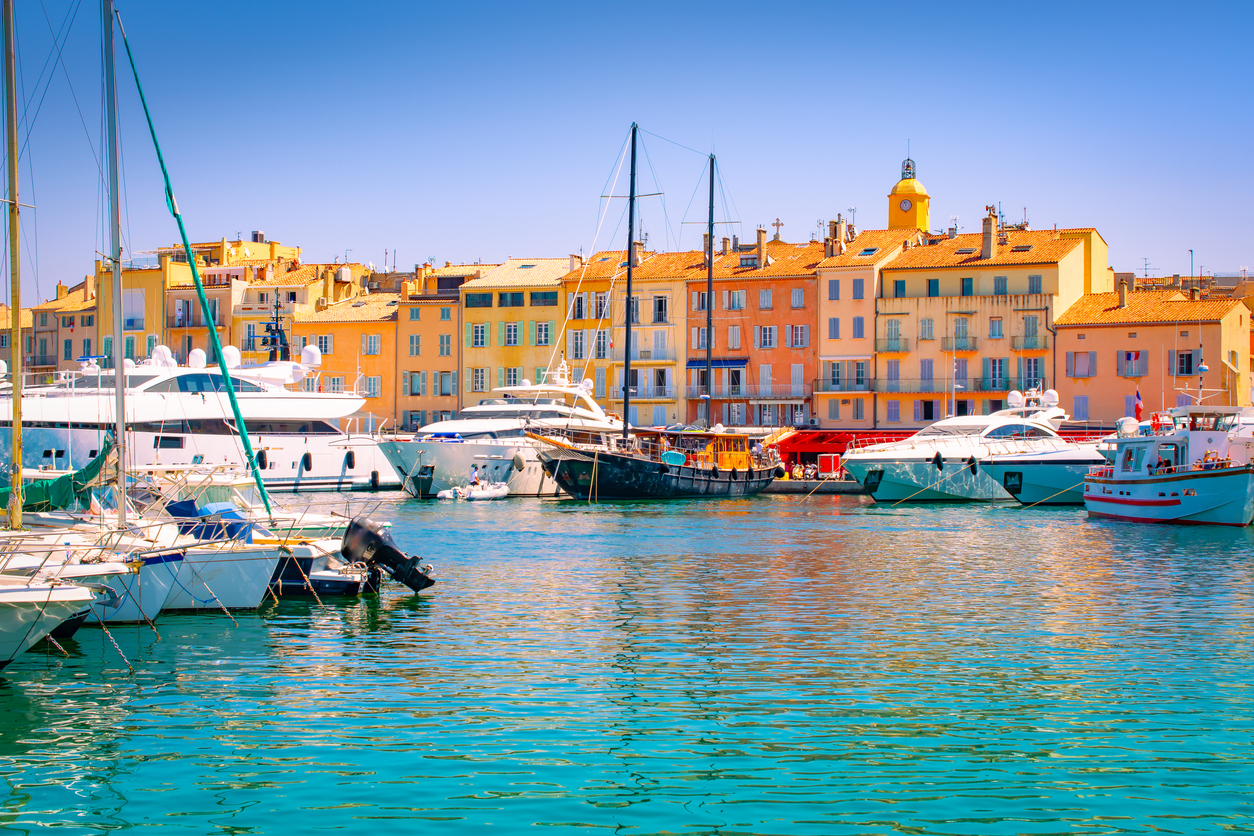
Discovering the Côte d’Azur by Boat around Saint-Tropez: Coastal Routes, Bays and Anchor Spots
Seen from the water, Saint-Tropez and its surrounding headlands reveal a coastline of subtle colours and sheltered coves, where fine sand alternates with pale rock and bright-green pine. A boat opens up a string of anchorages that feel a world away from the busy quays, and it gives you the freedom to tailor each day to the conditions, your mood, and the tides of the season. This guide focuses on the Saint-Tropez peninsula itself and the near-shore waters of Ramatuelle, La Croix-Valmer and Cavalaire-sur-Mer. It includes practical routes, lesser-known stops, advice on anchoring, and where to rent boats with or without a captain, so you can confidently shape your own coastal adventure.
For a broader understanding of the coastline, villages and beaches surrounding these waters, this Gulf of Saint-Tropez travel guide offers a useful overview before setting out by boat.
Why explore Saint-Tropez and its headlands by boat
Saint-Tropez was built to face the sea. Its old port sits at the apex of a broad gulf that funnels breezes across the bay; beyond the breakwater, the land tumbles away into a series of capes and beaches that are more easily reached by boat than by road. From the Baie des Canebiers through to Cap Camarat, Cap Taillat and Cap Lardier, you can choose your anchorage by wind and light. On a calm morning, the water between L’Escalet and the sandbar at Taillat shines with a milky turquoise. After the mistral has swept the air clean, the view back to the village, its ochre bell tower floating above the mastheads, is one of the Riviera’s essential sights.
Boating here also turns the practical—getting to lunch, finding a quiet swim—into something more relaxed. Instead of queues and car parks, you time your day by the sun and the breeze, drop the hook, and swim ashore or call a shore tender where moorings are organised. With a boat, you can hop between three entirely different settings in a day: a village-view bay for morning coffee, a translucent cove beneath a cape for snorkelling, and a mellow evening anchorage under the umbrella pines near Canebiers.
Know the waters: winds, swell and sensible seamanship
Conditions along this stretch are generally kind in summer, but a little knowledge makes all the difference. Two winds define the area. The mistral is a dry north-westerly that can funnel down the gulf, clearing the sky and flattening the sea close to shore but raising a short chop around the capes. The easterly (and south-easterly variants) can push a rolling swell onto Pampelonne and around Cap Camarat, making open anchorages less comfortable. When an easterly is up, look to the Baie des Canebiers and the inner gulf for shelter. When the mistral blows, Pampelonne can be surprisingly manageable if you tuck into the lee of the points at Pinet or Bonne Terrasse, and the coves west of Cap Taillat often deliver good protection with crystal water.
Traffic builds during July and August, especially off Pampelonne and at the capes. Keep to the marked channels on approach to Saint-Tropez’s old port, maintain a slow wake near swimmers and tenders, and treat the rock-studded headlands with respect. A few simple guidelines help:
- Speed limits: 3 knots in ports and channels; 5 knots generally within 300 metres of the shore.
- Anchoring: avoid posidonia seagrass; seek sand patches and use a short tender run to shore. Eco-moorings are installed seasonally off Pampelonne.
- VHF: harbourmaster’s office for Port de Saint-Tropez monitors Channel 9; safety and weather on Channel 16 via CROSSMED.
- Visibility: morning and late afternoon are often quieter with calmer seas and less glare for spotting buoys, swimmers and paddleboards.
If you’re new to the area, consider starting with shorter hops inside the gulf before rounding the capes. Even experienced skippers plan their days according to the wind; the peninsula offers a plan B and C for almost every direction.
Getting afloat: boat types, licences and the skipper question
You can explore the Saint-Tropez coastline comfortably in a 6–8 metre rigid inflatable boat (RIB) or day cruiser. These handle the chop around the capes, are easy to anchor and make short work of shore runs. If you want shade, a freshwater shower and a small cabin for changing, choose a day boat with a bimini. Families often prefer the stability and space of a slightly larger RIB with a broad bow sunpad and swim ladder.
Without a skipper, you’ll need a valid licence: in France, the Permis Côtier covers coastal navigation by day and night for motorboats; many rental firms also accept the ICC (International Certificate of Competence). If you don’t hold a licence, there are two common solutions. First, choose a no-licence boat with a small engine for gentle pottering within the gulf. Second, book a skipper for the day; local captains are invaluable for reading the wind, knowing where the sand patches are, and finding quieter corners when the main anchorages fill up.
For mixed groups, a skippered charter has a neat advantage: everyone can relax. Skippers also know which beach clubs accept tender drop-offs on busy days and how best to work with the organised mooring fields at Pampelonne in high season.
Where to rent a boat in and around Saint-Tropez
In Saint-Tropez itself, head to the old port and the surrounding quays. Rental and charter desks cluster around the harbourmaster’s office and along the main waterfront. Expect a spread of options: no-licence runabouts for a few hours in the inner gulf, mid-sized RIBs and day cruisers for coastal hops to the capes, and larger motor yachts with skipper and crew for full-day itineraries.
If you’re based on the peninsula, you’ll also find boats for hire at Pampelonne’s watersports bases (for supervised activities and, in some cases, arranged pick-ups) and at Cavalaire-sur-Mer’s marina to the west, which offers a useful alternative departure point for Cap Lardier and the coves beyond. Across the gulf, Marines de Cogolin and Port Grimaud host numerous charter companies and fuel docks, but for this guide we’ll keep our focus on Saint-Tropez-side departures.
Practicalities are straightforward: bring ID, your licence (if applicable), and a bank card for the security deposit. Most day rentals run from 09:00 to 18:00, with the option to arrange early starts or sunset returns by prior agreement. Fuel is typically additional, paid on consumption at the fuel dock on return. Lifejackets, safety kit and a basic chart are normally included. If you’re unfamiliar with the coastline, ask for a local briefing with annotated charts highlighting rock outcrops at the capes and the preferred anchor lines off Pampelonne, Taillat and Canebiers.
Essential anchoring etiquette and the posidonia rule
The forests of posidonia seagrass that line this coast keep the water clear and the beaches intact. Anchoring directly on posidonia is not only harmful but increasingly regulated. The simple rule is to anchor on sand. In practice, this means easing in slowly with someone on the bow, looking for pale patches through the water and dropping your anchor there. A short swim or tender ride ashore is a small price for protecting a fragile ecosystem.
Eco-moorings are laid seasonally at Pampelonne and at other sensitive spots along the peninsula. Use them when available. Several smartphone tools help, including the Donia app, which shows posidonia beds and recommended anchoring zones, and Navily, which gathers local reports on shelter, holding and seabed. In clear summer light, you’ll often spot sand without help, but it’s good practice to check charts and apps before you go, especially if a swell is running and water clarity is down.
Short routes inside the gulf: gentle mornings and sunset runs
Baie des Canebiers: village views and an easy first stop
Ten minutes from the old port by small boat, the Baie des Canebiers feels quietly residential, with pale villas framed by pines and a low swell that rarely disturbs the surface. There are wide sand shelves to anchor over in 3–5 metres, and the view back to Saint-Tropez’s bell tower makes even a simple coffee feel rather special. Canebiers is a fine warm-up anchorage: swim, check your ground tackle is set and get your bearings. If an easterly is building, this bay remains one of the more comfortable spots to sit and watch the light change into the evening.
La Bouillabaisse: quick dips by the harbour mouth
West of the harbour breakwater, the sandy curve of La Bouillabaisse offers convenient day anchoring in calm or mistral conditions. It is less idyllic than Canebiers but handy if you’re doing a short loop or waiting for a berth call. Keep well outside the swimming perimeter and maintain a low wake. On nights when the western sky softens and the gulf turns silver, it’s a rewarding sunset run.
Pampelonne by boat: picking your patch along a five-kilometre shore
Pampelonne isn’t a single anchorage so much as a series of moods along five kilometres of beach and low dunes. On calm days, the water is gin-clear and the seabed alternates between sand bars and sea grass, with organised moorings set out in season. You can choose your spot by what you want from ashore: a quiet swim off Pinet, a relaxed lunch near the mid-beach clubs, or a wilder feel towards Bonne Terrasse.
North Pampelonne and Pinet
Starting nearest Saint-Tropez, the corner around Cap Pinet and Tahiti Beach is a good choice in light mistral conditions, with a little lee from the cape and sand in 4–6 metres. The water feels lagoon-like on still mornings. Mind the swim zones and keep an eye out for paddleboards and kayaks that hug the headland.
Mid-beach moorings and tender shuttles
In high season, the central stretch of Pampelonne has organised mooring buoys and marked lanes for tenders. If you plan a lunch ashore, it’s sensible to arrive mid-morning to find a buoy or a clear sand patch. Many restaurants arrange tender pick-ups from a seaward pontoon or from the mooring field; radio or phone ahead from your anchorage to align timings and avoid clustering near swim lines. Even if you stay aboard, the mid-beach area delivers classic Pampelonne colour without being overly exposed on a standard summer day.
Bonne Terrasse: the quiet end
At the southern tip of Pampelonne, the small headland of Bonne Terrasse gives texture and shelter. Anchor off the rocky fringes in settled weather, again over sand in 3–7 metres, and snorkel around the point where boulders host wrasse and damselfish. When the sea is glassy, this end of the beach can feel almost private, particularly at siesta time when the shoreline empties.
Rounding Cap Camarat: lighthouse, shoals and round-the-corner coves
Cap Camarat is the peninsula’s second-highest lighthouse and a key landmark from almost any angle. The water around it can be confused when swell meets rebound; give the headland a clean margin and watch for semi-submerged rocks off the point. In settled conditions, the clarity of the water here is superb, and the play of light against the layered rock makes a quick circuit a pleasure in itself.
Anse de la Douane
Just south-west of the cape, Anse de la Douane (Customs Cove) is a small pocket under ochre cliffs, best in light winds and earlier in the day before it attracts attention. Sand lies under 4–6 metres, with enough swing room for a couple of boats. The mood changes quickly with a swell, so treat it as a bonus stop rather than the day’s main plan.
Diving the Rubis (advanced)
Experienced divers will know of the submarine Rubis, a famous wreck in deeper water between Cap Camarat and Cavalaire. Local dive centres run guided trips when conditions allow. If you’re not diving, it’s still a reminder of the area’s maritime history and why you often see dive buoys and RIBs staged offshore. Keep a safe distance and a slow wake around dive flags.
Cap Taillat and L’Escalet: the postcard anchorages
Between Cap Camarat and Cap Lardier, a low ridge of pale sand ties Cap Taillat to the mainland, with the coves of L’Escalet stepping northwards in clear water. This is where the peninsula’s colours are at their brightest. The seabed is a patchwork of white sand and rock ledges; anchor only on the pale patches and give snorkellers space. You’ll often see sunlight flaring off the sandbar, giving the water a lagoon glow that is unmistakable from afar. Cap Taillat is also featured in this guide to the most beautiful beaches and coastal landscapes around the Gulf of Saint-Tropez, particularly for its remarkable water clarity and protected surroundings.
L’Escalet coves
North of Taillat, the small coves at L’Escalet offer a sequence of nooks for a swim and a lazy lunch aboard. Depths run 3–8 metres close to shore, then deepen. If a light mistral blows, these coves can be nicely tucked. In an easterly swell, they can turn rolly. Watch the rocky offshoots near the surface; a bow lookout is invaluable here.
Cap Taillat sandbar
On calm days, anchor off the sandbar with the cape to the south-west and low dunes ashore. The sand is obvious, the water shallow and inviting, and the snorkelling along the rocks towards Pointe des Trois Pointes is excellent. It is a popular stop for good reason, so arrive early to find space. Afternoon is often best for photographs, when the sun swings round and the water glows.
Cap Lardier to Gigaro: understated beauty and fewer boats
Cap Lardier marks the start of a more reserved coastline where pines and maquis brush the shore and a necklace of smaller beaches runs west towards La Croix-Valmer and Gigaro. If you’ve rounded Taillat and want to keep moving, this stretch is a treat with space to breathe even in high summer.
Plage de Vergeron and Sylvabelle
These compact beaches lie west of Cap Lardier under pine slopes, with clear sand patches in 4–8 metres. The water tends to stay calm in moderate mistral conditions and looks south to the distant Îles d’Hyères on clear days. Sylvabelle in particular has a gentle gradient and is a favourite for a long, easy swim from the boat.
Plage de Briande
Between Lardier and Taillat sits Briande, a beach with a wilder feel and good holding on sand. If Taillat feels busy, Briande is often the quieter alternative, with lovely snorkelling along the rocks to either side. The absence of road access keeps the mood low key; respect the serenity by keeping music low and engines to a minimum.
Cavalaire Bay and Bonporteau: shelter, services and a change of scene
The broad arc of Cavalaire offers reliable shelter from east and south-east, with a full-service marina and easy re-fuelling. If you’re planning a longer day, Cavalaire is a useful pivot: lunch in the bay, a top-up at the fuel dock, and then a slow return via Lardier and the coves past Taillat.
Bonporteau and the western curve
Plage de Bonporteau sits tucked into the western corner of the bay beneath a low cliff. The water is often clear and calm here when elsewhere is unsettled. Anchor over sand in moderate depths and swim along the rocks where small invertebrates cling to the weed and the sea-floor turns from pale sand to pebbles and back again. It’s a quiet, unshowy stop that pairs well with a busier morning at Pampelonne.
The Saint-Tropez side: Les Salins, La Moutte and tucked-away pockets
Closer to the village but away from the main traffic lines, the Savonnerie and Les Salins side rewards a slower look. These spots feel more intimate, particularly in shoulder season when the water is still warm but the beach crowds thin.
Les Salins
Les Salins is a fine sand crescent backed by pines east of the village. In settled weather, you can anchor off in 4–6 metres over sand. It is exposed to easterlies, so avoid when a swell is running. Early mornings are best, when the breeze is tree-top only and the water sits still.
Plage de la Moutte and Pointe de la Rabiou
Further along the same shore, the cove at La Moutte and the rocky point of Rabiou offer interesting, smaller-scale stops with clear water and pockets of sand. There are rocky outcrops at bow depth, so approach with patience and spotters. The snorkelling along Rabiou’s flanks can be surprisingly good, with darting schools of small fish hugging the shadows.
Half-day, full-day and weekend routes from Saint-Tropez
Easy half-day: village, Canebiers and Pinet
Depart the old port mid-morning and idle past the breakwater to take in the village view. Make a quick leg down to Canebiers for a swim and coffee aboard, then slide around Pointe de Pinet to anchor on sand near the north end of Pampelonne for lunch. If the wind holds steady, you can pick up an organised mooring and a tender ashore for a slow walk along the dunes before returning. Total engine time is minimal, and you’ll have seen three distinct faces of the peninsula without ever feeling rushed.
Classic full-day: Pampelonne, Cap Camarat and Taillat
With a settled forecast, round Cap Camarat late morning, drop into Anse de la Douane for a swim, then carry on to L’Escalet and Cap Taillat for an unhurried picnic. Spend the warmest hours in the water—snorkelling the rocks and paddling over the sandbar—then retrace your route with a mid-afternoon stop at Bonne Terrasse to break up the return. If the mistral freshens, cut short at Pinet and slip back into Canebiers for a sheltered, golden-hour swim.
Westward day out: Cap Lardier to Cavalaire
When the easterly has lent a swell to Pampelonne, head west. Round Taillat early and let the day unfold between Briande, Sylvabelle and Vergeron, taking lunch aboard in calm water. Continue to Cavalaire for fuel or an ice run, then return with the sun behind you, making a final swim at Lardier where the light on the pines turns warm and low.
Ambitious weekend: peninsula circuit with a Hyères teaser
If you have a larger boat and a confident skipper, a two-day loop can include a taste of the waters towards the Îles d’Hyères. Day one: Saint-Tropez to Taillat and Lardier for an unhurried coast-hop and overnight ashore. Day two: westward in the morning to explore a little beyond Cavalaire before returning, or, in perfect weather windows, a longer run out and back along the coast without pushing time. Factor in fuel, forecast and daylight; great seamanship here is unrushed seamanship.
Shore time from the hook: how to do lunch or a stroll
One of the perks of boating the Saint-Tropez coastline is how easy it is to step ashore for a short stroll or lunch without committing to a car park and a timetable. At Pampelonne in season, mooring fields are set up with tender lanes; use the designated channels, keep speeds low and always confirm with the venue before heading in. Around L’Escalet and Taillat, you’ll find small beaches where a quick tender landing allows for a leg-stretch along the coastal path that runs behind the dunes and capes—bring sandals or light shoes for the rocky sections. Canebiers offers a more village-like feel for a coffee and gentle walk under pines.
If you prefer to stay aboard, the coast path still shapes your day: watch walkers trace the headlands, time your swim to catch the quiet between waves of visitors, and tuck slightly further from shore after lunch when the sea breeze freshens.
Local knowledge that makes a difference
- Timing: arrive early at Taillat if it’s on your list; by late morning on a perfect day, the sandbar fills with boats. Conversely, Canebiers is lovely late in the day, when the gulf calms and the village settles.
- Swim lines: the yellow buoys mark bathing areas where engines are prohibited—keep outside the lines and use the tender channels where marked.
- Quiet corners: on peak days at Pampelonne, nudge south towards Bonne Terrasse for a calmer feel, or west of Taillat towards Briande where the mood softens.
- Events: during Les Voiles de Saint-Tropez (late September to early October), expect exclusion zones and intense traffic in the gulf. It’s spectacular to watch but plan anchorages with care.
- Refuelling: Port de Saint-Tropez has a fuel dock near the entrance; Marines de Cogolin and Cavalaire also offer avitaillement. Mid-afternoon is often the least busy time to top up.
Safety, comms and a simple onboard checklist
Even in settled summer conditions, it pays to be prepared. Bring more water than you think you’ll need, sun protection, a light layer against the breeze, and a basic first-aid kit. Mask and fins transform a good stop into a great one; a lightweight beach umbrella for the foredeck is a kindness to everyone after lunch. Keep a sharp knife accessible near the windlass for quick line work, and a spare length of warp for a temporary fore-and-aft line if you’re tucking into tighter coves.
Check the forecast the evening before and again in the morning; Météo-France Marine bulletins are reliable, and local charter companies will point out any quirks for the day. Keep your VHF on and volume sensible; CROSSMED monitors Channel 16, and the harbourmasters in the area are approachable on Channel 9 for berthing questions and local notices. Mobile coverage is generally strong close to shore.
Respecting the coast: low-impact boating in practice
The beauty of the Saint-Tropez coastline is a collaboration between nature and careful stewardship. A few habits keep it that way. Use holding tanks where fitted and pump out at marinas. Bag and bring back all rubbish; lightweight plastics have a way of escaping on a breeze. Keep music to a level that stays aboard—sound travels over water further than you think. Reduce wake when passing anchored boats and swim areas. And perhaps most important, treat posidonia as off-limits: anchor on sand, even if it means an extra minute with the helm.
Renting with or without a captain: how to choose
If you’re comfortable helming and reading the water, a bareboat day on a 6–8 metre RIB is hard to beat for freedom. It lets you pivot quickly between coves as the wind shifts and park in tighter spaces. If you don’t hold a licence or simply prefer to relax, a skipper changes the tenor of the day. A good local captain anticipates where wind and swell will be by early afternoon and suggests a route that feels effortless: perhaps a calm morning at L’Escalet, a lunch mooring in mid-Pampelonne with a short tender in, and a lazy return via Canebiers.
In Saint-Tropez, you’ll find both options with a wide range of boat sizes. Discuss your group’s needs—shade, swim ladder height, deck layout, children aboard—before booking. For skippered charters, confirm whether the price includes fuel and whether there’s flexibility to adjust the day’s plan if conditions change. For bareboat, ask for a local hazard briefing specific to Cap Camarat and the rock outcrops near Rabiou and L’Escalet.
Seasonal nuances: spring clarity, summer buzz, autumn gold
Each season along the Saint-Tropez coast has its own signature. In late spring, the water can be extraordinarily clear, and the anchorages at Taillat and Briande glow with blue-green light. Summer brings warmth and bustle; start early, take your time and lean on the peninsula’s variety to find quieter corners. Early autumn is arguably the sweet spot: settled seas, long light, and fewer boats. On clear October days, a slow circuit past Camarat to Lardier and back is pure pleasure.
Lesser-known details to look for as you cruise
- The stone customs path huts above Anse de la Douane, reminders of the old shoreline patrols that give the coastal path its name.
- The rock textures at Pointe de la Rabiou, where layers fold and tilt into the sea, creating small overhangs and shade patches that fish favour.
- The changing tone of sand along Pampelonne—brighter and finer near the centre, slightly coarser towards Bonne Terrasse—subtle but visible from the bow on a calm day.
- A faint, resinous scent of maritime pine you catch even offshore on windless mornings close to L’Escalet and Vergeron.
- The way the lighthouse at Cap Camarat seems to float above the trees when the sea haze lifts in late afternoon, a crisp landmark from nearly any anchorage on the southern side.
Frequently asked practical questions
Can I anchor anywhere along Pampelonne?
Not anywhere. Respect swim lines, keep outside the 300-metre zone except in marked channels, and seek sand patches. In season, use organised moorings where available. A tender channel makes going ashore simple without pushing close to swimmers.
Where can I refuel on a day trip?
Port de Saint-Tropez has a fuel dock near the entrance; there’s also avitaillement at Marines de Cogolin across the gulf and at Cavalaire to the west. If you’re cruising towards Lardier and beyond, Cavalaire is a useful top-up point before the return leg.
What if the wind changes midday?
That’s when the peninsula’s variety helps. In an easterly, slide into Canebiers or the inner gulf. In a fresh mistral, shift towards Pinet or Bonne Terrasse on the Pampelonne side, or continue to the lee under Lardier where the sea often lies flatter than you’d expect.
Is snorkelling worthwhile here?
Yes. The rocks around Taillat, L’Escalet, Rabiou and Bonne Terrasse host plentiful small fish and the odd octopus if you’re patient. Bring a mask and fins; even a 20-minute swim transforms the day.
Sample day plans matched to wind
Light easterly forecast
- Morning: Canebiers for a quiet swim over sand.
- Late morning: short hop to Pinet, anchor in the lee of the point.
- Afternoon: organised mooring mid-Pampelonne with a tender ashore; return to Canebiers for sunset.
Gentle mistral forecast
- Morning: round Camarat, swim in Anse de la Douane.
- Midday: L’Escalet cove or Taillat sandbar for lunch and snorkelling.
- Late afternoon: Bonne Terrasse as the sea breeze fades, then home along the beach line.
Variable breeze, calm sea
- Morning: Salins or La Moutte for a tucked-away feel.
- Midday: mid-Pampelonne, choose a sand patch away from the crowd.
- Afternoon: slow scenic cruise past Camarat for photos, back via Pinet to the village.
A note on events and busy days
On days when regattas are underway—most famously during Les Voiles de Saint-Tropez—expect moving exclusion zones, RIBs shepherding classic yachts and a great deal of spectacle. A good tactic is to aim south of Camarat to Taillat and Lardier early, enjoy the quieter anchorages, and then return to the gulf in late afternoon when racing wraps. For village fireworks or festivals, the Baie des Canebiers offers a comfortable viewing platform with manageable tender runs ashore if needed.
Final thoughts: a coastline that rewards unhurried days
Boating around Saint-Tropez is a study in contrasts. The lively harbour hums; a mile away, pine shadows ripple on still water. The open sweep of Pampelonne feels airy and bright; a few minutes’ cruise brings you into a creek where you can hear gulls on the rocks. The best days lean into this variety. Start with a plan, adapt to the wind, and let the capes and coves set the rhythm. Whether you’re helming a small RIB for the morning or stretching out aboard a skippered day boat, the peninsula offers enough anchorages, shore touches and gentle swims to fill a summer—and enough subtlety to pull you back in spring and autumn when the light turns soft and the water keeps its clear, quiet voice.
Planning more time on the French Riviera? View all our holiday villas on the Côte d’Azur.

