

 EN
 NL
 DE
 FR

The Famous Painters of the Côte d'Azur: Artists Inspired by the French Riviera
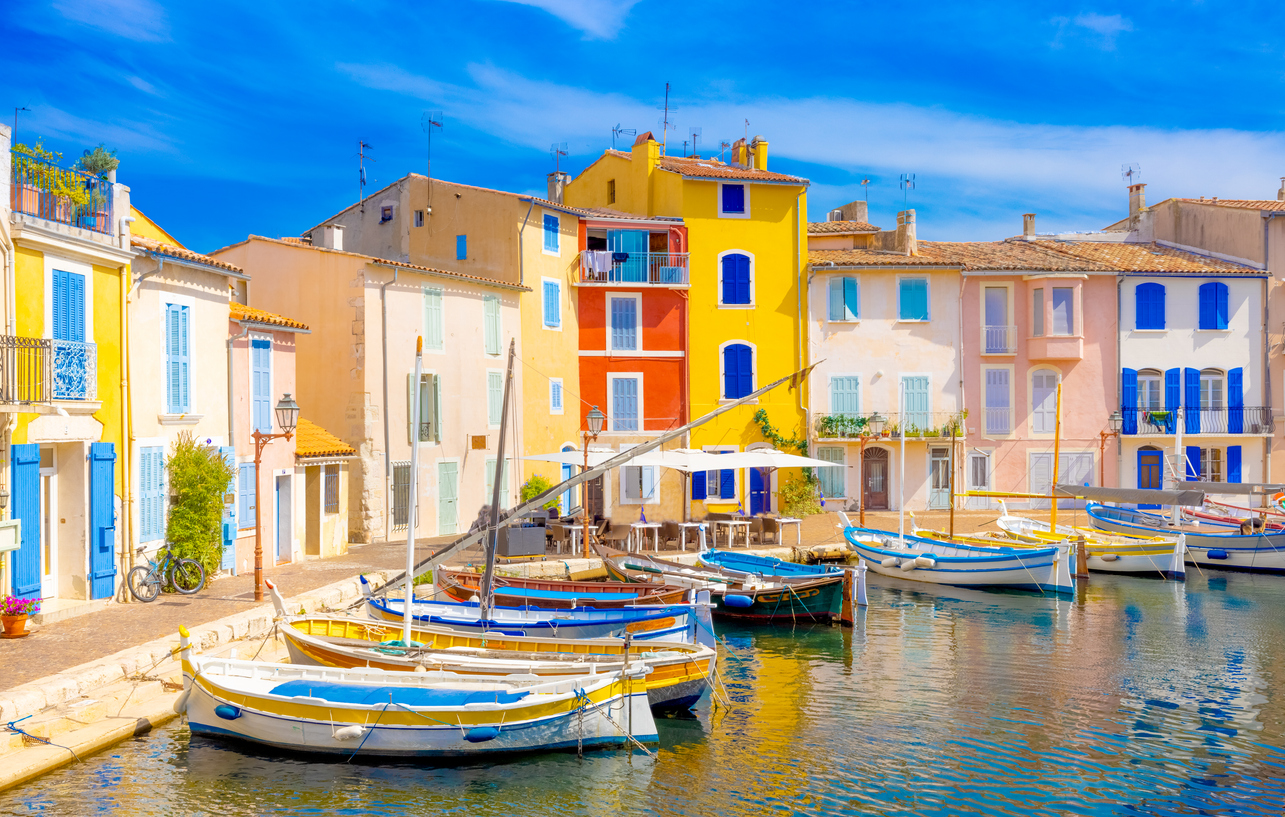
The Côte d’Azur has long been more than a backdrop for sun and sea; it has served as a studio, a sanctuary, and a catalyst for some of the most vital movements in modern art. From the crystalline blues of the Baie des Anges to the red porphyry of the Esterel, the region’s contrasts of light and color coaxed new palettes from Monet, Matisse, and Chagall; ignited Signac’s pointillist revolution in Saint-Tropez; and helped Picasso, Cocteau, Bonnard, and Dufy rethink what painting could be beside a Mediterranean shoreline. This is a place where the mistral scrubs the air clear in winter, where late afternoons burnish facades in Nice and Antibes to copper and apricot, and where harbors—from Menton to Saint-Tropez—turn masts and hulls into geometry for the eye.
For broad regional orientation as you plan an art-focused journey, this concise regional travel guide to the Gulf of Saint-Tropez offers a helpful overview of key towns and landscapes.
The Côte d’Azur’s Light: Why Artists Came—and Stayed
Ask a curator in Nice or Antibes why so many artists converged here from the late 19th century onward, and they’ll answer in one word: light. The Riviera’s light isn’t only bright; it is consistent in winter and endlessly variable in summer, clarifying forms without flattening them. Morning air near Menton feels diffused, the headlands layered in a soft haze; by midday, the blues shift—ultramarine deepens off Cap Ferrat while the inner bays flash viridian over pale sand; evening lends rose and lilac to the marina masts and terracotta roofs.
There is also the geometry of the coastline itself: serrated coves and capes, carved by ancient volcanic rock and limestone cliffs, which lend themselves to bold composition. Artists drawn to structure—the cubists and geometric abstractionists—found in the harbors and ramparts their perfect motifs; colorists, from Matisse to Dufy, saw in canvas awnings and sailing pennants a chromatic score to conduct.
Practicalities helped too. Mild winters made plein-air work possible. Trains and, later, well-cut coastal roads opened up remote capes. And there was the magnet of a living artistic community: studios, foundries, ceramic workshops, and sympathetic gallerists. Even now, the region’s museums—many housed in the very villas and bastions where artists lived and worked—keep the dialogue between place and painting alive.
Monet’s Antibes: Early Impressions of a New Mediterranean
Claude Monet visited the Riviera in 1883 and again in 1888, painting Antibes, Bordighera, and the headlands flanking the Baie des Anges. His Antibes canvases translate the sun’s dazzle without resorting to whiteness; instead, lemon and pale cobalt granulate together to imply light on stone. Stand on the ramparts just east of the Antibes old town, and Monet’s vantage makes sense: the town crouches behind its walls, and beyond it, the Alps’ foothills blue into distance.
What shocked Monet was not just the light’s intensity but its speed. Clouds scud off snow-topped peaks and reform over the sea in minutes. The sea color cannot be memorized; it must be chased. He wrote of struggling to pin down a “sky that does not stay still for fifteen minutes.” That urgency gave his Riviera pictures a vitality distinct from the cooler, northern Impressionist works. If you want to experience his time-of-day logic, trace the coastal path (Sentier du Littoral) from Plage de la Garoupe around Cap d’Antibes in early morning and return at late afternoon; note how the capes switch from silver-blue to velvet indigo.
Saint-Tropez and Paul Signac: Dots, Boats, and a Modern Myth
In 1892, Paul Signac sailed into Saint-Tropez and, captivated, made it his base. His yacht, Olympia, became both studio and lookout; his house above the port became a salon. Here he refined divisionism—placing discrete strokes and dots of pure color side by side so that the viewer’s eye mixes them at a distance. The Mediterranean suited the method: rigging lines, reflections, hulls, and quay stones break naturally into facets.
Signac’s legacy in Saint-Tropez is palpable at the Musée de l’Annonciade, a former chapel steps from the water. The collection is small but exacting, revealing how the town spurred others: Matisse visited and painted “Luxe, Calme et Volupté” nearby after absorbing Signac’s chromatic theories; Henri-Edmond Cross, based further west along the Var coast, sent shimmering Mediterranean canvases that look like heat embodied.
To read Signac’s port scenes in situ, find a bench along the inner harbor in the morning, when the sun is behind you and the water’s surface shows minute shifts in tone. Notice the cadence of repeating shapes—bollards, mooring ropes, sail slats—and how a field of “neutral” gray is actually blue, pink, and green. On mistral days the clarity intensifies; outlines sharpen, and the palette cools by a few degrees.
Henri Matisse in Nice: Color, Calm, and Volupté Reimagined
Matisse arrived in Nice in 1917, checking into a room with a balcony and a square of sea beyond it. What began as a winter sojourn became decades of work. The Niçois period is fluid: interiors that look out onto a scallop of sea; odalisques reclining under patterned textiles; windows that are as much characters as sitters. The light in these works is not analytical; it is generous and saturating, a companion that lays color across skin and curtain evenly.
The Musée Matisse sits in the Cimiez neighborhood, a short ride up from the bustle of the old town. The villa’s ochre façade is a study in local tones, and inside, the works track his Riviera grammar: cut-outs that borrow the arabesque of iron balconies; paintings where shutters and potted geraniums become a musical staff in green and red. To see why Matisse prized certain hours, walk the Promenade des Anglais near the pergola at late afternoon; colors flatten in the best possible way, every silhouette crisp against the sea, exactly the compositional economy he sought in his late paper works.
Pierre Bonnard’s Le Cannet: The Intimate Riviera
While some artists took the Riviera as a stage, Bonnard turned it into a room. In Le Cannet, above Cannes, he bought a house he called Le Bosquet, where he painted secretive, incandescent interiors. Here, the Mediterranean appears as a sliver through a window, a blown-out rectangle of white-gold beyond a patterned tablecloth. Color hums at low volume, an orchestration of lilac shadows and butter-yellow highlights.
The Musée Bonnard in Le Cannet rewards close looking: glazes, half-tones, and edges where color nuzzles against color. If you’re inclined to “read” the landscape as Bonnard did, slip into a café on a residential street—away from the spectacle of the port towns—and notice how sun entering a dim room exaggerates the local color of objects. A simple glass of water can carry alpine blue in shade and citrine at the meniscus, a Bonnard microcosm.
Pablo Picasso’s Antibes and Vallauris: Reinvention by the Sea
Picasso’s Riviera is in two key chapters. In Antibes, after World War II, he installed himself in the Château Grimaldi and poured out paintings in a euphoric register—centaurs, fauns, and fishermen, a Mediterranean mythography that felt like exhalation after years of darkness. The Musée Picasso, occupying the same fortress, is a rare experience: a place where walls still hold the humidity and scent of the sea that sharpened his lines.
Then came Vallauris, inland from Golfe-Juan, where Picasso experimented with ceramics. The local clay and workshops offered new surfaces and shapes. He also created “La Guerre et la Paix,” a monumental diptych installed in a former chapel in Vallauris, pivoting grand themes through local craft and space. To connect these works to place, stroll Vallauris’s compact center: ceramic studios, some modest, show how the town remains a place where earth becomes image, where utility and art meet without apology.
Marc Chagall: Biblical Blues and Mediterranean Gardens
Chagall found in the Riviera a climate that answered his inner weather: radiant color, fruit trees, and a sea that could be both dream and sky. The Musée National Marc Chagall in Nice is devoted to his Biblical Message series—a suite of paintings whose blues estrange and welcome at once. These are not coastal pictures in the literal sense; they are images made possible by a place that allowed him to breathe, saturated in light.
To feel the resonance outdoors, climb to the Monastère de Cimiez gardens not far from the museum. Cypress shadows stripe the gravel; terracotta warms the cloister arches. From this height, Nice feels like a painted city, its roofs and sea separated by paler bands of green. Chagall’s palette—electric yet tender—makes sense in this compressed spectrum.
Raoul Dufy and the Joyous Script of the Promenade
Few artists captured the Riviera’s spirit of leisure and movement as playfully as Dufy. He painted regattas and promenades as if the lines themselves were having fun—calligraphic, buoyant, quick. Nice, with its café awnings and rhythm of people unfolding chairs to face the sea, gave him his subject and his style. Look to his depictions of the Promenade des Anglais and you’ll see how he treated buildings as intervals, not blocks; color travels in chords across facades and flags.
If you’re curious about Dufy’s line, take a sketchbook to the eastern end of the Promenade near Rauba-Capeù. The curve of the bay and the seam of the horizon give you a base line on which to riff; then add awnings, cyclists, and the layered hills—your composition writes itself, as Dufy’s always seems to.
Jean Cocteau’s Riviera: Chapels, Bastions, and Theatrical Lines
Cocteau’s Riviera is drawn more than painted—lines that feel ceremonial and spontaneous at once. In Villefranche-sur-Mer, the Chapelle Saint-Pierre des Pêcheurs, once a fishermen’s chapel, holds his frescoes: saints and sailors cast as if in a dream-play, grounded by nets and anchors. In Menton, the Bastion Museum (Musée du Bastion) on the seafront exhibits Cocteau’s works within a fort he helped adapt, a dialogue of stone and drawing that suits him perfectly.
To pair these spaces with lived landscape, walk the short stretch between Menton’s covered market and the Bastion along the promenade. You’ll understand Cocteau’s taste for silhouettes and shadows: palms, arcades, bay, and the Italiate profile of Menton’s old town rising behind you like a set design.
Nicolas de Staël: Horizon, Weight, and the Antibes Ramparts
De Staël’s time in Antibes was brief and intense, and his relationship to the Mediterranean was physical: horizon as a weight-bearing beam, color laid on thick like masonry. His late landscapes, created on the Antibes ramparts, hammer the blue-green sea into planes. Even today, stand on those ramparts at dusk and the sea feels almost solid—squared off by the jetty and the last light. De Staël translated that sensation into canvases that are less about view than about pressure and release.
There is a somberness to his story, but his Riviera paintings do something profound: they condense the coast’s always-changing image into a few assertive terms, a vocabulary painters still learn from when they come to work here.
The Neo-Impressionists on the Var Coast: Cross, the Esterel, and A Dozen Blues
Henri-Edmond Cross settled around Saint-Clair near Le Lavandou, with visits up the coast toward the Esterel and into the Gulf of Saint-Tropez. His pointillist touch loosened over time into tesserae-like marks, fitting for a shore that often looks mosaic under bright sun. Cross painted afternoon beaches ringed by pines whose shadows fall in cool violet, an effect anyone walking the coastal paths near Agay or Théoule will recognize instantly.
Further east, the Var coastline around Fréjus and Saint-Aygulf presents a distinct palette: the red rock headlands against unexpectedly pale aquamarine water, especially after a north wind. It’s a color dissonance painters relish. Bridges and viaducts cut through the Esterel, and from many pull-offs you can grasp why the fauvists and divisionists alike prized these views: the landscape already works like a constructed image, structural and direct.
From Cap Ferrat to Menton: Coastal Walks That Teach You to See
Some places along the Riviera supercharge your ability to see like a painter. Around Saint-Jean-Cap-Ferrat, the coastal path alternates between shaded coves and white-rock exposures where the water glows bottle-green. Pause near the Pointe Saint-Hospice; the sea’s color changes in ten meters from jade to sapphire to cobalt, depending on depth and seafloor. Painters read these gradations as notes rather than a single chord.
Near Menton, the footpath between the Vieille Ville and the Garavan side is a primer in warm-cool shifts: façades reflect into the harbor, warmer in the morning, cooler in the late afternoon when the sun drifts behind the ridge. From the cemetery terrace above Menton’s basilica, the view toward Italy stacks in receding pale blues that every landscape student tries to name and mix correctly. It’s a place to test your eye against distance.
Lesser-Known Painterly Corners: Where the Light Shows Its Hand
Beyond the marquee caps and ports, quieter stretches reveal the Riviera’s palette in detail. Around Les Issambres, the Sentier du Littoral winds past low red-rock shelves and coves where eelgrass and sand paint the water in patchwork. Morning here can feel almost tropical in color, but by noon the mistral can sweep in, sharpening outlines in a way pointillists love to chase.
North of Sainte-Maxime at the Pointe des Sardinaux, shallow pools trap sky color in a different way: reflections shift with the breeze’s smallest change, teaching a lesson in transience Monet would appreciate. Fréjus’s long beaches at the end of the Argens plain deliver wide, low-slung horizons—useful to understand how painters like de Staël found architecture in seemingly empty space.
Inland from the gulf, the village of Grimaud offers vantage over the patchwork of vineyards, cork oak, and sea beyond. From the ruins of the castle, the bay curls like a painted prop, with morning haze bluing the hills toward La Garde-Freinet. Paintings that read as “simple” Mediterranean hillsides get their depth from exactly this kind of stacked distance and alternating warm-cool bands of foliage and air.
Where to See the Art Today: A Focused Museum and Chapel Circuit
The Riviera’s museum network is unusually intimate; rather than encyclopedic halls, you’ll find concise spaces rooted in place. A route that rewards focus would include:
- Musée Matisse (Nice, Cimiez): Interiors and late works that speak to Nice’s light; the surrounding gardens calibrate your eye before and after.
- Musée National Marc Chagall (Nice): Biblical Message series and stained glass; color as theology and memory shaped by Mediterranean clarity.
- Musée Picasso (Antibes): In the Château Grimaldi on the sea; paintings, ceramics, and drawings from a period of post-war abundance.
- Musée de l’Annonciade (Saint-Tropez): Divisionism and fauvism at the water’s edge; Signac’s influence is particularly legible.
- Musée Renoir (Cagnes-sur-Mer): The estate at Les Collettes; olive trees and a studio where the light feels almost edible.
- Fondation Maeght (Saint-Paul-de-Vence): Modern and contemporary dialogues among sculptures and pines; Miró, Giacometti, Braque—an open-air conversation about form.
- Musée Bonnard (Le Cannet): The domestic Riviera; quiet rooms where color is felt before it is seen.
- Museum spaces in Vallauris: Ceramics and Picasso’s “La Guerre et la Paix,” where local craft underpins monumental ideas.
- Bastion Museum (Menton): Cocteau’s graphics in a sea-breeze stone shell; line that breathes salt air.
- Museum of Fernand Léger (Biot): Geometry tuned to Mediterranean brightness; a reminder that the Riviera fostered more than coastal scenes.
Complement museums with lived spaces tied to the works. In Cagnes-sur-Mer’s Haut-de-Cagnes, the amphitheater-like Place du Château shows how a small hill town creates its own internal light. In Nice’s old town, Rue Droite and adjacent lanes still hold galleries whose windows frame single canvases like stanzas—an echo of the Riviera’s own preference for concise statements.
A Short Guide to Reading Riviera Paintings In Situ
Once you begin comparing the canvases to the coast, you start to notice repeated strategies—solutions artists developed to manage too much light, too many colors, too much view.
- Foreground anchors: Many painters insert a quay, a balcony rail, a table edge—something stable in the foreground to push the luminous chaos back and create scale.
- Horizon discipline: On this coast, the horizon is bossy. Artists either exaggerate it (de Staël’s beams) or interrupt it (masts, palms) to prevent the image from splitting in two.
- Color temperature: The Mediterranean tricks the eye—shadows are cool, but reflected warmth off stone can heat them unexpectedly. Matisse luxuriates in these permissions; Bonnard turns them into murmurs.
- Time of day as composition: Morning clarity vs. late-afternoon bloom are not simply moods; they are compositional tools. Museums help you map an artist’s preferred hour, which you can then test on-site.
- Wind and air: The mistral’s post-storm clarity has a distinct palette: stiffer outlines, lower humidity, a slight blue lift in whites. Painters register this with cooler mixtures and harder edges.
Following in the Artists’ Footsteps: Three Day Itineraries
Experienced travelers often prefer a theme to a checklist. Here are three days that each follow a specific painterly thread while staying flexible.
Day 1: Nice—Windows, Lines, and Blues
Morning in Cimiez at the Musée Matisse; stroll the gardens to reset your eyes between rooms. Walk down to the old town via Boulevard de Cimiez to feel the shift from hilltop quiet to market bustle. Lunch near Cours Saleya, then step into the flower market to notice how local color saturates shade—an excellent Matisse primer. Afternoon at the Musée Chagall; end the day by the pergola on the Promenade des Anglais, sketching passersby in Dufy spirit.
Day 2: Antibes and Cap d’Antibes—From Monet to Picasso
Start with a loop of the Sentier du Littoral around Cap d’Antibes while the light is low; stop near Plage de la Garoupe to understand Monet’s headland logic. Lunch in Antibes at the covered Marché Provençal; then the Musée Picasso. Late afternoon on the ramparts to consider de Staël’s blocks of sea and sky. If you’re a notebook person, write down the exact color changes every fifteen minutes as the light slides west.
Day 3: Gulf of Saint-Tropez—Divisionist Echoes
Morning in Saint-Tropez at the Musée de l’Annonciade before the harbor crowd swells. Step outside and compare Signac’s masts to the marina’s present geometry; the rhyme is still there. Drive or cycle the coast toward Sainte-Maxime and, if time allows, walk a small section of the Sentier du Littoral near Les Issambres to watch how the red rock recalibrates your palette. End with a high viewpoint—perhaps above Grimaud village—to see how distance piles color into bands the divisionists loved to unravel.
Contemporary Echoes: Galleries, Studios, and Markets
The Riviera’s art story did not stop with the grands noms. In Nice, the old town’s Rue Droite and surrounding streets host a cluster of contemporary galleries and working studios where you can see how younger painters engage with the same light—less as subject, more as condition. Antibes’s old town is similar: small spaces where geometry of boats and seawalls becomes abstraction on wood or linen.
In Saint-Paul-de-Vence, beyond the Fondation Maeght, lanes hold galleries where sculpture and color dialogue under pines. Markets keep the visual culture social: in Nice, the Monday brocante on Cours Saleya often features prints and drawings; in Antibes’s covered market area, pop-up stalls sometimes show local lithographs alongside olives and goat cheese.
Food and Pause: The Painter’s Break
Great looking demands good pausing. In Nice, a plate of oysters at Café de Turin sets you up for an afternoon museum visit; the brine calibrates your palate for Chagall’s blues. In Antibes, espresso near the Place Nationale offers a short study of shade and sun grappling under plane trees. In Saint-Tropez, a quiet morning coffee on a bench just off the main quay lets you observe reflections before wind stamps its signature on the water. Not every stop must be storied; what matters is picking a vantage and watching the light work on ordinary things.
Seasons and Weather: When the Colors Turn Their Volume
Winter is the connoisseur’s season here. Skies can be hard blue from breakfast to sundown, with gaps of dramatic clouds rolling off the Alps. Many painters favored late winter and early spring for their steadier light and quieter promenades. Summer’s glare is a different task: whites can go chalky, midday flattens shadows, and color pushes toward heat; this is when pattern—awnings, umbrellas, hull stripes—does the compositional heavy lifting. Autumn doubles as a second spring: the sea remains warm, storms add theatrics, and sunsets turn Cap Ferrat and the Estérel into tonal opera.
Wind matters. A mistral day can make Menton feel like enamel and the Esterel rocks carve themselves sharper; a humid, still day softens Nice to satin. Painters learned to read the forecast as much as the view, and so should you—both for comfort and for recognizing which painter’s eye the day most resembles.
Respecting Place: Etiquette for Seeing and Sketching
Art-viewing and light-chasing ask for a few courtesies. Museums on the Riviera often keep a midday closure; plan lunch then rather than rushing. Chapels and smaller spaces—like Cocteau’s—are intimate; whisper and linger rather than taking dozens of photos. On coastal paths, keep easels and tripods tucked to one side; these are shared spaces for walkers and fishers alike. Avoid trampling garrigue and dune plants to gain a foreground view: a low branch or railing can anchor your composition just as well as a rock outcrop, and the plants will thank you for it.
Why the Riviera Still Teaches Painters
The French Riviera compresses art’s perennial problems—light, color, space, and time—into a testbed that rewards attention. The coast is not a postcard; it is a set of propositions. What is blue, really, at 10:15 a.m. on a still day in Antibes? How does shadow behave under orange-splashed stucco in Nice at 5:30 p.m.? When the Esterel goes from red to burgundy under cloud, what must change in your mixture, and what stays? The artists who came before kept asking and answering these questions, line by line and plane by plane.
Stand where they stood, not to replicate their images but to understand their solutions. You will find, as Matisse did, that a window is never just an opening, and, as Signac did, that a harbor is never simply boats and water; it is an argument about how to place color next to color until it makes a world. And on some evening, looking from Grimaud’s ridge or along the Promenade’s curve, the world will answer back in the exact hue you were waiting for.
Planning your next visit? Discover our holiday homes and holiday villas on the Côte d’Azur and enjoy the region’s art museums, picturesque villages, Mediterranean coastline and exceptional light that has inspired artists for generations.

