

 EN
 NL
 DE
 FR

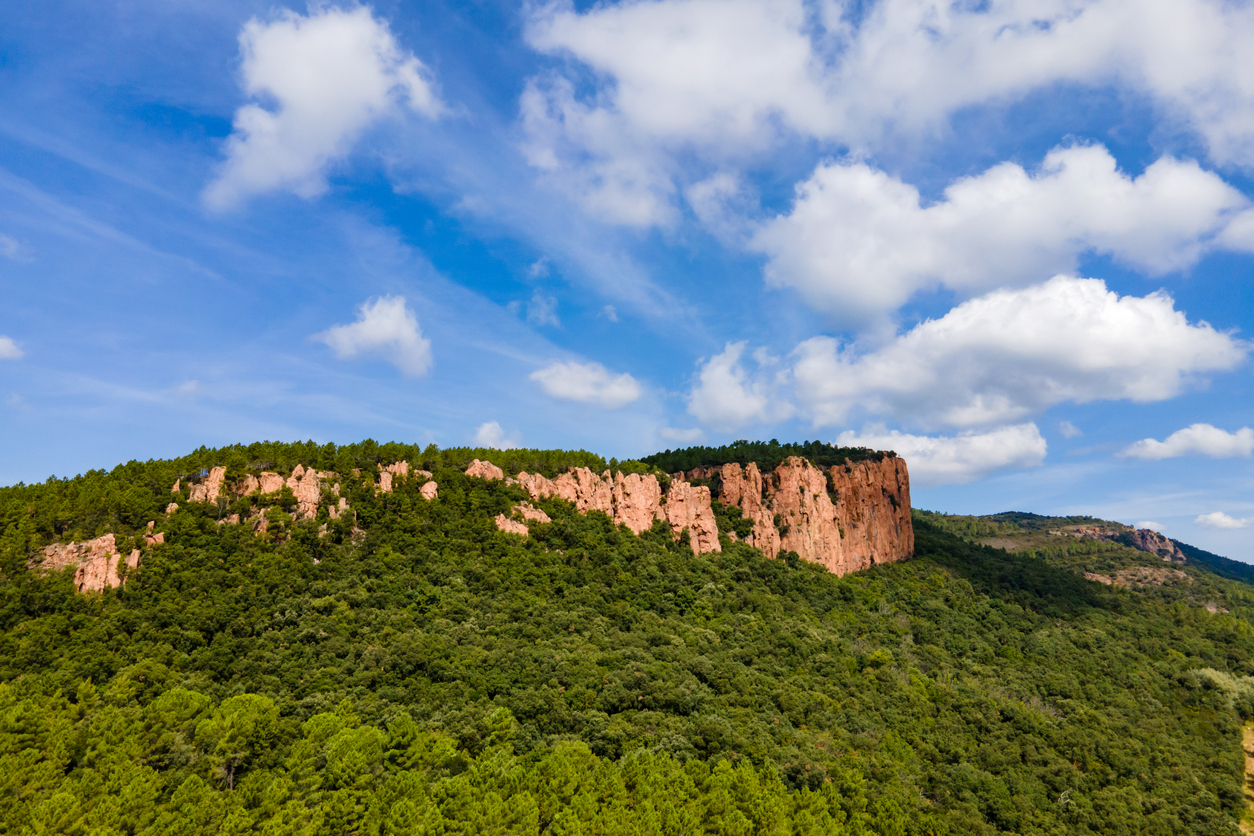
Massif des Maures: Wild Nature Between Coast and Provence
Massif des Maures: Wild Nature Between Coast and Provence
Folded like a sleeping cat between the Côte d’Azur and inland Provence, the Massif des Maures is a world of schist peaks, cork-oak forests, and chestnut groves that seem to drink in the light. It stretches quietly behind the more photographed beaches, yet on its ridgelines the Mediterranean glints through breaks in the canopy, and on still mornings you can smell resin, wild thyme, and the faint spice of cistus baked into the slopes. This is not dramatic high mountain country; it is low, intimate, and unmistakably southern, a landscape to walk through slowly, to hear cicadas and the hush of wind in umbrella pines, and to notice the cinnamon bark of cork oaks after the harvest.
For context on the broader setting and nearby coastal villages, you may appreciate this regional travel guide to the Gulf of Saint-Tropez, which frames where the Maures meet the sea.
Reading the Landscape: Schist, Maquis, and Cork Oak
The Maures are an ancient block of metamorphic rock—schist and gneiss—that predates the Alps. If you notice the warm, rusty-brown stone in old village walls or the silky, flaky sheen on exposed outcrops, that’s the schist talking. It underpins everything: the soils are acidic and well-drained, a profile cork oak loves, and the slopes are too broken and poor for large-scale agriculture, which helped preserve big tracts of forest.
Walk any ridge here, and you pass through classic Mediterranean maquis: arbutus (strawberry tree) with its red fruits, evergreen heather, cistus (both rockrose and gum cistus), myrtle, rosemary, and wild lavender. Down in the folds of the hills, stands of chestnut take over—cultivated for centuries and left semi-wild in places—while cork oak dominates mid-slope. Chestnut leaves turn amber in late autumn and carpet the tracks; in spring, the blooms are honey-sweet and bees work the understory in a steady hum.
Because the Maures are a “wooded mountain” rather than a bare alpine chain, the sensory palette is subtle: shadow, resin, humus, the flash of a jay, a tortoise retreating into the shrubs. To enjoy it, you only need a steady rhythm and a willingness to pause where a track crosses a creek or lifts to a low pass—col is a generous word here—for a sudden pocket view to sea or to the snowline in the distant Alps.
Where the Maures Begin and End
Geographically, the Massif des Maures rises behind the Var coastline and runs roughly west–east, from the hills inland of Hyères and La Londe-les-Maures to the hinterland behind the Gulf of Saint-Tropez. Northward, the forest gives way to the Argens plain and the protected Plaine des Maures with its cork oaks and ponds; southward, ravines tumble toward the Mediterranean through valleys like La Môle. The range’s interior is anchored by villages that feel like they grew out of the rock itself—Collobrières and La Garde-Freinet most prominent among them—each with narrow lanes, fountains, and an easy pace of life.
If you’re looking at a map, ridge roads and quiet departmental routes (D-roads) lace the massif: the D558 connecting the Gulf’s interior with the Argens valley, the D14 curling toward Collobrières, and the scenic climb up to Notre-Dame des Anges, the highest point at 767 meters, from Pignans, Gonfaron, or Collobrières. At the fringes, places like La Môle, Plan-de-la-Tour, and Bormes-les-Mimosas mark the shift from coastal light to forest shade. But the identity of the Maures lies less in the names and more in the threads that connect them: the taste of chestnut honey, the sight of cork stripped in summer, and the flicker of sea between schist shoulders.
Trail Culture: How Locals Walk the Maures
Walking here is a daily habit for many locals, an early-morning outing before the heat settles into the ravines. Trails are a mix of broad fire roads—signed “DFCI” for forest protection—and narrower singletrack linking old shepherd routes, charcoal burners’ clearings, and chapels. Waymarking is consistent: red-and-white blazes for long-distance routes (GR) and yellow for local paths (PR). Underfoot, the schist fragments into plates and marbles; shoes with decent grip and a firm sole make a world of difference.
Access is a cultural point too. Forest roads often have metal bars or gates and “interdit sauf services” signs; those are not for vehicles, full stop. Park where permitted on the roadside pullouts or village lots, step into the shade, and walk in. In summer, the Var department may restrict forest access due to fire risk, with color-coded alerts updated daily; when it’s red or black, trails are closed or access is highly limited. This isn’t bureaucracy for its own sake—the wind can flip a single spark into a wall of flame in minutes—so locals check the map in the morning and choose their plans accordingly.
Three Walks to Understand the Massif
Fort-Freinet Loop (La Garde-Freinet): A classic half-day circuit climbs through cork oak and strawberry tree to the ruins of Fort-Freinet, a medieval hilltop site whose stone ramparts perch dramatically over the forest. The loop delivers a primer in the Maures’ geology and vegetation, with views toward the Gulf. Expect 2–3 hours at a moderate pace, with some rocky steps underfoot.
Chartreuse de la Verne (near Collobrières): Tucked deep in the forest, the 12th-century monastery of La Verne sits like a schist mirage among cork oaks. You can approach from the main access road’s parking and take a shorter hike on a stony track, or make a longer circuit from Collobrières on older paths used by monks and woodcutters. Either way, plan to linger; the play of sunlight on the schist walls and the soundscape of forest stillness make this an unexpectedly moving place.
Notre-Dame des Anges Summit: Reached from Pignans, Gonfaron, or Collobrières on winding tracks, the summit chapel marks the massif’s high point. On clear winter days you can see the Alps to the north and the islands of Hyères to the south. The last slopes are steady rather than steep, and the feeling of being above a rolling sea of trees is pure Maures. Bring layers—wind can be sharp on the crest even when the valleys are warm.
The High Point: Notre-Dame des Anges
On maps, Notre-Dame des Anges is just a dot with a cross; in person it feels like a hinge-moment where the forest exhales. The chapel itself is small and often closed, but the site has drawn pilgrims and hikers for centuries. The approaches differ in character: from Pignans, the track snakes up through old chestnut groves; from Gonfaron, you move through pine before emerging into low, wind-milled shrubs; from Collobrières, the route feels more interior, almost monastic in its quiet.
Arrive early for the light—the way it rinses the landscape in cool blues to the north and warms the sea to the south—or come at the long end of the day and watch gold creep along the schist. If you like a tiny ritual, bring a thermos coffee and a small pastry from whichever village you started in; it turns a viewpoint into a memory.
Secret Valleys: La Môle and Its Backroads
The valley of La Môle barely registers on many itineraries, which is exactly why it’s worth your time. It is a longitudinal seam that runs from the coast inland, with the small airport at its floor and forested slopes rising immediately on both sides. Stop by the plane trees, listen to the creek working over schist slabs, and look for terracing remnants where families once grew grain and olives under the canopy’s edge.
Side roads here deliver quiet pastoral scenes—the kind that feel stolen from an older Provence: a line of hives under cork oak, a shepherd’s fence repairing itself into the brush, a small patch of vines folded between chestnut and pine. When the mistral cleans the air, the light is needle-sharp and colors pop: the red-brown of schist, the sea-gloss green of strawberry tree, the powdery gray of olive leaves. If you’re on a bike, the valley is a clean run with just enough elevation to keep your legs honest.
Collobrières and the Chestnut Heartland
Collobrières is the Maures’ kitchen, in spirit if not in strict geography. The village sits along the Real Collobrier river, with laundry fountains and stone bridges that hint at an older, water-wise life. Chestnuts are the thread that ties it together: in autumn, the hills rustle and villagers come home with baskets; in winter, you’ll see coals glowing under a grill with chestnuts à la poêle; in spring, honey from chestnut flowers shows up at the market with a handsome bitterness that pairs with goat cheese.
Time your visit for October and you may catch the Fête de la Châtaigne, a weekend when chestnut growers, small producers, and locals fill the lanes with roasters, music, and stalls of marrons glacés and candied fruit. The rest of the year, look for modest signs pointing to confiseries that work chestnut into every possible form. A longstanding address like Confiserie Azuréenne has become a reference point for glazed chestnuts and crème de marrons; even if you’re not a sweet tooth, picking up a small jar to stir into yogurt feels like a suitably Maures souvenir.
Collobrières is also your launchpad for the Chartreuse de la Verne on foot and for loop drives through the forest roads that climb to the ridges and descend again in a choreography of switchbacks and shade. The town’s weekly market is small, but you’ll find chestnut flour in tidy paper sacks and locals exchanging recipes for soupe au pistou with chestnut bread on the side—perhaps the most comforting version of the region’s comfort food.
Cork and Fire: A Resilient Forest
Nothing explains the Maures more quickly than a summer sighting of freshly stripped cork oaks. Their bark has been neatly cut away in plates and levered off, revealing a smooth, almost velvety trunk the color of cinnamon. Harvesting happens by hand, tree by tree, every 9 to 12 years; the work is skilled and quiet, and the forest seems to acknowledge it with a crest of fragrance. Cork bark insulates the tree against heat and fire, and many oaks keep living—and regenerating—even after burns.
Wildfire is a fact of the Mediterranean, and the Maures both suffer and rebound in the rhythm of its seasons. You’ll see firebreak tracks and water points signed for helicopters, the pragmatic counterpoints to the forest’s romance. After a burn, the first greens are often cistus and bruyère (heather), and within two seasons cork oaks push new leaf, their trunks banded where the fire licked but didn’t kill. For visitors, the takeaway is simple: respect closures, never smoke on the trail, and don’t assume a patch of earth is safe for any flame, ever.
Wildlife You Might Actually See
If someone tells you they “saw everything,” they probably moved too fast. The Maures ask patience. The emblematic resident is Hermann’s tortoise (Testudo hermanni), a small, amber-shelled tortoise that basks along sandy tracks in spring and early summer. If you see one, give it distance, don’t pick it up (even to “help”), and avoid stepping off-track into shrubs where others might be resting.
Look up, and you may catch a short-toed snake eagle circling in a long, lazy oval, or a common buzzard working the thermals over a clearing. In the shrub layer, Sardinian and Dartford warblers scold invisibly; late spring evenings bring the churr of the European nightjar. Wild boar thrive here and are more often heard than seen—look for churned soil under oaks where they’ve rooted for acorns and bulbs. In spring, orchids surprise even the indifferent: bee orchids and serapias pop along verges in the cooler weeks of April and May, especially after a wet winter.
On Two Wheels: Road Cycling and Gravel in the Maures
Cyclists know the Maures as a network of patient climbs and lightly trafficked valleys. None of the ascents are high, but they are honest: gradients hover in the low single digits with occasional steeper kinks where the road wraps a spur. The reward is continuity—you can string together ridges and passes into a day that feels stitched to the forest’s rhythm rather than to the stop-start of town riding.
Col du Babaou, rising from the Bormes–Collobrières side, is emblematic: shaded, steady, and scented with cork oak. Col de Gratteloup, between Grimaud and La Garde-Freinet, makes a fine warm-up or an inviting detour when you’re linking the interior with the gulf-side lanes. If you like mixed-surface adventures, the DFCI tracks open a world of gravel riding—broad, stable, and sandy in sections—connecting valleys like La Môle with ridgeline vantage points. Bring extra water and a sense of restraint: on dry days, schist marbles can behave like ball bearings, and braking early on descents is the difference between confidence and aquaplaning on dust.
In shoulder seasons, you’ll share the road with folks in classic convertibles out for a slow look at the forest. They are generally courteous; a quick wave goes a long way. Summer’s heat pushes best rides to the early morning—out by sunrise, back by lunch—and winter’s mistral can turn a gentle slope into a workout. Either way, the sightlines on the old D-roads are generous, and the drivers often live here and expect cyclists. It’s part of the place’s natural economy.
Mountain Biking and Trail Running
The Maures are not a bike-park destination, and that’s a virtue. You make your own circuits: fire road to connect, singletrack to play, a creek crossing to rinse dust from your ankles. Around La Garde-Freinet, loops wrap Fort-Freinet and dip into chestnut shade; near Plan-de-la-Tour, the lower slopes pour out fine-grained networks that are forgiving to intermediate riders and playful for experts who like to pop off rock ledges. After rain, surfaces bind nicely; after a long dry spell, that same schist can wash under your tires, so read the ground and pick clean lines through switchbacks.
Trail runners find a sweet-spot here too. The climbs are measurable without being punishing, and the canopy breaks heat even on late-spring afternoons. A favorite rhythm is to launch from a village—La Garde-Freinet or Collobrières—catch a crest, and roll a shallow ridge for kilometers with the regular metronome of footfall on pine needles. If you’re new to the area, start with signed PR circuits and carry a phone or map; tracks can braid in unexpected ways, and what feels like a gentle valley detour may twist you much farther than planned.
Wine from the Woods: Côtes de Provence – Notre-Dame des Anges
It can surprise first-time visitors that a forested massif gives birth to such articulate wines. The key is how the vineyards thread through clearings and pockets at the forest’s foot, on schistose slopes that drain well and force the vines to work. Many of these parcels now fall under the “Notre-Dame des Anges” geographical denomination within Côtes de Provence, recognizing the Maures’ specific terroir. Rosé is the flag-bearer, pale and saline, but don’t overlook schist-driven reds with savory edges or whites that carry fennel and anise notes.
A few addresses stand out for tasting and conversation about the land. Domaine de Rimauresq, near Pignans at the massif’s northern foot, has long cultivated a style that respects shade, stone, and wind, and the quiet intensity of their reds speaks to old-vine care. On the gulf-facing side, Domaine de la Giscle, tucked up the valley beyond Cogolin, offers a satisfying cross-section of the local palette—rosé for the long lunch, red to reward an evening back from the ridges. To the west, Château Pas du Cerf near La Londe-les-Maures channels the forest’s wild herbs into classically structured wines. And in the folds near La Môle, Domaine des Campaux shows how vines can sit shoulder to shoulder with chestnut and cork, their rows catching the same breezes you feel on the nearby trails.
The most valuable part of a tasting here isn’t collecting labels; it’s hearing how growers navigate forest life—wild boar pressure, hail in seasons that shouldn’t have it, and the shared duty to manage brush and maintain firebreaks. It’s one of the places where wine truly belongs to a ecosystem rather than to a brand exercise.
Gardens and Culture at the Forest’s Edge
At Rayol-Canadel, directly at the forest’s coastal edge, the Domaine du Rayol—Le Jardin des Méditerranées—lays out a floral atlas of Mediterranean-climate plants from around the world. It isn’t a “pretty garden” in the usual sense; it’s a lesson in how climate and flora speak across continents, curated by the landscape gardener Gilles Clément with paths that move from South African proteas to Chilean shrubs by way of Australian banksias. If you walk there after a morning on a schist ridge, the kinship between the plants clicks into place.
Back in the heart of the hills, the Chartreuse de la Verne is a cultural anchor. Even without going inside, the approach puts you in a monastic frame: stone, silence, the unmistakable sense that the forest is not background but protagonist. And in La Garde-Freinet, the Conservatoire du Patrimoine du Freinet offers a small, affectionate gateway into local heritage—cork extraction tools, old photographs from chestnut harvests, and everyday objects that place the Maures’ slow economy into your hands, tangibly and without lecture.
Markets, Bakeries, and Simple Tables
There’s a rhythm to shopping in the Maures that’s halfway between errand and ritual. In La Garde-Freinet, the twice-weekly market (traditionally Wednesdays and Sundays) lines the main square with vegetables, honey, goat cheeses from nearby farms, and breads that carry the perfume of wood-fired ovens. In Collobrières, Sundays are the most animated, especially in chestnut season, when bakers set out loaves darkened with chestnut flour and pastry shops ice chestnut cream onto tartlets with an easy hand.
One of the simple joys is a picnic made from these markets and eaten a few kilometers up a track with a view. Choose a loaf still warm, a jar of crème de marrons, a wedge of tomme, and early-season figs or late-season apples depending on the month. Add a small slab of nougat or a bag of candied orange peel for the walk back. The point isn’t to create a perfect spread; it’s to let the forest around you be the fourth ingredient.
Family-Friendly Nature Moments
Families often ask for places where kids can “feel in the forest” without overcommitting. Several easy wins exist. The approach walks to Chartreuse de la Verne or to the Fort-Freinet ruins are manageable at an unhurried pace, with enough goals—walls to touch, towers to peek from—to keep attention engaged. In the Plaine des Maures, north of the massif proper, the Lac des Escarcets area offers flat trails along ponds where dragonflies stitch the air and frogs spring from the margins; if you go in spring, you may find a chorus of birdsong that carries even the youngest along.
Down on the gulf-facing side, the short loop to the Pont des Fées near Grimaud makes a half-day for smaller legs, with a medieval bridge as a concrete destination and shaded banks for unhurried snacks. And if you prefer the coastline as a gentle counterpoint, the Sentier des Myrtes at Rayol-Canadel is a bite-size piece of coastal path with interpretive panels and views that show exactly how sea and forest speak to one another here.
Season by Season: When the Maures Shine
There isn’t a “best moment” so much as different moods that reward different temperaments:
- Spring (March–May): The forest wakes. Cistus and wild lavender bloom, orchids appear along verges, and temperatures stay friendly for long walks and all-day rides. After rains, the air is scrubbed and the scents feel almost edible—pine, resin, and wet schist.
- Early Summer (June): Mornings are glorious and evenings long. Trails are dry, cicadas begin their chorus, and beaches call after a ridgeline hike. Watch fire risk bulletins as the season advances.
- High Summer (July–August): Heat settles in; go early, finish by lunch, or choose shaded creek bottoms and chestnut lanes. Forest access may be restricted on certain days due to wildfire risk. Swim after.
- Autumn (September–November): The connoisseur’s window. Chestnuts ripen, mushrooms nose up after early rains (do not forage unless you’re knowledgeable), and the light turns honeyed. Chestnut festivals animate weekends; days are cool enough for long circuits.
- Winter (December–February): Empty trails, huge views on mistral days, and the sight of snow far to the north. Dress for wind on the crests, reward yourself with a long lunch. Rains can make tracks sticky; plan accordingly.
Across these seasons, a small courtesy pays off: say “bonjour” to everyone you meet, from trail runners to the retiree clipping brush along a path. It’s the local grammar of the forest, a reminder you’re a guest in a shared space.
Practicalities: Getting Around and Staying Safe
Distances are deceiving here. A twenty-kilometer drive over the forest can feel longer than the number suggests, and that’s part of the charm. The D-roads are narrow but well-kept, with pullouts where courteous drivers let each other pass. Fuel up in the larger valley towns; in the heart of the massif, stations and shops thin out. Mobile coverage is good on crests and spotty in ravines—useful to know when you’re picking a meet-up point.
Pack water generously and wear shoes with an assertive tread. In summer, carry a light, long-sleeved layer: the sun is fierce on exposed slopes but you’ll appreciate cover in the middle of the day. If you’re walking near zones of private property (chestnut groves often are), stay on signed paths; locals are friendly, but they guard their livelihoods. Dogs should be leashed during spring and early summer—ground-nesting birds and tortoises are vulnerable then.
If your curiosity about local nature and slow travel extends beyond this article, the background and editorial ethos at AzurSelect will give you a sense of how regional knowledge is gathered and shared here—patiently, with both feet on the ground.
Suggested 2-Day Itinerary Through the Maures
Here is a simple, workable arc that doesn’t force the pace and leaves room for detours. Swap days or reorder as you wish—the massif is forgiving that way.
Day 1: Ridges and a Monastery
- Morning in Collobrières: Coffee by the river, a quick pass through a shop for chestnut treats, then a short drive to the Chartreuse de la Verne access. Walk in on the stony track, lingering under cork oaks with their birdsong canopy.
- Midday picnic: Stop at a signed table under pines or carry a blanket for a shaded slope. Chestnut bread, goat cheese, olives, and early figs make a fine spread.
- Afternoon loop drive: Take a slow ridgeline route toward Notre-Dame des Anges—not necessarily to summit today, but to feel the forest open. Pause at a pullout and listen; you’ll hear the pitch of the wind change even minute to minute.
- Evening in Collobrières: A simple dinner built around local produce. If you like a digestive walk, wander the back lanes where the houses are so close you can smell dinner through shutters—always a balm after a day outdoors.
Day 2: Fort, Valley, and Vines
- Early walk to Fort-Freinet: Park in La Garde-Freinet and climb before the day heats. Explore the ruins, then take the longer loop back through chestnut and bracken.
- Lunch in the La Môle Valley: Follow the valley floor, find a quiet turnout near the creek, and lean into the shade. If you ride, this is where a short spin lines up with digestion just right.
- Afternoon tasting: Choose a vineyard on the north or south slopes—Domaine de Rimauresq near Pignans if you want to feel the massif’s northern air, or Domaine de la Giscle up the Cogolin side for that warm, gulf-facing light. Taste slowly and ask questions about cork, boar, and wind; you’ll learn more in ten minutes of conversation here than in an hour with a brochure.
- Sunset look-out: Finish on a low crest near a pass. Let the light fade until the first cicadas stop. The forest gets very quiet very quickly; it never loses the habit of listening.
Local Details That Reward Attention
Every time you’re tempted to speed up here, slow down instead. A few micro-details turn your time in the Maures from a sequence of views into a sequence of meanings:
- Bark and Banding: On cork oaks, notice the painted numbers on trunks; they mark the year of the last harvest. The arithmetic tells you when a tree’s next cycle might be due.
- Water and Stone: Where a track crosses a trickle, look for smooth, dark schist plates—perfect for a five-minute sit. In a heavy rain year, some of these ephemeral creeks sing for weeks.
- Old Economies: Charcoal mounds—flat, round platforms in the woods—are the remnants of an industry that fueled forges and kitchens. Once you see one, you’ll spot them everywhere.
- Light Discipline: In winter, ridgeline sun can be blinding in the last hour of day; in summer, it’s the shade that matters. Locals wear hats with real brims and carry a neck scarf—small, unfashionable details that work.
Why the Maures Stay with You
No single view defines the Massif des Maures. It is not an amphitheater of peaks, a lake with a postcard reflection, or a fortress town that announces itself from a distance. Instead, it works by accumulation: the click of boot on schist, the warm sourness of chestnut on the tongue, the slackening of breath under pines, the honest exertion of a ridge. Days later, you realize you’re still carrying the smell of resin or the memory of a tortoise easing into shade. That’s what “wild nature between coast and Provence” means here—not isolation, but continuity. The forest folds itself into daily life without spectacle. Give it a little time, and it gives you the same courtesy back.
Exploring the French Riviera? View all our holiday villas on the Côte d’Azur.

