

 EN
 NL
 DE
 FR

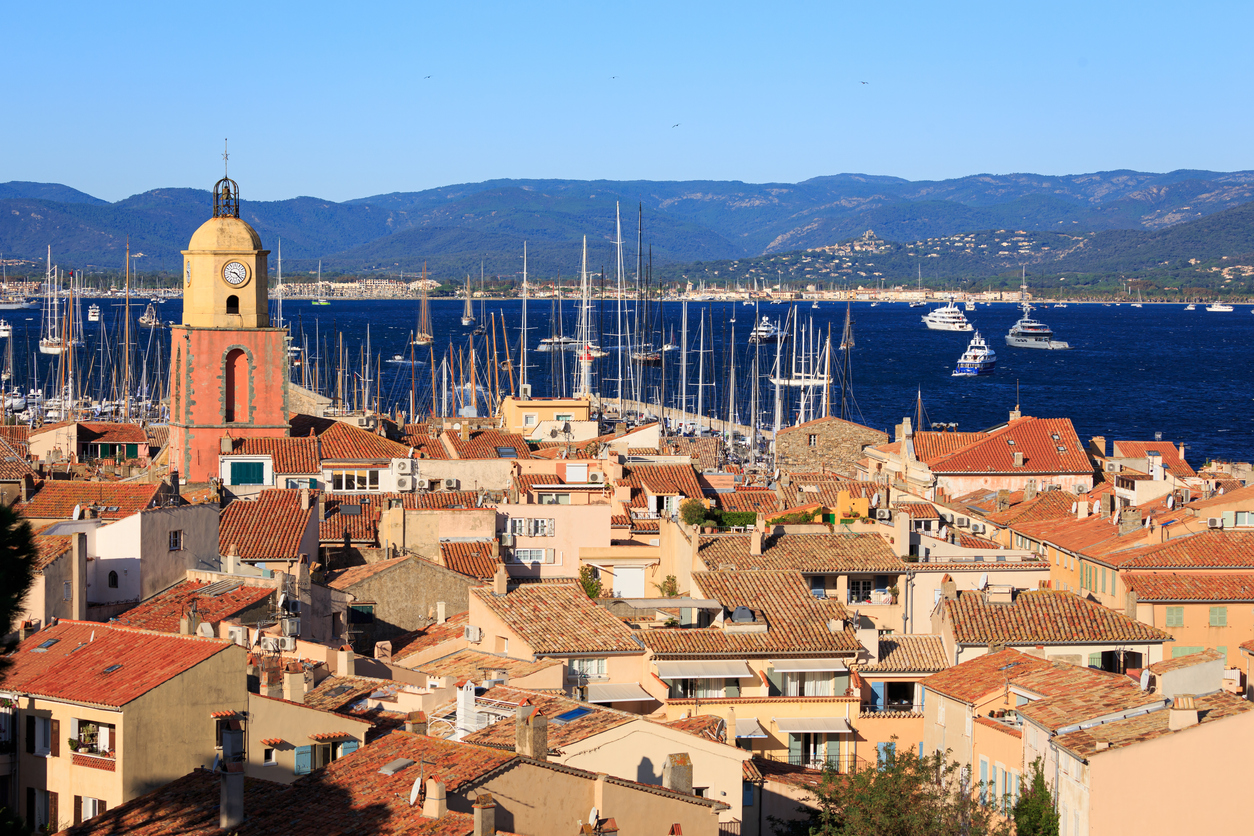
The Most Beautiful Churches and Chapels in the Gulf of Saint-Tropez
Before the surf wakes the beaches and cafés fill their terraces, the Gulf of Saint-Tropez is a place of bells and stone. Ochre belltowers mark hilltop villages, humble whitewashed chapels hide in the vines, and cool naves offer a hush that feels older than the road you just drove. From Romanesque gems to mariners’ shrines hung with ex-votos, the gulf’s sacred buildings tell a story written in salt, wind, procession, and prayer. This guide gathers the most beautiful churches and chapels across the gulf—places where architecture, landscape, and lived tradition come together—along with practical pointers for an unhurried, respectful visit.
For broader context on the coastline, seasons, and villages mentioned here, see our gently curated Gulf of Saint-Tropez travel guide.
How sacred architecture took root in the gulf
Stand on any ridge in the Massif des Maures and you can read the landscape in layers: cork oak and chestnut woods rolling down toward a bright arc of sea, with villages stitched along the slope. Faith here has always been practical—built to protect, to give thanks, to mark distance and danger—so the architecture feels grounded. Early chapels near springs, crossroads, and promontories were often modest Romanesque structures with semicircular apses and thick limestone walls, chosen as much for coolness and sturdiness as for symbolism. Later, as maritime trade and Ligurian influence grew, you see brighter colors, Italianate facades, and elegant campaniles appear in parish churches, especially in Saint-Tropez and the perched villages of Gassin and Ramatuelle.
Many rural chapels were erected “en ex-voto,” after plague years or storms, which explains their scattered locations among the vines or at the bend of an old track. Inside, the gulf’s seafaring soul shows in detail: model boats suspended from the nave, paintings of ships escaping breakers, and saints of plague or healing invoked in names like Saint-Roch or Saints Côme et Damien. Today these sanctuaries are as much cultural anchors as places of worship—venues for summer concerts, stops on village processions, and quiet markers of continuity when the coast outside is in motion.
Saint-Tropez: iconic towers and sailors’ devotions
Église Notre-Dame-de-l’Assomption: the ochre tower of the old town
The historic centre of Saint-Tropez is dominated by its famous bell tower, which is far more than a landmark—it’s a rhythm section. Painted in sun-warmed ochre with a darker crown, it rises above the lanes between Place des Lices and the old port. Step inside the 18th-century Église Notre-Dame-de-l’Assomption and the contrast with the quays outside is immediate. The baroque interior folds around you with stucco, side chapels, and gilded retables that catch slants of light. Look for the bust of Saint Torpes—Torpes of Pisa in Latin legend—carried through the streets each spring during the Bravade, Saint-Tropez’s proudest procession.
Architecture here carries an Italian accent: curving cornices, a nave designed for sound, and colored marbles that soften the stone. If you catch a weekday morning, you’ll likely share the space with a few residents lighting candles. On market days, slip in from Place des Lices between errands; time your visit just after the bells for the best sense of the church breathing with its town. And if you return in May, the Bravade’s white uniforms, muskets, and drums transform the square outside into a living theater of civic faith that has outlasted empires and fads.
Chapelle Sainte-Anne: wind, thyme, and a hilltop thank-you
A short drive or a steady walk up from the Baie des Canebiers, the 17th-century Chapelle Sainte-Anne sits among cypress and low scrub with one of the most luminous views of the gulf. Local tradition ties its construction to deliverance from plague, and the place still feels like a thank-you: spare lines, pale walls, a bell gable, and the sweep of water below. The path often carries the scent of wild thyme and pine sap; keep an ear out for the cicadas, which seem to tune themselves to the chapel’s quiet geometry in high summer.
Arrive near sunset on a clear day and watch the belltowers of Gassin and Grimaud glow across the bay as boat lights pinprick the water. Morning is another sweet hour, with the mistral sharpening the horizon and the chapel’s shadow falling long over the dry grass. Bring water, and if you’re coming by foot, choose shoes made for gritty, stony paths. You’ll find the simple pleasure that defines so many Provençal sanctuaries: a threshold between the built and the wild that gives the headspace you didn’t know you needed.
Fishermen’s chapels by the port: small doors to deep stories
Near the old port, tucked into side streets that lead off Rue Gambetta and the quays, Saint-Tropez shelters small chapels that speak the language of the sea. One, long linked with the confraternity of fishermen, keeps its walls lined with ex-votos: naïve paintings of barques in peril, model ships hung from beams, a brass plaque in thanks for “deliverance in a storm.” Another once served the “Black Penitents,” a brotherhood devoted to charity and funerary rites. You may find these sanctuaries closed between services; often, a small window in the door allows a view inside. Take a moment there—eyes adjusting to the dim—to trace how the village’s livelihood threaded itself through devotion.
If the quayside is crowded, slip back into the lanes after your visit. A quiet espresso under the plane trees not far from Place des Lices resets the pace. Walking back toward the masts, you’ll find the belltower again, now familiar, marking your steps through the old town’s weave of shade and light.
Ramatuelle: stone and silence above Pampelonne
The parish church in the heart of the village
Ramatuelle keeps its shape tightly wound around its hill—curving lanes, shuttered facades, and, at the center, a modest parish church dedicated to Our Lady of the Assumption. The approach takes you past honey-colored stone and doorways no taller than a tall man; step inside and you’ll meet a nave that is cool and simple, with a main altar framed by restrained Baroque flourishes. On summer afternoons when the outside air ripples with heat, this is where time loosens. The church offers that particular Provençal quiet—the kind you hear in the creak of a pew and the dust motes turning in a bar of light.
Leave by a side door and walk the town’s outer path, the one that looks toward the vineyards and Pampelonne’s long pale band. The parish’s careful modesty feels of a piece with the village’s good sense: solid, shaded, essential. On a weekday morning, the square outside holds just enough bustle—locals greeting each other, a delivery van unloading baskets—to underscore how seamlessly the church sits within daily life.
Rural chapels among the vines
South and east of the village, lanes bend through vineyards where you may find a small chapel dedicated to Saints Côme and Damien, healers whose names recur in places once tested by plague. These sanctuaries, often limewashed and humble, anchor a pattern of processions and countryside blessings that still punctuate the calendar. They are easy to miss until you train your eye to spot the bell gable and solitary cypress; once seen, they become waypoints that pull the landscape into focus. If you pause, do so gently—farm work carries on around them—and treat the place like a neighbor’s threshold.
Gassin: sky-high parish and a hillside hermitage
Église Notre-Dame-de-l’Assomption: a church with a balcony to the sea
Perched at one of the gulf’s great natural belvederes, Gassin’s parish church keeps company with exceptional views. Its exterior is plain, almost austere, its stone the same russet and cream as the houses around it. Inside, the surprise lies in color and craft: wood-carved saints with traces of polychrome, a sober nave that makes any lit candle feel like an event, and a sense of proportions that point you back toward the door and the horizon beyond. Step outside to the terrace nearby and you’ll understand why the parish feels so anchored: the world below—the marinas, the roads tracing the shore—reads as a quiet map from here.
In the late afternoon, the bell’s voice seems to travel farther in Gassin than anywhere else in the gulf. The sound reaches the vines, then slides toward the sea. If you linger for a glass on the terrace along Place Deï Barri, you can watch the color drop out of the day until only the church and the line of the Maures hold their contours.
Chapelle Notre-Dame-de-la-Consolation: a green clearing and a memory
A short drive down from the village, a lane leads to the site of Notre-Dame-de-la-Consolation, where a hermitage and chapel once received pilgrims under umbrella pines and cork oaks. Today you’ll find a clearing, remnants of stone, a small restored sanctuary, and the openness that makes landscapes like this feel like outdoor churches themselves. The place is used occasionally for open-air religious moments and community gatherings; it also works as a gentle pause between villages, especially in spring when the undergrowth carries the first sweet scents of the season. Come for 20 quiet minutes; leave with the sense that a sanctuary can be defined as much by air and trees as by walls.
Grimaud: Romanesque roots and a living pilgrimage
Église Saint-Michel: a 12th-century lesson in proportion
The historic village of Grimaud is home to the remarkable Église Saint-Michel, one of the finest Romanesque churches in the Gulf of Saint-Tropez. Romanesque in its bones and beautiful in its restraint, it rises just below the castle ruins along the old village lanes. The west door is heavy with age; inside, a single nave leads your eye toward a semicircular apse, its curve cradling the altar in a way both intimate and monumental. Outside, a frieze of Lombard bands gives the exterior a rhythm that the sun catches in the late day. The stone here is tactile—worn, human in scale. If you’re fond of acoustics, plan to attend a summer concert; a single violin seems to bloom within these walls.
After visiting, take the stepped lane that lifts you to the castle keep. Looking back, Saint-Michel’s compact volume completes the village’s silhouette. From the ramparts, note how the path of Rue des Templiers threads between church and square—another reminder of how faith and daily trade once moved together in these villages. The walk back down, with its small galleries and craft workshops, brings you past doorways where lavender hangs to dry and cats hold still in patches of sun.
Chapelle Notre-Dame de la Queste: cypresses, horses, and a meadow
On the plain below Grimaud, a lane marked for “La Queste” leads to a beloved country chapel ringed by cypresses and stone pines. Notre-Dame de la Queste occupies a clearing where generations have gathered for processions, blessings, and late-summer celebrations that include a cherished tradition of honoring horses. Even at quiet times, you feel the memory of crowds—in the worn threshold, the picnic tables beneath shade, the fountain where children chase each other in the heat. The chapel itself is simple, stirring more by setting than by ornament: a low nave, a painted Madonna, and a door that opens onto a square of sky where swallows lace their arcs.
If you’re traveling with family, this is an easy stop that gives everyone space to roam. Bring a picnic as locals do, but keep the clearing as you found it—these places survive on a code of mutual care. In late afternoon, the cypresses cut clean silhouettes; photographers will appreciate how the chapel’s lines compose naturally against them.
La Garde-Freinet: hermit paths and Maures panoramas
Notre-Dame de Miremer: a chapel with the world as an apse
Between Grimaud and La Garde-Freinet, crest a rise in the Maures and you’ll find signs for Notre-Dame de Miremer. The approach winds through cork oak and chestnut, the understorey spiced with rockrose in early summer. The chapel, white and unpretentious, stands at a lookout where the gulf unfurls in blue and the interior hills layer into smoky greens. Inside, the simplicity is nearly monastic; outside, the terrace functions as a kind of open-air apse encompassing villages, vineyards, and the long curve of the coast. It’s a lovely stop on any drive between village and sea, and a place where the mistral can clear a week’s worth of thought in a handful of minutes.
Saint-Jean near the old fort: stones that remember
For a taste of the area’s older spiritual geography, park below the path to the ruins of Fort Freinet and walk up a shaded trail. Near the ridge, the remains of a small chapel dedicated to Saint John punctuate the landscape with a few standing walls and a footprint of sacred space. This is less a “site” than a mood: wind in the chestnuts, lichened stone, views down to the plain. Bring good shoes and give yourself time to linger; the sense of time here is measured more by weather than by clocks.
Cogolin: borough shrines and a square-towered parish
Église Saint-Sauveur: a bell and a market morning
Cogolin, with its reed-making workshops and lived-in center, keeps a parish church that fits the town’s scale. Saint-Sauveur’s square bell tower watches over streets where market stalls set up early; step inside after picking up fruit and you’ll catch the last coolness before the day swells. Look for side altars telling familiar Provençal stories—patron saints of craftsmen, Marian dedications with silk flowers faded by decades of sun. If you chance on the organ in practice, take a seat; the instrument’s voice seems sized exactly to the nave and the town outside.
Chapelle Saint-Roch: a neighborhood promise kept
Chapels named for Saint Roch, the plague protector, dot the Var. Cogolin’s stands quietly in a residential quarter, a reminder of vows made during hard seasons. The building is typically modest—a door, a small window, a bell—yet the brass plaques and handwritten cards inside carry a weight disproportionate to the chapel’s size. Notice the language of these offerings: spare, grateful, almost conversational. It’s a pattern you’ll find across the gulf, and it repays attention as surely as any capital or cornice.
Sainte-Maxime: a seaside parish and a hillside oratory
Église Sainte-Maxime: maritime notes in a light-filled nave
In the heart of Sainte-Maxime, just a block or two back from the harbour, sits the parish church of Sainte-Maxime, a 20th-century building shaped by sunlight and sea air. Compared to its medieval cousins across the gulf, it feels youthful: clean lines, high windows, and the occasional model boat hung as an ex-voto above a side altar. On mornings when the town market sets its colors outside, step through the doors and the contrast is refreshing—the cool, faint scent of wax, a quiet broken only by the click of a votive lighter.
If you have an eye for materials, notice the floor tiles and the way sun warms the plaster into cream and pale gold. Coastal parishes often absorb their setting, and here that means a certain openness and brightness that fits a town living hands-on with the sea. After, take five minutes on a bench beneath the palms, watching the ferry draw its line across the bay to Saint-Tropez’s ochre tower—a bell-to-bell view that says more about the gulf’s unity than any map could.
Chapelle de la Nartelle: a white pause above a blue beach
East of town, above the long sweep of La Nartelle beach, a small white chapel keeps watch from a rise dotted with pines. It’s the kind of oratory you spot first in profile, a bell-gabled outline set against sea-glare. Come early when the light is still pearly and the road quiet; the chapel’s clean geometry and the scent of resinous pine make a simple, satisfying composition. If you continue down afterward for a swim, you’ll carry the calm with you. Remember that these small chapels are used for occasional services—if you find the door closed, treat the threshold with the same care you would if it were open.
Les Issambres and Saint-Aygulf: quiet coastal devotions
Les Issambres: a modern chapel behind the promenade
In the San Peïre quarter of Les Issambres, a modest modern chapel hides a street or two back from the seafront, its pale stone and blue-tinted glass echoing the bay outside. It opens mainly for summer liturgies and small community moments; the rest of the week, you might pass it without noticing—until a drift of music or the soft chiming of its bell stops you. Step inside if you find it open: the architecture is unassuming, but the light has a mariner’s quality, shifting subtly as the day turns.
Saint-Aygulf: a parish under pines
Further west, Saint-Aygulf’s parish church keeps a gracious strip of shade under pines, a few minutes’ walk from the protected étangs de Villepey. The facade leans gently toward neo-Romanesque, with round-arched doors that give way to a nave scaled to the neighborhood. Come here when the beach wind picks up and you need a pause from salt and noise. The atmosphere is relaxed and local—baptism ribbons on a rail, a vase of garden flowers on a side altar—and all the more welcoming for it.
Reading the details: a visitor’s guide to what matters inside
If you’ve ever left a church wondering what you just saw, the gulf’s sanctuaries are a fine classroom. Start with the plan: most Romanesque chapels here use a single nave ending in a semicircular apse, a form you’ll learn to spot from the outside. Later Baroque and 18th-century parish churches often add side chapels connected by shallow arcades; these chapels frequently house confraternity altars with their own micro-stories—look for painted panels or inscriptions that name a local guild or devotional group.
Next, scan for ex-votos: small paintings, model ships, silver hearts. The maritime ones are easy to love, with their naïve waves and named storms; they also map the gulf’s trade routes more honestly than any historic plaque. A painting of a near-wreck off Sardinia or a saved crew beyond Porquerolles turns faith into lived geography. In more urban parishes, ex-votos might mark epidemics resolved or fires survived—tiny archives of resilience.
Materials tell their own tale. The reds and creams you see inside often come from local limestone and the iron-rich sands used in historic mortars. Floors may be set with terracotta tomettes whose wear marks centuries of footfall; plastered walls hold layers of limewash that seem to absorb and soften sound. Wood carving in polychrome—the saints in Gassin, for example—retains, in chips and flecks, the colors that would have made once-plain interiors read richly by candlelight. And wherever you are, listen carefully: a single bell in a country chapel can define the entire acoustic space, its tone tugging the surrounding trees into the experience.
Practical etiquette and visiting tips
These buildings are living sanctuaries first and historical spaces second. A few simple practices help you meet them on their terms:
- Dress for a place of worship: shoulders covered, hats off inside, and beachwear swapped for something modest.
- Avoid photography during services or when small groups are praying; otherwise, ask permission if a caretaker is present, and skip flash entirely.
- Keep voices low, phones silent, and footsteps light. Thick stone carries sound more than you think.
- Carry a few coins for candles or a donation box—small contributions keep rural chapels maintained.
- Check village noticeboards for opening hours; many chapels open only around mass times or key feasts.
- Park considerately: many rural chapels are reached via narrow lanes shared with farm vehicles. Never block an access track.
Suggested day routes that flow with the landscape
Itineraries in the gulf work best when they follow the natural rhythm of the day—cool mornings for walks, bright middays for interiors, golden hours for views. Three routes make a satisfying day without hurry:
- Hills to harbor: Start early in Grimaud village to see Église Saint-Michel while the lanes are still in shade. Continue down to Notre-Dame de la Queste for a late-morning picnic beneath the pines. In mid-afternoon, cross to Saint-Tropez, entering the cool of Notre-Dame-de-l’Assomption just as the outside heat peaks. As the light softens, drive up to Chapelle Sainte-Anne for sunset over the Baie des Canebiers.
- Perched villages circuit: Begin in Gassin with a quiet visit to the parish church and a coffee on the terrace along Place Deï Barri. Wind to Ramatuelle next, pausing in its parish for a midday cool-down. In the late afternoon, stop at Notre-Dame de Miremer above Grimaud for a breeze-swept view before descending for an evening stroll along the coast.
- Shoreline and small sanctuaries: In Sainte-Maxime, step into the parish church after the morning market. Head east to the Chapelle de la Nartelle for a short contemplative stop before a swim. After lunch, trace the corniche to Les Issambres to find the modern chapel tucked behind the promenade, then finish in Saint-Aygulf’s shaded parish before walking the path by the étangs, where herons and egrets fish the shallows.
Between stops, keep your pauses simple: a bakery baguette in Cogolin, a coffee at a quiet village square, a glass of rosé at a winery on the plain near Gassin or La Croix-Valmer. The point is to stay close to the small scale these sanctuaries invite.
Photography, light, and sound: working with the elements
Photographers will find the gulf generous if they heed its light. Bell towers in Saint-Tropez and Gassin sing at golden hour, when the ochres and pinks turn warm and the shadows carve detail. Midday is ideal for interiors—stone reflects more light than it absorbs, and long exposures won’t wash color if you balance white properly. A small, fast prime (35mm or 50mm) and a willingness to raise ISO will handle most naves without a tripod. Respect house rules: many parishes forbid tripods to preserve the space for prayer.
In rural chapels, compose with context. Framing a door with a leaning cypress or setting a bell gable against a wide sky keeps the building honest to its landscape. And listen while you work: the wind in the pines at La Nartelle or the bell at La Queste is part of the record. Sometimes the best frame comes after you pocket the camera and wait for a minute of quiet to show you the structure’s simplest line.
Festivals and processions: when stones move with people
To understand why these buildings matter, see them when they’re in motion. The Bravade of Saint-Tropez fills the old town each May with uniforms, muskets, drums, and the carrying of Saint Torpes’ bust to and from the parish church. The ritual is disciplined and joyful, with a seriousness beneath the spectacle; it binds the town’s identity to its sanctuary as few civic events can. Even if you watch from a side street, you’ll feel the choreography that centuries have refined.
Elsewhere, village processions trace the little roads between chapel and parish, candles touching the lane’s edges with light. At Notre-Dame de la Queste, a summer blessing of horses links the chapel’s meadow to the region’s agricultural rhythms, with riders and families mingling in a scene lifted from an older century. In these moments, architectural details recede and what remains is a sense of community at scale with the buildings themselves—measured, neighborly, and rooted.
Stewardship: traveling in a way that keeps places whole
Sacred buildings survive when they are used, loved, and lightly handled by visitors. That means simple courtesies—quiet voices, clean picnics, mindful parking—but also a willingness to slow down enough to meet a place as it is. A coin in a box, a door closed gently, a photo taken without breaking a prayer—all of it adds up to another decade in which a small chapel looks after its meadow and a parish bell keeps time for a village.
Why these sanctuaries endure
The gulf’s churches and chapels are not museums; they’re companions to a coastline that reinvents itself each season. What makes them beautiful is only partly stone and light. The rest is use—the weddings and farewells, the summer Mass whispered to the hum of cicadas, the procession that takes a saint’s likeness along the route where fishermen once walked. Visit with that in mind and you’ll leave with something deeper than photos: a sense that in a region famous for surface, the most lasting beauties are, in fact, foundations.
Planning your next visit? Discover our holiday homes and holiday villas on the Côte d’Azur and explore historic villages, remarkable churches, Mediterranean landscapes and the rich cultural heritage of the region.

