

 EN
 NL
 DE
 FR

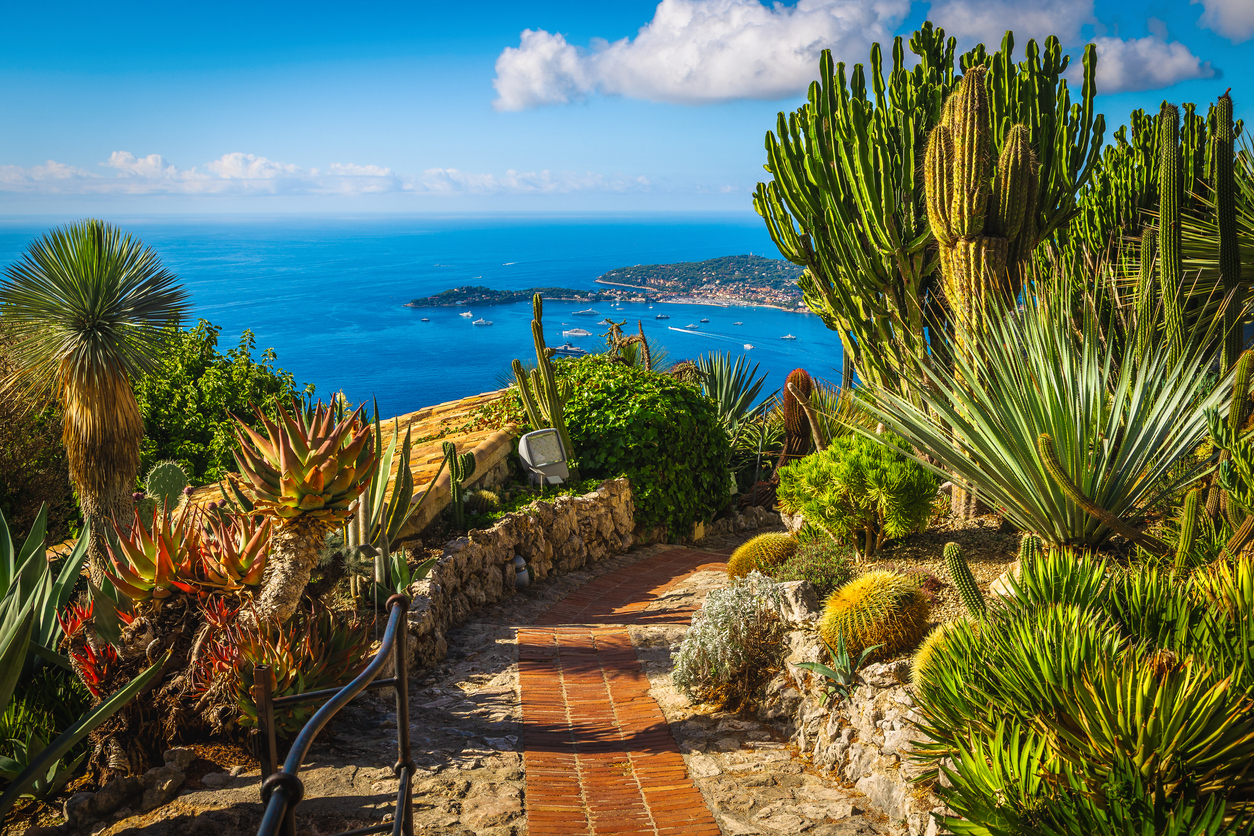
The Most Beautiful Gardens on the Côte d'Azur: A Guide to Parks, Villas and Botanical Gardens
There is a particular light on the Côte d’Azur that turns leaves to glass and seas to silk. It’s the light that drew painters to these shores and gardeners to its slopes, coaxing terraces of cypress and olive out of rock, acclimatising palms against salt-bright winds, and weaving paths through mimosa, citrus, and succulent. This guide brings together the region’s most beautiful gardens—grand villa grounds, botanical collections, intimate village plots, and coastal parks—so you can experience the Riviera through its living, breathing landscapes.
For an easy sense of how the coastline fits together and where garden days pair well with beaches and villages, you might enjoy this softly curated regional travel guide to the Gulf of Saint‑Tropez.
How to use this guide: the lay of the land and the rhythm of the seasons
From Menton near the Italian border to the Var’s pine-framed bays, the Côte d’Azur is not one climate, but a necklace of microclimates. Menton is famous for being a botanical “sweet spot,” warmer and more sheltered, where avocados and rare palms feel at home. Nice has generous winter sun and spring softness. Cap d’Antibes and Cannes draw breezes that keep summer bearable, while the Var coast alternates between aromatic maquis and surprising pockets of lushness. If you time your visits with the plants themselves, you’ll see the gardens at their best.
Spring (March–May) is the Riviera’s grand stage. In April, citrus blossoms sweeten paths from Menton to Antibes; by May, roses at Villa Eilenroc and Cimiez are in generous bloom. Early summer brings agapanthus and bougainvillea across the coast, while dry heat concentrates fragrance in lavender, santolina, and rosemary borders. Autumn often lingers warm into November, with pomegranates ripening in Mediterranean sections of the botanical gardens. Winter is not a pause but a pivot: mimosas take the spotlight from late January to February, especially around Mandelieu and the Tanneron hills, and subtropical specimens in sheltered gardens keep their poise year-round.
Signature Riviera gardens at a glance
If you are short on time, these are the places locals quietly recommend to visiting friends when they ask for one garden that feels “most Riviera.”
- Villa Ephrussi de Rothschild (Saint‑Jean‑Cap‑Ferrat): palatial terraces and themed gardens with musical fountains and sea views.
- Jardin Exotique d’Èze: a crown of succulents and panoramic looks over the coast, best early morning before the village wakes up.
- Serre de la Madone (Menton): Lawrence Johnston’s nuanced, terraced mediterraneo-subtropical experiment.
- Val Rahmeh–Menton Botanical Garden: living museum of exotics, shaded and quietly scholarly.
- Domaine du Rayol (Rayol‑Canadel‑sur‑Mer): the “Gardens of the Mediterranean” with landscapes from Chile to South Africa reflected on one headland.
- Jardin Thuret (Cap d’Antibes): acclimatisation garden with storied palms and eucalypts under research care.
- Parc Phoenix (Nice): vast greenhouse and family-friendly botanical displays near the airport.
- Parc Gonzalez (Bormes‑les‑Mimosas): Australian flora glowing in winter-spring.
- Jardin L’Hardy‑Denonain (Gassin): a pocket terrace garden with Gulf of Saint‑Tropez views.
- Parc Areca (Saint‑Aygulf): a calm coastal palm garden with boardwalks and birdsong.
Cap‑Ferrat and the magic of Belle Époque landscapes
Villa Ephrussi de Rothschild, Saint‑Jean‑Cap‑Ferrat
It is difficult to imagine a site more “Côte d’Azur” than this rosy villa perched on the narrow ridge of Cap‑Ferrat, sea on both sides, yachts like toy boats below. Created by Béatrice de Rothschild in the early 20th century, the grounds are staged as a promenade of nine gardens—French, Spanish, Florentine, Japanese, stone garden, exotic cactus garden, rose garden, Provençal garden, and the scented “garden of the five senses.” The French garden steps down to musical fountains which, on the hour, dance lightly to classical music—a theatrical flourish that pairs surprisingly well with the whisper of pines.
If you love detail, allow time to watch the planting shifts between sections: austere clipped forms give way to loose drifts of lavender and rosemary; then palms take over, with agaves and aeoniums punctuating the exotic garden. In late spring, the rose garden is particularly generous, and in high summer the shaded corners of the Spanish and Florentine sections provide welcome relief. The walkways are mostly level, though there are steps on the French garden terraces; soft-soled shoes will carry you comfortably across gravel paths. The small tea room looking onto the fountain parterre is a gentle place to reset before a circuit of the outer viewpoints.
The coastal path and pine-fringed pockets
While not a formal garden, the sentier du littoral around Cap‑Ferrat is, in spirit, a 360-degree arboretum of Aleppo pine, tamarisk, and rock-hugging succulents. Between Port de Saint‑Jean and Paloma Beach, sap-scented pines lean to sea and the understorey is a botanist’s primer in Mediterranean survival—myrtle, lentisk, and immovable juniper. In spring, capers flower from walls. Take a short detour from the harbor toward the parish church; the tiny, often-overlooked plantings here catch the town’s keen eye for seasonal color without fuss.
Sky gardens above the sea: Èze and Monaco
Jardin Exotique d’Èze
You climb the stone alleys of Èze for the view, and then the plants ask you to stay. The crown of the village is a terraced garden of spiky sculptures—aloe, agave, euphorbia—punctuated by the serene, elongated figures of Jean‑Philippe Richard. Every landing seems made for a breath: to one side, the turquoise corridor from Cap‑Ferrat to Cap d’Ail; to the other, the crouched terracotta roofs of the village itself. The garden thrives on contrast: the clean geometry of succulents against the impossible curve of the bay.
Timing is everything here. Come as the gates open, ideally on a weekday outside high summer, and you’ll share the paths with just a handful of early risers. The garden is steep and terraced: choose sturdy shoes with grip, and don’t rush your descent. The topmost lookout is the photogenic prize, but linger where the irrigation subtly feeds planted microclimates—tiny oases where delicate echeverias hide, and native rock flora thread their way through stonework.
Monaco’s gardens: exotic and Japanese
Monaco has a reputation for hard edges and heights, yet the principality’s gardens are surprisingly tender. The cliff-top Jardin Exotique is famed for its succulent collection and the cool descent into the Observatory Cave, where a guide leads you past stalactites that feel worlds away from the corniches above. Down in Monte‑Carlo, the Japanese Garden, designed by Yasuo Beppu, trades spectacle for serenity: stepping stones over water, a tea pavilion, and a palette of maples and azaleas that shift gently with the seasons. If you wander near the Oceanographic Museum, the St‑Martin Gardens offer cypress shade and sea-watching benches that locals claim in the late afternoon.
Menton, city of gardens
Serre de la Madone
Created by Lawrence Johnston—who also made Hidcote in England—Serre de la Madone is a garden of carefully orchestrated rooms. Its terraced valleys and stone channels draw water where it’s needed and pull your attention to moments of nuance: the way high canopies of Magnolia grandiflora filter light for camellias and ferns; how a stair turns to present a stem of Brugmansia against a blue sky. It is a place to move slowly, sit on a low wall, and listen for the rill. The planting here, a conversation between Mediterranean backbone and subtropical flourish, shows how shelter and slope can create pockets where rare plants persist through mild winters.
Serre de la Madone rewards off-peak visits; weekday mornings are quietly glorious. Paths are compacted gravel and stone; some sections are stepped and narrow. If you like a thread to follow, ask about current highlights at the entrance: gardeners often point visitors to a particular bloom or seed head that is having its best week.
Val Rahmeh – Menton Botanical Garden
Part botanic garden, part botanical ark, Val Rahmeh catalogues living collections with a scholar’s discipline and a plant lover’s heart. Fruit trees from the subtropics, palms rare enough to make plant nerds grin, and a seasonal pool where giant water lilies spread improbably wide—each section is labelled, so a slow circuit doubles as a compact education in global mediterraneans. In Menton’s kindness of climate, the “exotic” feels ordinary in the best way: a guava ripening quietly near a hedge of jasmine; a Strelitzia arching over gravel where lizards vanish in a wink.
Don’t be surprised if a gardener in a sun hat offers a tiny anecdote about a newly established specimen; the site’s human scale encourages conversation. Afternoons soften here under canopy—if you’re in Menton for a few days, drop in twice at different times to sense how the garden’s mood changes with light.
Fontana Rosa and Maria Serena
Fontana Rosa carries a literary shimmer: created by Vicente Blasco Ibáñez in the 1920s, it is known for ceramic benches and tiled pergolas in blues and greens that echo the nearby sea. The planting is romantic and a little wild around the edges, making the glazed faience stand out all the more. South along the seafront, the garden at Villa Maria Serena frames Washingtonia palms and citrus behind a wrought-iron gate; on days it opens, the interplay of formal layout, coastal horizon, and Menton’s gentle air feels like a page from a Belle Époque album. These two are not always open daily; check local schedules and build them into a Menton morning that ends with a wander through the covered market for fruit and a lemon tart to share by the quay.
Antibes and the science of Mediterranean acclimatisation
Jardin Thuret, Cap d’Antibes
Founded by Gustave Thuret in the 19th century as a living laboratory, this garden became a cornerstone of plant acclimatisation around the Mediterranean. It still has that research hush: tall Araucaria rising like green candelabras; sabal and Washingtonia palms creaking softly; silvery eucalypts holding the light high overhead. Labelled specimens map a story of botanical curiosity that sent seeds and saplings circling the globe. It isn’t flashy, and that is its gift—you feel the bones of Mediterranean horticulture here. Because it is attached to research, opening hours can be restricted; when you do get in, loiter. There are few places where a path between gum trees and stone pines can feel this quietly historic.
Villa Eilenroc and coastal olive groves
At the pointy tip of Cap d’Antibes, Villa Eilenroc looks across water in three directions. The grounds lean toward classic Riviera grace: gravel drives crunching past clipped greens, a rose garden that peaks around May and early June, and a coastal olive grove where the “chemin des douaniers” (customs path) skirts low cliffs above cobalt water. The best days are still ones where a light sea breeze keeps the perfumes shifting—rose and pine, thyme and salt. Late afternoon light turns the villa’s pale walls warm; bring a book and fold an hour into a bench somewhere between land and sea.
Nice, parks that locals actually use
Promenade du Paillon and Jardin Albert 1er
It’s easy to walk the Promenade du Paillon and forget it is a garden at all: children chase mist plumes across the miroir d’eau; commuters cut under plane trees; sunbathers sprawl in patches of spring grass. Between Place Masséna and the seafront, Jardin Albert 1er stitches formal lines of palms and bedding with open lawns, while the larger Paillon corridor brings in play-spaces flanked by Mediterranean plantings—holm oak, myrtle, tamarisk—that are as resilient as they are handsome. If you want a living sense of how Niçois spend their green time, this is your measure: a garden as civic living room.
Parc Phoenix and the Botanical Garden of Nice
Near the airport, Parc Phoenix is a generous, family-friendly botanical park anchored by a tall greenhouse pyramid. Inside you’ll find humid zones with koi watching, orchids, and cycads; outside, themed sections soften the passage from exotic show to Mediterranean practice. The separate Botanical Garden of Nice sits high on the western hills and leans deeply into Mediterranean botany—a wealth of aromatic shrubs, succulent borders, and a teaching spirit that comes through in excellent signage. It is one of the best places to get your eye in for the native flora you’ll see on cliff paths and country lanes.
The monastery gardens of Cimiez
On a hill above Nice, the Franciscan monastery garden in Cimiez is a pocket of quiet geometry. Box-edged parterres give order to roses and seasonal flowers, while ancient olives step down the slope beyond. On festival days at the nearby Matisse Museum, the garden is a calm counterpoint; on ordinary mornings, you may share it with a handful of locals and the hum of bees. The view down over the Paillon valley and the city’s terracotta roofs is as much part of the experience as the planting itself.
Cannes, Mandelieu and the mimosa hills
La Croix‑des‑Gardes
A short ride from Cannes’ Croisette, La Croix‑des‑Gardes is a green lung with viewpoints that swallow the bay at a glance. It is less manicured garden than Mediterranean landscape park: winding paths under stone pines, cork oaks, and tall mimosa stands that hit their stride in late winter. After rains, the scent of the soil sharpens and the sea looks nearer; in February, the golden bloom of Acacia dealbata turns whole slopes to honeyed light.
Château de la Napoule gardens
On the water’s edge in Mandelieu‑la‑Napoule, a whimsical castle houses gardens that feel both sculptural and romantic: clipped hedges turning to open sea, statuary tucked among cypresses, secretive green rooms that add a touch of theatre to the coastline. The place is very much about mood—stone warmed by afternoon sun, the wash of small waves, a gull or two wheeling overhead. Even if your itinerary is heavy on botanic collections, this stop reminds you that Riviera gardens are also about gaze and frame, not just species.
The Mimosa Route and February color
Between Mandelieu and the Tanneron massif, the Route du Mimosa strings together some of the Riviera’s simplest winter pleasures. In late January and February, roadsides feather with yellow and village squares lean into bouquets and sweet pastries. If you have a morning, drive (or better, walk) a section of the Tanneron’s marked trails; the scale of bloom inside the forest is gentler than the road views—by turns sparse and then suddenly full. Forest etiquette matters here: mind fire risk, stay on paths to protect understorey regeneration, and carry your clippings home—wild picking exhausts the bloom for everyone else.
Grasse and the art of perfume plants
Les Jardins du MIP, Mouans‑Sartoux
A short hop from Grasse, the gardens of the International Perfume Museum lay out the aromatic raw materials of the region’s craft: jasmine grandiflorum, Rosa centifolia, tuberose, bitter orange, lavender, and fields of clary sage. Instead of exotic showpieces, you’ll find ordered beds and small plots that teach by proximity—lean in, crush a leaf gently between fingers, and the alchemy of Grasse’s perfumers clicks into place. Spring into early summer is the sweet spot (rose in May, jasmine into June and beyond), but autumn yields a quieter palette of seeds and late bloomers that reveal structure over spectacle.
Fields and seasonal rhythms
In the Grasse countryside—Plascassier, Pegomas, and the gentle slopes out toward Cabris—seasonal flower fields thread together a cultural landscape. Many are private working plots, and the best way to experience them respectfully is from public paths and village lanes or via open days advertised locally. A heady afternoon can be had by pairing a visit to the museum gardens with a slow drive through the backroads, windows down, just to see how roses and jasmine mark out the land’s softer corners.
The Var coast: gardens between sea and maquis
Domaine du Rayol, Le Jardin des Méditerranées
On a bold headland between Le Lavandou and Saint‑Tropez, Domaine du Rayol is less “garden” than a set of landscapes. Gilles Clément’s concept invites you to walk from one mediterranean climate to another: the Chilean zone in cool green whispers; South Africa’s fynbos in fine texture and subtle color; Australia’s banksias and grevilleas buzzing with life; California’s sages silvery in the sun. The native Riviera section ties it all together, showing how closely related climates can build different tapestries on similar bones. Plant fairs and seasonal walks here are well loved; when you need shade, the on-site café tucked under pines looks toward the sea, and the bookshop is an unusually good place to pick up regionally focused field guides.
One of the pleasures of Rayol is sound. Wind moves through foliage differently in each zone, and the sea, always nearby, gives a baseline hush. If the water is calm, bring a mask: the nearby shore path is a reminder that the “gardens” continue underwater—posidonia meadows swaying like long grass at the edge of a clearing.
Parc Gonzalez, Bormes‑les‑Mimosas
This small municipal garden is a valentine to Australian flora. In winter, acacias cascade with gold; through spring, grevilleas, banksias, and hakeas bloom in sculptural ways that make you look twice. The garden’s slope gives it pockets of microclimate—a good spot to learn how to site drought-tolerant plants for success. Pair it with a wander through Bormes’ old village, where bougainvillea overtops walls and narrow lanes catch the afternoon light just so.
Jardin L’Hardy‑Denonain, Gassin
High above the Gulf of Saint‑Tropez in the village of Gassin, this tiny terraced garden is the kind that families slip into on a summer evening. It begins almost invisibly—stone steps curling past low walls, a bench where the view is the main event—and then turns intimate: Mediterranean shrubs, old roses, a citrus tucked in a sun pocket, lavender fussed into a corner that bees have clearly claimed. Maintained with care and a light touch, it feels more like a neighbor’s careful secret than an attraction. The late sun here, falling across the gulf toward the Maures, can be very moving in its simplicity.
Parc Areca, Saint‑Aygulf and the scent of the shore
At the edge of Saint‑Aygulf, Parc Areca is a ribbon of calm between road and sea. Boardwalks flank a shallow lagoon where moorhens skitter, while palms—both familiar and rare—sway above lawns that invite a pause. Planting beds lean toward the robust: agaves and yuccas catching light in winter; perennials making an easy show in summer. It’s the kind of place that begs a book and an hour, particularly in shoulder seasons when the picnic benches are empty and the only noise is wind through fronds.
Parc de la Villa Aurélienne, Fréjus
Fréjus wears its history well, and the park around the 19th‑century Villa Aurélienne adds a refined note to the mix. Umbrella pines hold the sky; cypress alignments frame the villa’s pale façade; in spring, irises flare along paths and lawns open into broad, restful planes. Photographers come for the interplay of shadow and architecture, especially late in the day when the villa’s ochres warm and the tree canopies look like painted backdrops. Combine a visit with the nearby Roman remnants to sense how layers of time shape the Var’s idea of a garden.
The gardens of Château de la Moutte, Saint‑Tropez
Set near Les Salins, Château de la Moutte hides among palms and stone pines, with pathways that move you from sheltered grove to open meadow in a handful of steps. On certain days and during summer cultural events, its grounds open and you can wander from listening lawn to the palm allée, trailing the smell of cut grass and fig. The sea is close enough to feel in the air. For those who think of Saint‑Tropez only in terms of harbor sparkle, this shaded, slightly secretive space adds balance.
Jardin Botanique des Myrtes and the Seafront Gardens of Sainte-Maxime
Sainte-Maxime offers a quieter and greener side of the Gulf of Saint-Tropez, where Mediterranean planting blends naturally with the coastline. The Jardin Botanique des Myrtes, located beside the seafront promenade, showcases many of the characteristic plant species that thrive in the region, including myrtle, rosemary, mastic trees, lavender and strawberry trees. Informative signs explain how these plants have adapted to the Mediterranean climate, making the garden both attractive and educational.
One of the pleasures of visiting the garden is its location. After exploring the botanical collections, you can continue your walk along the palm-lined promenade overlooking the Gulf of Saint-Tropez. Throughout the year, changing light, sea breezes and flowering Mediterranean shrubs create an ever-changing landscape that perfectly reflects the relaxed character of Sainte-Maxime. It is an ideal place to combine a botanical visit with a leisurely walk, lunch by the sea or a visit to the historic town centre.
Hyères and the Golden Isles gateway
Villa Noailles and Parc Saint‑Bernard
Up on the hill above Hyères, Villa Noailles—one of France’s earliest modernist houses—anchors terraces where Mediterranean planting meets sharp architecture. The Parc Saint‑Bernard folds around it with cypresses, rosemary borders, and steps that spill down toward views of the Giens peninsula and the salt marshes beyond. Design and garden festivals bring temporary installations that often amplify the site’s dialogue between plant, stone, and line. It’s a place where bougainvillea seems perfectly at ease climbing past cubic planes.
Parc Olbius Riquier
Closer to the center of Hyères, Parc Olbius Riquier offers an easy, family‑friendly botanical interlude: palms in variety, a small lake with island, and collections that show off the breadth of species that thrive in the town’s mild climate. On summer afternoons, its shade is worth its weight in gold; in winter, the stillness under the palms feels like a welcome whisper.
Porquerolles and a garden of island light
A short boat hop from the mainland, Porquerolles is more landscape than garden, but near the village the Jardin Emmanuel Lopez draws together Mediterranean plants in a sequence of beds that echo the wider island. Agaves stand as quiet sculptures, olive trees catch the trade of wind, and informational panels help you identify species you’ll meet on the coastal paths. If you plan a day there, begin early: the softer morning light lays the textures open and the island feels yours for a little while.
Practical planning: tickets, timing, and etiquette
Great garden days on the Côte d’Azur tend to share the same simple elements: early starts, a light bag, and a willingness to sit. A few practical notes make them even better:
- Start early and break midday. Light is kinder, temperatures gentler, and crowds fewer in the morning. Many small gardens take a lunch break; plan for a shaded café or a seafront stroll then return in late afternoon.
- Footwear matters. Terraced sites like Èze and Menton’s hillside gardens involve steps and gravel. Flat sandals are fine for promenades; choose closed shoes with grip for climbs and cobbles.
- Water and sun. Carry a refillable bottle and a hat. Shade can be patchy on cliff paths and in succulent gardens.
- Picnics. Many formal gardens prohibit picnics within planted areas. Use designated tables or nearby public parks to keep lawns and borders tidy.
- Photography with care. Tripods can be restricted; drones are generally not allowed. Mind other visitors’ lines of sight at popular viewpoints.
- Access and steps. If mobility is a concern, check site maps for step-free routes. Places like Promenade du Paillon, Parc Phoenix, and Parc Areca are notably accessible.
- Seasonal closures and events. Smaller sites (notably village gardens and private villa grounds) may open on select days or host events; verify hours locally before you set out.
Suggested garden itineraries
A Riviera classic in a day from Nice
Begin at Villa Ephrussi de Rothschild as doors open. Take the outer loop first to catch the sea air before the day warms, then the themed gardens, ending with the fountain parterre and a short pause on the terrace. Late morning, drive or bus to Èze and climb through the village to the Jardin Exotique; give yourself a full hour to linger on terraces and let your eye adjust to the play of light on spines and leaves. After a simple lunch in the village, roll on to Monaco for the Japanese Garden and a seafront stroll through the St‑Martin Gardens. You’ll have moved from grand villa to sky garden to urban oasis in a clean, legible arc—very Riviera, very satisfying.
Menton deep‑dive
Arrive early to Serre de la Madone and walk its rooms slowly, listening for water. Late morning, shift to Val Rahmeh to see a different expression of Menton’s climate—a more scientific collection with no less romance. Pick up fruit and pastries at Les Halles and decamp to the promenade for a short sea‑watch. If Fontana Rosa or Maria Serena are open, fold them into the afternoon; if not, let yourself wander the old town’s tight streets, where potted geraniums and trailing succulents on balconies carry the garden feeling through the day.
Var coast, unhurried
Give the morning to Domaine du Rayol. Begin in the “home” Mediterranean and then move through the world: Chile cool, California silver, South Africa fine‑textured, Australia bold. Take lunch at the on‑site café under pines; afterward, walk down to the shore path for a salt‑edge shift of mood. Mid‑afternoon, climb to Gassin and step into the Jardin L’Hardy‑Denonain for a quiet half hour among terraces. End the day with a coastal amble in Saint‑Aygulf’s Parc Areca, where palms and lagoon reflect sunset with a gentleness that pairs perfectly with a low‑key dinner nearby.
Plants to look for on your walk
Part of the joy of Riviera gardens is recognising the plants you’ll meet again on cliff paths and village edges. A short checklist to train the eye:
- Myrtus communis (myrtle): glossy leaves, white starry flowers in summer; the namesake of Sainte‑Maxime’s seafront garden.
- Pistacia lentiscus (mastic): resinous scent when the leaves are crushed; a structural evergreen in coastal scrub.
- Cistus species (rockrose): crinkled petals in white or pink in late spring; loves stony soils and full sun.
- Rosmarinus officinalis (rosemary) and Thymus vulgaris (thyme): culinary classics that double as rugged ornamentals in dry borders.
- Chamaerops humilis (Mediterranean fan palm): Europe’s only native palm, often forming clumps on dry slopes.
- Phoenix canariensis (Canary Island date palm): stately avenue palm, though many older specimens have suffered from the red weevil; newer plantings often diversify species for resilience.
- Pinus halepensis (Aleppo pine): signature coastal pine with open crown and long needles that sound like rain when the wind is right.
- Agapanthus: summer blue and white drums in villa borders, especially generous in July.
- Bougainvillea: magenta cascades against whitewashed walls; thrives in warm pockets from Antibes to Menton.
- Acacia dealbata (mimosa): bright winter bloom, especially around Mandelieu and Bormes‑les‑Mimosas.
Respecting the landscape
Riviera gardens sit inside a bigger living system—forests that burn if care fails, cliff flora that tire under too many feet, soils that hold or lose water depending on our choices. The best gardens of the Côte d’Azur model respect: drought‑tolerant palettes, mulched beds, shade where it counts, intelligent groundcovers that hold slopes. Visitors can join that ethic by staying on paths, carrying out what they carry in, forgoing cigarette breaks entirely in dry months, and reading the small interpretive signs that explain why a bed looks “quiet” in August—often by design, to ease plants through heat’s hard weeks.
Souvenirs: books, seeds, and scents to bring home
Many gardens here have small shops that favor quality over clutter. At Domaine du Rayol, the book selection on Mediterranean climates and water‑wise planting is particularly strong, and seasonal plant fairs can be a chance to meet local growers. In Menton and Grasse, you’ll find citrus marmalades and floral honeys at markets; soaps and simple colognes based on regional aromatics are easy to pack and longer‑lived than a bouquet. If you are tempted by seed packets, remember that customs rules vary by country; labelled, common species are usually easiest to carry home without fuss. The best souvenir of all, of course, is a trained eye—once you see how an olive tree casts shade, or how rosemary softens steps, you’ll start re‑imagining your own corners with Riviera logic.
Conclusion: a coastline of living rooms
From the orchestrated parterres of Cap‑Ferrat to the rough‑edged softness of a palm grove in Saint‑Aygulf, the Côte d’Azur’s gardens are rooms in a house open to the sea. In each, someone once decided how to catch a view, break a wind, feed a fig, or set a bench where a story might be told. Walk them slowly. Sit when a place asks you to. Learn the names, yes, but also the habits—the way light slides off agaves at noon, or how jasmine slips into an evening. In doing so, you’ll see why gardeners came here, and why the Riviera has continued to shape their dreams in green and stone.
Planning your next visit? Discover our holiday homes and holiday villas on the Côte d’Azur and enjoy beautiful gardens, picturesque villages, Mediterranean beaches and the region’s unique natural beauty.

