

 EN
EN  NL
NL
 DE
DE
 FR
FR

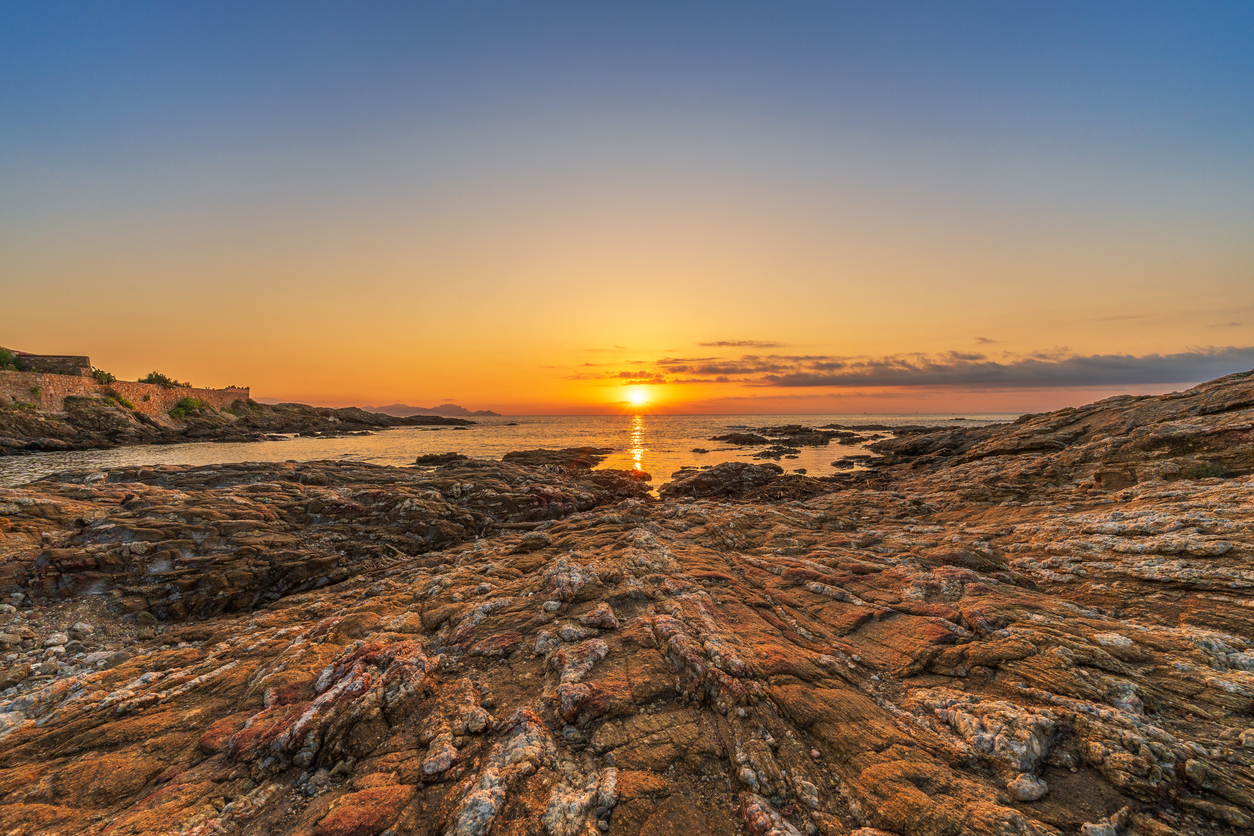
Most Beautiful Photography Spots in Les Issambres
Les Issambres sits quietly along the northern sweep of the Gulf of Saint-Tropez, a ribbon of coves, ochre rock shelves, and pine-fragrant headlands that reward patient photographers with some of the Côte d’Azur’s most nuanced light. While glitzier neighbors tend to attract headlines, this stretch—from La Garonnette at the western end to the rugged, wave-cut calanques edging toward Saint-Aygulf—offers a remarkably varied canvas: Roman-era relics exposed by the tide, WWII silhouettes crowning a golden beach, and high inland viewpoints where the sea becomes a distant shimmer beyond cork oak and strawberry tree. If you’re crafting a location list for seascapes, coastal walks, and characterful villages nearby, Les Issambres belongs at the center of the map.
Before exploring the coastline through your lens, discover the beaches, coves and local highlights in our complete guide to Les Issambres.
Understanding Light and Landscape in Les Issambres
The local geography is your ally. Les Issambres faces broadly south-southeast, with the Maures hills rising behind and the volcanic Esterel massif painting red facets across the bay toward Fréjus. That geometry matters: sunrise often lights the Esterel first, casting warm tones across the eastern sky, while sunset tends to slide past headlands toward Sainte-Maxime and beyond, giving rim light to off-shore rocks and turning the water a deep slate-blue if there’s swell.
When the mistral sweeps through after a cold front, clarity can feel almost Alpine. Distant ridgelines snap into focus, and the sea—ironed flat by northwesterly winds offshore—renders mirror-clean reflections along sheltered coves. Southerly or easterly breezes can bring a faint haze, lovely for long-lens compression at dusk but less friendly to expansive vistas at midday. Plan accordingly: long exposures with neutral density filters on hazy days; polarizer and short shutter speeds on crisp, windy mornings.
Les Issambres changes character with tide and swell. At lower tides, Roman-era stonework and sculpted rock ledges appear like stage sets; when the sea is up, waves slam into notches along the calanques, throwing veils of spray that photograph beautifully at 1/5 to 1/2 second. Combine that with the crystalline, Mediterranean blues that skew turquoise over sand and deep sapphire over Posidonia meadows, and you have reasons to revisit the same shelf twice in one day—and again the next.
The Coastal Icons of Les Issambres
La Garonnette Headland: A Quiet Dawn Start
At the western edge of Les Issambres, the headland around La Garonnette gives a generous view back across the gulf. Dawn is the sweet spot, especially in late spring and early autumn, when the sun rises along the line of the Esterel. Broad rock pavements run like whalebacks into the sea, cut with tidy gullies where wave motion blurs elegantly. Wander a few minutes along the shore and you’ll find foreground options—puddled reflections, barnacle textures, and cream-colored pebbles filtering into cobalt flats. Arrive 30 minutes before sunrise to scout compositions; the first pink-off-blue across the sky is often the best frame.
San Peïre Harbor: Blue Hour Geometry
Port des Issambres, centered on San Peïre, is where the village breathes in the evening. Fishing skiffs, varnished tenders, and low-slung modern boats line up in rhythmic ranks. Blue hour is your friend: shoot along the quay to stack repeating shapes, then pivot for reflections of mast lights after sunset. If there’s light swell, the rippled surface gives painterly smears; if it’s calm, aim for perfect symmetry. On market days and early evenings, candid street work around the square picks up warm tungsten notes; a 35 mm or 50 mm prime handles the scene without intruding.
Plage de la Gaillarde and the Cliff Battery: Sunset with Silhouette
Plage de la Gaillarde is one of the area’s signature strands—golden, open, slightly raw when the swell funnels in from the southeast. The WWII battery that crowns the cliff behind makes a stark subject for silhouettes as the sky strips down to orange bands at day’s end. Frame low, using tufts of shorebreak foam as leading lines, or climb the steps (mind the posted access paths) to enlarge the horizon. On clear evenings with a stiff breeze, textures on the water can be mesmerizing at 1/200–1/500; on still, hazy nights, lengthen exposures to melt the surf into porcelain.
The Roman Fishpond (Vivier Gallo-Romain): Low-Tide Archaeology
Few spots marry history and seascape as gracefully as the Roman fishpond tucked along the Les Issambres shore. When the tide eases out and the sea relaxes, you can trace the outlines of the ancient walls and holding basins chiseled into the rock. Angle your camera low to catch the interplay between hewn stone and natural striations in the shelf; a polarizer helps cut the surface sheen so the pond’s geometry shines through. Early morning works beautifully here: soft side light defines edges, and the water stills into a perfect, glassy skin.
Sentier du Littoral: Coves, Ledges, and Secret Corners
The coastal path threading Les Issambres is your ticket to hours of micro-compositions. Between San Peïre and the calanques edging toward Saint-Aygulf, look for:
- Flat, rust-toned rock terraces where small pools trap reflections after a blow
- Narrow inlets that compress wave energy into vertical plumes—excellent for mid-shutter drama
- Stacked shelves with dark Posidonia swaying beneath: a chance to contrast velvety greens with the sea’s blue gradients
Walk a segment in the afternoon to mark foregrounds, then return at first light. Even a ten-meter shift along the path can change the conversation between foreground and horizon. Sturdy footwear helps: surfaces can be slick with sea spray or algae, especially after onshore winds.
Col du Bougnon: A Belvedere over Sea and Hills
The D8 climbs from Les Issambres to Col du Bougnon, a quick, winding ascent that repays with a sweeping view back across the gulf and inland toward Roquebrune-sur-Argens. There are a couple of safe roadside pull-offs near the top; from there, stitch a panorama at 50–70 mm to keep the perspective natural. Late afternoon glow wraps the hill folds, and on winter days, low sun rakes the mauve-green slopes with long shadows. If wind is howling along the coast, this perch can actually be calmer and may give you your day’s strongest set.
To discover more beaches, villages and viewpoints around the bay, explore our Gulf of Saint-Tropez travel guide.
Wild Textures toward Saint-Aygulf
Calanque du Grand Boucharel: The Long-Exposure Classic
Grand Boucharel is a photographer’s training ground. The inlet features a notched rock lip where waves fold over in layers, creating elegant veils. On a rising tide with a modest swell, set up on the ledge (well back; always keep an eye on the sea) and work sequences at 1–6 seconds with a 6-stop ND filter. Time your shutters to the reverse draw of the wave; the outflow writes bright calligraphy into the frame. On calmer days, use a 20–30 second exposure to flatten the sea and carve the headlands into graphic shapes.
Étangs de Villepey: Birds, Reeds, and Evening Pastels
Just beyond Les Issambres, the Villepey wetlands spread in low, shimmering pans behind Saint-Aygulf. If you enjoy wildlife, this is the place to trade rock shelves for reeds. Egrets, herons, and migratory visitors rest and feed in the shallows, and on quiet evenings the pools mirror dusk skies in soft mauves and peach. A 300 mm lens (or 200 mm with a crop body) is enough for environmental portraits; a longer prime rewards patient birders. Use the footpaths and boardwalk edges with respect, and go light on saturation in post—pastel understatement suits this place.
Dunes and Pines: Minimalist Studies
South of the Étangs, low dunes meet stone pines in a quietly cinematic way: repeating curves taper into a horizon softened by sea mist. If you relish minimalism, strip your kit to a 50 mm prime; work early before footprints pattern the sand, and look for the S-curves where a tuft of marram grass anchors the composition. On cloudy days, the even illumination eliminates harsh contrast—excellent for a short monochrome set you’ll treasure later.
Inland Perspectives: Roquebrune-sur-Argens and the Argens Valley
Rocher de Roquebrune and the Three Crosses: Where Light Meets Stone
Drive inland from Les Issambres and the sea recedes; in its place rises the ochre-limbed mass of the Rocher de Roquebrune. The route up toward the Three Crosses is a real mood shift: aromatic scrub, orange sandstone underfoot, and a view that suddenly drags the coastline into a distant band of silver. Sunrise takes the prize—first light ignites the rock in copper tones—but sunset’s oblique glow can be just as rich if cloud plays along the horizon. A moderate hike and sturdy shoes are a must; in summer, start pre-dawn to beat the heat and to claim an uncluttered skyline.
Argens Riverbanks: Mist and Reflections
On still autumn mornings, the Argens can exhale low, pewter mist while the first sun pierces through cottonwoods and narrow-leafed ash. Find a bend where fishermen launch small boats; watch for a breath of fog to recede from the surface, giving you nautically precise reflections broken only by a mullet’s jump. A 70–200 mm on a tripod lets you isolate geometry—rope coils, bow shadows, the echo of a bridge rail in water—without crowding the banks. If you’re coming from the coast, this is an easy first stop before returning to the sea for mid-morning rock detail work.
Neighboring Backdrops That Complement Your Les Issambres Set
Sainte-Maxime: Pointe des Sardinaux and a Pocket of “Little Corsica”
Local photographers call it “Little Corsica” for a reason. Pointe des Sardinaux—just west of Les Issambres—feels remote despite its proximity to town. Low pines lean into salt air, and shallow pools carve the rock shelf into interlocking tiles. Arrive with a microfiber cloth (sea spray can be persistent) and a polarizer to manage glare on the water; sidelight in early morning or late afternoon sculpts the rock to near-tactile depth. When the sea lies calm, use those tide pools as mirrors; when the swell rises, step back and let the surf lines articulate your frame.
Sainte-Maxime’s Jardin Botanique des Myrtes: Macro and Shade
When sun peaks hard at midday, duck into the Jardin Botanique des Myrtes on the eastern edge of Sainte-Maxime. This compact garden folds in myrtle, mastic, and aromatic shrubs that thrive in maritime conditions. It’s perfect for a macro interlude: textures of cork oak bark, the soft matte of olive leaves, delicate flower structures catching dappled light. Keep your ISO low, lean on a reflector or gentle fill, and treat the stop as visual palette cleansing before you head back to the coast for golden hour.
Fréjus: Roman Stone, Quiet Cloisters, and Strong Lines
Fréjus lends architectural counterpoint to your seascapes. The amphitheater’s repeated arches and the cathedral’s cloister—where carved capitals open onto a small garden—both suit studied compositions in soft light. Early morning is best for the cloister; seek diagonals where columns lead the eye to a patch of shadow beneath wooden beams. The Roman aqueduct remnants, scattered through town and just beyond, offer recession lines that reward a 35–50 mm lens. If you’ve shot water and rock for hours, these disciplined forms will steady the edit.
Grimaud Village and Castle: Stone, Vistas, and Wind-Polished Lanes
Uphill from the coast, the medieval village of Grimaud is built for photographers who like to walk slowly. Start at the castle ruins for a 360-degree scan of the Maures and the coastline; early morning softens the distant sea into a haze that plays well with long-lens compression. Then drop into the lanes: shuttered facades painted in chalky pastels, stairways turning under tiny arches, wisteria pergolas in spring. Keep your shutter high enough to freeze ivy leaves flicked by valley breezes, and look for hand-worn stone edges that catch side light. Before leaving, detour to the Pont des Fées, the old aqueduct arching over a gully—a simple, powerful frame with mossy greens in winter.
A Two-Day Photography Itinerary Centered on Les Issambres
To stitch the area into a coherent set without rushing, this two-day plan balances shore, village, and inland scenes. Adjust for weather: mistral days are ideal for distant clarity and brisk surf; southerlies favor soft gradations and long exposures.
Day 1: Sea-Ledges and Evening Silhouettes
Pre-dawn: Arrive at La Garonnette headland. Scout the flattest shelves and low pools; set a wide lens (16–24 mm) and work transitions from blue hour to first light. Vary shutter speeds from 1/4 to 2 seconds if swell plays nicely; bracket for highlight control as the sun breaks.
Mid-morning: Walk a nearby section of the Sentier du Littoral. Focus on textures—striations in rust and ochre, the foam lace left between notches. Switch to a 50 mm for tighter studies that will break up your wide frames in the edit.
Lunch break: In San Peïre, the seafront offers relaxed cafés for a quick salad or tartine. Sit with your back to the sun; watch light angles for evening and note any new scaffolding or seasonal changes that might influence later shots.
Afternoon: Port des Issambres for harbor geometry. If wind has freshened, shoot shorter shutter speeds for sparkle; if calm, reduce ISO and chase reflections. A short time later, recon the Roman fishpond at its lowest tide window of the day; mark compositions for a return if conditions improve.
Sunset: Plage de la Gaillarde and the cliff battery. Make one set from the waterline with foam inversions at 1/6 second, then climb to silhouette the battery against the afterglow. If clouds underlight, stay for the second, deeper magenta phase.
Day 2: Inland Warmth, Wetlands, and Blue Hour
Pre-dawn: Drive to Rocher de Roquebrune. Hike to a chosen vantage near the Three Crosses and set a mid-tele (70–135 mm) to stack hillside layers as the sun fires the stone. Bring a windbreaker; it’s often cooler than the coast.
Late morning: Coast back through Les Issambres for a coffee pause in San Peïre, then continue to Sainte-Maxime’s Pointe des Sardinaux if clarity remains strong. Work reflections and shallow pools; switch to macro for shell details if wind knocks the water surface about.
Afternoon: Head to the Étangs de Villepey. Observe quietly before shooting—bird patterns often repeat on a cadence. Keep shutter speeds at 1/1000 or higher for flight shots; for perches, balance a lower ISO with support.
Blue hour: Back in San Peïre harbor, create a closing series of calm, contemplative frames. Tilt the camera slightly upward to include a slice of indigo sky. End with a few verticals—the harbor lights trail into the water like candle drips, ideal for sequence variety.
Shooting Logistics: Access, Parking, and Timing
Access Points and Parking Along the RD559
The coast road that threads Les Issambres has small pull-offs and marked parking areas near popular coves. In high season, arrive early; spaces often fill before 9 a.m., and yellow-lined shoulders are enforced. If you’re planning a dawn start, a headlamp, reflective strap, and a compact kit help on narrow verges. Many segments of the Sentier du Littoral begin from stairways tucked between villas—look for discreet signage, and remember that these are public rights-of-way even when they feel tucked into residential areas.
Tide, Swell, and Wind Notes
While Mediterranean tides are modest, they matter for the Roman fishpond and for broader rock shelves that look twice as generous at low water. Check swell forecasts in tandem with tide charts: a small swell at low tide can be gentle; the same swell at higher water may slap the shelf and make footing treacherous. On mistral days, sheltered nooks behind headlands feel ten degrees calmer and clean the air for long lenses. Southerlies bring surface chop; adjust by shooting higher and looking for oblique reflections rather than mirror stills.
Drone Etiquette and Airspace Awareness
If you fly, keep altitude conservative near wetlands and avoid nesting seasons; birds will tell you you’re unwelcome long before a sign does. Urban cores and sensitive heritage sites have additional constraints. In summer, early flights are both courteous and kinder to sensors; atmospheric shimmer rises with heat and flattens detail by midday. Keep spare batteries cool and shaded.
Seasonal Calendar: How the Area Wears the Year
Winter: The light is crystalline, the air dry, and hillsides carry a sage-mauve palette. Sunrise is mercifully late, and sunsets can flare for long minutes after the disc drops. With less foot traffic, minimalism sings: a single pine, a strip of sea, and a sky brushed with thin cirrus. Wrap up and mind slippery rocks—sea spray can freeze on the coldest mornings inland.
Spring: Wildflowers push through scrub on the Rocher de Roquebrune; wisteria cascades over gates in Grimaud; the sea brightens to aquamarine in shallower pockets. Breezes are workable and days lengthen, giving you generous windows for scouting and shooting in one go. Sardinaux shines with reflective pools and young greens.
Summer: Heat and glare can be fierce by midday, yet dawn from the calanques rewards those who rise early. Dune grasses in Saint-Aygulf catch low-angle sun like spun gold, and evenings at La Gaillarde smolder with color after beach crowds ebb. Hydration and sunscreen become compositional tools—without them, your creative window narrows quickly.
Autumn: Migratory birds funnel into Villepey; vineyards along the Argens wash into copper; and storm cycles can stack cumulus anvils over the sea. Long-exposure seascapes feel more dramatic, and inland, the dry crackle of summer loosens into saturated, forgiving color. It’s also the season when you can handhold longer in cooler air without heat shimmer softening distance.
Markets, Cafés, and Small Breaks Between Shoots
San Peïre’s Monday Market: Color and Character
Monday morning in San Peïre brings produce mounded in baskets, jars of honey lined like amber soldiers, and olives glistening under striped awnings. Market etiquette is simple: ask before photographing stallholders, step back to keep foot traffic moving, and return a favor with a purchase. Color blocks—peppers, citrus, lavender sachets—assemble into tight studies that break up seascapes in your final spread.
Sainte-Maxime’s Covered Stalls and Seafront Caffeine
In Sainte-Maxime, a mid-morning espresso on the promenade doubles as reconnaissance. Watch how light peels off the bay; note where small boats or paddleboarders enter the frame. A short wander through the covered stalls yields cured meats, cheeses, and seasonal vegetables—photogenic subjects if you’re assembling a lifestyle vignette around your trip. Keep lenses capped when you weave past fountains and spray; a slim pouch or easy-access wrap prevents salt smudges.
Fréjus for Gelato and Old Stones
When heat climbs, duck into Fréjus’s historic lanes for a scoop of gelato and a shadowed wander. Tight alleys offer chances to practice exposure discipline: look for slivers of sun that cut a doorframe, and build a composition where the brightest element anchors attention. Architectural details—iron knockers, sun-faded shutters—respond well to a short telephoto and a soft hand in post.
Gear and Technique for the Riviera’s Palette
Essential Kit for Coastal Work
- Wide zoom (16–35 mm): for Sardinaux shelves, La Garonnette pools, and harbor scenes
- Mid-tele (70–200 mm): for compressing Esterel ridges from Col du Bougnon and isolating patterns inland
- Polarizer: to cut glare on rock pools and deepen sea color without overcooking skies
- ND filters (6–10 stops): for wave veils at Grand Boucharel and porcelain-sea long exposures at dusk
- Sturdy but compact tripod: rocks are uneven; wide stances help
- Microfiber cloth and blower: salt spray accumulates faster than you think
Long-Exposure Recipes
At the calanques, start at ISO 100, f/11, with a 6-stop ND in late afternoon. If swell pulses at 6–8 seconds, try 1–2 second exposures to hold wave shape; lengthen to 10–20 seconds when the sea smooths out to reveal rock geometry. For post-sunset blues, increase to a 10-stop filter and aim for 30–60 seconds to clean the water completely—then take one faster frame to freeze detail in any sky texture and blend later.
Street and Market Etiquette
In harbors and markets, keep your profile low. Work with a small prime, hold the camera at chest height for framing practice, and lift only when the scene feels settled. A quick nod or a small word of thanks eases tension, and if someone asks not to be photographed, honor it and move on. For children and private moments, err on the side of restraint.
Respecting Nature and Staying Safe
Posidonia and Rock Pools
Those dusky underwater meadows close to shore are Posidonia—vital to Mediterranean ecosystems. Avoid trampling washed-up mats and sidestep any temptation to tug them aside for “clean” photos. On rock shelves, black algae and wet film can be like ice; check each footfall and keep gear slung across your body rather than swinging at your side.
Heat, Hydration, and Timing
Summer light can be merciless by late morning. Build your days around dawn and dusk; save midday for shade—gardens, lanes, a quiet lunch—or for reviewing frames on a calibrated tablet. Hydrate before you feel thirsty, and tuck a sachet of electrolytes into your bag when hiking inland. A compact hat with a dark brim helps you screen the LCD and judge color more accurately outdoors.
Sea Awareness
Swells can run up shelves unexpectedly; set your bag well back and keep a line of retreat. Watch others: if local anglers step away from a ledge at intervals, they know a set wave is due. On breezy days, point the camera slightly downwind to protect the front element; on calm ones, don’t forget the inverse—condensation can form on glass when you move from cool interiors to warm sea air quickly.
Conclusion: Building a Cohesive Les Issambres Set
Les Issambres rewards photographers who like to move slowly, return to the same corner at different times, and treat small details with the same respect as grand views. Between the tide-chiseled shelves of La Garonnette, the evening silhouettes at Plage de la Gaillarde, the quiet archaeology of the Roman fishpond, and the litany of inlets along the coastal path, you can collect enough coastal material for a full portfolio. Fold in inland warmth from Rocher de Roquebrune, clean geometry from Fréjus, and the soft marine minimalism of the Villepey wetlands, and your set gains contrast and coherence.
Work with the weather rather than against it; let mistral clarity push you toward distance and structure, and let southerly haze coax you into abstraction and long exposures. Pause at markets and cafés to reset your eye, and respect the small and the fragile—Posidonia, dunes, and the hidden edges where life gathers at the sea’s margin. With that approach, Les Issambres will give you more than beautiful photographs; it will teach you to see how light lives on this coast, hour by hour, tide by tide.
Looking for the perfect base for your photography trip? Discover our holiday villas and holiday homes in Les Issambres.

