

 EN
EN  NL
NL
 DE
DE
 FR
FR

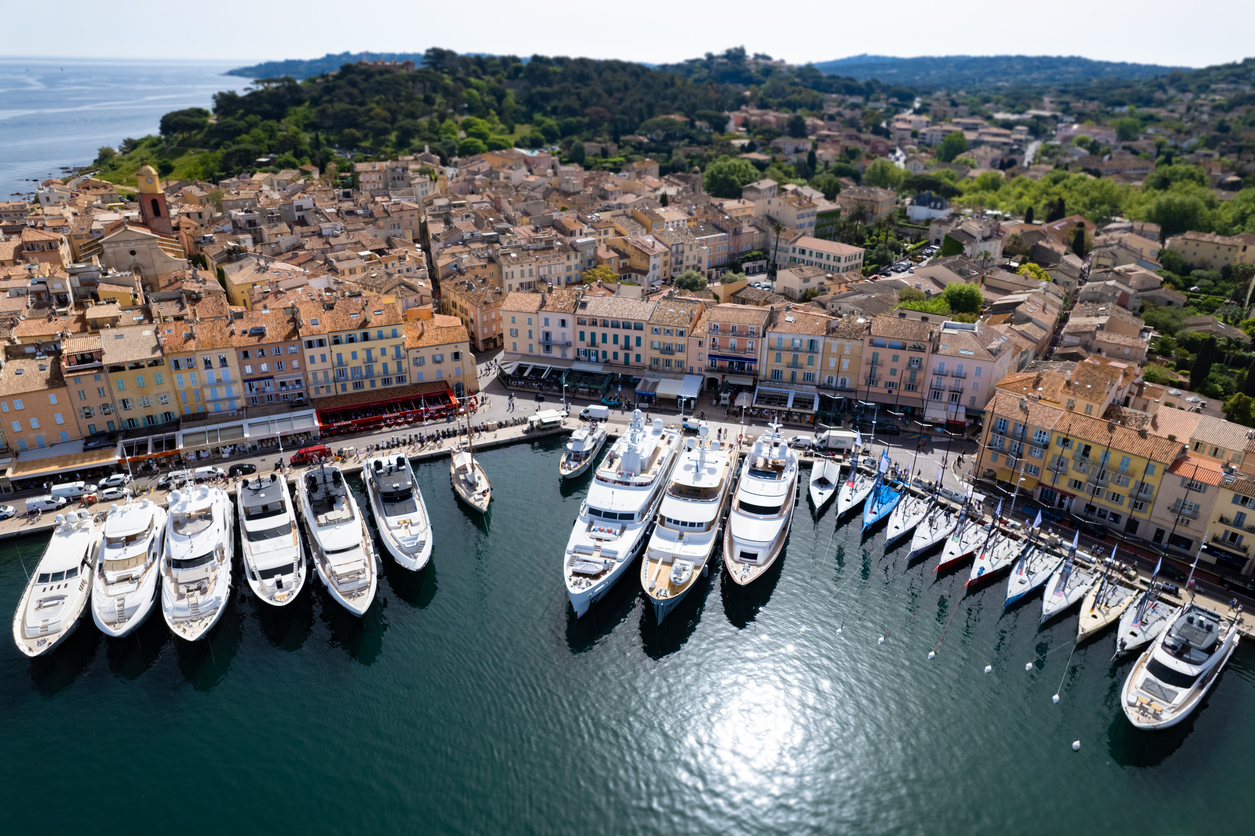
Most Beautiful Photography Spots in Saint-Tropez
Saint-Tropez rewards photographers who pay attention to rhythm: the way the bell tower blushes at dawn, the hush before the market stirs on Place des Lices, the wind-scrubbed clarity after a Mistral. This compact peninsula town is more intimate than legend suggests, a place where the best frames happen three streets back from the port or at the low stone lip of La Ponche when the first boat noses in from the gulf. The following guide gathers locations locals return to again and again—timed with light, tide, and habit—so you can walk straight into the kind of images that feel unmistakably Tropezian.
Before exploring the town through your lens, discover its history, beaches and highlights in our complete guide to Saint-Tropez.
How Saint-Tropez Light Works: Seasons, Mistral, and Daily Rhythm
The light in Saint-Tropez changes character with small shifts in weather and season. If you know those shifts, you can plan where to stand and when to wait. In summer, dawn comes early and fast; the first 30 minutes after sunrise are when pastel wash meets empty streets. In winter, the sun arcs lower, skimming roofs and cutting longer shadows across cobbles, a gift for contrast-driven street work and for compressing layers of the old town against the sea.
Keep the Mistral in mind—this northerly wind sweeps the sky to a hard, lacquered blue and scrubs haze from the gulf, which is ideal for crisp horizon lines from the Citadel or the jetty. It can also kick up chop, so sea-spray on the rock path under the Tour du Portalet is part of the bargain. On humid, still days (common in late July and August), the gulf softens under a pearly veil; use it to flatten distance and lean into color and shape—painted facades, cherry-red chairs at a café, fruit crates at Place des Lices—rather than pure vista.
Saint-Tropez’s daily rhythm favors early arrivers and late lingerers. Market mornings (Tuesdays and Saturdays) bring dense street life; midafternoon the town dozes; then a second golden window opens as long light slips down Rue Gambetta and the masts flame on the Vieux Port. Night comes in slow layers: blue hour pools under the arcades of La Ponche, then a gentle hum of neon, lanterns, and conversations on the quays.
The Vieux Port: Glossy Hulls, Pointus, and the Red Jetty Light
The old port is Saint-Tropez’s kinetic stage set—wooden “pointus” (traditional fishing boats) tied side by side, yacht sterns reflecting calligraphy on black water, gulls tracking across a clockwork bell tower. People shoot it because it’s iconic; locals return because it changes hour by hour. You want to work it from three angles: along the quays, from the jetty, and back toward the town from the far side.
Sunrise along Quai Suffren and the director-chair reds
Start on Quai Suffren and Quai Jean Jaurès, moving in a slow S-curve around the harbor edge. At daybreak, the harbor mirrors are calmer and the polished brass hasn’t yet crowded with reflections. If you like a human element, the first deliveries rustle near Place aux Herbes, the petite market square tucked just behind the quays. The red canvas director chairs of the seafront cafés glow before the sun clears the mast forest; place them as foreground for a frame that pins Saint-Tropez at a glance. A classic alignment: stand near Quai Frédéric Mistral and layer the Notre-Dame-de-l’Assomption bell tower between rigging; a 50–85 mm lens isolates the tower’s ochre and yellow bands against the lattice of ropes.
Blue hour from the Môle Jean Réveille
The town’s red lighthouse sits at the end of the Môle Jean Réveille, the long jetty that arms the harbor. Walk it at blue hour. Set up facing back to the facades; you’ll get the soft candy-colored sweep of houses with their reflections stitched together by mooring lines. Expose so lamps don’t blow out—bracket if needed—and wait for a small boat to etch a lead-in curve. Turn seaward for minimalist frames: the lighthouse’s red cylinder, a clean horizon, gulls as punctuation marks. In a Mistral, spray flies over the jetty—it’s dramatic but tough on gear, so a microfiber cloth and a protective filter save a lot of grief.
Reflections and details at eye height
Saint-Tropez’s port is more than a postcard sweep; most days the best images live at 90 centimeters off the ground: cleats rusting into blues and oranges, a coil of hemp against a taxi-yellow hull, names hand-painted on the bow of a pointu. Crouch to cut the sky and fill the frame with color fields, or stand just high enough to catch the tilt-shift of reflections repeating like brushstrokes. Light bounces off white decks into shaded alleys along Quai Suffren—use those soft fills for portraits of craftspeople sanding wood or fishermen mending nets, always with permission.
La Ponche Quarter: Stone Alleys and Sea Doorways
Skirting east from the port, La Ponche is the old fishing quarter, a tightfold of lanes draped over low rocks. Its scale is intimate and photogenic: lime-washed stone, worn steps, laundry lines, iron knockers shaped like fish. The sea is never far; you hear it behind doors, under arches, at the end of every narrow corridor of light. The quarter rewards small, observant frames and the kind of patience street work needs.
Dawn at Plage de la Ponche and Plage de la Glaye
Two pocket beaches—La Ponche and La Glaye—tuck into the stone hem of the quarter. Pre-dawn, set up at the lip above Plage de la Ponche and aim back toward the arch with the bell tower peeking above. The facade colors are most true before the sun hits; at sunrise, the arch frames bathers by late morning. La Glaye, a few steps along, gives you the same geometry with a tighter cove; long exposures at blue hour turn the water into milky glass under the stone wall and its portholes.
Staircases, lintels, and the angled sun
La Ponche’s charm is the way light grazes surfaces. Around Rue des Remparts and Rue de la Comédie, the sun drops at a slant in late afternoon, lighting a single window latch or cutting a triangle of brightness onto worn treads. This is where a 35 mm lens shines: let the geometry breathe; avoid bowing lines by keeping your camera level; and watch for locals using the alleys as they have for decades—ice buckets ferrying to a family lunch, a basket of artichokes knocking a doorpost. Footfall echoes, and so does etiquette: stand aside, smile, and give space.
The Citadel and the Marine Cemetery: Wide Vistas and Quiet Monochromes
Above town, the 17th-century Citadel lifts you into an amphitheater of views. It’s the best single spot for a sweep of the Vieux Port, the terracotta roofs, and the blue expanse of the gulf beyond. The ramparts curve, so you can move with the light. Early morning, face west and look for oblique light sliding across roof tiles. Late day, turn east for shadow-carved views over La Ponche and the red jetty light spearheading the harbor mouth.
Rampart perspectives
From the southern walls, frame the town with umbrella pines as a natural vignette. A short telephoto (85–135 mm) compresses the roofscape into patchwork and simplifies the busy texture below. The museum inside focuses on maritime history; whether you step in or not, linger under the entry arch to capture visitors haloed by the sun as they step into darkness—an easy chiaroscuro study that feels timeless here.
The cimetière marin
Down the slope toward the water sits the marine cemetery, low walls and white stones set against a horizon that breathes. It lends itself to restraint: monochrome, careful lines, negative space. The soundscape helps—wind, gulls, soft water. Be discreet and avoid close-ups on names; look instead for the pattern of marble and shadow, the way the sea reads as a gently moving plane behind the crossbars. Late afternoon, the stones cast hard-edged shadows that sketch diagonals across the footpaths—clean graphic frames resolved in two tones.
Place des Lices and Market Life: Color, Produce, and Pétanque
Place des Lices flips character depending on the day. On quiet weekdays, it’s a dusty plane-tree plaza striped with light, old men rolling pétanque while kids chase each other around the trunks. On Tuesdays and Saturdays, it blooms into a market that is a color wheel: tomatoes stacked like jewels, Provençal fabrics fluttering, buckets of lavender, rotisserie chicken turning, copper pans catching the sun. Both moods are worth photographing.
Market mornings, etiquette, and lenses
Arrive early on market days (before 9:00) while stalls are still being dressed; you’ll get uncluttered angles and the connection that comes with a proper “bonjour.” Vendors here are used to cameras but appreciate a heads-up; buy a small bunch of herbs and ask to shoot hands at work—wrapping cheese, tying herbs, weighing olives. A fast 35 mm gives you context; a 50–85 mm isolates textures without crowding anyone. Place aux Herbes, the tiny square by the port, also wakes early with fruit and fish; it’s especially photogenic in winter light as steam rises from coffee cups.
Pétanque under the plane trees
When the market packs away, the pétanque resumes. The rhythm of the game photographs well: dust puffs, hands hovering in concentration, tape measures pinched between fingers. Stand behind the tossed ball’s path; use backlight through the plane leaves to rim silhouettes; and keep shutter speeds around 1/1000 for clean action. Offer to share a pastis later and you might leave with a portrait under a cap brim that feels like it could have been made in 1962.
Coastal Path and Hidden Coves: From Plage des Graniers to Les Canoubiers
Beyond town, Saint-Tropez keeps a more rugged edge than postcards suggest. The Sentier du Littoral, the coastal path, stitches from Plage des Graniers around coves and headlands. It’s tight against stone, shaded by pines, and occasionally splashed. The path gives you compositions of rock planes, sea marks, and the town from new angles. It also puts you in the company of fishermen, swimmers, and dog walkers—unposed life at the right scale for a 24–70 mm lens. To discover more beaches, villages and viewpoints throughout the surrounding region, explore our Gulf of Saint-Tropez travel guide.
Plage des Graniers: the beach with a skyline
Plage des Graniers, tucked at the foot of the Citadel, is where you can put swimmers in front of a town-framed skyline. Morning light comes over the trees and paints the water in streaks; in late afternoon, the sun drops behind the fort so you get silhouettes of kids leaping from the jetty with the bell tower pastelled behind. From the left side of the beach, look back along the curve to align the Citadel above a line of parasols—an archetypal Saint-Tropez summer layer cake in three bands: sand, sea, stone.
Les Canoubiers: sails, pines, and soft water
Les Canoubiers (often “Canebiers”) sits in the broad bay north of town. It’s gentler than the central beaches, with a long shallow shelf and umbrella pines that form a living grid against the horizon. Early mornings here are about routine: locals rigging dinghies, paddleboarders gliding through mirrored water, dogs shaking spray. Keep an eye toward the far shore for a delicate skyline of masts rising over the peninsula; a polarizer deepens the gulf’s blues but mind the angle to avoid striping water reflections into black.
The Chapel on the Hill: Chapelle Sainte-Anne and a Quiet Panorama
High above town on a knuckle of land sits the 17th-century Chapelle Sainte-Anne, a whitewashed landmark visible from the gulf. The path up (by way of Route des Salins, then winding lanes) opens onto a knoll where the view fans from the Vieux Port to the headlands. At sunrise, the town glows from within like a lantern, and the chapel’s simple volumes take on pastel, shadow, and texture. A favorite local frame: position a patch of wild fennel or a vineyard row in the foreground and let it blur into a green wash, with the bell tower sharp beyond. The silence up here is its own subject; keep your footprint light.
Salins and the Wild Edge: Wind Lines and White Sand
Plage des Salins sits at the far eastern edge of the commune, a stretch of pale sand backed by scrub and pines. When wind lines etch the surface, you get textures that read as gently as heavy snow or as harsh as desert ripples depending on angle. It’s one of the best places near town for clean, horizon-simple beach minimalism. Arrive early for footprints erased by tide; stay late if the sky stacks thin cloud tapestries that set up symmetrical waterline compositions. In a Mistral, sand lifts in shivers—protect lenses, experiment with slower shutter speeds (1/30–1/60) to write movement into the frame.
Art and Color Echoes: The Annonciade and the Port Facades
Set just back from the quays in a former chapel, the Musée de l’Annonciade celebrates the colorists—Signac above all—who made Saint-Tropez a painter’s magnet. Whether you visit for the works or simply pause in the square outside, this bend of the old port is an essay in complementary colors. Stand across the water and look at how the houses stack ochres, greens, blues, and apricots; you can’t miss the connections to the Fauves in the way the town still wears its skins. Photograph boats and reflections here with those palettes in mind; a modest underexposure keeps color density true in hard light. The small campanile punctuation on the museum’s roof turns into a perfect counterweight in any left-to-right visual sentence.
Night Photography: Lanterns of La Ponche, Port Glow, and Blue-Hour Calm
Saint-Tropez’s nights are made for tripod work and patience. The first 20 minutes of blue hour saturate the sky to a cerulean that feels deep enough to touch; it sets off stone and stucco like silk. Start at La Ponche: the lapping water under arches, steps with worn centers, lamps pooling on walls. Five- to eight-second exposures give water just enough blur to read as motion, not mush. Move to the port when the facades switch on—north side first, then the south as reflections lengthen. The red lighthouse on the jetty lets you make a minimal seascape even in a crowd: weigh the composition with the light on a third and wait for a fishing boat’s lamp to draw a gold thread along the bottom edge.
Event Moments: Les Bravades, Les Voiles de Saint-Tropez, and Seasonal Life
Some of the town’s most photographable scenes arrive with the calendar. In mid-May, Les Bravades takes over with 16th-century costumes, banners, and muskets. Smoke hangs above Rue Gambetta and Place de l’Hôtel de Ville; stand upwind if you want sharp banners and faces, or downwind for shafts of light cutting through gunpowder haze. Bring ear protection if you work close to the salvos—there’s no soft way to say it, the muskets are thunder. Early October brings Les Voiles de Saint-Tropez, when classic and modern yachts duel on the gulf; the port brim is a catwalk of varnished wood and taut rigging. From the Môle Jean Réveille you can catch sails slipping past the lighthouse with town as backdrop. December is gentler: lights reflecting in rainy cobbles, a small ice rink on the quay depending on the year, and fewer people in the frame to snag your eye from the geometry of windows and shutters.
Food and Street Life as Subjects: Cafés, Bakeries, and Market Stalls
Saint-Tropez plates subjects even if you don’t order anything. A tray of tartlets dusted with sugar in a bakery window on Rue Allard, steam squiggling the glass; a barista’s hands tamping coffee in a narrow café on Rue Gambetta; a fishmonger at dawn arranging dorade on ice at Place aux Herbes. Look for repetition—rows of oranges, stacks of bowls, the parade of red chairs along the Vieux Port—then puncture the pattern with a human gesture to anchor the frame. Slices of street life also happen in the pauses: a waiter leaning in conversation outside a side-door, scooter mirrors reflecting the bell tower, a child riding a balance bike under the plane trees at Place des Lices. Keep a respectful distance around anyone dining; it’s easy to move from charming to intrusive at table height.
Chemins and Corners: Micro-Spots People Miss
Saint-Tropez’s smaller corners shape a portfolio. Seek out these little stages and you’ll come home with frames you rarely see in guidebooks:
- Chemin de la Tour du Portalet: a short, wave-lashed path hugging the old sea wall between La Ponche and the harbor entrance. After a storm, foam scribbles across the rocks; on still evenings, it’s a proscenium for blue-hour textures.
- Lavoir Vasserot: the old washhouse off Rue Joseph Quaranta. Its glass roof makes gentle top light; when exhibitions hang here in summer, the combination of stone, water trough, and prints creates layered, reflective frames.
- Rue du Portail Neuf: pastel facades at uneven heights, with a peek of sea drawing your eye to the end of the street. Mid-morning, laundry shadows dance here.
- Place de l’Ormeau in La Ponche: a pocket square with a noble tree and a jumble of shutters; perfect for a quiet, painterly street scene either side of noon.
- Quai de l’Épi, new port side: for a modern counterpoint—clean marina lines, mirrored glass, and the town reflected in yacht transoms.
Practical Shooting Logistics: Getting Around, Parking, and Crowd Sense
Saint-Tropez is pocket-sized; you can walk most of what you’ll shoot. Early mornings mean easier parking if you arrive by car—look toward the port-side and central car parks and always allow a climb if you aim for the Citadel first. Midday in peak season compresses the town; save your tight-lane work for early or late and use the heat of the day for interiors, museum stops, or shaded plage edges like Les Canoubiers. On market mornings, Place des Lices is packed by 10:00, so work perimeters, then step in. Footwear matters: the sea path can be slick; alleys slope; and the jetty gathers puddles that reflect perfectly until you kneel unwisely in them—bring a microfiber cloth for the gear and a small towel for you.
Respect carries you far. Always ask before photographing people closely, especially vendors and players at pétanque. Private quays and gates along the coast are exactly that—don’t lean in for a shot of a private garden or a yacht interior. Drones are heavily restricted; the best angles here are already at eye level or from the ramparts. If you photograph children in public, do so with extra discretion and be prepared to delete images if parents ask. Common sense is the best credential you can wear.
Gear and Settings for the Tropezian Palette
Saint-Tropez doesn’t require exotic gear, but certain tools sing here. A 24–70 mm covers 90% of work: quays, streets, and seascapes. Add a 35 mm f/1.4 or f/1.8 for low-light cafés and alleys, and a short telephoto (85–135 mm) for compressing rooflines from the Citadel or isolating bell-tower/mast compositions. A light travel tripod pays for itself at blue hour; a compact tabletop version can brace on sea walls. Polarizers deepen skies and cut glare on water, but use with restraint on the port—they can erase the reflections you came to capture. A 3-stop ND helps at La Ponche to blur water in daylight without pushing ISO to a grainy place.
Color is the heartbeat. Set white balance a touch warm at golden hour (around 5600–6000 K) to honor stone and skin; dial back at noon to avoid baked orange. For JPEG shooters, a “neutral” or “standard” profile protects facades from cartoonish saturation; you can always nudge in post. Raw shooters will find HSL tweaks rewarding—pull blues toward cyan slightly to match the gulf’s true hue; lift oranges delicately to keep terracotta alive without tipping into candy. Sharpen rope and timber textures; let stucco stay soft.
Ethics and Comfort: Working Kindly in a Loved Town
Saint-Tropez lives under many gazes. Your best images will come when you blend into the texture of the place rather than staging it. Ask, don’t steal, portraits. If someone declines, thank them and move on. Don’t block alleyways, café service paths, or a pétanque throw. Keep noise low at dawn in La Ponche; voices carry against stone. On the coastal path, mind swimmers and fishermen—cast lines and camera straps are a poor mix. Pack out any trash, and pause your frame if a funeral passes near the marine cemetery. Most of all, remember that this town is lived in; the quiet kindness you extend will be the story your pictures tell back home.
One-Day Photo Circuit: A Pace That Feels Like Saint-Tropez
If you have a single day and want a flow that respects light and rhythm, try this compact loop:
- Sunrise on the Vieux Port: begin along Quai Suffren and curve toward Quai Frédéric Mistral as the bell tower warms.
- Early La Ponche: step into the alleys while they’re still empty; frame the arch over Plage de la Ponche; a long exposure at Plage de la Glaye.
- Morning market at Place des Lices (if Tuesday or Saturday): work edges first, then soften into portrait-distance conversations.
- Late-morning coffee near Place aux Herbes: hands, cups, steam, and reflections in café glass.
- Midday coastal path from Plage des Graniers: shade under pines, rock textures, small vignettes.
- Golden hour at the Citadel: roofscape layers and pines as framing; watch the gulf pop to cobalt after a Mistral.
- Blue hour on the jetty: reflections of the facades; the red lighthouse as a simple seascape subject.
- Night cap in La Ponche: lantern pools, steps, and quiet stone geometry.
Three-Day Deep Dive: Building a Tropezian Set
With three days, you can let weather steer you and build breadth:
Day 1: Use your freshest morning for the port and La Ponche, then market life and pétanque. In the afternoon, scout the Citadel; note how shadows carve alleys and plan a return. Blue hour on the Môle Jean Réveille, then a late wander for window light and after-dinner street scenes.
Day 2: If the Mistral blows, head to the coastal path: spray, hard skies, clean horizons. Work Plage des Salins for textures and minimalism. After a midday break, return to townsides that benefit from wind-cleared air: long-lens compressions from the ramparts; bell tower slotted among masts; dusk frames at Place de l’Hôtel de Ville with flagpoles sharp against cerulean.
Day 3: Climb to Chapelle Sainte-Anne pre-dawn for the town as a glowing patchwork. Drop to Les Canoubiers for locals gearing up for the day on the water. Dedicate the afternoon to details—Lavoir Vasserot’s soft top light, door knockers, house numbers, shutter hardware—and plan a final blue hour for a scene you’ve been refining in your head since day one. If it’s event season (Les Bravades or Les Voiles), thread highlights into each day rather than trying to shoot it all at once.
Editing Notes: Bringing Out Tropezian Blues and Terracotta
When you sit to edit, ask what this town sounded like when you pressed the shutter—wind, voices, gulls, boots on cobble—and let that guide your color and contrast. Resist pushing the saturation slider; the chroma already sings. Work in layers: a gentle S-curve to lift midtones without crushing shadows, local brushes to recover detail on sunlit stucco, a radial filter to draw the eye to a café table or a single person under a plane tree. On port images, keep reflections believable; match the color temperature of the water to the facades or let it drift cooler for contrast. Grain can be your friend at night to soften digital sterility; it suits La Ponche’s stone and the harbor’s glow. Crop with restraint; Saint-Tropez lives in edges—ropes, shutters, and step-lines that need air to breathe.
Weather Plays: Rain, Fog, and High Summer Haze
Rain scrubs tourists off the stage and hands you reflections: puddles on Quai Suffren mirroring facades and lamps, slate-gray gulf flattening behind the lighthouse, La Ponche stairs gleaming like wet oiled stone. Bring a small umbrella or a lens hood; point down alleys to double lights in water without catching the sky as a big white hole. Fog is rarer but magical: the bell tower becomes a ghost; the port recedes in layers. High summer haze is no enemy—lean into it. Photograph planes of color, interiors pooled with shadow, and mid-distance portraits in open shade. You can always go long and contrasty again after the Mistral flexes.
Compositions That Read Tropezian at a Glance
As you build a set, consider a few archetypes that whisper “Saint-Tropez” without relying on clichés:
- The bell tower threaded between lines: from Quai Frédéric Mistral or the back of the port, let mast rigging bracket the tower in soft focus.
- Three-band summer: sand, sea, stone from Plage des Graniers, parasols pinned by the Citadel.
- Chair chorus: a neat row of red director chairs against pastel facades on the quay, one chair angled away to break the line.
- La Ponche arch-and-sea: a lone swimmer framed in shadowed stone with a sliver of water lit beyond.
- Jetty geometry: the red lighthouse on a third, gulls slicing diagonals, a boat’s light painting a faint gold curve across the bottom edge.
- Plane-tree lattice: dappled light on Place des Lices turning pétanque players into a dance of wrists and dust.
Respecting Private Icons: Gates, Gardens, and Legends
You’ll hear whispers about certain famous villas around the bay and the lives within them. Treat them as lore rather than quarry. The coastal path passes behind gates that are not invitations; a long lens from public vantage is legal but not the spirit of this guide. Saint-Tropez’s most generous images are the ones it offers readily: old hands tying knots, kids skipping stones, stone warming under the late sun. Lean into those. The town gives more than enough story without leaning over any fence.
Frequently Overlooked Times and Angles
Everyone loves sunrise and sunset; fewer people mine the late-morning sliver when the town flips into bright shade. On the back streets—Rue des Tisserands, Rue des Feniers—the light bounces from warm walls into cool cobbles, making skin look lovely and objects glow. At the port, shoot directly into the sun and let hulls go black; the reflections sketch themselves. And don’t ignore noon in winter; the sun sits south and soft, opening angles in La Ponche you can’t get in summer. The Citadel at that time reads as sculpture under a cold sky—a very different Saint-Tropez, just as true.
Safety and Comfort When the Wind Blows
Wind writing is part of Saint-Tropez’s story. When it kicks hard, gear safety and your footing matter. Strap your camera; keep the lens hood on; shield the glass with your body before turning into spray. On the Môle Jean Réveille, watch for sneaker waves that slap against the inner wall and leap; on the Chemin de la Tour du Portalet, step wide when stones go green with a sheen. Sand-lash at Salins can make lenses gritty fast—switch lenses in a café or back at your base, not on the beach. Most of this is common sense, but common sense is easy to skip when the light’s perfect and your eyes are elsewhere.
Why Locals Keep Returning to the Same Spots
In a small town, repetition is a virtue. Locals return to the same corner of Quai Jean Jaurès or the same step in La Ponche because the variables never settle: a cloud bank softens the port one evening; the Mistral chisels it the next; the orange on a facade shifts with fresh paint; the chairs shuffle. Your best day here might be your second or third, when the picture you’ve been building in your head finds its last missing element—a gull in the right place, a hand gesture, a tarpaulin lifting on cue. That’s the fun of Saint-Tropez: it’s pocket-sized, but the permutations are infinite if you give them time.
Closing Thoughts: Let the Town Set the Tempo
Saint-Tropez’s beauty is not a fixed thing but a set of conditions—light, wind, color, habit—that move through its streets. You’ll see grand moments on the port and quiet ones in the folds of La Ponche. You’ll find big horizontals at the Citadel and small textures down by the waterline. The trick is to let the town set the tempo: walk slow in the morning, step aside in the market, wait for the bell tower to blink awake at dusk, and watch how the place edits your frame for you. If you do, your photographs will carry the warmth of stone, the salt on the air, and the soft thud of pétanque balls under a plane tree—what Saint-Tropez really feels like when you’re here.
Looking for the perfect base to explore the French Riviera? Discover our holiday villas and holiday homes on the Côte d’Azur.

