

 EN
EN  NL
NL
 DE
DE
 FR
FR

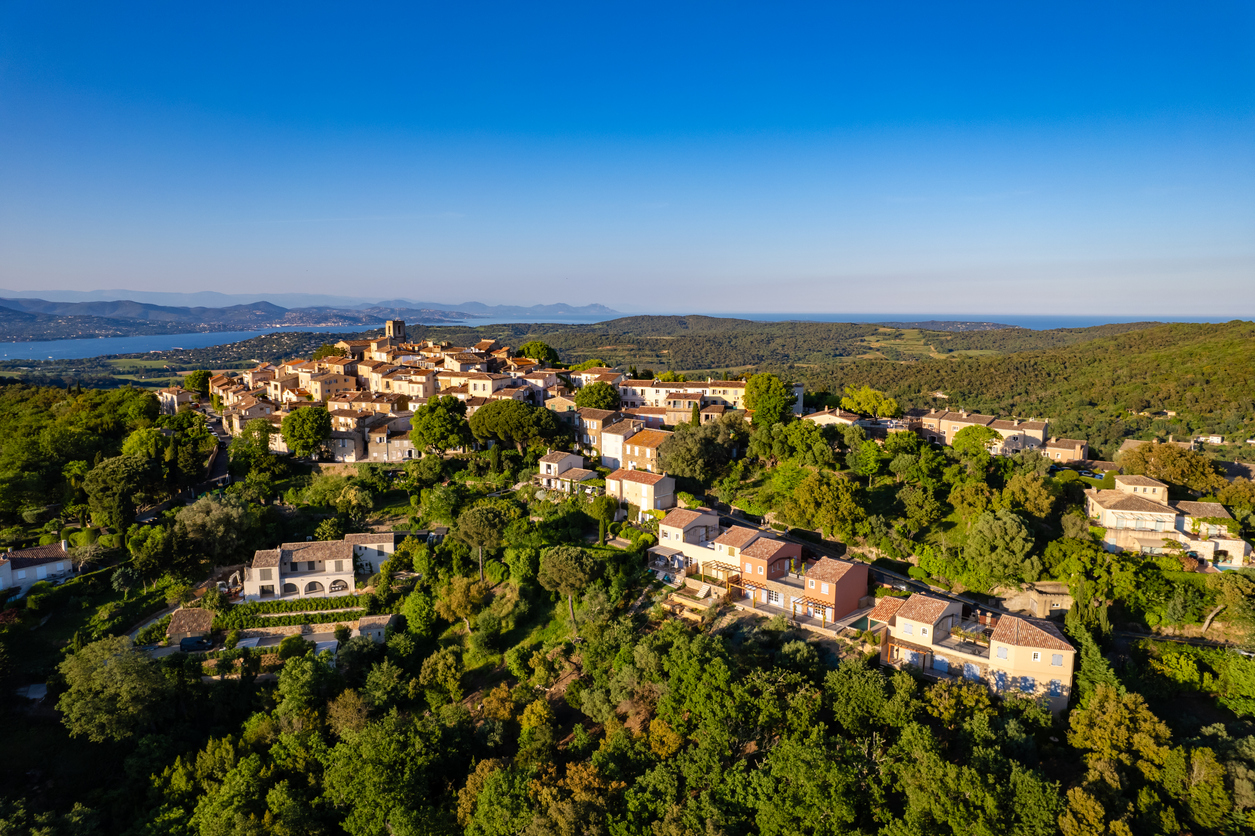
The Most Beautiful Villages in the Gulf of Saint-Tropez
The Gulf of Saint-Tropez is more than a glittering bay fringed with pines; it’s a constellation of characterful villages, each with its own light and cadence. From hilltop hamlets where windmill sails once creaked above terraced vines, to stone-built fishing quarters where nets dry beneath pastel shutters, the gulf rewards anyone who slows down and lets the small details come into focus. You’ll hear it in the clack of pétanque balls on a shaded square, smell it in the resin of cork oaks after a hot afternoon, and taste it in a glass of pale rosé poured by a winemaker who remembers your face from last summer. This is a place to wander on foot, to take the long way around a headland, and to trust that every lane with an old lavoir sign hides something worth discovering.
For a broader overview of the region’s highlights, from beaches to markets and hidden corners, explore our complete guide to the Gulf of Saint-Tropez.
How to read the Gulf’s villages
One way to approach the gulf is to think in layers. The high villages—Grimaud, Gassin, La Garde-Freinet, Plan-de-la-Tour—were placed to see trouble coming across the Maures’ rolling green. Their streets corkscrew around churches and castle ruins, and when the mistral clears the air, you can trace the coast from Cap Lardier to Cap Camarat like a cartographer. The low villages—Saint-Tropez, Sainte-Maxime, Cogolin, Les Issambres, La Croix-Valmer—unfold along the water, their old ports and sandy coves lively at sunrise and somnolent at siesta. And then there are the edges: limestone capes, cork oak groves, wind-scoured mills and stone oratories, all connected by ribbons of pot-holed farm lanes, “chemins” that still carry the memory of salt, resin, and grape must.
In this guide, we circle clockwise from the peninsula to the hinterland, letting each village show its best angles. Where names of cafés, beach clubs, wineries, or shops appear, they’re here because they add specificity to a walk or a day out—not as a roll call. The gulf rewards specificity: the right bench at dusk, the right backstreet at 10 a.m., the right bakery when the fougasse still cracks under your fingers.
Saint-Tropez: the village behind the legend
It’s easy to forget that Saint-Tropez began as a compact fishing village curled around La Ponche, its boats pulled up on shingle and its lanes perfumed with rope tar and bouillabaisse. Start at dawn on the quai—before the selfie angles and the wakeboards—and you’ll still catch that feeling. At Place aux Herbes, crates of tomatoes and basil share space with cuttlefish and red mullet glistening on ice. Slip through the archways toward La Ponche to watch the pink come up over the tiled roofs, the sea slapping the old stone slipway where children dive in summer.
Mid-morning, the Musée de l’Annonciade is the right counterpoint to the marina’s shine. Housed in a 16th‑century chapel, it holds a perfectly scaled collection of pointillist and fauvist works that remind you why light matters here. If it’s Tuesday or Saturday, save time for the market under plane trees in Place des Lices: flowers, linen, the olive tapenade you’ll crave on the beach later. Step back again in the afternoon and climb to the citadel for a circuit of the ramparts; on windless days the gulf looks lacquered, and you can see the thread of Cap Taillat stitching two seas together.
Where the village breathes
There’s a small city beach at Plage des Graniers, a short walk from the citadel’s base, where families picnic and kids surf tiny shore-breaks on bodyboards. At dusk, the rhythm returns to the square: pétanque players reclaim their pitch, red-awning cafés clink glasses, and the air smells of pine and grilled sardines. Order a slice of tarte tropézienne for the walk back through La Ponche; whether you prefer orange-blossom notes or a firmer custard is a debate best held on a low stone step as the evening bells ring.
Gassin: a balcony over the bay
Gassin perches on its spur like a lookout, and everything here points to the view. Stand on Place Deï Barri and you’ll understand the village’s nickname as the “balcony” of the gulf: vineyards unroll in every direction, the sweep of Pampelonne’s dunes is visible between umbrella pines, and the distant caps frame the horizon with a painter’s sense of balance. Before you sit down anywhere, wander. The Androuno, reputedly one of the narrowest streets in the world, is a playful prompt to look closely at door lintels, ironwork, and patches of bevelled stone polished by centuries of hands.
Just below the village, the L’Hardy-Denonain botanical garden collects Mediterranean flora into a shady puzzle of paths and viewpoints. It’s modest, deeply local, and a lovely counterweight to the big-sky panoramas. Vintners ring Gassin—names you’ll recognize on restaurant lists all over the coast—and the rosé culture here is less about clout and more about freshness: strawberry, peach skin, anise. A late-afternoon tasting, followed by a slow return to the village for sunset, is a simple formula that never misses.
Small rituals, big payoff
Morning coffee on the wind-protected north side of the village, an hour’s walk along vineyard tracks toward the Moulins de Paillas ridge (technically over the commune limit but always in view), and an evening table on Place Deï Barri when the lights of Saint-Tropez begin to prickle across the bay. Gassin does fewer things than many villages, but it does them with poise.
Ramatuelle: stone lanes, sea air
If Gassin gazes, Ramatuelle listens. The village curls in an oval around old ramparts, its lanes stepping up and around in satisfying spirals. Come on a Thursday or Sunday when the market fills Place de l’Ormeau with baskets, chèvres, and bundles of thyme; or come in August for the Festival de Ramatuelle, when open-air theatre and music float over the stone. You’ll find windmills—the Moulins de Paillas—standing on a ridge above vineyards, their wooden arms like strange birds against the sky, and you’ll find shade in lanes named for poets and priests who left their mark in tiny ways: a carved lintel, an incongruous glazed tile, a shutter the color of sea glass.
The coastal half of Ramatuelle is a world of its own. L’Escalet beach snakes into a series of tiny calanques with water so clear it seems to remove time. The Cap Taillat isthmus ties sand to rock with a delicate stitch of dunes protected by posidonia seagrass; explore lightly, watch for marked paths, and bring a mask for the shallow ledges where saupe and sars mill in the surge. When the mistral has scrubbed the sky, the lighthouse on Cap Camarat looks like a toy perched on a giant’s thumb. Pampelonne, of course, needs no introduction, but head to its quieter ends near Bonne Terrasse or Patch if you prefer dune grass for company over decks and DJs.
Timing and tone
Ramatuelle’s village lanes are best between 9 and 11 a.m. or in the golden hour when families drift back from the sea. On warm nights, the perfume of fig trees seems to collect where the streets pinch tight, and conversations tuck into stone alcoves like swallows at roost.
Grimaud: castle stones and water whispers
Grimaud balances the gulf and the Maures with quiet confidence. Park below and enter on foot: the streets rise to the castle ruins in a gentle zigzag that invites detours. Seek out the Place Neuve fountain (c. 1886), stop at the tiny Chapelle Saint-Roch, and keep an ear out for trickling water in hidden courtyards that make the summer heat feel lighter. The château’s ruined walls are a gift to photographers, especially at blue hour when the gulf’s lights read as a sleeve of silver below; between the stones, wild thyme and erinacea pad the gaps like nature’s own mortar.
Grimaud’s calendar is quietly rich. The summer “Grimaldines” soirées bring world music into the lanes and onto the castle terrace. In May, the traditional pilgrimage to Notre-Dame de la Queste gathers riders and families in an atmosphere that seems unchanged for a century. And throughout the year, artisans open shutters to workshops where paper, glass, and wood are shaped with a pace more Maures than marina.
Just outside the frame
Wander a little farther and find the Moulin Saint-Roch, its stone cylinder restored with working sails. From there, paths lead into vineyard country where old farmhouses pull their shutters against the light, and where scent tells you as much as sight—broom in spring, warm hay in July, the ripe-dust smell of harvest in September.
Sainte-Maxime: Provençal light on the waterfront
Sainte-Maxime faces Saint-Tropez across the water, but its heart points inland to the Maures and its traditions. The old town, gathered just back from the promenade, is best explored at market tempo. The covered market hums in the morning with a crescendo of voices over tomatoes, anchoïade, goat cheeses, and tapenades; on Fridays, the weekly market spills across adjoining streets in a wave of cotton and wicker. Stop at the Tour Carrée, a squat 16th‑century tower that now houses a small museum of local history—the kind where everyone seems to have brought something from their attic—and pick out details of maritime life repeated in Maximois families for generations.
When the afternoon begs for sea air, head to the Pointe des Sardinaux, a low promontory locals call “little Corsica” for its rock pools, small coves, and WWII bunkers softened by lichen. It’s a prime spot for snorkeling when the sea lies flat, and for sunsets when the light slides around the peninsula and the sky does its painterly thing. Sainte-Maxime's most famous beach la Nartelle’s long arc, to the east, gives you room to stretch a towel, and the wood-and-sand boardwalks make evening strolls feel easy even in July.
The Maximois way
Pace yourself. A coffee on the Promenade Simon-Lorière watching the ferry come and go; a stroll over the Préconil footbridge in late light; a nap; then a ricochet back into town for ice cream and a wander among the night stalls of the summer craft market when the heat has bled out of the paving stones.
Cogolin: crafts you can still touch
Cogolin doesn’t shout for attention, and that’s the charm. It’s a place to step off the postcard and into the workshop. The village has long been a center for hand-woven floor coverings—seek out the Tapis de Cogolin ateliers to see how patterns migrate from old looms into contemporary homes—and for instrument reeds made from local cane. If you’re curious, ask at a music shop about the process; you might find yourself in a back room talking thickness and cut with someone who has shaped reeds since childhood. Briar pipes once defined the village’s craft economy, and you’ll still find nods to that tradition in small displays and older shopfronts along Rue Nationale and Rue Gambetta.
The medieval core clusters around the church of Saint-Sauveur and the clock tower; climb streets that bend with the hill, and look for the old washhouse and fountains tucked away as if in a scavenger hunt. Markets on Wednesdays and Saturdays are friendly and functional rather than performative; the person selling you caillette or olives likely knows half the shoppers by name.
A pause between sea and hills
One of the gulf’s quiet pleasures is to spend a long morning swimming and a long afternoon watching hands work—textiles, reeds, wood—before drifting back toward the coast in the honeyed light. Cogolin offers that pivot point with humility and substance.
La Garde-Freinet: Maures stone and chestnut shade
Up in the Maures, La Garde-Freinet feels like a landing after a winding flight. The village sits in a bowl of chestnut and cork oak, its streets draped with wisteria in spring and warm, resinous air in summer. Walk up to the old Fort Freinet on the rocky outcrop above town; the last pinch to the top is short and steep, and the 360‑degree view makes sense of the entire region—the gulf laid out like a map to one side, valleys and ridgelines folding away to the other. The Croix des Maures, a large metal cross on a nearby summit, offers an equally satisfying vantage with an easier path and picnic-friendly clearings.
Back in the village, the rhythm is unhurried. Sit in front of the church of Saint-Clément and listen to the conversations that spool out under plane trees. On Wednesdays and Sundays, a small market fills the main square; in autumn, chestnuts roast on the spot, and it’s a rare child who doesn’t get a smear of soot to show for it. Follow the “oratories” trail markers out of town to find small devotional structures—little stone pauses in a secular landscape—that double as waypoints into the forest.
Cool escapes
On peak-summer days, when the coast radiates heat, a late lunch here—tomatoes that taste like sun, a glass of Maures rosé that smells faintly of fennel—followed by a shaded walk is the kind of interlude you’ll mentally revisit when winter runs long.
La Croix-Valmer: where vineyards meet the sea
La Croix-Valmer is defined by the sillon of hills that slide into the sea at Gigaro and beyond. The coastal path from Plage de Gigaro toward Cap Lardier is one of the gulf’s essential walks: rockrose and cistus in spring, sea fennel and immortelle in summer, the sea throwing its weight against boulders with the hush of a train. Pack a mask—there’s a marked underwater trail near the protected headlands in season—and plan your swim for the coves where granite shelves cradle emerald pools. The wide Plage du Débarquement carries the memory of the Provence landings in 1944; a simple stroll along its arc at first light sets the tone for the day.
Back from the sea, vineyards ripple up the slopes, their neat rows interrupted by umbrella pines and small shrines. Tastings here skew intimate and instructive: you’ll talk soil and salinity, cane pruning and wind. If the breeze lifts in late afternoon, watch for paragliders above the ridge; it’s likely you’ll hear them before you see them, a soft flapping noise as canopies billow and settle in invisible thermals.
Choose your hours
Hike early, taste late, and leave a pocket of time for the low-angle light at Sylvabelle, where stairways descend to a cove that seems reserved for whisperers and book-lovers.
Plan-de-la-Tour: slow village, many hamlets
Plan-de-la-Tour has the feeling of a place that grew by addition: a central village surrounded by a constellation of tiny hamlets—hameaux—tucked into folds of oak and pine. If you like your Provence understated, this is your address. The square by the church wakes gently, children ride scooters between café tables, and gossip flows as easily as the morning sun. Walk out toward the Chapelle Saint-Pierre for a look back over the tiled roofs, or follow signs to old washhouses and stone basins shaded by fig. On market morning, the talk overtakes the trade; it’s where you’ll learn which grower’s melons arrived sweet this week and who is bottling a first rosé over the hill.
What makes Plan-de-la-Tour special is how quickly the village yields to nature. Five minutes out of center and you can hear only cicadas and the padded hush of your steps on pine needles. In spring, wild orchids shyly appear along lanes; in autumn, mushrooms tempt the knowledgeable. When the heat crests, the scent of resin is almost thick enough to see.
A different kind of afternoon
Bookend a beach morning with an hour of aimless exploration here. Bring back a fougasse or a bag of still-warm navettes, and you’ll feel the point made: beauty isn’t always staged; often, it’s baked into the quiet.
Les Issambres: creeks, fishponds, sunsets
On the gulf’s eastern lip, Les Issambres divides itself into headlands and small sandy stitches. The Corniche winds past creeks where the sea glows cobalt against russet rock, and the coastal path between San Peire and Pointe des Issambres lets you trade traffic for foam and wind within minutes. La Gaillarde offers a longer run of sand, while tucked-in coves between reefs give families natural paddling pools when the sea is gentle.
At low tide near La Gaillarde, keep an eye out for the Roman vivier, a semi-sunken fishpond used in antiquity. Its outlines ghost into view when the swell drops, a reminder that people have been engineering clever ways to eat well here for millennia. San Peire’s small harbor is a fine place to sit with an ice cream in the late light and watch boats corkscrew their way back to moorings; in summer, the weekly market brings everything from lavender wands to socca under fluttering awnings.
A last light place
Sunsets from Pointe des Issambres can be unexpectedly grand—sky and sea laying down wide bands of color while the Estérel’s sawtooth silhouette goes indigo. Bring a light sweater; the breeze can trick you even in August.
By the water: quiet corners between the headlands
The gulf’s coastline between capes hides pockets that repay attention. Between Sainte-Maxime and Les Issambres, shallow reefs turn the sea into a child’s atlas of pools and channels; mask and fins transform an aimless afternoon into an expedition. On the opposite shore, the stretch from Les Salins to Canebiers (both within Saint-Tropez’s orbit) slides from wild to villagey, with pine shade that feels like a door gently closed on the day’s heat. Near Marines de Gassin and Port Cogolin, boardwalks and marina quays offer flat, easy evening walks; if you like photographing masts against saturated skies, bring your camera and walk without a plan.
The trick is to let the smaller scale win. Choose a cove, sit under a bent pine, and watch the detail—the elbow of a crab, the silver flash of an anchovy ball deeper than you can follow, the extraordinary color of the sea when clouds pass overhead and the bottom is a scrap of limestone.
Seasonal rhythms: when each village shines
Spring belongs to walkers and wanderers. The Maures’ slopes flush green, rockrose opens along the coastal path, and markets turn from winter’s roots to bundles of asparagus and early strawberries. Villages wear the season lightly—café doors unhooked, chairs dragged into sun patches—and the air smells of cut grass and wet stone. It’s the right time to trace capes and climb to castles without heat as your companion.
Summer is the full palette. Streets run late, musicians stake corners in shaded lanes, and long tables appear beneath plane trees in a choreography the villages know by heart. Saint-Tropez is busiest, but start early and end late and you’ll find the space between. Sainte-Maxime’s night markets are as much promenade as purchasing; Ramatuelle’s dunes glow, Grimaud’s castle turns music into a magnet. This is rosé season: crisp, herb-tinged, built for grilled sardines and salt on your lips.
Autumn might be the gulf’s most articulate season. Vines shift to gold and rust, the air picks up a new clarity, and village calendars tip toward harvest suppers and chestnut roasts. It’s also when you can spend an afternoon talking to a winemaker or rug weaver without the summer churn. Winter strips things back to essentials: fishermen still mend nets on quiet quays, church bells still measure the day, and on certain windless mornings the gulf looks like something from a lacquered screen. If you’ve ever wanted a village to yourself, this is when to come.
Three easy village days
When time is short, a little planning turns the gulf into a series of scenes you’ll keep.
- Hilltop to sea, east side: Morning coffee in Grimaud, climb to the castle and windmill while shadows stripe the lanes. Late-morning swim at Sainte-Maxime’s Pointe des Sardinaux. Lunch in town, then a lazy promenade and an ice cream. Finish with sunset at Les Issambres, watching the Estérel go blue.
- Peninsula arc: Early market at Place des Lices in Saint-Tropez (Tuesday or Saturday), an hour in the Annonciade for cool air and color, then sandwich and figs at Plage des Graniers. Mid-afternoon drift through Gassin’s lanes, a tasting at a nearby winery, and dinner on Place Deï Barri with the gulf laid out like a story you already know the ending to.
- Coastal trail and vines: Park at Plage de Gigaro in La Croix-Valmer, walk the Cap Lardier path to a cove that speaks to you, snorkel the rocky shelves, and nap under parasol pines. Late-afternoon tasting at a hill-foot domain, then a detour up to La Garde-Freinet for a last-light stroll and a glass on the square.
Tastes of the gulf: markets, wineries, and small tables
Villages tell their stories through appetite as much as architecture. At the markets, you’ll watch a region talk to itself: whose cherries came on first this year, which goats are milking well, who’s baking the sablés that break just-so between your teeth. Specific days can vary by season, but a few patterns repeat year after year:
- Saint-Tropez: Tuesdays and Saturdays on Place des Lices; fish and produce at Place aux Herbes most mornings.
- Sainte-Maxime: daily bustle at the covered market; a larger weekly market typically on Fridays.
- Cogolin: convivial markets mid-week and Saturday that draw locals from hamlets all around.
- Grimaud: a village market day that folds crafts and produce into the stone setting.
- Ramatuelle: Thursday and Sunday morning markets on Place de l’Ormeau in season.
- La Garde-Freinet: mid-week and Sunday gatherings, chestnut-forward in autumn.
- La Croix-Valmer: a Sunday market near the heart of the village, easy to combine with a coastal walk.
- Les Issambres: a beginning-of-week market near San Peire that suits a fresh start after the weekend.
Wineries knit the villages together across soil and slope. On the peninsula’s inland face, the road that threads Gassin and Ramatuelle is a primer on modern Provence rosé: pale colors that belie structure and mineral line, whites with fennel and hawthorn, reds that surprise in cool years. Seek out tastings where the winemaker has time to talk fermentation temperatures and pick dates, and ask for a quick taste of the vintage still in tank if you’re visiting in late autumn; it clarifies the whole process in a single sip. In La Croix-Valmer, the balance skews a little more maritime, and it’s not unusual to find a bottle that tastes like a long swim at the right hour of the tide.
Between vineyards and markets, small village tables hum. A shaded terrasse in Ramatuelle with a chalkboard that changes by the day; a Gassin perch where a bowl of poutargue-laced pasta appears with a lemon you’ll keep squeezing until the last bite; a no-fuss fish of the day in Sainte-Maxime that wears nothing but olive oil and sea salt. If a menu reads like a walk through the neighborhood—figs from a specific garden, herbs from a named hillside—you’re in good hands.
Little obsessions: details to notice
Once you’ve seen the big frames—castle, capes, markets—you can start to collect the smaller things that knit the gulf to memory.
- Door hardware in Gassin: hammered studs, hand-forged pulls, and the way latches fit palms like they were made yesterday.
- Street names in Ramatuelle: dedicate an hour to walking every lane with “ramparts” or “olive” in its name; you’ll stitch the village together the way its builders did.
- Fountains in Grimaud: from Place Neuve to pocket basins fed by channels you’ll hear before you see.
- Pine pitch in Sainte-Maxime: resin beads catch light like amber along the promenade pines after hot days.
- Chestnut burrs in La Garde-Freinet: green in summer, russet and bristling in autumn, a seasonal metronome underfoot.
- Marina reflections near Cogolin: masts and hulls turning evening light into abstracts on calm water.
- Roman stone at Les Issambres: the geometry of the fishpond suddenly clean when the sea steps back.
Moving between villages: practical, unhurried
Distances in the gulf are short, but time is elastic. Accept that a 12‑kilometer drive can take 40 minutes when the cicadas are in full voice. Better yet, reframe: the in-between is part of the point. Use early mornings for cross-gulf moves, siesta hours for village strolls and museum stops, late afternoons for coastal paths and coves sheltered from the wind of the day. Bring water, a hat, and shoes you don’t mind getting dusty on vineyard tracks.
Public ferries between Saint-Tropez and Sainte-Maxime are a pleasure as well as a practical link; the short crossing changes your perspective on both towns in the simplest way. And whenever possible, put the car to bed and walk: villages reveal themselves at human speed, through the weight of a wooden door, the scrape of a chair on stone, the way a shadow bends around a corner you haven’t turned yet.
Why the gulf’s villages endure
Trends and spotlights come and go, but the gulf’s villages keep their line. Their beauty isn’t fussy—it’s work-worn stone and clever shade, a slope engineered for grapes because someone’s grandfather knew the wind. That’s why a Thursday in Ramatuelle can feel as storied as a Saturday in Saint-Tropez, and why a bench in La Garde-Freinet at 5 p.m. in October can be as opulent as any deck chair in July. Over years of fieldwork, the editors at AzurSelect have filled notebooks with found moments: a mason washing his hands at a village fountain, a grandmother slicing peaches over a tart at an open window, a winemaker’s child carefully staking a young vine. None of it is staged; all of it is the point.
So choose your perch—a castle wall, a café chair, a beach pebble—and stay a while. Watch the light do what it’s famous for, then let the small things tell the bigger story: the ones a camera catches and the ones you’ll carry back invisibly, in your pockets and on the back of your tongue.
Bringing it together: a gulf of villages, a single thread
Draw a line around the Gulf of Saint-Tropez and you enclose more than addresses—you hold a fabric of places with a shared appetite for sun and salt, and a shared insistence on the village scale. Saint-Tropez keeps its myths flexible enough to let dawn back in through La Ponche; Gassin and Ramatuelle measure distance by view and footstep; Grimaud teaches patience one stair at a time; Sainte-Maxime practices the art of the everyday; Cogolin keeps its hands busy; La Garde-Freinet and Plan-de-la-Tour show how a forest prints itself onto a life; La Croix-Valmer and Les Issambres remind you to listen to the edge where land negotiates with sea.
That’s the gulf’s logic: no single village can be everything, but each is exactly itself—and that’s more than enough. Learn their tempos, collect their tastes, match your days to their light, and the gulf will feel less like a destination and more like a place you know.
Exploring the French Riviera? View all our holiday villas on the Côte d’Azur.

