

 EN
EN  NL
NL
 DE
DE
 FR
FR

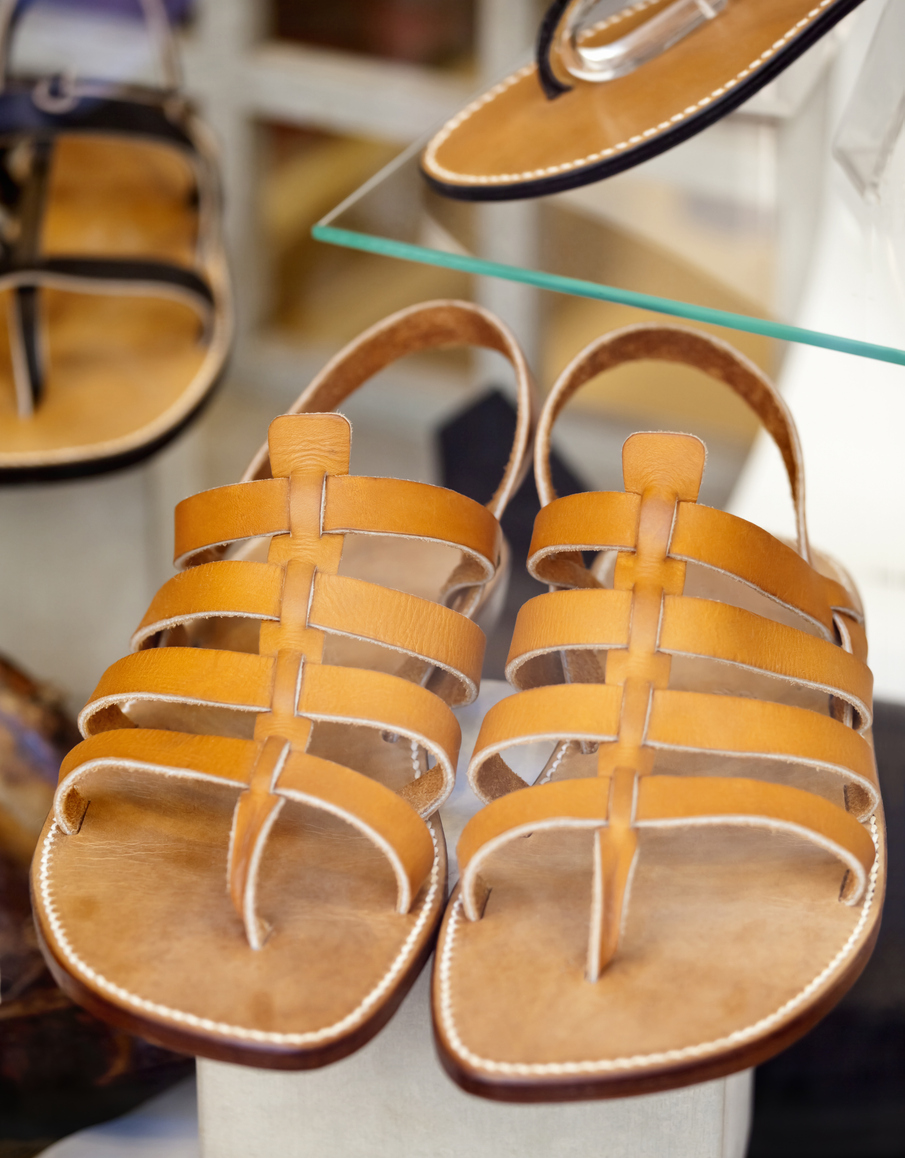
The Art of the Tropézienne Sandal: Riviera Craftsmanship and Timeless Style
Slip into a true Tropézienne sandal and you feel the Riviera underfoot: sun-burnished leather, an elegant web of straps, and a whisper of the old quays around La Ponche. It is one of those rare objects that carries the imprint of a place. Born of utility and simplified to essential lines, the Tropézienne is both an heirloom of Saint-Tropez’s working harbor and a symbol of Mediterranean ease. Its charm lies not in ornament but in proportion, material, and the patient work of hands—craft so quiet and assured that the sandal seems inevitable, as though the town itself distilled into two straps and a sole.
To discover more about the history, traditions and unique atmosphere that shaped this iconic sandal, explore our complete guide to Saint-Tropez.
What Makes a Sandal “Tropézienne”
“Tropézienne” describes a family of strappy, low-profile sandals whose elegance comes from restraint. The classic model is flat or near-flat, with slender leather straps that hold the foot with surprising precision: a toe loop or forefoot band, a diagonal strap crossing the instep, and a heel strap buckled at the ankle. Everything is set low and close to the skin. There is no chunky platform and rarely a heel higher than a whisper. The silhouette reads as a line drawing against the skin—minimal yet expressive—easy to wear whether you’re crossing Place des Lices or following the pine-fringed path to Plage des Graniers.
What distinguishes the Saint-Tropez iteration, especially, is a devotion to simple geometry executed with uncompromising materials. The straps are cut from firm, full-grain leather that softens with time; the sole is a lamination of leather layers, sometimes with a thin rubber insert, assembled with brass tacks you can count in tidy rows. The look is refined but never fussy, which is precisely why it transcends trend: a sandal that lets your stride tell the story.
A Brief History from Quays to Catwalks
Fishermen, Shepherds, and Summer Visitors
Before the cameras arrived, Saint-Tropez was a fishing town whose footwear reflected purpose: sandals were sturdy, breathable, and simple to repair. The Tropézienne took cues from older Mediterranean types—the Roman-inspired “pêcheur” styles worn by fishermen, the pragmatic sandals of shepherds on inland tracks, the airy straps favored across the Tyrrhenian world. As rail lines and steamers deposited summer guests along the Var coast, cobblers in and around Saint-Tropez began refining these legacy designs for lighter, leisure-bound feet, maintaining rugged construction but trimming the lines. The result was a sandal for hot stones, cool cafés, and long afternoons that run together.
Mid-century Icons and Global Allure
The 1950s and 60s vaulted the Tropézienne from local essential to global shorthand for Riviera style. As Saint-Tropez turned from working port to cultural magnet, the sandal’s minimal silhouette captured the limelight without trying: it framed the foot rather than dressing it up, equally at ease with a striped marinière or a white cotton skirt. Sprinkled with a little stardust from the peninsula’s new cinematic glow, the sandal remained loyal to its construction roots. Summer after summer, ateliers on the narrow streets just back from the harbor continued to measure, cut, and nail pairs for locals and visitors who wanted something of the town to take home—and wear until it became part of them.
The Anatomy of a Classic Pair
Straps, Toe Loops, and Minimal Lines
At first glance, the Tropézienne seems almost too spare. Look closer and you’ll see a quiet architecture at work. The forefoot is stabilized by a narrow band or toe ring; a strap angles across the instep to resist lateral movement; a heel strap cups the back of the foot; and a slender ankle strap with a small buckle finishes the hold. Each strap placement corresponds to an anatomical anchor point: the sandal feels less like a shoe and more like an arrangement that respects the foot’s natural motion. Small tabs where straps meet the sole distribute stress and preserve the shape as the leather relaxes in the heat.
Soles That Meet Cobblestones
Beneath, a Tropézienne sole is typically stacked from vegetable-tanned leather layers—firm enough for support, thin enough to keep you close to the ground. Artisans often insert a protective half-sole or heel pad in rubber to manage slick stones and long walks; others prefer a fully leather sole that will polish with wear and then accept a rubber overlay when needed. Look for beveled edges, sanded and burnished smooth. The sole should be a touch wider than the foot, a sign of thoughtful shaping that prevents rolling at the edges. Flip the sandal over and you’ll often see an orderly constellation of brass or steel tacks: the signature of an atelier that takes pride in what most people never see.
Materials That Matter
Vegetable-Tanned Leathers
Full-grain, vegetable-tanned cowhide—often from European tanneries that specialize in slow tanning with plant extracts—forms the backbone of a true Tropézienne. This leather starts firm and develops a warm patina with sun and oil from the skin. You’ll see it in natural, chocolate, or cognac tones, and sometimes in sleeker finishes like black box calf or metallic foils for summer evenings. The important detail is fiber structure: a dense, tight grain resists stretching while molding gently to the foot. For the lining or insock, a softer leather is commonly used, treated to resist perspiration and maintain a fresh feel even in August.
Buckles, Nails, and Small Hardware
The best buckles are small and discreet, in brass or coated alloys that won’t corrode near salt water. Stitching is done with sturdy, waxed thread; strap ends are skived to lie flat, then stitched and often reinforced with a tiny rivet at stress points. Nails—when used—are placed in rhythmic rows that secure the sole without excess adhesive. Even the dyes matter: good ateliers hand-edge and burnish with neutral or matched pigment so the profile looks crisp. Altogether, these humble parts conspire to produce a sandal that feels finished before it’s even been worn, then improves as the leather learns your step.
Inside the Atelier: How They Are Made
Measuring and Tracing the Foot
Step into a Saint-Tropez atelier and the first thing a craftsperson may do is reach for brown paper. Your foot is traced in pencil; the arch, bunion area, and heel width are noted. Some shops keep these tracings for years—so returning visitors can order a new pair that fits exactly like the last. The maker will ask where you tend to rub, whether you prefer a snug toe loop or a freer forefoot band, and how the sandal will be used: long walks along the Sentier du Littoral or mostly terrace-to-car?
Cutting, Edging, and Dyeing
Straps are cut from templates with a keen eye for the grain direction so the leather resists stretching where it must. The edges are beveled, smoothed, and often burnished with a mix of heat, wax, and dye. Holes are punched for buckles and, when needed, for tiny nails that secure strap ends under the footbed. The sole layers are cut and prepped—the insole top stitched or embossed with the atelier’s mark—then everything is dry-fitted on the bench to check the flow of lines. If you watch closely, you’ll see the maker flex each strap; a good strap springs back, holding its line without feeling brittle.
Lasting, Nailing, and Finishing
Assembly begins with anchoring the straps to the insole board so they emerge exactly where they should under the foot. The midsole and outsole are cemented and, in some shops, hand-nailed through. After curing, the maker shapes the edges, sands and dyes them again, and buffs the sole. Buckles are installed; holes are tested for belt-tongue fit; the protective half-sole—if chosen—is affixed. Finally, the sandals are polished with neutral cream and set aside to rest so adhesives stabilize. The pair you receive might look simple, but it holds the quiet math of a hundred decisions made at the bench.
Fit and Personalisation on the Riviera
Custom Straps and Adjustments
Because the Tropézienne is all about strap placement, personalisation has real value. In Saint-Tropez, you’ll find ateliers offering subtle modifications while you wait or over a day: shifting a strap a few millimeters, adding an extra hole for the ankle, tightening a toe loop, or selecting a narrower heel cup if your foot slips. The effect is transformative. A barely adjusted diagonal strap can tame a high instep; a slightly wider forefoot band can eliminate pinch. Some shops will mix leathers across a pair—matte straps with a metallic toe ring for evening—so long as the integrity of the fit remains.
Breaking In with Grace
A good Tropézienne begins snug: the straps should hug without biting, and your foot should sit fully on the footbed with nothing hanging over the edges. In the first days, the leather will soften and memorize your walk. Wear them for short stretches on dry, warm days; avoid soaking them in seawater at the outset, as wet leather stretches unpredictably. If any spot rubs, a dab of neutral leather balm softens the edge; a cobbler can also lightly stretch a specific strap on a last. Within a week or two, the sandal becomes a second skin—live-in proof that minimal design rewards patience.
Styles for Her, Him, and Everyone
Iconic Women’s Profiles
Women’s Tropéziennes often play with the relationship between toe and instep: a delicate toe loop balanced by a clean band over the metatarsals; a double-ankle strap that reads like jewelry; or a T-bar variation that nods to classic Roman lines. Color does much of the work. Tan and cognac are daytime naturals; black sharpens a striped dress at dinner; a soft gold lifts white linen for an evening on the harbor. Heeled versions exist, but the essence remains the flat sandal that respects the Riviera’s carefree geometry.
Understated Men’s Sandals
For men, the “pêcheur” line—cross straps over the forefoot, a lateral brace, and heel strap—delivers support on the old stones around the Citadel without bulk. Dark brown in a matte finish suits navy shorts and olive linen trousers alike. The trick is scale: slimmer straps feel refined, especially with a rolled chino; thicker straps lean more rugged for beach paths and pine-scented trails. Either way, a leather sole with a discreet rubber insert will carry you from café to cobblestones without slipping into the realm of beachwear.
How to Wear Tropéziennes, From Port to Pine Forest
Day-to-Night Pairings
On the port: a faded indigo shirt over crisp shorts, tan Tropéziennes, and a straw tote for the market. Afternoon: a white tee knotted over a cotton skirt, sandals in natural leather that quietly frame the ankle. Evening: soft black sandals paired with a silk camisole and tailored trousers, or for men, a pale linen shirt with chocolate-brown straps. The sandal’s economy of line lets fabrics and silhouettes carry the moment. If you aim for cohesion, keep one element changeable—color, texture, or strap complexity—and let the rest stay simple.
Color Stories of the Coast
Saint-Tropez is a study in sunlit color: ochre façades, blue shutters, the deep green of umbrella pines. Sandal hues drawn from this palette tend to play well: tobacco brown with terracotta, navy with sea-glass greens, metallic champagne with the chalky whites of old limestone. If you like bolder choices—a red strap or a cobalt band—treat them as you would a scarf: a punctuation mark, not the whole sentence. The aim is to let the Riviera light do the heavy lifting while your sandals sketch the outline.
Caring for Leather in Sun, Salt, and Sand
After the Beach Routine
Salt, sand, and sunscreen are tough on leather, but a simple ritual keeps Tropéziennes handsome for years:
- After wear, brush off sand with a soft cloth; avoid soaking the leather to rinse it.
- Wipe straps with a barely damp cloth to lift sunscreen residue, then dry away from direct heat.
- Every few wears, massage a small amount of neutral leather cream into the straps; buff lightly.
- If the sole picks up tar or pitch from pine paths, let it harden and lift gently with a blunt edge; solvents are a last resort and can stain.
Seasonal Storage and Repairs
Store sandals in a breathable cotton bag, not plastic; stuff the forefoot lightly with tissue to preserve shape. Come autumn, a cobbler can add a thin rubber half-sole if you plan to wear them on slick streets or simply to extend the life of the leather outsole. Heels can be replaced; straps restitched or even swapped if you crave a new color. A hallmark of the Tropézienne tradition is repair culture: the same bench that made your pair can likely refresh it, keeping the original fit intact.
Buying Guide: Finding the Real Thing
Where to Seek Out Artisans in Saint-Tropez
The old lanes behind the Vieux Port and around Rue Georges Clemenceau hold long-established sandal-makers whose workshops smell of wax and leather. Step inside and you’ll often find bins of cut straps, a rhythmic tap of nails, and a maker ready with paper and pencil for your tracing. On market days around Place des Lices, stroll early; the crowds swell by midmorning. If you plan a custom fitting in high summer, start your day with a coffee at Sénéquier or a shaded table near the Lavoir Vasserot garden, then head to the atelier when it opens. Many shops close for lunch, so timing matters.
Signs of Authentic Craftsmanship
Even without a magnifying glass, you can sense quality. Look for:
- Even, tight stitching and neatly finished strap ends with no raw, fuzzy fibers.
- Edges that are beveled and burnished—smooth to the touch, without paint flaking.
- Soles that sit flat on a table, with a slight, comfortable arch and no gaps.
- Hardware in proportion: small buckles, tidy rivets, and a stamped footbed that’s crisp, not blurred.
- Straps placed symmetrically across both feet, with holes punched cleanly and evenly spaced.
Price Sense and Timing
For authentic, bench-made Tropéziennes, expect pricing that reflects materials and labor: generally in the range that rewards the time at the bench without straying into mere logos. Custom strap placement or special leathers command a premium. In June and September, the town is calmer and fittings feel unhurried; July and August teem with energy, but patience pays off with a pair that still outlasts trends. If you’re day-tripping, ask about lead times for custom tweaks and whether same-day pickup is feasible; some adjustments take a few hours to cure properly.
A Day Built Around Your Fitting
Morning in La Ponche and Place des Lices
Start early with a quiet loop through La Ponche—cobbled lanes, laundry lines in the breeze, the sea peeking between walls. Wander up to Place des Lices as the plane trees shrug off morning mist. If it’s a market day, you’ll find ripe figs, tapenade, and handsome straw baskets perfect for your new sandals. After a simple coffee at the counter, slip into an atelier for your tracing and first fitting. Many artisans suggest a short walk in the pair before final adjustments, so take a short amble to the Citadel ramparts for a view over the gulf while the leather warms and settles.
Across the Gulf and Along the Headlands
If you’re staying or strolling along the northern side of the gulf, the small ferries that knit Sainte-Maxime and Saint-Tropez make a scenic hop across the water—useful if you plan to pick up a pair in the afternoon. Back in town, a light lunch near the old fish market sets you up for a lazy walk to Plage des Graniers, where the pine scent is strong and the water feels close. In late afternoon, return to the atelier for final tweaks and polishing. By sunset, you’ll be stepping confidently along the Môle Jean-Réveille, your sandals quietly mirroring the color of the quay stones.
To discover more villages, beaches and local traditions around the bay, explore our Gulf of Saint-Tropez travel guide.
Beyond Saint-Tropez: The Riviera Thread
Ramatuelle, Gassin, and Quiet Back Roads
The Tropézienne’s spirit stretches beyond the port into the vineyards and hill villages that embrace the gulf. Ramatuelle’s lanes slope toward Pampelonne, where boardwalks connect beach paths and sand softens even the firmest soles. Gassin’s belvedere catches evening breezes that feel like balm on warm leather. In these places, the sandal reads as native dress: practical on old stones, refined at a terrace table, never overdressed even at the most storied beach clubs along the bay. Wear them with cotton shirting in the vineyards at dusk; they’ll come home dusted with a memory of the track.
From Fréjus Stones to Sainte-Maxime Breeze
Further west, Roman stones in Fréjus remind you that sandals have paced these parts for centuries. And on an evening promenade in Sainte-Maxime—when the gulf blinks with mast lights and music drifts from the square—the Tropézienne’s quiet silhouette looks right at home. This is the Riviera thread: a continuum of places knit by paths, quays, and small workshops where leather becomes summer’s simplest pleasure. The sandals bridge contexts, never demanding attention yet always completing the picture.
Sustainability and the Joy of Repair
In a world of disposable fashion, the Tropézienne stands apart. It thrives on maintenance and small interventions: a resole instead of a replacement, a strap restitched rather than discarded. Vegetable-tanned leathers age beautifully, meaning “used” is not a flaw but a patina—a map of places walked. Buying locally from an atelier keeps production small and traceable; the maker’s name, often stamped inside, is an invitation to return. Even the materials encourage circularity: leather offcuts become key fobs or strap keepers, and well-loved pairs rotate into beach duty as their dressier life ends. This, too, is Riviera wisdom: travel light, choose well, and look after what you love.
The Cultural Footprint of a Minimalist Sandal
Objects that survive fashion do so because they express a place more than a moment. The Tropézienne is the Riviera in negative space—the curve of a strap standing in for the curve of the coast, the soft clink of a buckle like the halyards on the harbor masts. At cafés like Sénéquier, you’ll see every generation slip them on without fuss. In patisseries selling the eponymous Tarte Tropézienne, a queue might include polished black pairs and sandy tan ones, all equally legitimate. The sandal applied no pressure to become iconic; it simply stayed true to its lines until the world noticed.
Practical FAQs, Distilled
How should a new pair fit at first try-on?
Snug but not tight. Your heel should sit fully on the insole; straps should hug without cutting in. A slight imprint on the foot after the first wear is normal; red marks that persist are not. Expect a gentle looseness after a few hours of walking as the leather warms.
Can you wear Tropéziennes on long walks?
Yes—within reason. Choose models with a supportive instep strap and consider a rubber half-sole for grip. They are not trail shoes, but for old town loops, coastal paths to quiet coves, and market days, they excel.
What about rain or saltwater?
Brief splashes are fine; dry away from heat. Avoid soaking new pairs. If they get wet, stuff with paper to wick moisture, reshape gently, and condition once fully dry. Salt can stiffen leather—wipe it off promptly.
Which colors age best?
Natural and mid-brown shades develop the richest patina; black stays elegant with minimal care. Metallics are more festive and may show wear sooner on high-friction edges—treat them kindly.
Is custom worth it?
If your feet are narrow, wide, or have a high instep, custom strap placement makes a world of difference. Even standard feet benefit from a few millimeters here and there—this is the quiet luxury of the Tropézienne tradition.
Etiquette and Timing in the Workshop
Ateliers are working spaces with a rhythm: mornings devoted to fittings and prep, afternoons to finishing and pickups. Arrive early, especially in summer, and bring the socks or bare feet you plan to use. Be honest about your intended use—beach days, city evenings, or both—so the maker can advise on sole protection and strap tightness. If a shop is bustling, a short wait is normal; step out for a lemonade under the plane trees and return when called. A measured pace is part of the craft’s DNA and, in the end, part of the charm your sandals will carry home.
Itineraries That Celebrate the Sandal
From Harbor to Hilltop
Begin with a harbor stroll where fishing boats share the quay with sleek classics. Take a seat on the low wall facing the Môle and watch the town stir. After your fitting, angle up shaded alleys to the Annonciade Museum for a glimpse of color fields that match the town’s palette. Lunch might be a bowl of soupe de poisson in La Ponche, followed by a slow walk to the Citadel for a breeze and a view that explains everything about Saint-Tropez’s magnetism. Your sandals will feel like they’ve been in the family for years by the time you return to the port.
Beach Afternoon, Village Evening
If the day runs warm, point yourself toward Pampelonne’s northern stretches where the boardwalks meet wilder sand. Slip your sandals off and let them sit in the shade while you swim; rinse your feet with fresh water before sliding them back on. Late afternoon is perfect for a detour to Gassin’s belvedere—soft light over vineyards, a perfume of wild herbs in the air. Back in Saint-Tropez, a pastry stop for a slice of Tarte Tropézienne is a wink to the town’s sweet tooth, then a twilight promenade with your sandals now tuned to your step.
The Subtle Science of Strap Geometry
Why do some pairs feel like gloves on the foot while others slip? Geometry. A diagonal strap draws the forefoot backward into the heel cup, reducing forward slide on descents (useful on the steps above La Ponche). A toe loop counters splay while leaving toes free to articulate; a T-bar restrains without pressure on the lateral forefoot. Skilled makers adjust the entry and exit angles of each strap for your foot. Millimeters matter. When a craftsperson shifts a cut line, you might not see it—but you’ll feel it in the way the sandal “disappears” on the foot.
From Bench to Street: Recognizing the Maker’s Hand
Once you’ve tried a few ateliers, you start to recognize signatures. One shop favors a slightly wider heel tab; another skives strap ends thinner for a razor-clean edge. Some like a matte, waxed finish that wears in softly; others polish their straps to a subtle sheen. The nail pattern, the curve of the instep strap, the way the buckle tongue sits when fastened—these are the maker’s fingerprints. Part of the joy is choosing the hand that resonates with your taste and the way you walk the town.
Packing and Travel Tips for Sandal Aficionados
For a trip centered on a new pair, pack a lightweight, fold-flat shoe bag and a small tin of neutral cream. Bring moleskin in case a strap needs a day to settle. If you expect a same-day pickup, plan footwear that slips off easily during fittings—saves time and keeps the atelier tidy. On departure, pad the sandal straps with soft clothing and place them near the top of your bag so they don’t get crushed. Leather remembers shapes; treat it kindly en route and it will reward you on arrival.
Local Taste Stops to Pair with Your Purchase
There’s a nice symmetry to savoring something local after choosing a local craft. On the harbor, a coffee at Sénéquier offers classic people-watching with the red façade as backdrop. In quieter corners, a scoop of lemon sorbet from a small glacier off Rue Gambetta cools a hot afternoon. If you have a sweet tooth, the cream-filled brioche of La Tarte Tropézienne is more than a pastry—it’s a slice of town lore. Sit on a low wall in the shade, sandals on your feet or beside you, and let the place explain itself by degrees.
A Note on Research and Local Voices
One of the best ways to deepen your appreciation for the Tropézienne tradition is to listen to the makers. Many have stories that connect the sandal to a grandfather’s bench or a postwar street the way it was. Let those voices lead you down side streets; the richest discoveries are rarely the loudest ones.
An Evolving Classic: Contemporary Twists
While the core remains constant, modern makers indulge a few carefully judged variations: a woven strap that reads like basketry from the marché; a contrast stitch that nods to sailmaking; a sole edge dyed in navy to echo the harbor. Some experiment with vegetable-tanned leathers in unusual tones—forest green, slate, even a smoky violet—for clients who know the rules well enough to bend them. Yet the best of these twists keeps faith with the Tropézienne’s founding idea: the foot first, the line second, the color last.
When to Choose Rubber, When to Choose Leather
Purists love an all-leather sole for the way it polishes and resounds on stone. Realists love a discreet rubber half-sole for grip on polished pavements and boat decks. There’s no heresy in either choice. If you plan on a summer of mixed use—markets, harbor walks, the occasional deck—ask your maker to add a thin rubber layer under the forefoot and a small stacked leather heel with a replaceable top lift. You’ll preserve the elegance of the profile and keep maintenance effortless.
What to Wear While They’re Being Made
If your atelier needs a few hours to finish adjustments, consider a Riviera errand-list that keeps you nearby without straying too far. Browse the spice stall on Place des Lices for herbes de Provence to take home. Peek into a tiny bookshop off Rue Allard for out-of-print postcards and small-run local histories. Duck into the shade of the Lavoir Vasserot’s garden to cool off. By the time you return, your sandals will be waiting—straps set, buckles burnished, ready for their first proper walk.
A Short Glossary for Sandal Lovers
Full-grain leather
The strongest part of the hide, minimally corrected, which develops a nuanced patina over time. Ideal for straps that must hold their line.
Vegetable-tanned
Tanned with plant extracts (like oak or chestnut) rather than chromium salts; tends to be firmer at first, then mellows beautifully.
Burnishing
Smoothing and sealing a leather edge using friction, wax, and sometimes dye; gives a refined, long-wearing edge along straps and soles.
Half-sole
A protective layer—often rubber—added to the forefoot area of the outsole to improve grip and durability, especially on smooth stones.
Patina
The gradual coloration and sheen that appear as leather absorbs oils, sun, and wear. On natural tan Tropéziennes, this can be spectacular.
The Riviera in Two Straps: A Conclusion
To understand the Tropézienne is to understand a Riviera habit of mind: choose less, choose well, and let time finish the design. These sandals are not about display; they’re about feel—how leather carries you across familiar stones, how a measured strap admits movement but keeps its promise. They are made in small rooms where the air smells of wax and summer, by hands that know where a millimeter earns its keep. Take a pair home and they will continue the conversation each time you step out, sketching a faint map of Saint-Tropez wherever you walk. That is the art: quiet, exacting, and endlessly wearable.
Looking for your own Riviera experience? Discover our holiday villas and holiday homes on the Côte d’Azur.

